Rune Østgård's avatar
Rune Østgård
npub1sv4zk080fvt4f3982u5kffzdkex3nm0kylky29um2xws5h4wsxvswtsrw4
npub1sv4z...srw4
Author of Fraudcoin, UNBAR and Arrow of Truth. undoqo.com
If you want to read a book that takes the battle of ideas to the World Economic Forum's doorstep - then look no further. *** "UNBAR makes a concise yet powerful case for supporting decentralized money." Lyn Alden Author of Broken Money "UNBAR is a must-read for those seeking a nuanced understanding of the relationship between geopolitics, power and money." Abubakar Nur Khalil Bitcoin Core developer image
"What's the cost of freedom?" That's the question I asked yesterday on X. I asked because I suddenly had a strange feeling of understanding that this was the most important question that man can ask himself, and that I might be close to finding the answer, or at least an answer that is satisfactory for me. Rewind back 20 years. Then I was 31. I read several books by Ayn Rand, including two of her masterpieces, "Atlas Shrugged" and "The Fountainhead". It was then that I understood what freedom meant to me. It had taken 31 years of my life to find this out. 31 years. That's a long time of living without knowing what freedom means to you, isn't it? I realized that, at least to me, freedom meant: "Absence of coercion." And it would take a total of 51 years 3 months and 3 days of living until I yesterday realized that the most important question to me is: "What's the cost of freedom?" To be more specific, it took me 51 years of reading, reflecting, discussing, completing the writing of three books, coming very close to completing my fourt book (Arrow of Truth) and an invitation to speak at a major conference before I yesterday understood that this question was the most important one. 51 years plus before I understood which question that was most important to me. That's a loooong time. Furthermore, it took one additional night with little sleep, waking up at 5 AM this morning, and then enduring one hour with ideas, memories, impressions, arguments and reflections erratically flickering behind my eyelids, before I this morning realized that the answer had been in front of me for almost 15 years. It has been there - stuck into my face for friggin 15 years as if it was written in large caps on a sheet of paper glued to the tip of my nose - since 2008, before I finally understood 90 minutes ago what my answer to this overwhelmingly important question was. It has been too close to me, of course, so close that I haven't been able to see it. And then - boom! This type of eureka moment has only happened to me very few times before. I'm not yet going to disclose it all yet, but parts of the answer to the question "What is the cost of freedom" is that: "It depends." I guess that not telling you more than this part of my answer will make some of you freak out a little bit, and that's ok, I can live with that. But I promise, I will share it with all of you in due time. First I'm going to spell it out as clearly as I can when I go about and complete Arrow. In the meantime, I hope more of you guys ask yourself the same question. Have a nice and philosophical day :-)
Wise words from Lyn Alden about #Bitcoin's economic function: "Faster than fiat - scarcer than gold." I would add the following, about Bitcoin's political function: "Smarter than violence - sharper than guilliotines." image
Brave, industrious people who early see the escape hatch are handsomely rewarded with the biggest catch. Others, who let subservience, ignorance or loyalty dictate that they should be afraid and sit still slowly see the escape hatch is replaced with bars, as they are left with the bill. #Bitcoin    #inflation #Fraudcoinbook
Which podcast episode about bitcoin do you recommend for an 18 year old girl?
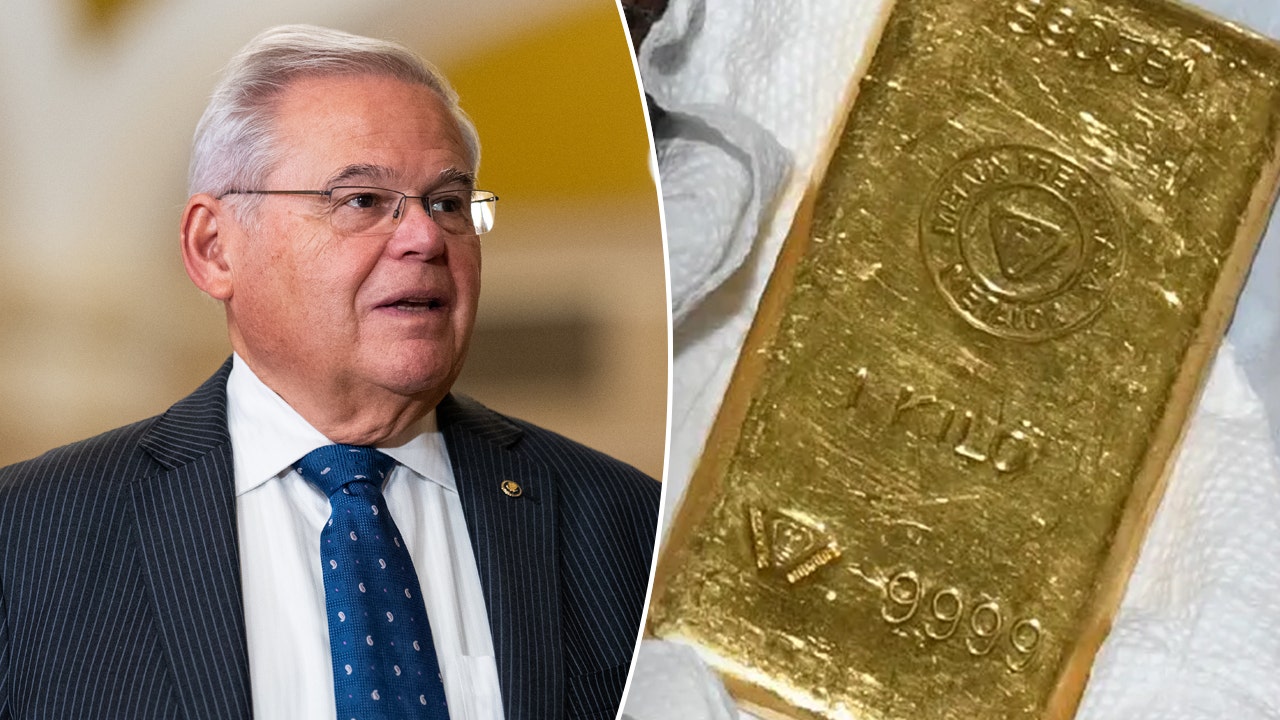
These news 👇 demonstate that we absolutely must ban gold. You see gold is being used extensively by politicians and other criminals in briberies and money laundering schemes. First of all, it represents a direct threat to the banks, because they depend heaviliy on this franchise. If gold outcompetes cash and bank money as the preferred means of payments by politicians and other criminals, this can cause financial instability, and then we will all suddenly be in serious trouble due. Secondly, gold mining requires enormous amounts of energy. Therefore gold is also a direct threat to the climate. Silver should be banned too, for the same reasons. Or at least, self custody of gold and silver should definitely be banned. It's so obvious.
Kids who learn to - master digital security - acquire, take care of and use #bitcoin    - use AI - defend themselves physically - speak multiple languages and get multiple passports, will become some of the freest and most prosperous people that have lived on planet earth. image
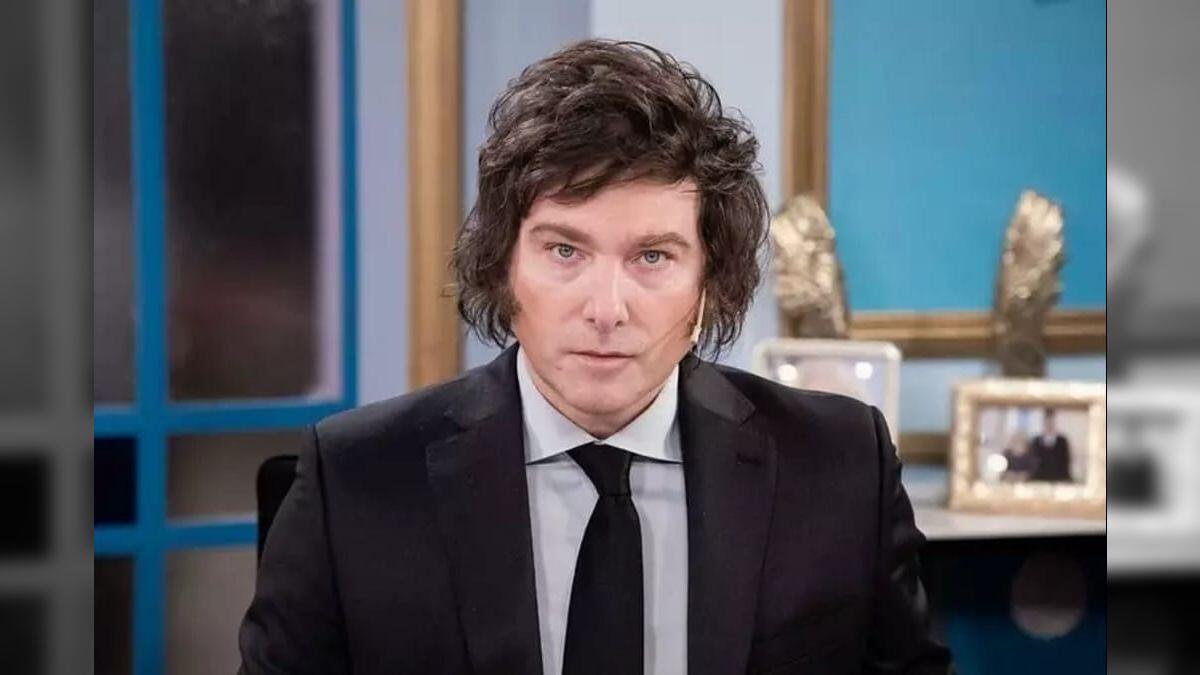
Why did Javier Milei campaign on a platform that included a vision of reinstating monetary freedom in Argentina? The answer is that it's because he is a student of the Austrian School of Economics who also understand his country's history. Monetary freedom, sometimes referred to as having a system with competing currencies, is properly defined as the right for the people to use the money they like best. Few are aware that the Argentine people enjoyed monetary freedom from the revolution in 1816 until the government adopted the gold standard in 1881. The number of people who knew that this made Argentina one of the most prosperous countries in the world, is even smaller. But Milei, luckily for us, is one of them. Being an economist of the Austrian School, enables him to understand the significance of the monetary system. Between 1783 and 1857 the people of the United States also enjoyed the right to use the money that they liked best. Monetary freedom transformed Argentina and the US into powerful magnets. The two countries attracted capital and talent from all over Europe. It happened so quickly that it's almost impossible for us to grasp it today. The economic growth Argentina and the US achieved was unprecedented. It was almost magical. Immigration to Argentina and the US was huge: “In the peak period of the world’s oversee migration,  1821-1932, six countries absorbed 90 per cent of the total, and among these six, Argentina ranked second in the number of immigrants, with a  total of 6,405,000. The only other Latin American country on the list is  Brazil, with 4,431,000. The United States, of course, came first with about 5 times as many as Argentina.” North America practically drained my country, Norway, of people. Only a few thousand Norwegians emmigrated to Argentina, which first of all recei an inflow of people mainly from Spain and Italy. But why did people flee from Europe? One reason was that the rulers in Europe clinged on to their national monopolies in money creation. They loved their money printers, just like Gollum loved his precious ring. The governments shared the privelege of money creation with powerful banks, because it made the system more effective for them. The European rulers let the banks organize themselves as cartels who could create money out of nothingness when they issued loans. Each country had a central bank that coordinated how rapidly the banks could create new money. It had been like this since the Swedish nobility creates the world's first central bank in 1669. Today almost all countries in the world have the same system as the European nations have had for centuries. While the rulers and the banks could create money out of nothingness, the people had to work to get the money, or take out loans, to pay taxes to the rulers, and to stay alive. Over time these monopolies in money creation ensured centralization of wealth and power. It also made it near impossible for the citizens in the working and middle class "to climb the social ladder." The banks and governments used their monopolies to extract enormous wealth from their people, something which also enabled them to wage endless wars against the neighboring countries. Furthermore, flooding the economy with money created out of thin air was like pouring sand in the machinery of the economy. It hampered capital formation, just like it does today. And it corrupted the society, and again, just like it does today. In contrast, the monetary freedom in Argentina and the US enabled a high level of capital formation, broad distrubution of wealth and much less centralization of political power. You see, the monetary system is society's cornerstone. Monetary freedom builds civilization and attracts economic resources. Monopolies in money creation, on the other hand, destroy civilization and consume economic resources. It's a shame that they don't teach us this when we go to school. I think we have a right to know, especially since the governments force us through education and dictate what we must learn. Not telling the people about this is in my opinion a terrible form of gaslighting, whether its intentional or not. Milei has enligthened the world about the evils of modern monetary policies. He has also said that he wants to reintroduce monetary freedom, and let the private sector take responsibility for money production, as it has done in the past. But now Milei has become president. And while others fear for his security, I fear more for his ability to resist the temptation to control the production of money. Because, you see; man's lust for securing himselves the exclusive control of a money printer is terribly strong. To Milei I would like to say the following: You have enlightened millions around the world about the importance of the monetary system. This is a priceless gift that I will never forget that you gave us. But now it's time to take action, Milei. You must destroy the central bank of Argentina once and for all, just like you promised. And you must be careful not to let a monopoly in money creation enter into your office via the back door. And finally: The fastest way of reinstating monetary freedom in Argentina is probably to abolish the capital gains tax on #Bitcoin   . Good luck! *** If you found this piece interesting, I appreciate that you push the like, share and follow buttons. You may also want to check out the books I’ve done together with my partner, graphic designer wiz Mattis Storhaug, on UNDOQO’s website.
Economist have for decades insisted that the CPI is the measure we need to use to track the value of money. This fundamentally illogical argument is about to tarnish their reputation as professionals. If they don't soon admit that they were wrong, they risk being perceived by the average person as having been key assets for governments and special interests in the biggest gaslighting operation the human race has ever witnessed, an operation that president Joe Biden currently is the front man for: The crime against humanity known as manipulation of the money supply. image
Graph reveals political scandal in Norway My friend Gregard Mikkelborg produces some amazing graphs. He sent me this one yesterday. Take a close look at it and read my comments below if you want to understand its significance. The short version of my comment is the following: *** The Norwegian pension fund squanders its capital and indirectly drives up price inflation in Norway. This is the opposite of what the politicians and economists told us that they wanted to achieve by establishing the fund. We were most likely gaslighted. *** For thousands of years, rulers used to save in gold The reason was that gold is hard to dig out of the ground, so its inflation rate is low, less than 2% on average per year. This means that gold has stored value better than any other assets over time. When society’s productivity goes up, for instance due to population growth and innovation, this in fact causes gold to increase in value as time goes by. Furthermore, gold doesn’t go bankrupt. Companies, on the other hand, rarely persist very long, so investing in stocks always involves a great deal of risk. Lending out savings to companies at an interest, or giving companies access to savings as equity, must result in a profit that compensates for the risk. This is very hard to achieve in a competitive market, and it’s a whole lot of trust involved in this game. For this reason, when kings and emperors invested instead of saving in gold, they preferred investing in companies that they at the same time gave a protected status, typically with exclusive rights to trade with the colonies. The East Indian Company is a good example of this. Jackpot! In the 1960s huge oil and gas reserves were discovered on the Norwegian continental shelf. When these enormously valuable resources much later started to pay off, Norwegian politicians didn't at all like the idea of saving in gold. They wanted to take risk instead. They wanted to turn a profit. You see, our politicians despised gold. That’s probably why they in 2004 let Norges Bank, which is our central bank, sell all of Norway's gold reserves. Turning Norway into a gargantuan hedge fund Our politicians decided to establish an investment fund owned by the state. The fund is named “The Norwegian Government Pension Fund Global.” The fund’s official objective is to ensure: "responsible and long-term management of revenue from Norway’s oil and gas resources, so that this wealth benefits both current and future generations." When oil and gas companies pay taxes to Norway, the revenue is slushed into the fund. Today it has almost USD 1.5 T of investment capital at its disposal. This makes it the largest Sovereign Wealth Fund in the world. Gaslighting on steroids Before the fund was established, the politicians and their economists communicated their reasoning to the Norwegian people. They argued that allowing the fund to invest in Norway would cause "overheating" of our economy. And they said that this "overheating" would result in high price inflation in Norway. However, the effect of investing capital is that it causes productivity gains, provided that it is invested wisely. Productivity gains make it cheaper to create products and services. When it becomes cheaper to produce goods and services, prices for the end users go down. By other words - investing the capital in Norway instead of abroad would have provided us with the invaluable gift of price deflation, not price inflation. This wasn’t at all included in the analysis and deliberations that were fed to the Norwegian people. It was an exercise in gaslighting. And it made it easy for the politicians to decide that the fund should invest in foreign, publicly traded bonds and stocks. The last few years it has also been allowed to make some investment in foreign real estate. The effect of giving away capital What our politicians effectively do, is that they supply multinational corporations and foreign governments with capital in the form of loans and equity. This increases the productivity of foreign corporations and other nations. One of the effects is that it makes foreign corporations able to outcompete Norwegian companies. At the same time, higher productivity abroad gives foreigners the benefit of relatively lower prices. Perverse incentives Our politicians are allowed to spend the fund’s expected net returns. This is called "the budgetary rule." Right now, they expect that the fund shall turn a net return of 3%. Therefore, the government reallocates 3% of the fund back to the public budget. It spends the money on all kinds of crazy projects in Norway. In recent years, this has become an important driver for ESG friendly investments, so-called sustainable investment. This drives all kinds of spending on “green” and “climate change” initiatives. The result is, of course, an immensely harmful level of rent seeking activity. Scandals are layered upon scandals. The latest example is the government’s subsidization of Freyr, a company that promised to turn Norway into a leading battery producing nation. While the company hasn’t been able to produce a single battery so far, a good portion of the subsidies have worked their way into the board members’ pockets and made the owners rich. What’s even worse is that the budgetary rule incentivizes politicians to allow the Norwegian krone (NOK) to weaken. And surprise - surprise, the NOK has performed absurdly bad over the last years. For instance, compared with 2008 you must today pay twice as much NOK for USD. The rapid debasement means that Norway imports inflation from other countries. This comes on top of the relative price increases that we get from reallocating capital from our own country to foreign corporations and other countries. Was it worth it? Was it still wise to take the capital out of Norway and let the fund invest it abroad? The answer is a resounding NO. Measured in USD, the fund has had an average gross return on the capital of 6.2 % per year since the fund’s inception in 1998. In comparison, the gold price measured in USD has increased on average 7.7 % per year. By other words, the fund’s average return on its capital per year by investing in bonds and stocks abroad is 24 % below what it would have been if our government had saved in gold, as rulers used to do in the past. (7.7 / 6.2 = 1.24) Conclusion Our politicians have given us a “Quintuple whammy, as operating the fund : 1. Squanders the nation’s savings 2. Subsidizes multinational corporations 3. Drives up other nation’s competitiveness 4. Allows the value of our currency to drop like a stone 5. Causes price inflation in Norway Many Norwegians no doubt trust politicians too much. They believe it’s mainly foreign politicians that lie. This is incorrect. You see, Norwegian politicians are excellent liars. And not only that. As other politicians, they do the exact opposite of what they tell us that they will do, and at an enormously high cost to its citizens. And they do it squarely for their own benefit. Solution In my opinion, there is only one solution to this problem. We must take the fund and the income from oil and gas out of the hands of our politicians. The revenue and the capital should instead be given to the people. If we continue with the current system, the politicians will squander it all, shrink the private sector into something totally insignificant and pull it further down into misery. --- If you found this piece interesting, I appreciate that you push the like, share and follow buttons. You may also want to check out the books I’ve made together with my partner, graphic designer wiz Mattis Storhaug on UNDOQO’s website. Finally - a big brotherly hug goes to my favorite goldbug Gregard Mikkelborg for sending me this amazing graph. image
The four winners of the #Fraudcoinbook raffle has been DM'ed, thx a bunch to each and everyone who participated.
Starten ble ikke med i sted, her er hele teksten min: I går ble jeg intervjuet av Document TV om svekkelsene av den norske krona. Det er summen av all inngripende og tåpelig politikk som er årsaken til at krona har svekket seg så mye. Jeg stiller spørsmål ved hvem det er som vil etterspørre den norske krona hvis man ikke kan få avkastning ved å investere i Norge. (Snart kan jo krona kun brukes til å betale skatt og avgift med.) Fra 18:52 i sendingen uttaler jeg meg om hva som skal til for at politikerne skal gjøre noe som kan få den til å styrke seg. Fordi årsaken til svekkelsen er summen av mye dårlig politikk så vil bare det at de begynner å føre en politikk som er litt mer fornuftig på noen områder være noe som kan slå positivt ut for krona. Problemet er at politikerne har incentiver til å holde den svak, fordi da får de mer penger å bruke på grunn av handlingsregelen og overføring fra oljefondet. Derfor peker jeg blant annet på at, i likhet med at en del folk "stemmer med beina" ved å flytte ut av landet, kan folket "stemme med sparemidlene sine" og plassere dem i gull eller i bitcoin i stedet for å ha dem stående i banken eller i aksjer. Det kan gi politikerne incentiver til å forbedre politikken, ved at de i mindre grad fører politikk som er direkte skadelig for krona. Som jeg sier "blir det alvor" for politikerne hvis folket begynner å velge vekk krona til fordel for gull eller bitcoin.
Som jeg sier "blir det alvor" for politikerne hvis folket begynner å velge vekk krona til fordel for gull eller bitcoin.