Som jeg sier "blir det alvor" for politikerne hvis folket begynner å velge vekk krona til fordel for gull eller bitcoin.
🚨 Raffle alert!
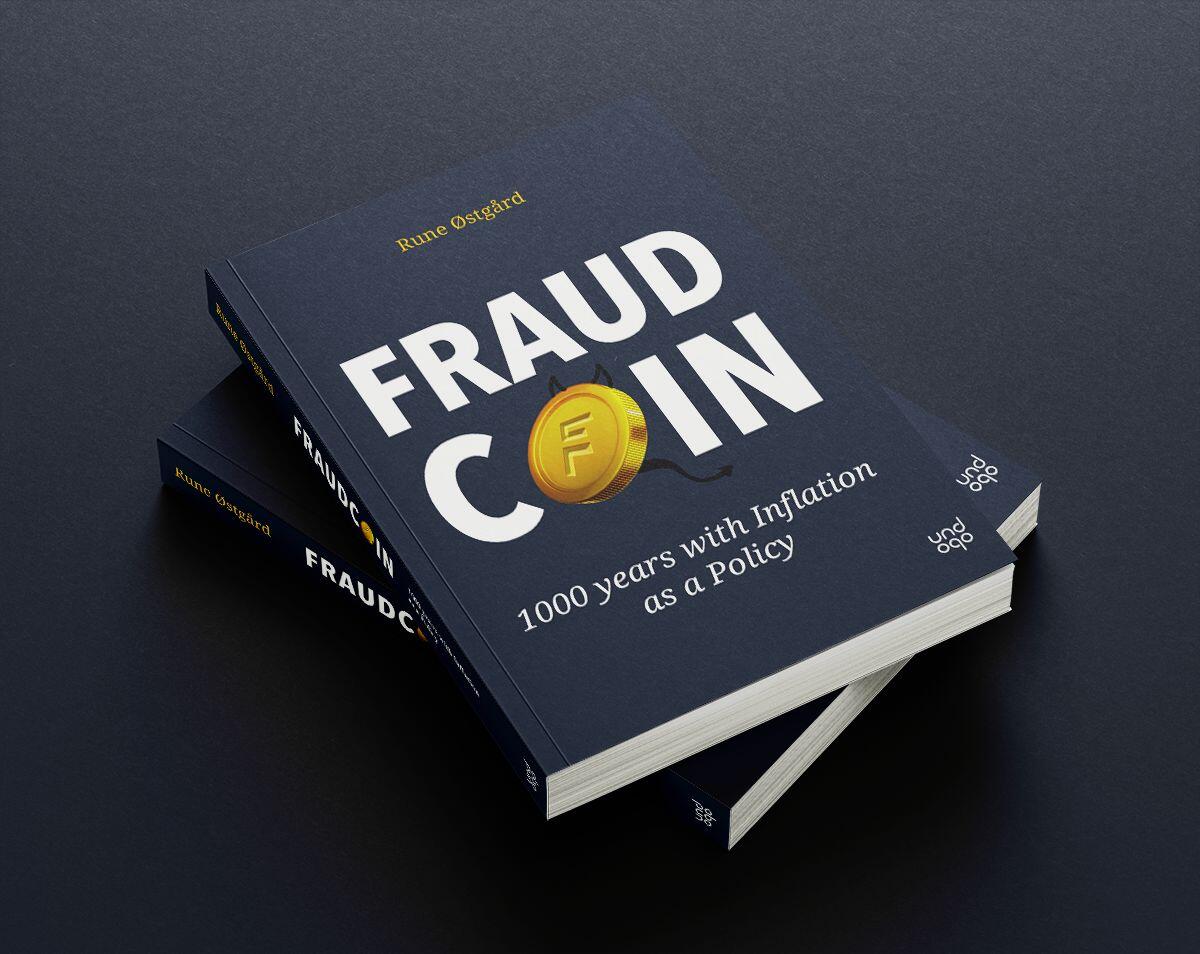
Win a signed copy of Fraudcoin - 1000 Years of Inflation as a Policy.
All you have to do is to like and share this post and you can become one of three lucky winners.
The raffle is open for new and old followers and closes Wednesday 29 November 21:00 CET.
***
We seek people who would like to translate the book to Spanish, Portuguese and French. Leave a comment and we will contact you.
One lion is worth a milion sheep.


Norway, trust, freedom and CBDC
This note is a call to action.
I write it in English to make it easy for people abroad to understand what's going on here, and because the Norwegian social democracy often is referred to as an example that other countries should try to copy.
I suggest that they shouldn't belive this narrative.
Norwegian politicians repeatedly tell us that we have a trust-based society.
It isn't true.
Their interest don't align with the people.
They most likely never did.
Our politicians have always known this.
They know that if they shall succeed in being part of the ruling class, they must bribe, coerce and deceive the people.
Coercion is expensive.
Bribes are costly too.
Therefore they rely heavily on deception.
By repeatedly referring to Norway as a trust-based society, they try to appeal to our conciousness.
They want us to feel shame if we think or talk about not trusting them.
Many Norwegians feel this shame.
They shouldn't.
Instead, they should try to learn where we come from, by studying our history.
If they do, they most likely will stop being ashamed for not trusting the politicians.
On the contrary, many will take great pride in not trusting any ruler at all.
Norwegians have relied heavily on voluntary cooperation with each other.
But trust in politicians has until recently not been one of our prospensities.
In my region, Trøndelag, we originally didn't trust rulers at all.
In the Viking Age we didn't want to have kings ruling us.
Therefore we punished them harder than anyone else, typically by killing them, if they tried to place themselves above the law.
Not trusting the kings was a fundamental requirement for our ancestors if they wanted to preserve their freedom and prosperity.
Fulfilling their obligations as manifested in the law, to punish the kings ruthlessly, was of equal importance.
They knew it by heart.
Is was as true for them as the natural laws.
They knew that ignoring the truth would punish them immediately.
Unfortunately this was exactly what happened when our social structure broke down in 1050 AD.
Over time fighting for our freedom was replaced with flight from oppression.
People feared standing up for their rights.
So our ancestors instead fled the country.
For instance, the level of emmigration that occured after we got our own constitution and a semi-independence in 1814 was nothing but gargantuan.
In 1814 we had a population of about 900.000 people.
Between 1836 and 1915 an estimated 750.000 people relocated to North-America.
It's an insanely huge number.
Norway is an enormously rich country in terms of natural resources.
Still people left in droves.
It tells us everything we need to know about how little the Norwegian people trusted and appreciated the politicians.
The level of trust was probably zero.
The ones who didn't leave managed to keep some check on the politicians for a long time.
Again, numbers are informative.
In 1900 the public sector only spent an amount of money equivalent to 6% of GDP.
The reason was probably that any attempt of increasing the burdens of the common people would increase the level of emmigration.
The ruling class risked being left with nobody to slave for them if they raised taxes.
So the people paid almost no taxes at all.
Instead, the ruling class used inflation to extract wealth from the people.
When World War I broke out in 1914, the gold standard had become a trap that enabled the elite to rob workers, landowners and farmers
By increasing the money supply 300%, and then suddenly reducing it in similar magnitude, all in a short timespan of 14 years, the ruling class robbed ordinary Norwegians for most of what they owned.
Now the wealthy elite and their cynical companions - the politicians - had carte blanche.
The table was set.
The feast could finally begin.
Party time for the rich and the State.
Serfdom for the rest.
Recent events show us that not adhering to the obligation to protect our freedom has been a one-way ticket to serfdom:
- the public sector today spends almost 2/3 of onshore GDP
- in 2020 and 2021 our government locked down our nation and forced us to take vaccines, although the risk for having a serious reaction to the coronavirus was insignificant while the risk related to taking these vaccines were much greater than other vaccines
- the government forces a broad range of costly burdens on us related to its climate change policy, although the effectiveness of these measures are dubious, to say the least.
Today our super-cynical politicians warn us about the dangers and immorality of owning #Bitcoin , while they at the same time present Central Bank Digital Currencies (CBDC) as a safe alternative.
The truth is that our politicians and the special interests that support them have painted themselves into a corner.
They try to deceive us into adopting CBDC because it makes it much cheaper for them to coerce us afterwards.
The monetary system is the most powerful social network that has ever existed.
And with CBDC our hubris-infected leaders will have the most powerful political tool that has ever been available to them.
With CBDC they can surveil, block and steer our every move.
I consider CBDC to be a bigger threat to our species than the nuclear bomb.
On the other hand, I don't find it likely that many countries will be able to adopt CBDCs.
I think the project will faceplant in most countries, because people will fight tools and nails against it, as they have done in Nigeria.
However, in those countries were people are lazy and don't feel any obligation to fight for their freedom, their rulers are definetely going to use of this terrible weapon.
And their people will immediately suffer.
Immediately.
It's a 100 % certainty.
Because the politicians who get to control this terrible weapon cannot resist the temptation to make every possible use of it to increase their power.
The CBDC will be like the ring in Tolkien's the Lord of the Rings.
It will spellbound them, and produce terrible outcomes for themselves and their people.
To sum up:
Norway is not at all a trust-based country.
We don't have any alternative other than to fight for our freedom.
If we allow the ruling elite to implement CBDCs, we will experience hell on earth.
And then our only option will be to flee to another country.
I prefer staying.
And I prefer fighting.
You see, I have a deep respect for the values and the understanding that my ancestors had, especially that they knew that ignoring the truth is incredibly costly.
It's in my genes.
This is my country.
A ruling class isn't welcome here.
It never was.
If you were inspired by this note, feel free to hit the like button and follow me here on NOSTR.
Academia sees no other solution than coming out of their hiding after Milei won. His message is too powerful, and reaches too many people.
I've now confronted two professors in Norway with their rhetorics on X, and expect that we only see the start of it.
I see Milei's win as the beginning of the end game in the battle of ideas and the era of Gargantuan Government.

X (formerly Twitter)
Rune Østgård (@enur72) on X
Javier Milei's victory provokes academia to engage in public debate. I want to see more of this, but without below par rhetorics.
Let's celebrate with Argentina today
Congratulations to the new president and vice president of Argentina, Javier Milei and Victoria Villaruel.
And a heartfelt congratulations also to the Argentine people.
To those of you who don't know Victoria and Javier:
They do not come from the same political class as the majority of politicians who dominate politics in the Western world.
They are different.
Radically different.
For instance, they have a totally different view of what it means to be "free", how society maximizes freedom and prosperity and what the government's role should be.
They believe the government should step back and give the country back to the people.
I don't know much about Victoria, but let me tell you a littlebit more about Javier.
He is the first anarcho capitalist who has become a leader of a state in modern times.
Anarcho - as supporter of anarchy.
And capitalist - as supporter of property and trade.
In sum - someone who believe people can organize themselves best when they are free to own and protect their property.
And someone who see this system as the only ethical way of letting people organize themselves.
However, Javier is also a realist.
So his ambition is to slash 80% of the government.
But this isn't the most important with the election.
The following is what's most important:
Javier believes in "monetary freedom," the right to use the money you like best.
He believes money creation should be left to the private sector, the way it used to be in most of our history as a civilized species.
The new president understands the evil of government monopolies in the production of money.
Therefore he wants to abolish the central bank and get rid of the Argentines' current monetary system.
Why do he support monetary freedom?
Because he understands its foundational importance for society.
And because he was fed up.
He had watched the Argentine government abuse their monopoly in money creation for decades.
They borrowed US dollars from the IMF, and let it flow into their own pockets and to the super wealthy.
This put the taxpayers on the hook.
The people were supposed to pay back this growing mountain of public debt.
Not the political class.
The voters.
And the children of the voters.
And the voter's grandchildren.
This scheme was supposed to move forward in perpetuity.
At the same time the evil government forced their people to use the Argentine peso.
"Wanna pay taxes?"
"We just accept peso."
And they made sure that their central bank and the private banks printed the peso in such a high tempo as if the devil himself commanded them to do it.
Who do you think got to use the pesos first, while it still had some value?
The political class and their crony capitalist comrades, of course.
And the people - what about them?
I'll tell you what this policy did to them.
The Argentine government crushed their people with price inflation.
Caused directly by their monopoly in money creation.
They debased the value of the peso.
Deliberately.
Fast.
Yes.
And they crushed the Argentine people with this.
They made them work harder and harder, faster and faster, to keep up with the rapidly rising prices.
They set fire to their savings.
Made the money they deposited in their savings accounts worth nothing.
The political elite destroyed the country economically.
They made sufficiently many of the people of Argentina hate the pesos and the government.
Yes.
They made the people hate.
So the people rose against them.
They flocked to Javier.
They did it with enthusiasm.
Because Javier hated the political establishment too.
He understood how this institutionalized fraud crushed the people of Argentine.
And he was able to communicate it to them.
And the people understood what Javier said.
In fact, they felt what he said.
They knew he was right.
Spot on.
So, they chose to follow him.
The people of Argentina rose against the political class and they did it peacefully.
I'm full of admiration for the way they behaved.
They felt what their candidate said, agreed, supported him, and finally they elected him.
That simple.
A peaceful revolution.
You might think it was very different in Argentina than it is in your country.
That their policy was extreme.
You are almost right.
But you are more wrong than you are right.
You see, it's almost the same everywhere.
In my country, Norway, we also have a government - and bank-controlled monopoly in money creation.
It's the same in the US.
And in Sweden, Denmark, Germany, UK, Ethiopia, Japan, Russia, Sweden, Brazil, Canada....
The list goes on and on and on.
And they all abuse their monopoly.
They all crush their peoples.
They crush us, because they stuff their own pockets and the super wealthy with the riches that comes from having the privilege of being the first users of newly created money.
The exact same thing.
They just crush us slower.
They grind us to poverty.
They grind us to death.
Slowly.
Steadily.
Using the same old, terrible weapon.
You would BTW be mistaken to belive that we haven't had leaders in the past who shared the same ideas as Milei.
A thousand years ago, the people in my region Trøndelag had much of the same view of what freedom meant that the new president of Argentina has.
This included the elite - the landowners and the farmers.
All of the Trønders were willing to and even obliged to kill any king who didn't rule by consent.
It's true.
It was established in the law.
It meant that much to them.
They knew they had to fight for their freedom.
They understood that they couldn't leave the duty to protect their freedom to anyone else.
It was an individual duty.
Individual obligation.
And a matter of honor.
In respect of past genertions.
And as a promise to the future generations.
Like today's people of Argentina, the Trønders understood that they had an obligation.
That they didn't have a choice.
Self defence and freedom were two sides of the same principle.
They understood and respected it, as if it was a natural law, akin to gravity.
They realized that ignoring it would come at an extremely high cost.
By having this understanding of how much they would have to sacrifice, this protected the Trønders against kings who tried to establish their own, private monopolies in money creation.
It preserved their right to use the money they liked best.
So my ancestors therefore used foreign money, silver and gold coins that was most valuable, that held the highest amount of silver and gold.
They used sound money.
They didn't have to ask themselves if they trusted the money.
They didn't think of the need to trust the money.
They just used them.
Simple.
The sound money filled the gap created by a lack of trust in people they didn't know.
They just traded with them, using sound money, playing the generous tit-for-tat with the strangers.
Building.
Strengthening the bonds within their own culture.
Establishing friendship with strangers.
Preserving their freedom.
Protecting their culture and their institutions.
Until it all ended in 1050 AD, when the Trønders buckled and they broke the promise had made.
King Harald Hardråde assassinated the Trønder's natural leader, Einar Tambarskjelve.
Einar's soldiers hesitated.
And we lost our freedom.
For a period of almost 1000 years, monetary freedom was replaced with inflation as a policy.
For almost 1000 years my ancestors have had to pay the price.
With an ever growing state.
A state that continuously erodes our freedom.
500 years later, in 1566 AD, rebels in the Netherlands created a society that to a large extent was based on the principle of monetary freedom.
It gave them the Dutch Golden Age, which lasted for about 150 years.
The little country which had so few natural resources established a monetary system and other policies that attracted enormous amounts of capital.
And the best entrepreneurs.
As well as the most talented artists.
It was built on a foundation of monetary freedom.
Born out of rebellion.
A prosperous society that rose out of the ashes after they escaped the Habsburg empire and their blood-thirsty inflation policy.
In 1783 the same happened in America.
The rebels in the coloinies rose against the British and the institution they hated the most:
Bank of England.
The institution that financed the Crown, its wars and its suppression of the colonies.
They hated Bank of England.
Hated it.
And they freed themselves from the British crown and they pound.
The United States of America established a principle of de facto monetary freedom.
It lasted for a long period.
The Americans were free to use the money they liked best.
People preferred to use the Spanish silver dollar.
In 1857 the government stopped this, when they introduced the Coinage Act.
The good old greed had taken over.
A political elite wanted to have power.
It needed to control the money creation.
They lusted to get back what they had lost.
Greed and ambition.
It once more floated to the surface.
For a long time the American private banks could issue credit without federal control.
If a bank created too much credit, it went bust, but it didn't break the nation.
This ended in 1914, one year after the Congress established the Federal Reserve by law.
And that was the end of it.
But what did they actually lose?
Just like had happened in the Netherlands, the monetary system in the 19th century in the US attracted enormous amounts of capital.
And it literally emptied Europe for human capital.
Yes, I used the word emptied.
Because that's what happened.
Ordinary Europeans fled from nations that still abused their monopolies in money creation.
They escaped to a country with monetary freedom.
In the beginning of the 18th century, Norway had a population of 900,000.
750,000 Norwegians emigrated to North-America, most of them to the US, between 1836 and 1915.
750,000!!!
Just imagine what kind of loss this was for our extremely rich country, in terms of the natural resources that we had!
Too few of my fellow Norwegians understand how the Trønders protected their monetary freedom and what it meant.
And too few people of this world understand how little time that has passed since monetary freedom existed as a foundational principle, in the Netherlands, and in the US.
And almost nobody understand how important it is.
But Javier, the anarcho capitalist, the former professor in economics, now President of Argentine, he understance the importance of all of this.
He want's to abolish the peso.
He want's the people to use US dollars, which is better money.
Javier supports #Bitcoin .
And he dreams of letting his people have monetary freedom.
I wish Javier and Victoria the best of luck.
By giving a privilege to the US dollar, you strike a political bargain with the US government.
It might be what it takes to calm the hawks in Washington down.
In a time when the US desperately needs to find someone who wants to use the dollar, they might let Milei try to do what he set out to do.
If he didn't first "dollarize", but went straight to monetary freedom, the US would probably punish Argentina, Victoria and Javier heavily with sanctions, military intervention or worse things.
No they might be able to pull it off.
Just brilliant.
And now it's time to find the strength to do it, Victoria and Javier.
You must walk the mile from promise to action.
Smash down the walls of your central bank.
Crush the rubble into dust.
Bury the dust deep into the ground.
Never let them build it up again.
Always remind the children of Argentine why you did it.
Always.
And finally - thanks for what you have done.
Spreading the understanding of the importance of the monetary system and sound money the way that you have done, has been immensely valuable.
Priceless.
Thank you.

The two big questions parents asked their kids yesterday:
Which education will you take and how do you plan to get into the housing market?
The one big question parents will ask their kids tomorrow:
In which country do you think it will be best for you to stack sats?
#Bitcoin
Derfor har krona blitt en shitcoin
Du må nå grovt sett betale dobbelt så mye for dollaren og femti prosent mer for euroen enn du måtte for 15 år siden. Valutaen vår er «kronisk syk» og «ingen gjør noe». Alle lurer på hvorfor, og få blir klokere av å lese det som mediene skriver.
Det er politikerne som ønsker svakere krone og som kontrollerer de viktigste instrumentene for å få det som de vil. Jeg har skrevet dette notatet slik at alle kan få litt innblikk i temaet. Det fokuserer på å gi en oversikt over aktørene i pengemarkedet der valutakursene fastsettes og incentivene deres og mulighetene som de har til å påvirke kroneverdien i den ene eller andre retningen. Til slutt skriver jeg litt om konsekvensene av at politikerne lar krona få stadig lavere verdi.
Den første november publiserte Dagens Næringsliv et intervju med valutatraderen Tor Vollaløkken. Intervjuet er tilgjengelig som podcast. Vollaløkken er kjent som "mannen som tok knekken på den norske krona i 1992", mens han var sjef for valutatradingen i DnC. Intervjuet kastet litt lys over valutamarkedet, og det er greit å begynne der.
Vollaløkken peker på at i de ti årene som har gått siden 2013 har utlendinger bare investert 1.000 milliarder kroner i Norge, mens nordmenn har investert hele 3.000 milliarder kroner i utlandet. I denne perioden har altså utlendingene kjøpt få kroner for å investere i Norge, mens nordmenn har solgt mange kroner for å investere i utlandet. Vollaløkken mener det forklarer omtrent to tredjedeler av kronas verdifall i denne perioden.
Spørsmålet er imidlertid hvorfor utenlandske investorer har investert så lite i Norge og hvorfor norske investorer har investert så mye i utlandet. Det er to årsaker til det.
Den ene årsaken er at f.eks. amerikanske aksjer historisk har hatt høyere avkastning enn norske aksjer.
Den andre årsaken er at investorene har trodd mest på at kroneverdien skal falle. Når kroneverdien faller, lønner det seg for nordmenn å investere i utlandet. Hvis de får den samme nominelle avkastningen for eksempel på et amerikansk fond som i et norsk fond, vil realavkastningen bli større når de selger fondsandelene sine og veksler seg tilbake igjen fra dollar til kroner som har falt i verdi mot dollaren i tiden etter at de kjøpte fondsandelene.
Det interessante spørsmålet er imidlertid hvorfor investorene har trodd at kroneverdien skal falle.
Det er tre viktige årsaker til at krona har falt.
For det første skyldes det at krona er underlagt politisk styring. Den er altså ikke «en vare» som produseres i et fritt marked. Aktørene vet at de kan påvirke politikerne og at politikerne selv har egeninteresse av pengepolitikken.
Den andre faktoren er at krona er en liten valuta. Det betyr at det er lettere for store aktører å påvirke verdiutviklingen enn om den hadde vært en stor valuta.
Den tredje årsaken er de incentivene som de toneangivende aktørene i pengemarkedet har. Som vi skal se er det her vi finner hovedårsaken. Dette er roten til hele problemet, men dessverre diskuterer ikke journalisten i Dagens Næringsliv det med Vollaløkken.
Før vi ser på hvem disse aktørene er og hvilke incentiver de har, må vi repetere noen grunnleggende trekk ved pengesystemet vårt.
Valutakursene påvirkes blant annet av mengden av en valuta som produseres og kommer i omløp. Kommer det mange enheter av en valuta i omløp reduseres verdien på den sammenlignet med om det kommer færre enheter i omløp. For eksempel, når argentinske pesos er så svak, skyldes dette først og fremst at argentinerne lar «seddelpressen» løpe løpsk.
Dette er et styrt system, og da må man forstå hvordan det virker. Systemet er så og si det samme over hele verden. Staten krever at alle betaler sin skatt til Norge med norske kroner. Hvis staten ikke hadde krevd det, ville nordmenn ha brukt andre lands valuta i handel i Norge. Det er dermed plikten til å betale skatt med norske kroner som sikrer at staten har pengemonopol.
Dette monopolet lar staten bankene få ta del i. Mer enn 97,5% av alle norske kroner som er i omløp er faktisk skapt av at bankene har lånt ut penger til kundene sine. Pengene våre er altså skapt av gjeld. De er ikke en fordring på bankreserver, f.eks. gull, slik det var frem til første verdenskrig i 1914.
Pengene er dermed skapt av ingenting.
Grunnen til at politikerne ønsker å ha monopol på å lage penger er fordi det gjør at de kan øke sin politiske makt, og fordi de som har de største økonomiske musklene i landet får store finansielle fordeler av det. I bytte mot at de får disse fordelene støtter de politikerne. Til sammen får politikerne og de som har de største økonomiske musklene stor makt i samfunnet. Vi har sannsynligvis hatt denne symbiosen så lenge statene har hatt monopol på å lage penger.
Det er sentralbanken, hos oss Norges Bank, som koordinerer bankenes utlånsvekst og dermed pengeproduksjonen. Det viktigste verktøyet den har er å fastsette styringsrenta. Hvis vi holder alle andre faktorer uforandret fungerer dette slik:
Når sentralbanken setter styringsrenta opp, setter bankene også opp utlånsrenta. Da vil folk låne mindre penger, noe som gjør at pengemengden vokser saktere, og som igjen fører til at krona stiger i kurs målt mot andre valutaer. Bankene setter også opp utlånsrenta, noe som fører til økt interesse, også fra utlendingene, til å sette penger inn på konto til norske banker. Det fører også til at krona stiger i kurs.
Og motsatt - når sentralbanken setter styringsrenta ned, setter bankene ned utlånsrenta, folk låner mer penger, pengemengden øker, norske banker tiltrekker seg mindre innskudd fra utlendinger og krona faller i verdi målt mot andre valutaer.
Bankene er altså del av et lovpålagt kartell, der mengden som de produserer av "varen" sin, dvs. pengene som de låner ut, og prisen de tar for pengene de låner ut og det som de tilbyr for å få folk til å sette pengene sine i banken, dvs. rentene, er koordinert av sentralbanken.
Staten liker dette systemet blant annet fordi den er en av de som først får gleden av å kunne bruke de nye pengene som er skapt av ingenting.
Bankene får på sin side gleden av å få inntekter blant annet i form av renter for noe som de har skapt av ingenting. Dette gir betydelig rikdom for bankene. Magne Geber skrev i 2019 masteroppgaven «Kunsten å skape penger i den moderne økonomien». Han beregner at norske bankers inntjening som følge av evnen til å skape penger er mellom 0,54 % og 0,95 % av BNP.
Staten får en andel av dette direkte, blant annet fordi den eier banker. For eksempel eier den mye av DNB, Norges største bank. Det er imidlertid ikke dette som er årsaken til at politikerne ønsker svakere krone.
La oss nå se på hovedaktørene som kjøper og selger norske kroner i valutamarkedet og hvilke incentiver de har. I intervjuet med DN lister Vollaløkken opp fem grupper av aktører, men egentlig peker han på seks grupper.
Den første gruppen er selskapene som produserer olje og gass på norsk sokkel. De har inntekter først og fremst i dollar og euro og utgiftene sine først og fremst i kroner. Selskapene må betale skatt til staten én gang hvert kvartal. Da veksler de fra dollar og euro inn i kroner. Det betyr at de er en stor aktør når det gjelder kjøp av kroner.
Når det gjelder incentivene deres i forhold til om de ønsker svakere eller sterkere krone er det viktigste å forstå at de er eksportører. Normalt vil eksportbedrifter ønske å redusere verdien på valutaen til landet de opererer i. Årsaken er at det reduserer kostnadene deres, noe som direkte øker profitabiliteten og som i tillegg gjør dem mer konkurransedyktige ovenfor produsenter i andre land. Effekten kan være kortsiktig. Over et lengre tidsperspektiv blir det blant annet dyrt for dem å skaffe kompetanse, da de som har høy kompetanse flytter til andre land der de får høyere reallønn.
Den andre store aktøren i valutamarkedet er staten. Den selger kroner og kjøper utenlandsk valuta, primært dollar og euro, som den setter inn i oljefondet. Norges Bank gjør dette på vegne av Finansdepartementet.
Incentivene i forhold til kroneverdien påvirkes særlig av handlingsregelen, som sier at staten kan bruke 3% av realavkastningen som man forventer at fondet kommer til å få. Fordi oljefondet er denominert i utenlandsk valuta, mens det aller meste av statens pengebruk skjer ved bruk av norske kroner, får politikerne mer penger å rutte med hvis krona svekker seg i verdi enn om den styrker seg i verdi. For hver prosent krona svekker seg i verdi mot valutaene som oljefondets aktiva er investert i, øker den reelle overføringen fra fondet til statsbudsjettet med én prosent.
Det er mye politikerne kan gjøre for å redusere kroneverdien annet enn å regulere farten på seddelpressa. Dette virkemidlet er imidlertid det som har mest umiddelbar effekt. Sett ned renta og øk pengeproduksjonen og kroneverdien faller.
Politikerne har altså både incentiver til å svekke kroneverdien slik at de får bruke mer penger over statsbudsjettet og de nødvendige virkemidlene for å få det til. Og når de svekker kroneverdien øker de makten sin på bekostning av nesten hele resten av samfunnet.
Den tredje store gruppen i valutamarkedet er de andre eksportbedriftene. Noen av dem er store og har betydelig politisk påvirkningsmulighet. Dette gjelder blant annet lakseoppdrettsselskapene og store mekaniske industribedrifter, som for eksempel Aker. De typiske eksportbedriftene har også kortsiktig gevinst ved at kronen blir svakere, av samme grunn som oljeselskapene. Jeg regner med at lakseprodusentene nå bruker skadevirkningene av grunnrenteskatten som argument overfor politikerne for å få dem til å fortsette med en politikk som gir svak krone.
Den fjerde store gruppen i valutamarkedet er norske og utenlandske aktører som investerer kapital i verdipapirer, typisk aksjer og obligasjoner. Det er en fragmentert gruppe som har til felles at den ønsker størst mulig realavkastning på kapitalen sin. Kapitalen flyter til de landene de forventer å få størst avkastning, og da må de kjøpe og selge valuta. Over lengre tid har de antageligvis ikke som gruppe incentiver til å styre kronas verdiutvikling.
Den femte er utenlandske hedgefond som trader valuta. Vollaløkken sier at han har et 20-talls av de største utenlandske investeringsporteføljene som sine kunder. Han forteller at de kan være investert med inntil 100 milliarder kroner i gangen, at de en periode i vår var oppe i 60-80 milliarder kroner, og at de kan sitte i posisjonene sine så lenge som i ett år.
Vollaløkken sier at «Dette er et poeng som det er litt vanskelig å være åpen på, men vi har såpass mye kundemidler i omløp her når vi gjør noen større ting at de ofte blir litt selvoppfyllende.» Det betyr, slik jeg forstår Vollaløkken, at denne gruppen er så stor og har såpass mye makt i valutamarkedet at de kan påvirke kroneverdien i det korte løp, men bare i inntil ett år, som er den maksimale tidshorisonten deres.
Jeg trekker ut av dette at hedgefondene som Vollaløkken bistår i liten grad påvirker den langsiktige utviklingen av kroneverdien og at de heller ikke prøver på det. Denne gruppen har tilsynelatende ikke incentiver til å påvirke kroneverdiens langsiktige utvikling.
Den sjette store gruppen som handler i valutamarkedet, er de som kjøper mye av varer og tjenester fra utlandet og som selger hovedsakelig til norske kunder. De har mye av kostnadene sine i utenlandsk valuta og inntektene sine i norske kroner. Denne gruppens incentiver er også enkle å forstå. I motsetning til de tre første gruppene ønsker denne gruppen en sterk krone som reduserer importkostnadene deres. Sterk krone medfører også at inntektene deres i Norge reelt sett blir mer verdt. Problemet for denne gruppen er at den har liten mulighet til å påvirke kroneverdien. Aktørene er for fragmenterte, både til å klare å påvirke kursene i valutamarkedet nevneverdig som gruppe og til å påvirke pengepolitikken.
For å oppsummere er det dermed tre av aktørene (staten, oljeselskapene og de store, tradisjonelle eksportbedriftene) som ønsker svakere krone. Disse har incentiver til å jobbe for at kronen skal være svak, kan koordinere seg og er i god posisjon til å lykkes med å få den pengepolitikken som de ønsker. To av aktørene, investorene som handler aksjer og obligasjoner, og hedgefondene som trader valuta, er nøytrale ift. kronekursens utvikling over lengre tid. De bryr seg derfor ikke om å bruke ressurser på å påvirke pengepolitikken i den ene eller den andre retningen. Den siste gruppen, norske bedrifter som importerer innsatsfaktorer fra utlandet og som selger til norske kunder, er en stor gruppe, men den er også den eneste gruppen som ønsker sterkere krone. Denne gruppen er fragmentert, har begrenset mulighet til å påvirke politikken og vil derfor heller ikke bruke særlig med ressurser på å prøve.
Av de faktorene som jeg har pekt på er det antageligvis handlingsregelen som er viktigst. Når politikerne liker at krona er svak, trenger ikke de andre aktørene som har fordeler av det å bruke særlig med ressurser på påvirkning. Det hele går av seg selv.
Når krona svekker seg over tid blir dette selvforsterkende, ved at eksportbedriftene får stadig mer makt og gruppen som ønsker sterk krone stadig får mindre makt. Over tid produserer vi mindre og mindre for oss selv og mer og mer for utlendingene.
Omfordelingseffekten av å svekke krona er enorm. De største taperne er oss folket som får stadig mindre igjen for pengene som vi prøver å skaffe oss med å jobbe. Norske kapitaleiere som ikke har innrettet seg for eksport frarøves også verdiene som de har bygd opp.
På kort sikt tjener eksportbedriftene mer penger, samtidig som politikerne drar fordeler av det.
Over tid er det imidlertid bare utlendingene, først og fremst storkapitalen, som tjener på dette. Jo svakere krona blir desto billigere råvarer får de fra Norge. Så kan de fokusere på å få mer profitt ut av foredling og industri i andre land.
Effekten på nordmenn og norske bedrifter er at de blir stadig mer fokusert på å plukke opp smuler som faller ned fra kongens bord, ved å drive ulike former for tilkarringsvirksomhet. Vi ser det allerede i fullt monn i forbindelse med det såkalte «grønne skiftet».
Til slutt ender Norge opp som en råvareproduserende bananrepublikk med kronisk svak valuta. Det går raskere enn mange tror, noe det vanvittige fallet i kroneverdien de siste 15 årene vitner om.
Når man ser pengepolitikken i sammenheng med kraftpolitikken og formuesskatten, er totalbildet at politikerne selger ut landet vårt bit for bit for å skaffe seg selv kortsiktige fordeler. Det er nesten som å se mannskapet plyndre en skute som synker, og hopper i livbåtene uten å la passasjerene få bli med.
Spørsmålet er hva som må til for å endre politikernes incentiver. Er det nok å endre handlingsregelen? Må eventuelt krona kollapse før noe skjer? Eller må vi bare legge om pengesystemet vårt helt?
***
Hvis du synes dette notatet var opplysende setter både algoritmene og jeg pris på om du følger meg og deler det med andre. Sjekk gjerne ut bøkene våre på UNDOQOs hjemmeside.
Letsfakemflation
Why the Norwegian krone (NOK) became a shitcoin
Norwegians pay roughly twice as much for the dollar and fifty percent more for the euro than we had to 15 years ago. Our currency is "chronically ill" and "nobody does anything." Everyone wonders why, and few become wiser by reading what the media writes.
It is the politicians who want a weaker krone and who control the most important instruments for getting what they want. I have written this piece so that everyone can get some insight into the topic. It focuses on providing an overview of foreign exchange market participants where exchange rates are set and their incentives and capabilities for influencing the value of the krone in one direction or the other. Finally, I write about the consequences of politicians allowing the value of the krone to decline.
On the first of November, Norway’s biggest financial newspaper, Dagens Næringsliv, published an interview with currency trader Tor Vollaløkken. He is known as "the man who destroyed the Norwegian krone in 1992", while he was head of foreign exchange trading in DnC, a bank owned 100% by the Norwegian state. The interview shed some light on the foreign exchange market, which is a good place to start.
Vollaløkken points out that in the ten years that have passed since 2013, foreigners have only invested NOK 1,000 billion in Norway, while Norwegians have invested as much as NOK 3,000 billion abroad. During this period, foreigners have bought few kroner to invest in Norway, while Norwegians have sold many kroner to invest abroad. Vollaløkken believes this explains about two-thirds of the krone's decline in value during this period.
The question, however, is why foreign investors have invested so little in Norway and why Norwegian investors have invested so much abroad. There are two reasons:
One reason is that, for example, US equities have historically had higher returns than Norwegian equities.
The second reason is that investors believed that the value of the krone would fall. When the value of the krone falls, it pays for Norwegians to invest abroad. If they receive the same nominal return, for example on a US stock fund as on a Norwegian stock fund, the real return will be higher when they sell their stakes and switch back from dollars to NOK that have fallen in value against the dollar in the period after they made the investment.
The interesting question, however, is why investors expected the value of the krone to fall.
There are three important reasons why the krone has fallen.
First, this is because the krone is subject to political control. In other words, it is not "a commodity" produced in a free market. Economic agents know that they can influence politicians and that politicians have a vested interest in monetary policy.
The second factor is that the krone is a small currency. This means that it is easier for large players to influence its value than if it had been a major currency.
The third reason is the influential players’ incentives. As we shall see, this is the main cause. Incentives are the root of the evil, but unfortunately the journalist in Dagens Næringsliv doesn’t discuss it with Vollaløkken.
Before we take a closer look at the agents and their incentives, we dive into some fundamental features of our monetary system.
Exchange rates are influenced partly by the quantity of a currency that is produced and enters circulation. If there are many units of a currency in circulation, its value decreases compared to if there are fewer units in circulation. For example, when the Argentine peso is so weak, this is primarily because the Argentines let the "printing press" run hot.
This is a managed system, and it’s easy to understand how it works. The system is pretty much the same all over the world. The state requires everyone to pay their taxes to Norway with Norwegian kroner. Absent this obligation, Norwegians would have used other countries' currencies. It is thus the obligation to pay tax in Norwegian kroner that ensures that the government has a monopoly in money creation.
The state shares its monopoly with the banks. More than 97.5% of all Norwegian kroner in circulation are actually created by banks lending money to their customers. So, our money is created by debt. It’s not a claim on bank reserves, such as gold, as it was until World War I in 1914.
The money is therefore created out of nothing.
The reason politicians want to have a monopoly on money creation is because it allows them to increase their political power, and because those who have the biggest economic muscles in the country get huge financial benefits from it. In exchange for receiving these benefits, they support the politicians. Together, politicians and those with the greatest economic muscles accumulate great power in society. We have probably had this symbiosis for as long as the states have had a monopoly on money creation.
It is the central bank, in Norway - Norges Bank, that coordinates banks' lending growth and thereby the money production. The most important tool it has is to set the key policy rate. If we keep all other factors unchanged (“ceteris paribus” assumption), it works like this:
When the central bank raises its key interest rate, banks also raise their lending rates. People will then borrow less money, which slows down the money supply and causes the krone to rise in exchange rate against other currencies. Banks are also raising deposit rates, which leads to increased demand, also from foreigners, in depositing money into Norwegian banks' accounts, which also causes appreciation of the krone.
Conversely, when the central bank lowers its key rate, banks reduce lending rates, people borrow more money, the money supply increases, foreigners deposit less money in Norwegian banks and the krone falls in value measured against other currencies.
Banks are thus part of a cartel mandated by law, where the quantity they produce of their "goods", i.e., the money they lend, and the price they charge for the money they lend and what they offer to get people to put their money in the bank, i.e., interest rates, are coordinated by the central bank.
The state likes this system partly because it is one of the first to get the pleasure of being able to use the new money created out of nothing.
Banks, on the other hand, get the pleasure of earning income, among other things, in the form of interest for something that they have created out of nothing. This provides considerable wealth for banks. In 2019, Magne Geber wrote his master's thesis "The Art of Creating Money in the Modern Economy." He calculates that Norwegian banks' earnings as a result of their ability to create money are between 0.54% and 0.95% of GDP.
The Norwegian government receives a share of this directly, partly because it owns banks (which is typical in socialist and social democratic countries). For example, it owns much of DNB, Norway's largest bank. However, this is not the reason why politicians want a weaker krone.
Let us now look at the main participants who buy and sell NOK in the foreign exchange market and their incentives. In the interview with DN, Vollaløkken lists five groups of actors, but he actually points to six groups.
The first group consists of the companies that produce oil and gas on the Norwegian continental shelf. They have income primarily in dollars and euros and their expenses primarily in kroner. The companies must pay tax to the state once a quarter. They then exchange dollars and euros for NOK. This means that they are a major player when it comes to buying kroner.
When it comes to their incentives in terms of whether they want a weaker or stronger krone, the most important thing is to understand that they are exporters. Normally, export companies want to reduce the value of the currency of the country in which they operate. The reason is that it reduces their costs, which directly increases profitability and makes them more competitive with producers in other countries. The effect may be short-term. Over the longer term, it will be expensive for them to acquire skills, as those with high competence move to other countries where they receive higher real wages.
The other major player in the foreign exchange market is the state. It sells NOK and buys foreign currency, primarily dollars and euros, which it deposits in the oil fund, the second largest sovereign wealth fund in the world. Norges Bank does this on behalf of the Ministry of Finance.
The incentives in relation to the value of the krone are influenced in particular by “the budgetary rule.” It states that the government can spend 3% of the real return, which the fund is expected to generate. Because the oil fund is denominated in foreign currency, while most government spending is made using NOK, politicians have more money to spend if the krone depreciates in value than if it appreciates. For every one percent in which the krone depreciates against the currencies in which the fund's assets are invested, the real transfers from the fund to the fiscal budget increase by one per cent.
There is much that politicians can do to reduce the value of the krone, other than to regulate the pace of the printing press. However, this remedy is the one that has the most immediate effect. Reduce interest rates and increase money production and the value of the krone falls.
In other words, politicians have both incentives to reduce the value of the krone so that they can spend more money over the central government budget and the instruments necessary to achieve this. And when they depreciate the value of the krone, they increase their power at the expense of almost all of the rest of society.
The third large group in the foreign exchange market is the other export companies. Some of them are large and have considerable political influence. This applies, for example, to salmon farming companies and large mechanical manufacturing companies, such as Aker. Typical export companies also benefit short-term from a depreciation of the krone, for the same reason as oil companies. I expect that salmon producers are now using the harmful effects of the ground rent tax (a brand new tax that our inventive government recently burdened this sector with) as an argument to persuade politicians to continue with a policy that results in a weak krone.
The fourth large group in the foreign exchange market is Norwegian and foreign participants who invest capital in equities and bonds. It is a fragmented group that has in common that it wants the greatest possible real return on its capital. Capital flows to the countries where they expect to generate the highest return, which means they must buy and sell foreign exchange. Over a longer period, they probably do not have incentives as a group to steer developments in the value of the krone.
The fifth is foreign hedge funds that trade currencies. Vollaløkken says he has about 20 of the largest foreign investment portfolios as his clients. He says that they can be invested with up to NOK 100 billion at a time, that for a period this spring they were up to NOK 60-80 billion, and that they can hold their positions for as long as one year.
Vollaløkken says, "This is a point that is a little difficult to be open about, but we have so much customer funds in circulation here when we do some bigger things that they often become a little self-fulfilling." This means, as I understand Vollaløkken, that this group is so large and has so much power in the foreign exchange market that they can affect the value of the krone in the short term, but only for up to one year, which is their maximum time horizon.
I draw from this that the hedge funds that Vollaløkken assist have little influence on the long-term development of the value of the krone, and that they do not attempt to do so. This group doesn’t appear to have any incentive to influence the long-term development of the value of the krone.
The sixth large group that trades in the foreign exchange market are those who buy a large share of goods and services from abroad and who sell mainly to Norwegian customers. They have much of their costs in foreign currency and their income in NOK. This group's incentives are also easy to understand. In contrast to the first three groups, this group wants a strong krone that reduces their import costs. A strong krone also means that their income in Norway in real terms becomes more valuable. The problem for this group is that it has little capability to influence the long term value of the krone. Its agents are too fragmented, both to be able to influence exchange rates appreciably as a group and to influence monetary policy.
To sum up, three of the players (the state, oil companies and the large, traditional export companies) want a weaker krone. They have incentives to work to ensure that the krone is weak, can coordinate and are in a good position to succeed in achieving the monetary policy they want. Two of the participants, investors who trade equities and bonds, and hedge funds that trade currencies, are neutral with regard to developments in the krone exchange rate over a longer period. They therefore do not care about spending resources on influencing monetary policy in one direction or the other. The last group, Norwegian companies that import factor inputs from abroad and sell to Norwegian customers, is a large group, but it is also the only group that wants a stronger krone. This group is fragmented, has limited ability to influence policy and will therefore not spend significant resources on trying.
Of the factors that I have highlighted, it is probably the “budgetary rule” that is most important. When politicians want the krone to be weak, the other actors who benefit from it do not need to spend resources on influencing them. It all runs smoothly by itself.
When the krone depreciates over time, this becomes self-reinforcing, as export companies gain ever more influence and the group that wants a strong krone steadily gains less power. Over time, we produce less and less for ourselves and more and more for the foreigners.
The redistributive effect of weakening the krone is enormous. The biggest losers are we the people who get less and less bang for the money we try to earn by working. Norwegian capital owners who have not adapted for export are also deprived of the wealth they have accumulated.
In the short term, export companies earn more money, while politicians benefit from it.
Over time, however, only foreigners, primarily “the big money,” benefit from this. The weaker the krone, the cheaper raw materials they get from Norway. Then they can focus on getting more profit out of processing and manufacturing in other countries.
The effect on Norwegians and Norwegian companies is that they are increasingly focused on picking up crumbs that fall from the king's table, by engaging in various forms of rent-seeking activities. We already see this in full force as people and companies line up for the ever growing climate change policy subsidies.
In the end, Norway ends up being a commodity-producing banana republic with chronically weak currency. This is happening faster than many believe, as evidenced by the crazy fall in the value of the krone over the past 15 years.
When we look at monetary policy together with the energy policy (the politicians started exporting enormous amount of our electricity in 2020, resulting in huge spikes in domestic electricity prices) and the wealth tax (which benefits foreign investors who escape the tax because they live outside our country, while it forces Norwegian successful entrepreneurs to emigrate, most of them to Switzerland) the overall picture is that politicians are selling off our country piecemeal in order to gain short-term benefits for themselves.
It's almost like watching the crew loot a sinking ship and jump in the lifeboats without letting passengers accompany them.
The question is what it will take to change politicians' incentives. Is it enough to change the budgetary rule? Must the krone collapse before anything happens? Or do we just have to completely remodel our monetary system?
***
If you found this piece informative, feel free to check out our books on UNDOQO's website.
UNBAR attacks globalization and analyses the evolution of geopolitics in relation to monetary systems and people's belief systems.
Lyn Alden says:
"UNBAR makes a concise yet powerful case for supporting decentralized money, and explains why it is conducive to human flourishing in all its myriad forms."
🙏

The powers at be significantly underestimate the speed of distribution of knowledge about the current monetary system and about Bitcoin, and at the same time they significantly underestimate the impact this will have on their ability to continue to extract wealth from the people and to rule.