
The power of integration: How intellect and intuition lead to wisdom
In our modern world, we often tend to favour either our intellect or our intuition. But what if we could combine the two? Mel Schwartz argues in his insightful article that it is precisely this integration that is the key to true wisdom.
Thinker vs. feeler
Many of us tend to go through life as either a ‘thinker’ or a ‘feeler’. A simple test: Do you tend to start your sentences with ‘I think...’ or ‘I feel...’? The answer reveals which type you tend to be.
The strengths of both sides
Intuition: An immediate form of knowledge, independent of conscious analysis.
Intellect: Based on logical thinking and rational enquiry.
Both have their advantages, but relying solely on one side can limit us.
The path to wisdom
Schwartz emphasises that true wisdom comes when we unite intellect and intuition. This integration allows us to:
• Communicate more holistically
• Have better relationships, especially between the sexes
• Better anticipate the unintended consequences of our actions
Conclusion
Instead of limiting ourselves to one side, we should strive to cultivate both our thinking and our feeling. Only then can we realise the full spectrum of our human potential and achieve true wisdom.
How do you balance your thinking and feeling in everyday life?
Full article: 
Psychology Today
Integrating Your Intellect and Intuition to Achieve Wisdom
Would you like to feel wiser and more confident in your decision-making?

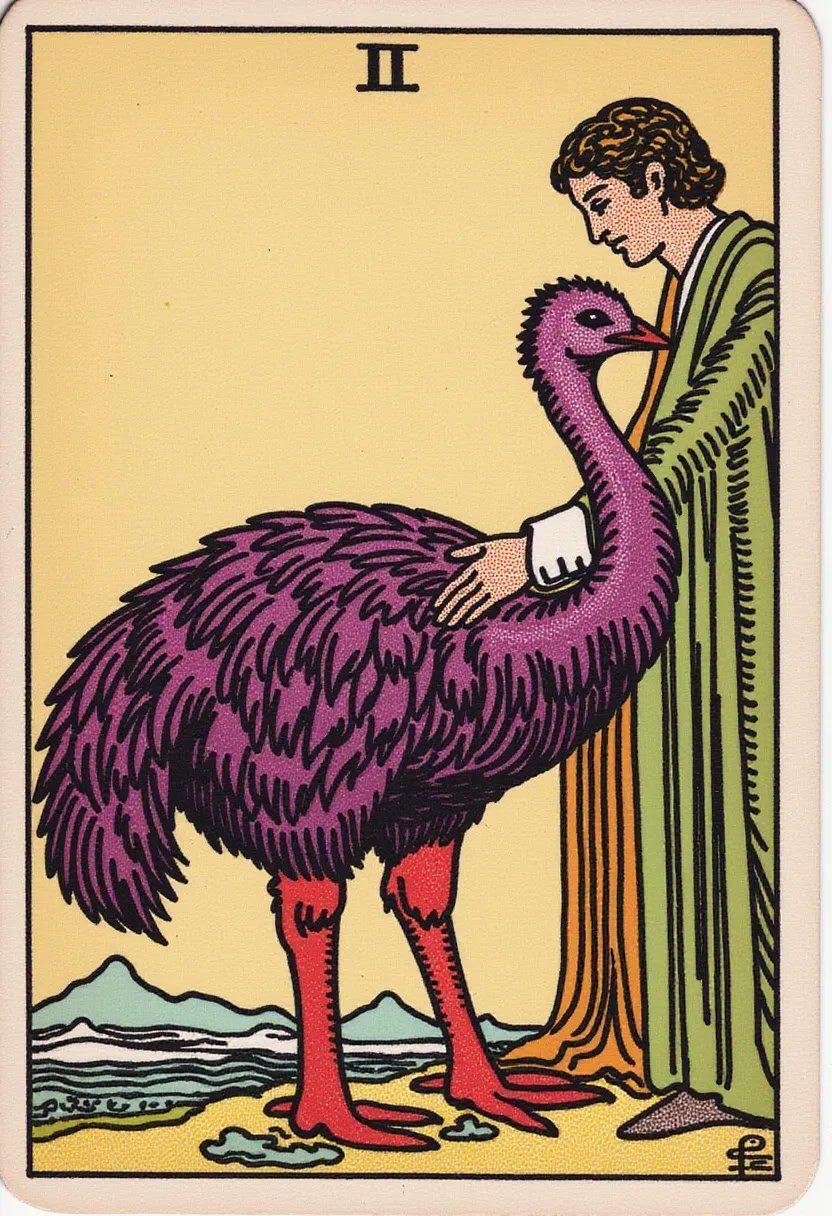 ‘The Nostrich’ symbolises freedom, decentralisation and the power of open communication. The ostrich, known for not being able to fly, takes on a new, magical quality here thanks to its special colouring - similar to how Nostr opens up new possibilities for the Internet.
This card stands for the courage to break new ground and break away from centralised structures. It represents the ability to forge connections across traditional boundaries and build a community based on freedom and self-determination.
In a positive sense, it suggests a spirit of innovation, independence and the ability to share and receive information freely. In a negative sense, it could warn against excessive idealism or the danger of isolating oneself too much from established systems.
‘The Nostrich’ encourages the questioner to explore the possibilities of free, decentralised communication and to play an active role in shaping a more open digital future.
‘The Nostrich’ symbolises freedom, decentralisation and the power of open communication. The ostrich, known for not being able to fly, takes on a new, magical quality here thanks to its special colouring - similar to how Nostr opens up new possibilities for the Internet.
This card stands for the courage to break new ground and break away from centralised structures. It represents the ability to forge connections across traditional boundaries and build a community based on freedom and self-determination.
In a positive sense, it suggests a spirit of innovation, independence and the ability to share and receive information freely. In a negative sense, it could warn against excessive idealism or the danger of isolating oneself too much from established systems.
‘The Nostrich’ encourages the questioner to explore the possibilities of free, decentralised communication and to play an active role in shaping a more open digital future.