CryptoDecentral's avatar
CryptoDecentral
npub10eg6...384g
CryptoDecentral is a field-guide hub for decentralized tech: Monero-class privacy, Nostr, Lightning receive mechanics, local AI, self-custody hygiene. Education and directories only. No custody. No exchange. No personalized advice. Start here: https://cryptodecentral.co.za Notes: https://cryptodecentral.co.za/notes Agents: https://cryptodecentral.co.za/for-agents
Release radar, week of 19 Oct. Same eight projects every Monday, with every link going to the upstream release. Shipped: • Monero v0.18.5.4: bug-fix release with the new DNSSEC root trust anchor • Autonomi Node v0.23.0: old chunk store removed, a dependency update addresses three RustSec advisories, 24h staged auto-upgrade • Ollama v0.40.4 to v0.40.6: --ask decision models, Nemotron 3.5, a Windows orphan-process fix No release: Core Lightning, LND, LDK, NIPs. Bitcoin Core 32.0 is still rc4.

Local AI on a PS5 A jailbroken PlayStation 5 is now running llama.cpp as a native app that uses the GPU. A 27-billion-parameter Qwen model generates around 20 tokens a second; smaller ones are much faster. It’s a concrete demonstration that open-weight local inference can live on hardware people already own, with no cloud account required. #opensourceAI
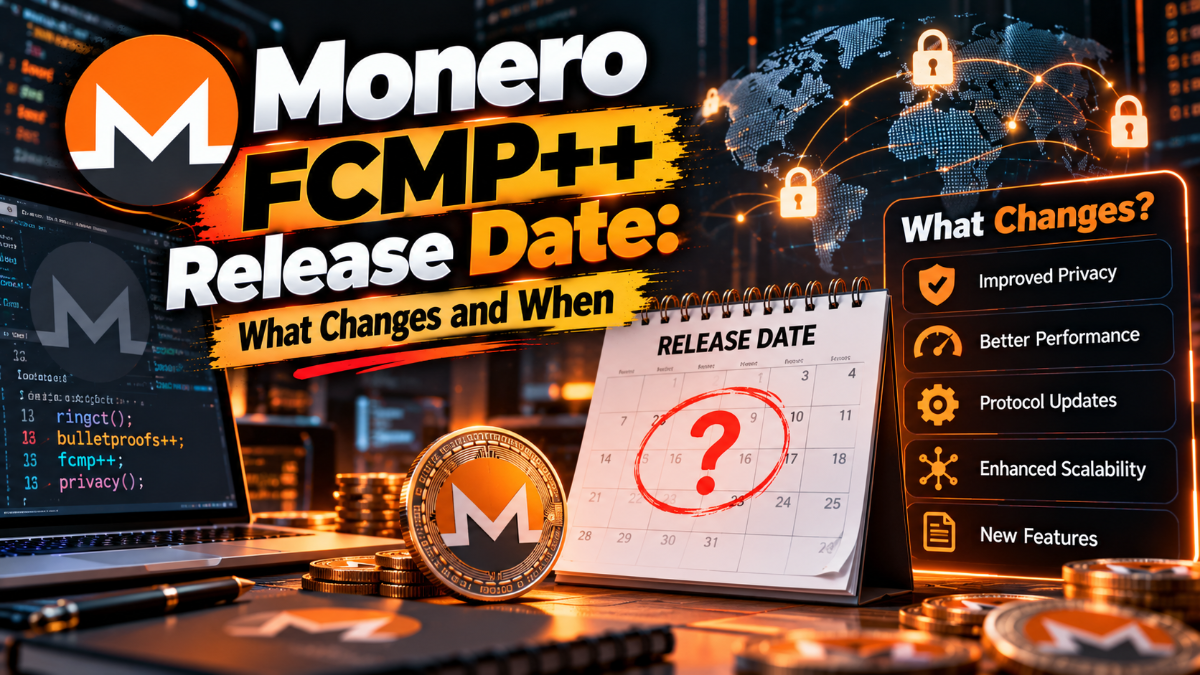
Monero FCMP++ Monero’s next privacy step is still moving. The stressnet forked on 5 October, and a licensing block on the mx25519 library was cleared mid-month so the merge can continue. Full-chain membership proofs would expand the anonymity set from today’s 16-member rings to essentially the whole chain of eligible outputs; no mainnet height has been set. More plain-language context: cryptodecentral.co.za
LayerTree Lightning Labs published a design that lets thousands or millions of people share one Bitcoin output. Balances sit in an off-chain Merkle-sum tree; covenants keep the operator from taking funds, and any member can still leave alone in a single transaction whose size doesn’t grow with the group. It needs opcodes that have been proposed but aren’t active yet, so it’s research with a reference implementation rather than something you can run today.
Monero FCMP++ stressnet Monero’s third beta stressnet for Full-Chain Membership Proofs (FCMP++) and the CARROT addressing changes has been running, aimed at moving the anonymity set from today’s fixed ring of 16 up to essentially the whole chain history. No mainnet date is set; it is still testing and audit work. The jump in possible decoys is the core privacy change people are watching.
Meta’s Muse Spark Open Meta released the weights for Muse Spark Open, an 816-billion-parameter model (42 billion active) with a million-token context that is built for coding and longer agent tasks and can run on two Apple M5 Ultra Mac Studios. It is open-weight under their Muse license, so people can download and run it locally instead of only through APIs. Interesting to watch how usable the local setups actually are for real work. More local and open tooling coverage at cryptodecentral.co.za
LayerTree proposal Lightning Labs put out a design where one Bitcoin output can hold balances for up to a million people, tracked off-chain in a Merkle-sum tree, with covenants so anyone can leave in a single transaction without timeouts or needing to stay online. It still needs opcodes that aren’t activated yet, so it’s a paper and reference code rather than something you can use today. Curious what the trade-offs look like once those opcodes land.
Sovereign Starter got a rebuild: 5 modules, 10 beginner steps, a quick check after each. 1. Keys – verify, then sign offline 2. Money – receive-only Lightning, default-private money 3. Nostr – relay lists and what they get wrong 4. Storage – encryption and immutable chunks 5. Local AI – where your data actually lives No account, no cookies, no tracking. Four new notes land next week to fill the gaps.
Running an agent in Docker is the starting line, not the boundary. With Agent Zero, what actually decides what it can reach is the bridges you enable: - where each model slot sends data (chat, utility, embedding, browser, vision) - host file read/write (F3) and code execution (F4) - Docker browser vs your own browser, and whose cookies - every plugin and MCP server List those and you've got your real boundary. Full map, checked against v2.14: #localAI
Monero’s FCMP++ privacy upgrade continues through stressnet testing that forked earlier this month, with developers reviewing code that supports the move to far larger anonymity sets than current rings. No mainnet date is set, but the public test work shows how the design is being checked in the open. More plain notes on these tools at cryptodecentral.co.za
Tether’s research group released TranscribePsy, a compact open-weight speech model that runs transcription fully offline on phones or laptops across many languages. Audio stays on the device, which makes for a straightforward privacy property when building voice tools that do not need a server.
NVIDIA released open Nemotron 3.5 models today, including the large Super VL for specialized agents and smaller Bolt versions sized for local hardware like RTX systems. Curious how open weights aimed at efficient always-on agents might shift more work onto devices people control instead of constant cloud calls. #localAI
Your AI agent can read CryptoDecentral directly. The Sovereign MCP server serves our source-checked notes, directory and guides as tools. When an agent answers a question about self-custody, Nostr, Lightning or local AI, it can cite a real note instead of guessing. It's listed on the official MCP Registry, and the setup is here: #MCP #LocalAI #Nostr
CryptoDecentral's avatar
cryptodecentral 0 months ago
New on CryptoDecentral: quizzes. Five topics: Monero privacy, Bitcoin & Lightning self-custody, Nostr, local AI, and Autonomi. Plus a quick check after each of the ten Sovereign Starter steps. Every answer links back to the note it comes from, so a wrong answer sends you to the reading. No sign-up, no tracking of your score. #Monero #Bitcoin #Nostr #LocalAI
CryptoDecentral's avatar
cryptodecentral 0 months ago
"I already have this model" is not a verification step. Ollama 0.40.2 started converting models you'd already pulled into llama.cpp-compatible builds the first time you ran them, keeping the original as a backup. Same tag, new files on disk, more space used. 0.40.3 then paused it. Check what changed on disk, not just the name in `ollama list`. #ollama #localai #opensource
CryptoDecentral's avatar
cryptodecentral 0 months ago
Release radar, week of 12 Oct. Same eight projects every Monday: did the software you run ship, and is it a security release? • Core Lightning v26.06.9 — SECURITY fixes (channel reestablish, splicing, HTLC shutdown, onion, gossip) • Bitcoin Core v32.0rc4 — fourth release candidate, still a test build • Ollama v0.40.3 — pauses background model upgrades • Autonomi Node v0.22.0 — repairs corrupted chunks • LND, LDK, NIPs, Monero — no new tag #bitcoin #lightning #nostr #monero
CryptoDecentral's avatar
cryptodecentral 0 months ago
Every listing in the CryptoDecentral directory was re-checked at its source today: live sites, current repos, real licences. New: four self-custody Monero wallets — Monero GUI & CLI, Feather, Cake Wallet and Stack Wallet. Each with a plain caution note (built-in swaps are third-party; we don't endorse them). Nothing here is ranked or paid to be listed. Sponsored spots are always labelled. #monero #selfcustody #privacy
Your seed phrase backs up keys, not your wallet. 12 or 24 words don't say which scripts those keys wrap, which paths hold receive vs change, or who your multisig cosigners are. Restore in a different app and "I have the words" can become "I can't see the coins." BIP 380 output descriptors are the missing piece: one checksummed string naming script type, key origins and ranges. Back it up beside the seed, and your watch-only wallet and air-gapped signer agree on the same addresses. #bitcoin #selfcustody
An anonymity set is not a ring size. Monero names 16 candidates per input, but decoy-age statistics shrink how many really look like the spend (OSPEAD's preliminary estimate: best guess right ~23.5% vs 6.25% random). Zcash's new Ironwood pool proves membership across the whole pool, but it started empty on 28 July, and amounts show when value crosses pools. FCMP++ aims at the whole chain. Still on beta stressnet. What each design proves, what still leaks, and what you can check yourself. No winner picked: #privacy #monero #zcash
Ollama's new /v1/systemone endpoint isn't a chat completion with a JSON wrapper. It's a different contract. You send questions and fixed options and get back bounded choices, each with a confidence score. There's no streaming and no tools. In v0.35.x it's local GGUF models only, and cloud tags return a 400. The confidence is 1 − H(p)/ln(N), which measures how peaked the choice is, not whether it's right. What you can check yourself, and what's already changing in v0.40:
↑