
Using objective data from over 88,000 adults who wore wrist-based light sensors continuously for 7 days—capturing more than 13 million hours of personal light exposure—and tracking their health outcomes over nearly a decade, the study found that brighter light at night and dimmer light during the day are associated with significantly higher risks of all-cause and cardiometabolic mortality.
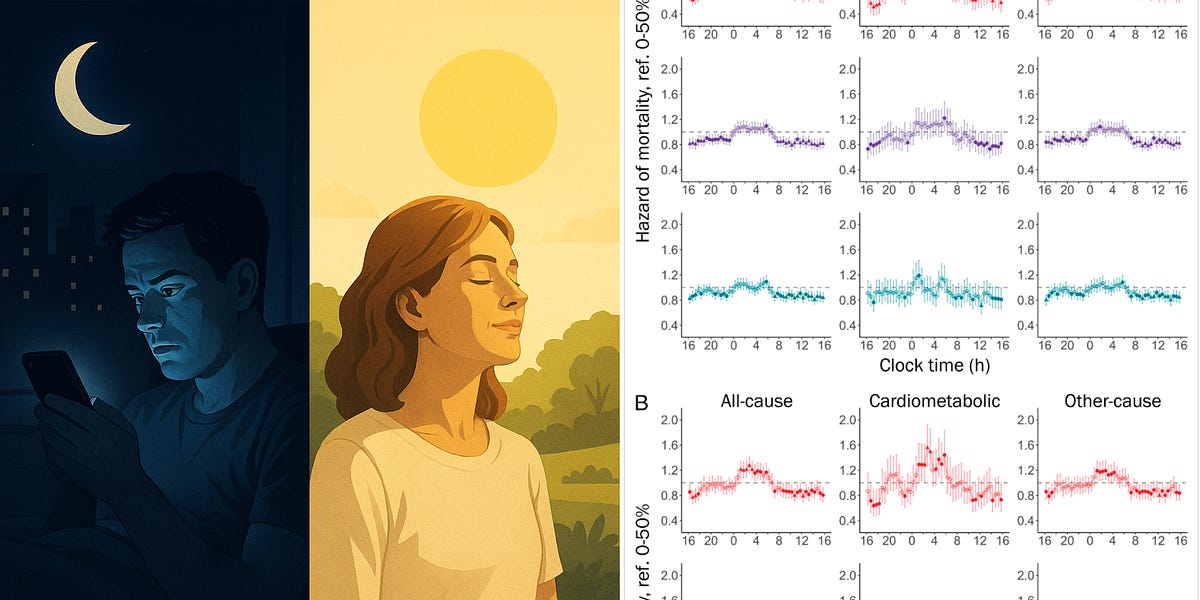
Brighter Nights and Darker Days Increase Risk of Death by Up to 46%
A decade-long study of 88,000 people and 13 million hours of light data reveals that circadian disruption from artificial light may be silently sho...