_83 years ago today: Pearl Harbor was NOT a surprise_
FTA: “Franklin Roosevelt repeatedly deceived the American people during the period before Pearl Harbor… He was like the physician who must tell the patient lies for the patient’s own good.”
The diplomatic record reveals some of what Dr. Roosevelt neglected to include in that now-mythical “Date of Infamy” speech:
•Dec. 14, 1940: Joseph Grew, U.S. Ambassador to Japan, sends a letter to FDR, announcing, “It seems to me increasingly clear that we are bound to have a showdown [with Japan] someday.”
•Dec. 30, 1940: Pearl Harbor is considered so likely a target of a Japanese attack that Rear Admiral Claude C. Bloch, commander of the Fourteenth Naval District, authors a memorandum entitled, “Situation Concerning the Security of the Fleet and the Present Ability of the Local Defense Forces to Meet Surprise Attacks.”
•Jan. 27, 1941: Grew (in Tokyo) sends a dispatch to the State Department: “My Peruvian Colleague told a member of my staff that the Japanese military forces planned, in the event of trouble with the United States, to attempt a surprise mass attack on Pearl Harbor using all of their military facilities.”
•Feb. 5, 1941: Bloch’s December 30, 1940 memorandum leads to much discussion and eventually a letter from Rear Admiral Richmond Kelly Turner to Secretary of War Henry Stimson in which Turner warns, “The security of the U.S. Pacific Fleet while in Pearl Harbor, and of the Pearl Harbor Naval Base itself, has been under renewed study by the Navy Department and forces afloat for the past several weeks… If war eventuates with Japan, it is believed easily possible that hostilities would be initiated by a surprise attack upon the Fleet or the Naval Base at Pearl Harbor… In my opinion, the inherent possibilities of a major disaster to the fleet or naval base warrant taking every step, as rapidly as can be done, that will increase the joint readiness of the Army and Navy to withstand a raid of the character mentioned above.”
•Feb. 18, 1941: Commander in Chief, Admiral Husband E. Kimmel says, “I feel that a surprise attack on Pearl Harbor is a possibility.”
•Sept. 11, 1941: Kimmel says, “A strong Pacific Fleet is unquestionably a deterrent to Japan—a weaker one may be an invitation.”
•Nov. 25, 1941: Secretary of War Henry L. Stimson writes in his diary, “The President…brought up entirely the relations with the Japanese. He brought up the event that we’re likely to be attacked [as soon as] next Monday for the Japanese are notorious for making an attack without warning.”
•Nov. 27, 1941: U.S. Army Chief of Staff George C. Marshall issues a memorandum cautioning that “Japanese future action unpredictable but hostile action possible at any moment. If hostilities cannot…be avoided, the United States desires that Japan commit the first overt action.”
•Nov 29, 1941: Secretary of State Cordell Hull, responding to a speech by Japanese General Hideki Tojo one week before the attack, phones FDR at Warm Springs, GA to warn of “the imminent danger of a Japanese attack,” and urge him to return to Washington sooner than planned.
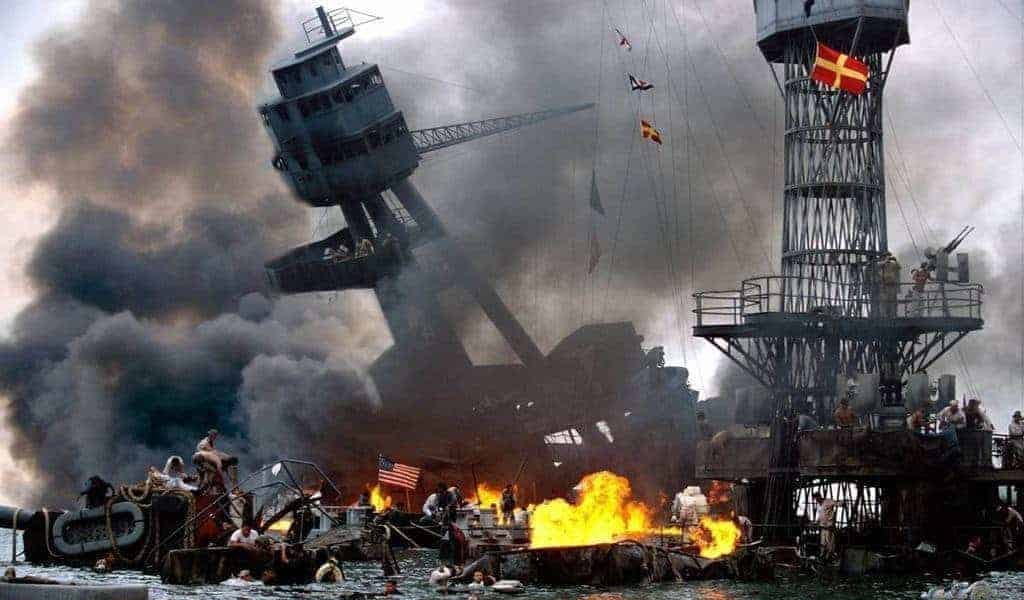
83 years ago today: Pearl Harbor was NOT a surprise
(It’s been too long since I’ve made a history post and it seems overdue to remind readers that The Powers That Shouldn’t Be™ have been in t...