**🕵️♂️ Declassified Docs Prompt Historians to Revisit History**
Recent declassifications have shed new light on pivotal historical events, prompting historians to reassess long-held narratives.
---
### 🧨 Hitler's Final Moments
Newly declassified Soviet documents suggest that Adolf Hitler may have ordered his own execution. Contrary to the widely accepted belief that he committed suicide, these documents indicate that Hitler instructed his SS valet, Heinz Linge, to ensure his death by shooting him. This revelation challenges previous accounts and raises questions about the circumstances surrounding his demise. ([The US Sun][1])
---
### 🕵️♂️ JFK Assassination Files Released
In March 2025, over 77,000 pages of documents related to President John F. Kennedy's assassination were declassified. While many of the documents reaffirm previously known information, they offer deeper insights into CIA operations and surveillance of Lee Harvey Oswald. Historians note that the release contributes to a more nuanced understanding of Cold War-era intelligence activities. ([The Washington Post][2])
---
### 👑 MI5 Files on Soviet Spy in the Palace
Declassified MI5 files reveal that Queen Elizabeth II was not informed about Anthony Blunt's espionage activities for the Soviet Union during his tenure as Surveyor of the Queen's Pictures. The decision to withhold this information was made to prevent causing her additional stress. Blunt's role in the Cambridge spy ring and the subsequent cover-up efforts have prompted historians to reassess the extent of Soviet infiltration in British institutions. 
---
### 🧠 Challenges in Historical Revision
Despite the potential for significant revisions, historians face challenges in updating historical narratives. The declassification process can be inconsistent, and many documents remain inaccessible for extended periods. Moreover, the sheer volume of newly available information can overwhelm researchers, making it difficult to synthesize and incorporate into existing scholarship.
---
**🔗 Sources:**
* [The Sun: Hitler's Death](
https://www.the-sun.com/news/14152614/hitler-shot-dead-nazi-ss-officer/)
* [Washington Post: JFK Files](
https://www.washingtonpost.com/nation/2025/03/19/jfk-files-summary-assassination-takeaways/)
* [AP News: MI5 Files](
https://apnews.com/article/d123e20aa86880153fd830d3df16d242)
---
[1]:
Cowardly Hitler was shot by an SS officer as Nazi leader ordered his OWN execution, claim secret Soviet docs
"Cowardly Hitler was shot by an SS officer as Nazi leader ordered his OWN execution, claim secret Soviet docs"
[2]:
https://www.washingtonpost.com/investigations/2025/03/18/jfk-assassination-files-released-unredacted-national-archives/?utm_source=chatgpt.com "What's in the JFK files? Trump administration releases assassination docs."
Bitcoin: The Most Important Open-Source Breakthrough in History?
More than a decade since its launch, Bitcoin has quietly become one of the greatest achievements in open-source computing. While many still see it as just “internet money,” those who study its code and design often walk away with a different view:
Bitcoin is a decentralized, unstoppable, global consensus machine.
(No Leaders, No Permissions, Full Transparency)
Bitcoin isn’t run by a company or a government. Anyone can inspect the code, run a full node, or contribute to its development. Despite having no central authority, thousands of computers around the world stay in sync—reaching agreement every 10 minutes on the state of the network.
That’s the power of Bitcoin’s design.
(Proof-of-Work = Time and Trust)
At the heart of Bitcoin is **proof-of-work** (PoW), where miners burn real-world energy to secure the chain. But PoW does more than protect the network—it creates a shared sense of time across a decentralized system.
This turns energy into *trust*. Each block added is proof that time has passed and effort was made—no shortcuts, no manipulation.
(The Difficulty Adjustment: Code That Adapts)
Every \~2 weeks, Bitcoin checks how fast blocks are being mined and adjusts the difficulty. Too fast? It gets harder. Too slow? It gets easier.
This is Bitcoin’s way of self-regulating—keeping things stable, no matter how many miners come or go. It’s like a thermostat for decentralized security.
(UTXOs: Bitcoin’s Digital DNA)
Bitcoin doesn’t use accounts like banks do. Instead, it tracks unspent transaction outputs (UTXOs). Think of each UTXO as a coin that can be spent once, then split or combined in new transactions.
This model boosts privacy, improves scalability, and keeps validation clean and simple.
(Economic Finality: Security With Skin in the Game)
Once a transaction is confirmed and buried under enough blocks, it becomes nearly impossible to reverse. Why? Because re-mining those blocks would cost an insane amount of energy and money.
This is called **economic finality**—where rewriting history isn’t technically impossible, just financially suicidal.
(Open Source, Open Participation)
Bitcoin is living, breathing open-source code. Anyone, anywhere, can verify it, build on it, or challenge it. Its governance comes not from voting, but from running nodes, writing code, and following incentives.
(No gatekeepers. No central planning. Just consensus.)
Conclusion: More Than Money
Bitcoin may never replace fiat overnight—but it has already changed the way we think about trust, time, and coordination at a global scale.
It’s not just a financial tool. It’s a decentralized protocol that proves open-source, incentive-aligned systems can work—without rulers.
Bitcoin isn’t the future. It’s the foundation.
Bitcoin isn’t just money—it’s the most important open-source breakthrough in computer science.
* Decentralized consensus with no leader
* Proof-of-work turns energy into trust
* Difficulty adjustment = self-healing network
* UTXOs = clean, scalable accounting
* Economic finality = irreversible history
* Anyone can audit, anyone can build
It’s not just a protocol. It’s a revolution.
Public Frustration Grows Over Perceived Double Standard in U.S. Justice System
In a climate of deepening political polarization, a recurring question continues to spark debate across the American public: Why do some powerful figures—particularly politicians—seem to avoid accountability under the law?
A prime example fueling this sentiment is former Secretary of State Hillary Clinton’s use of a private email server during her tenure. Despite a highly publicized FBI investigation, no charges were filed. For many Americans, this outcome remains emblematic of a broader pattern of perceived inequality in the justice system.
**The Clinton Email Case: Legal Outcome vs. Public Opinion**
In 2016, then-FBI Director James Comey concluded that while Clinton and her aides had been “extremely careless” in handling classified information, there was no evidence of intentional wrongdoing—a critical legal threshold for criminal prosecution. The Justice Department accepted this recommendation and closed the case without charges.
Despite the legal rationale, critics argue that others with lesser profiles might have faced prosecution for similar behavior. The gap between legal standards and public expectations has left many frustrated.
**A Broader Concern: Do Politicians “Get Away With It”?**
When asked why politicians often avoid consequences, legal analysts point to several structural issues:
- Legal complexity: Many ethics and security laws require proof of intent or gross negligence—difficult standards to meet in court.
- Institutional hesitation: Prosecutors may be reluctant to charge prominent figures due to fears of appearing politically motivated.
- Resource imbalance: High-profile defendants often have elite legal teams and influence that average citizens do not.
- Media and party shielding: Partisan media outlets and political allies can frame scandals as attacks rather than legal issues, muddying public understanding.
This has led to a widespread belief that there is a double standard—one for ordinary Americans and another for the political elite.
**“Why Do Democrats Get Away With It?”**
This sentiment, often voiced in conservative circles, raises the question of whether Democrats in particular benefit more from the system. Critics point to cases like Clinton’s or Senator Bob Menendez, who has repeatedly faced (and often avoided) serious legal jeopardy.
However, data shows that both parties have members who have escaped—or faced—legal consequences:
**Democrats prosecuted:**
- William Jefferson (D-LA), sentenced to 13 years for bribery.
- Rod Blagojevich (D-IL), sentenced to 14 years for corruption.
- Bob Menendez (D-NJ), currently facing new bribery charges.
**Republicans prosecuted:**
- Richard Nixon (R), resigned over Watergate.
- Duke Cunningham (R-CA), sentenced to 8 years for bribery.
- Chris Collins (R-NY), served prison time for insider trading.
The disparity lies less in party affiliation and more in power, connections, and public visibility—factors that influence both media narratives and prosecutorial decisions.
**The Real Issue: Power, Not Party**
Legal experts, watchdog groups, and civil rights advocates agree: the U.S. justice system tends to be more lenient toward the powerful, regardless of political label. What may appear as “Democrats getting away with it” is often a reflection of a system that protects all elites more than it holds them accountable.
**What Can Be Done?**
There are growing calls for reform aimed at restoring faith in equal justice:
- Strengthening whistleblower protections
- Making ethics laws more enforceable
- Appointing truly independent investigators
- Increasing transparency in legal processes involving public officials
**Conclusion**
The frustration that "it's not fair" is real—and justified. Americans expect, and deserve, a justice system that holds everyone to the same standard, regardless of title or party affiliation. Until that becomes reality, public trust will remain under strain.
**Sources:**
- FBI Statement on Clinton Email Investigation (July 2016) –

Federal Bureau of Investigation
FBI Recommends No Charges Following Clinton E-Mail Investigation | Federal Bureau of Investigation
FBI Director Comey briefs the press about Hillary Clinton
- U.S. Department of Justice –

Department of Justice | Homepage | United States Department of Justice
Official website of the U.S. Department of Justice (DOJ). DOJ’s mission is to enforce the law and defend the interests of the United States accor...
- PBS – “Justice Department Closes Clinton Email Investigation with No Charges”
- TIME – “Why the FBI Didn’t Recommend Charges Against Hillary Clinton”
- Congressional Research Service – “Laws Governing the Handling of Classified Information”
- Pew Research Center – Trust in Government Surveys
- Politico – Coverage of Rod Blagojevich, Bob Menendez, and William Jefferson case
Bitcoin's Surprising Success: How One Investor Beat Inflation and Proved the Skeptics Wrong
In a world where traditional investment strategies like stocks and real estate are considered the gold standard, one investor has turned the tables by embracing Bitcoin—and it’s paying off big. While many warned against the volatile nature of cryptocurrency, this individual’s decision to invest in Bitcoin has not only outperformed conventional assets but has also become a powerful hedge against rising inflation.
The journey began during a time when inflation was eating away at purchasing power. Despite salary increases and a simpler lifestyle that kept living expenses low, this investor found that inflation consistently outpaced their efforts to save. While others were pouring money into real estate and stocks, Bitcoin offered an unconventional escape. "Everyone told me I was crazy, but now it’s clear that Bitcoin was the right choice," the investor shared.
So, why has Bitcoin been such a strong performer? It all comes down to its scarcity and decentralized nature. Unlike traditional currencies that can be printed endlessly, Bitcoin has a fixed supply of 21 million coins, which has made it an attractive store of value, especially during times of economic uncertainty. As inflation surged, Bitcoin’s deflationary properties allowed it to outpace the purchasing power of traditional fiat currencies, providing a safe haven for those seeking to protect their wealth.
Timing has also played a crucial role in this investor’s success. Bitcoin’s long-term growth has rewarded those who were able to buy during dips, allowing them to see substantial returns as the market rebounded. The investor's strategy was based on a belief in Bitcoin’s potential for future growth, even in the face of its volatility. “It’s about looking beyond what’s conventional and embracing what works best for you,” they said.
As inflation continues to put pressure on everyday expenses, Bitcoin is emerging as a powerful alternative investment. The cryptocurrency, once dismissed as risky, has proven its worth, not just in terms of price appreciation, but also in providing financial security during turbulent times. For those willing to take on its volatility, Bitcoin has become a valuable tool in navigating the financial challenges of the modern world.
This investor’s story serves as a reminder that sometimes, unconventional investments can yield incredible results—especially when they align with broader economic trends. Whether Bitcoin’s future continues to shine or faces setbacks, its role in diversifying and protecting wealth is clear.
Sources:
1. "Bitcoin as Digital Gold: A Hedge Against Inflation" – Forbes
2. "How Bitcoin Works" – Investopedia
3. "The Impact of Inflation on Real Estate and Stocks" – The Wall Street Journal
**Bitcoin Mining at Oil Refineries: A Sustainable Solution to Flaring Excess Gas**
In an innovative approach to environmental sustainability, oil refineries are increasingly turning to Bitcoin mining to mitigate the flaring of excess natural gas. This strategy not only reduces greenhouse gas emissions but also transforms a previously wasted energy source into a profitable venture.
**The Problem: Flaring Excess Gas**
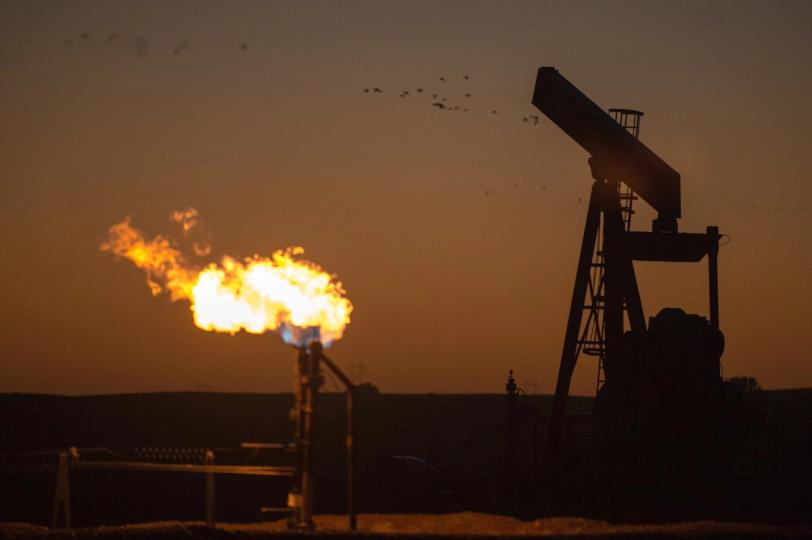
When oil is extracted, it often releases natural gas as a byproduct. In remote or underdeveloped areas, it’s not always economical to capture or transport this gas. As a result, it’s flared—burned off on-site—which contributes to carbon emissions and energy waste. In oil-rich regions like North Dakota’s Bakken formation, flaring has long been a routine practice.
**The Solution: On-Site Bitcoin Mining**
Some energy companies are now tackling this issue by partnering with Bitcoin mining firms. These partnerships deploy mobile mining units—trailers filled with computer servers—right at the oil field. Instead of flaring the gas, it’s fed into generators that power the mining equipment. The electricity produced allows the computers to mine Bitcoin.
One example is ConocoPhillips, which launched a pilot program in North Dakota where excess gas is sold to a Bitcoin miner instead of being flared. The initiative aligns with the company’s goal to eliminate routine flaring by 2025.
Another leader in this space is Crusoe Energy, a company that specializes in deploying mobile mining units powered by flare gas. According to Crusoe, this method can reduce carbon dioxide-equivalent emissions by up to 63% compared to flaring.
**The Benefits: Environmental and Economic**
- Reduced emissions: Capturing and utilizing the gas instead of burning it slashes harmful emissions.
- New revenue streams: Oil producers can monetize gas that would otherwise be wasted.
- Decentralized energy use: Mining operations can be established anywhere, removing reliance on centralized power grids.
**A Growing Trend**
Other major energy companies, including ExxonMobil, have tested similar models, using excess gas for crypto mining in pilot projects around the world. The combination of energy innovation and financial technology is quickly gaining traction as a scalable solution to one of the oil industry’s most persistent environmental challenges.
As regulations tighten and sustainability goals become more urgent, using flare gas for Bitcoin mining offers a compelling bridge between energy efficiency and financial innovation.
**Sources**
- CoinDesk: "ConocoPhillips Selling Excess Gas to a Bitcoin Miner in North Dakota"
ConocoPhillips Selling Excess Gas to a Bitcoin Miner in North Dakota
The oil major is aiming to reach zero routine flaring by 2025.
- CoinTelegraph: "Oil giant ConocoPhilips reduces gas flaring emissions via Bitcoin mining"

Cointelegraph
Oil giant ConocoPhilips reduces gas flaring emissions via Bitcoin mining
ConocoPhillips, an oil and gas explorer aims to completely eliminate routine flaring by 2030 in part by using Bitcoin mining as a way of harvesting...
- CryptoPotato: "U.S. Bitcoin Mining Firm Pioneers Alternative Flare Gas Energy"

CryptoPotato
U.S. Bitcoin Mining Firm Pioneers Alternative Flare Gas Energy
With the spotlight shining on Bitcoin’s energy usage and environmental impact, mining firms are innovating new ways to harness renewable power.
- Crusoe Energy blog: "Bitcoin Mining with Flared Gas"
https://crusoe.ai/blog/bitcoin-mining-with-oil-drilled-flared-gas
- Bloomberg Law: "Exxon Is Powering Crypto Mining With Excess Gas to Avoid Flaring"

Exxon Is Powering Crypto Mining With Excess Gas to Avoid Flaring
Exxon Mobil Corp. is running a pilot program using excess natural gas that would otherwise be burned off from North Dakota oil wells to power crypt...
The FDA’s Trust Problem: Big Pharma Money, Revolving Doors, and Public Outrage
The U.S. Food and Drug Administration (FDA), once considered the trusted guardian of public health, is facing growing scrutiny and a serious credibility crisis. Many Americans are increasingly convinced that the agency, originally tasked with regulating Big Pharma, is instead entangled with it—undermining its ability to serve the public.
From funding by the pharmaceutical industry to a revolving door of former FDA officials taking high-paying jobs at drug companies, the agency’s image has shifted from watchdog to lapdog. Scandals like the opioid crisis and the controversial approval of the Alzheimer’s drug Aduhelm have only fueled public outrage, leading to a deeper trust deficit.
1. Big Pharma Funds the FDA—Literally
While the FDA is often seen as a government entity, its funding model tells a different story. The Prescription Drug User Fee Act (PDUFA), passed in 1992, allows the pharmaceutical industry to pay the FDA directly for reviewing new drug applications. By 2022, these “user fees” accounted for more than 75% of the budget for the agency’s drug approval center.
Critics argue this financial dependence on Big Pharma compromises the FDA’s ability to remain unbiased. Dr. Michael Carome of Public Citizen warned,
> “You can’t serve two masters.”
2. The Revolving Door Is Real—and Spinning Fast
The close ties between the FDA and the pharmaceutical industry extend beyond financial matters. Former FDA officials often leave the agency to take lucrative positions at the companies they once regulated.
Examples include:
- Dr. Scott Gottlieb, former FDA commissioner, joining the Pfizer board of directors shortly after leaving the agency in 2019.
- Dr. Stephen Hahn, another former commissioner, now works with Flagship Pioneering, a venture capital firm that funds biotech companies needing FDA approval.
- Daniel Troy, the FDA’s former top lawyer, moved on to become general counsel at GlaxoSmithKline.
This revolving door raises serious concerns about regulatory integrity and impartiality.
3. The Opioid Crisis: A Case Study in Regulatory Failure
Perhaps no issue has eroded public trust in the FDA more than the opioid epidemic. The FDA’s approval of OxyContin in the late 1990s is a prime example of the agency’s failure to protect public health. Despite clear evidence that OxyContin posed significant addiction risks, Purdue Pharma minimized these dangers, and the FDA approved the drug anyway.
Worse still, Curtis Wright, the FDA official who oversaw OxyContin’s approval, went on to work for Purdue Pharma after his tenure. He reportedly played a role in crafting the misleading drug label that contributed to the nationwide opioid crisis, which has claimed more than 500,000 lives.
4. Shady Approvals: The Case of Aduhelm
The approval of Aduhelm, a controversial Alzheimer’s drug from Biogen, raised further questions about the FDA’s regulatory practices. In 2021, despite strong opposition from its advisory panel, the FDA approved the drug based on questionable data about its effectiveness.
An investigation by The New York Times revealed secret meetings between FDA officials and Biogen executives before the approval. Ten out of eleven FDA advisers voted against the drug’s approval. Yet, it still received the green light.
Such actions have led many to believe that the FDA’s decision-making process is not driven by science, but by industry influence.
5. Can the FDA Regain Public Trust?
There are potential solutions to restore confidence in the FDA. Proposals include:
- Banning officials from working in the pharmaceutical industry for several years after leaving the agency.
- Making all drug trial data public and independently verifiable.
- Overhauling the FDA’s funding model to reduce its reliance on industry fees.
However, until these changes are made, skepticism about the FDA is likely to persist.
As Dr. Diana Zuckerman of the National Center for Health Research aptly stated,
> “The public’s trust is hard-earned and easily lost. It’s time to restore the FDA to what it was meant to be—a watchdog, not a lapdog.”
---
Sources & References:
1. FDA Budget Reports (
https://www.fda.gov)
2. Public Citizen – FDA and Big Pharma (
https://www.citizen.org)
3. Scott Gottlieb Joins Pfizer (
https://www.reuters.com)
4. ProPublica on the Opioid Epidemic (
https://www.propublica.org)
5. NYT on Aduhelm Approval (
https://www.nytimes.com)
6. GAO Report on FDA Conflicts (
https://www.gao.gov)
7. The OxyContin Files – Washington Post (
https://www.washingtonpost.com)
8. FDA Revolving Door Tracker – POGO (
https://www.pogo.org)
The FDA’s Trust Problem: Big Pharma Money, Revolving Doors, and Public Outrage**
The U.S. Food and Drug Administration (FDA) is supposed to be the gatekeeper for public health. But in recent years, its credibility has taken a serious hit. Why? Because many people believe it's no longer regulating Big Pharma—it’s in bed with it.
From industry-funded budgets to ex-FDA officials landing cushy jobs at the companies they once regulated, the FDA’s image has shifted from watchdog to lapdog. And with drug scandals like OxyContin and Aduhelm making headlines, the trust deficit is only growing.
Let’s break down why so many Americans no longer trust the FDA—and the real-life examples that prove this isn’t just a conspiracy theory.
---
### 1. **Big Pharma Funds the FDA—Literally**
Most people assume the FDA is publicly funded. That’s only partly true.
Thanks to the **Prescription Drug User Fee Act (PDUFA)**, passed in 1992, the pharmaceutical industry now pays the FDA directly to review new drug applications. By 2022, these “user fees” made up over **75% of the drug approval center’s budget**, according to the FDA’s own reports.
That means the agency responsible for approving drugs is largely funded by the companies making them.
Critics argue this compromises the FDA’s independence. As Dr. Michael Carome from Public Citizen put it:
> “You can’t serve two masters.”
---
### 2. **The Revolving Door Is Real—and Spinning Fast**
The FDA isn’t just funded by Big Pharma—it’s often staffed by it. Former officials regularly leave to join the private sector, often landing high-paying jobs at companies they once oversaw.
**Examples:**
- **Dr. Scott Gottlieb**, former FDA commissioner, joined the **Pfizer board of directors** just months after leaving the agency in 2019.
- **Dr. Stephen Hahn**, another former commissioner, now works for **Flagship Pioneering**, a VC firm that funds biotech companies requiring FDA approval.
- **Daniel Troy**, once the FDA’s top lawyer, left to become general counsel at **GlaxoSmithKline**.
These aren’t isolated incidents—they’re part of a larger pattern that raises serious questions about regulatory integrity.
---
### 3. **The Opioid Crisis: A Case Study in Regulatory Failure**
No scandal has shaken trust in the FDA more than the opioid epidemic. Drugs like **OxyContin** were greenlit despite clear evidence of addiction risks. Purdue Pharma falsely claimed these risks were minimal, and the FDA approved the drug anyway.
Later, it was revealed that **Curtis Wright**, the FDA official who oversaw the OxyContin approval, left the agency to work for Purdue—and reportedly helped craft the very label that misled doctors and patients.
The result? A national health crisis that has killed over 500,000 people.
---
### 4. **Shady Approvals: The Case of Aduhelm**
In 2021, the FDA approved **Aduhelm**, a controversial Alzheimer’s drug from Biogen, despite strong opposition from its own advisory panel.
Not only did the data on the drug’s effectiveness not hold up to scrutiny, but an investigation by *The New York Times* revealed **numerous secret meetings** between FDA officials and Biogen executives before approval.
Ten out of eleven FDA advisers voted against approval. One abstained. The drug still got the green light.
That’s not oversight—it’s a rubber stamp.
---
### 5. **Can the FDA Regain Public Trust?**
Solutions are being proposed, including:
- Banning officials from working in the pharmaceutical industry for several years post-tenure.
- Making all drug trial data public and independently verifiable.
- Reworking the FDA’s funding model to eliminate reliance on industry fees.
Until then, skepticism remains the norm—and understandably so.
As Dr. Diana Zuckerman of the National Center for Health Research said:
> “The public’s trust is hard-earned and easily lost. It’s time to restore the FDA to what it was meant to be—a watchdog, not a lapdog.”
---
**Sources & References:**
1. [FDA Budget Reports](
https://www.fda.gov)
2. [Public Citizen – FDA and Big Pharma](
https://www.citizen.org)
3. [Scott Gottlieb Joins Pfizer](
https://www.reuters.com)
4. [ProPublica on the Opioid Epidemic](
https://www.propublica.org)
5. [NYT on Aduhelm Approval](
https://www.nytimes.com)
6. [GAO Report on FDA Conflicts](
https://www.gao.gov)
7. [The OxyContin Files – Washington Post](
https://www.washingtonpost.com)
8. [FDA Revolving Door Tracker – POGO](

Homepage
POGO is a nonpartisan independent watchdog that investigates and exposes waste, corruption, abuse of power, and when the government fails to serve ...
Earth’s Climate Has Always Been Changing — With or Without Humans
While human activity is now a major driver of climate change, scientists emphasize that Earth’s climate has never been static. In fact, the planet has undergone countless transformations over millions of years—long before humans appeared.
“Climate change isn’t a new phenomenon,” says Dr. Lisa Randall, a geoscientist at the University of Utah. “Earth’s climate system has always been dynamic, responding to everything from shifting continents to changes in the sun’s intensity.”
Natural Forces at Work
One of the key drivers of long-term climate change is Earth’s own orbit. Known as **Milankovitch cycles**, these include changes in the planet’s tilt, orbit shape, and axial wobble, all of which affect how sunlight is distributed across the globe over tens of thousands of years. These cycles are linked to major climate events, such as the onset and retreat of ice ages.
Volcanic activity has also played a significant role. Massive eruptions can cool the Earth temporarily by releasing aerosols that reflect sunlight, while sustained volcanic activity over geologic time can pump greenhouse gases into the atmosphere, leading to long-term warming.
In addition, **solar cycles**—periodic changes in the sun’s energy output—have influenced Earth’s climate on shorter timescales. Meanwhile, the movement of tectonic plates has slowly reshaped continents, rerouted ocean currents, and altered the global climate in the process.
A History of Dramatic Shifts
Evidence from ice cores, ocean sediments, and ancient rock formations paints a vivid picture of a planet that has swung between extremes. Earth has experienced multiple **“Snowball Earth”** episodes—where ice may have reached the equator—as well as **greenhouse periods** when tropical forests thrived near the poles.
Mass extinction events, such as the one that ended the Permian period 252 million years ago, were likely linked to massive climate shifts caused by volcanic activity and changing atmospheric conditions.
Human Acceleration
What’s different today is the **pace** of change. Since the Industrial Revolution, the burning of fossil fuels has led to unprecedented levels of atmospheric carbon dioxide, significantly warming the planet in just a couple of centuries—a blink in geologic time.
Still, scientists stress that understanding natural climate variability is crucial. “It gives us context,” says Dr. Randall. “It shows us how powerful Earth's systems are—and how our actions now intersect with those natural rhythms.”
Sources:
- National Aeronautics and Space Administration (NASA) – [Climate Change: How Do We Know?](

NASA Science
Climate Change - NASA Science
NASA is a global leader in studying Earth’s changing climate.
- Intergovernmental Panel on Climate Change (IPCC) – [AR6 Climate Change 2021 Summary for Policymakers](

Climate Change 2021: The Physical Science Basis
The Working Group I contribution to the Sixth Assessment Report addresses the most up-to-date physical understanding of the climate system and clim...
- NOAA Paleoclimatology Program – [Past Climates](
https://www.ncei.noaa.gov/products/paleoclimatology)
- US Geological Survey (USGS) – [Climate and Earth History](
https://www.usgs.gov
What is Bitcoin Hashrate and How It Balances the Network
Bitcoin mining isn’t just about numbers and code—it’s about balance. At the heart of Bitcoin’s mining process is something called the *hashrate*, which represents the total computational power used by miners to solve puzzles and add new blocks to the blockchain. In simple terms, think of it like the horsepower of a car engine, where more horsepower means faster performance.
When more miners join the network, the hashrate increases. Imagine more people joining a community garden, each helping to dig new plots faster. But if too many miners rush in, blocks could be created too quickly, disrupting the flow. To keep things steady, Bitcoin’s network adjusts the difficulty of the puzzles every two weeks, just like a gardener changing the soil mix to ensure a consistent harvest.
This “difficulty adjustment” ensures that the pace of new blocks stays constant, around one every 10 minutes, no matter how powerful the miners become. It’s like having a smart thermostat that automatically adjusts the temperature to keep things comfortable, whether there’s a heatwave or a cold snap.
Beyond just keeping things stable, the increased hashrate can be a game-changer for sustainability. When miners capture wasted energy—like using excess electricity from a nearby power plant or geothermal energy from a volcano—they can mine Bitcoin more efficiently. This helps balance the energy grid, using otherwise wasted power for a productive purpose, benefiting both the miners and the environment.
In short, Bitcoin’s hashrate and difficulty adjustments ensure that the network stays secure, efficient, and adaptable to changes—just like any well-run system.
---
Sources:
1. Nakamoto, S. (2008). *Bitcoin: A Peer-to-Peer Electronic Cash System*.
https://bitcoin.org/bitcoin.pdf
2. Antonopoulos, A. M. (2017). *Mastering Bitcoin: Unlocking Digital Cryptocurrencies*. O'Reilly Media.
3. Bitcoin Wiki. (2025). *Difficulty Adjustment*.
https://en.bitcoin.it/wiki/Difficulty_adjustment
The Hash Rate Surge: How Increased Mining Power Affects Network Difficulty
Imagine you’re in a giant race where everyone’s trying to solve a complicated puzzle to unlock a prize. The more racers there are and the better their cars (or in this case, their computers), the faster they can cross the finish line. When more people join the race, it gets tougher to stay ahead of the pack. So, the race organizers make the challenge harder to keep things fair and balanced, so no one is crossing the finish line too quickly.
Let’s say the prize is new blocks being added to the network. The faster people are racing—meaning, the more computational power is being put in—the quicker those blocks are being discovered. If that happens too fast, things could get out of hand. We wouldn’t want blocks showing up every second, right? So, to slow things down and make it more challenging, the organizers (the network) increase the difficulty.
Now, if suddenly a bunch of racers pull over, maybe because their cars (mining hardware) broke down or the race got less exciting, the remaining racers will find themselves slowing down. The organizers will notice this and make the race a bit easier by decreasing the difficulty, ensuring the race still feels fair and blocks aren’t taking too long to show up.
In the real world, this means that if mining becomes more profitable—let’s say the value of the asset being mined spikes—more people are going to jump into the race, bringing their faster, more efficient cars with them. This pushes the hash rate (the total computational power) higher, which leads to more blocks being discovered faster. To keep things steady, the difficulty has to go up to match that boost. On the flip side, if mining becomes less profitable or harder to keep up with, fewer miners will be involved, causing the hash rate to drop. In this case, the system adjusts to make it easier again, so miners can keep the race going without too much slowdown.
In essence, the hash rate is like the number of racers and the power of their cars, while the difficulty adjustment ensures the race keeps running at the right pace. Too many fast cars? Make it tougher. Too few? Ease it up. It’s all about keeping things balanced so the race (or block production) stays consistent!
Sources:
- "Bitcoin Difficulty and Hashrate Explained," Blockchain.com, 2025.
- "Understanding Mining and Difficulty Adjustments," Investopedia, 2025.
- "How Bitcoin Mining Difficulty Works," CoinDesk, 2025.
The Impact of Declassified Information on Public Trust in Historical Narratives
In recent years, the declassification of sensitive government documents has significantly altered our understanding of past events, prompting shifts in historical narratives. These revelations have the potential to reshape public perception and deepen mistrust toward institutions that once controlled the official record.
When previously hidden or misleading information comes to light, the public often reacts with skepticism, particularly if the truth challenges longstanding beliefs. For example, the release of documents related to the Watergate scandal in the 1970s shed new light on the extent of governmental misconduct, leading to the resignation of President Richard Nixon. Similarly, the declassification of CIA documents related to covert operations like MKUltra and the U.S. involvement in the Vietnam War in the 1990s revealed a history of deception that prompted widespread public outrage.
As history books and academic journals are updated with these new facts, they can cause public disillusionment. Many people feel betrayed by the institutions that they believed were trustworthy, creating a broader cynicism about historical accounts and government transparency. The skepticism is compounded when institutions fail to provide clear explanations for why information was withheld or misrepresented for so long.
This erosion of trust also extends to other sources of information, including the media and historians, who are often tasked with interpreting declassified materials. If these intermediaries are seen as too closely aligned with the institutions responsible for hiding the truth, the public may lose confidence in their objectivity.
Despite the negative impact on trust, there is also an upside. The revelation of hidden truths can lead to calls for greater transparency and accountability in government. This demand for openness has been especially prominent in the wake of high-profile document declassifications, such as those related to the Iraq War and the Afghanistan Papers. As more documents are declassified, citizens are increasingly advocating for the right to access full and accurate information about past events.
In conclusion, while the exposure of previously classified information can lead to public mistrust, it also serves as a catalyst for greater transparency and historical accuracy. The challenge remains for institutions to rebuild public trust in the aftermath of these revelations.
Sources:
1. National Security Archive – www.gwu.edu/~nsarchiv
2. U.S. Government Accountability Office – www.gao.gov
3. "The Vietnam War: An Intimate History" by Geoffrey C. Ward and Ken Burns
4. "The CIA and the Cult of Intelligence" by Victor Marchetti and John D. Marks
5. The Washington Post – www.washingtonpost.com
Bitcoin Mining: A Solution for Balancing the Electric Grid and Harnessing Excess Energy
By Chewigram
Bitcoin mining has often been criticized for its high energy consumption, but recent trends suggest it could play a key role in addressing challenges in energy management. As the world increasingly turns to renewable energy sources like wind and solar, controlling electricity supply has become more complex due to their intermittent nature. Bitcoin mining, however, offers a unique solution that could help stabilize the electric grid and make better use of excess energy.
Power grids must maintain a delicate balance between supply and demand to prevent outages. This task has become more difficult with the rise of renewable energy, as wind and solar generation fluctuates. When these sources produce more energy than is needed, it can overwhelm the grid, wasting power. On the other hand, when demand spikes, the grid often struggles to meet the increased need.
Bitcoin mining provides a way to absorb surplus energy during times of low demand. Miners, who use energy-intensive computers to solve complex mathematical problems and verify Bitcoin transactions, can adjust their power consumption depending on the availability of electricity. When there is excess energy—such as on a windy or sunny day—miners can increase their operations and consume that power, preventing waste. Conversely, during peak demand, they can scale back their energy usage, helping to prevent grid overloads.
A key advantage of Bitcoin mining in this context is its flexibility. Unlike other energy consumers, miners can quickly adjust their operations in response to changes in energy supply. This makes Bitcoin mining an ideal partner for renewable energy producers, who often struggle with energy storage and managing surpluses. For instance, in Quebec, Canada, Bitcoin mining companies like Bitfarms work with hydroelectric plants to use surplus power that would otherwise go to waste. Similarly, in Washington State, miners utilize excess hydroelectric power during off-peak times, helping stabilize the grid and prevent power from being lost.
In addition to supporting the grid, Bitcoin mining contributes to the security and reliability of the Bitcoin network itself. The process of mining, known as Proof of Work (PoW), ensures the network remains decentralized and secure by requiring miners to solve complex computational problems to validate transactions. This process is integral to the integrity of the Bitcoin blockchain, making it resistant to manipulation and attacks.
Another important aspect is the role of the hashrate, which refers to the combined computational power of all Bitcoin miners. A higher hashrate strengthens the network's security by making it more difficult for bad actors to disrupt it. The difficulty adjustment mechanism also ensures that the network remains predictable and consistent. Every two weeks, the difficulty of mining adjusts based on the total computational power, keeping the production of new blocks at a stable rate. This ensures the network stays secure and reliable, even as the number of miners fluctuates.
By working in tandem with renewable energy sources, Bitcoin miners are incentivized to seek out cheaper, cleaner energy, which further encourages the adoption of sustainable power generation. This relationship not only benefits the Bitcoin ecosystem but also accelerates the global transition to greener energy sources.
Bitcoin mining, often seen as a drain on resources, could in fact play a pivotal role in making energy systems more flexible and sustainable. By using excess energy and helping balance the grid, miners contribute to the efficiency of renewable energy production. This synergy between Bitcoin mining and energy management could be key to building a more sustainable energy future, benefiting both the environment and the decentralized nature of the Bitcoin network.
---
Sources:
1. "Bitcoin Mining's Potential Role in Stabilizing the Grid." *CoinDesk*, 2021. [coindesk.com](
https://www.coindesk.com)
2. "How Bitcoin Mining Can Help Solve Energy Problems." *The Guardian*, 2021. [theguardian.com](
https://www.theguardian.com)
3. "Bitfarms Signs Long-Term Power Agreement with Hydro Quebec." *Bitcoin Magazine*, 2020. [bitcoinmagazine.com](
https://www.bitcoinmagazine.com)
4. "Bitcoin Mining Could Help Address Renewable Energy Grid Instability." *TechCrunch*, 2021. [techcrunch.com](
https://www.techcrunch.com)
Bitcoin: A Way to Protect Your Money from Inflation
By Chewigram , March 28, 2025
In today’s financial landscape, inflation is an ever-present concern. With many governments around the world struggling under massive debts, the value of money seems to be constantly eroding. People are increasingly asking themselves how they can safeguard their savings from this growing threat. One potential answer to this question is Bitcoin, a digital currency that operates independently of governments and central banks. This essay will explore why Bitcoin is considered a promising way to protect wealth from inflation, drawing comparisons to traditional currencies and looking at how Bitcoin operates as an alternative financial tool.
The Inflation Problem and the Role of Government Debt
Governments often borrow large sums of money to fund national infrastructure, public services, and social programs. However, excessive borrowing can lead to a situation where it becomes impossible to pay off the debt. To solve this issue, some governments resort to printing more money. This action typically leads to inflation, which occurs when the prices of goods and services rise while the value of money falls. As inflation accelerates, the purchasing power of the average person decreases, and their savings lose value.
A stark example of this is Zimbabwe in the early 2000s, where the government printed excessive amounts of money to deal with its debt. This led to hyperinflation, and everyday citizens needed millions of Zimbabwean dollars just to buy basic items like bread. When inflation spirals out of control like this, traditional currency becomes worthless, and people are left searching for a safe alternative.
What Is Bitcoin and How Does It Offer a Solution?
Bitcoin is a digital currency, which means it exists only in electronic form and is not tied to any physical assets like gold or paper money. Unlike traditional currencies, Bitcoin is decentralized, meaning it is not controlled by any government or central authority. Instead of relying on banks or financial institutions, Bitcoin operates through a technology known as blockchain (or timechain, as some Bitcoin advocates call it), which records every transaction in a secure, transparent manner.
One of the key features of Bitcoin that makes it an appealing hedge against inflation is its limited supply. There will only ever be 21 million Bitcoins in existence, which is a fixed number. In contrast, governments can print more money at will, often contributing to inflation. Bitcoin’s scarcity, much like the rarity of gold, means that it cannot be diluted by central authorities, providing a stable store of value. This fixed supply protects Bitcoin from the inflationary pressures that affect traditional currencies.
How Bitcoin Protects Against Inflation
The limited supply of Bitcoin makes it an excellent option for those looking to protect their money from inflation. Unlike traditional currencies, which can lose value due to excessive printing, Bitcoin’s scarcity ensures that its value is less susceptible to the whims of government policies. This characteristic is especially relevant in countries suffering from hyperinflation.
For instance, in countries like Venezuela, where inflation is rampant and the value of the national currency is rapidly decreasing, many people have turned to Bitcoin as a way to preserve their savings. As the local currency loses purchasing power, Bitcoin provides an alternative that remains stable and independent of the government’s monetary policies. This use case demonstrates how Bitcoin can act as a safeguard against the erosion of wealth caused by inflation.
Moreover, Bitcoin has become a digital version of gold for the modern age. Historically, gold has been a trusted store of value because of its rarity and universal appeal. Bitcoin mimics these qualities, offering a secure way to store wealth in a digital format. If people had held onto gold or similar assets in countries suffering from hyperinflation, they would have been better protected from inflation. Bitcoin serves as this modern alternative, providing similar benefits in a digital form.
Bitcoin’s Global Reach and Its Independence from National Economies
Another compelling reason to consider Bitcoin as an inflation hedge is its global nature. Bitcoin is not tied to the economic situation of any specific country. Its value does not depend on the fiscal health of a nation, making it an attractive option for people living in countries with unstable economies. For example, in Argentina, where inflation has reached staggering levels in recent years, many citizens have turned to Bitcoin as a way to protect their savings. By using Bitcoin, they can escape the volatility of the local currency, which is constantly losing value.
Bitcoin’s global reach also means it operates outside the control of any single government, reducing the risk of political interference or economic collapse. This decentralization ensures that Bitcoin’s value is not subject to the economic troubles of one particular country, offering a more stable financial environment for those who use it.
The Role of Bitcoin Mining and Energy Efficiency
One unique aspect of Bitcoin is its mining process, which involves verifying transactions through complex mathematical puzzles. To solve these puzzles, Bitcoin miners require substantial amounts of electricity. However, miners are incentivized to seek out cheap, renewable energy sources or energy that would otherwise go to waste, such as excess power from hydroelectric plants. This process makes Bitcoin mining more energy-efficient compared to traditional banking systems, which require vast amounts of energy for physical transactions and maintaining banking infrastructure.
By relying on wasted energy or renewable sources, Bitcoin helps reduce the environmental impact of its mining process while also benefiting the economy by utilizing otherwise unused power. This energy-efficient aspect makes Bitcoin an eco-friendly alternative to traditional financial systems, which are often less sustainable.
Conclusion
In conclusion, Bitcoin offers a unique and powerful way to protect wealth from inflation and the destabilizing effects of government debt. With its fixed supply, decentralized structure, and global accessibility, Bitcoin presents a modern solution to the age-old problem of currency devaluation. While it is still a relatively new technology and subject to occasional volatility, its potential as a store of value is undeniable. As more people learn about Bitcoin and begin using it to protect their savings, it could become a more common tool for safeguarding wealth in the face of rising inflation.
---
Sources:
- "Bitcoin Whitepaper" by Satoshi Nakamoto (2008)
- BBC News: "Hyperinflation in Zimbabwe" (2019)
- The Guardian: "Argentina’s Economic Crisis and Bitcoin Adoption" (2023)
- Reuters: "Venezuela Turns to Bitcoin Amid Economic Crisis" (2018)
- CoinDesk: "Bitcoin’s Role in Protecting Wealth Against Inflation" (2024)
- Bitcoin Magazine: "How Bitcoin Mining Is Using Excess Energy to Fuel Global Growth" (2022)
- The New York Times: "Bitcoin's Environmental Impact and Energy Consumption" (2021)
- World Bank: "Global Inflation Trends and Currency Devaluation" (2023)
- IMF: "Bitcoin’s Role in the Global Financial System" (2023)
*Bitcoin: A Safe Way to Protect Your Money from Inflation*
*By Chewigram, March 28, 2025*
In today’s world, with many governments struggling under huge piles of debt, inflation has become a growing concern. You might be asking: *How do I protect my money from losing value?* One promising answer could be *Bitcoin*, a digital currency that isn’t controlled by any government or central authority. Let’s dive into why Bitcoin might just be the perfect shield against inflation and rising debt.
What Is Bitcoin and How Does It Work?
At its core, Bitcoin is a type of digital money that exists only online. Unlike the dollars or euros in your pocket, you can’t physically hold Bitcoin, but you can use it to send and receive payments over the internet without relying on a bank. It runs on a technology called *blockchain* (or *time-chain*, as many Bitcoin users like to call it), which is essentially a secure, public ledger where all Bitcoin transactions are recorded. Each transaction is linked to the one before it, creating an unchangeable chain of information.
The best part? There will only ever be *21 million Bitcoins* in existence. That’s right—unlike traditional money that governments can print at will, Bitcoin’s supply is fixed, making it a powerful tool to protect your wealth from inflation.
Why Are Governments Borrowing So Much Money?
Many governments borrow huge amounts of money to fund public services like healthcare, education, and infrastructure. But when borrowing spirals out of control, it can lead to serious problems. Governments sometimes try to tackle massive debt by printing more money. Unfortunately, this often causes **inflation**—where prices rise, and the value of money falls.
A classic example of this is *Zimbabwe* in the 2000s. The government printed excessive amounts of money to cover its debts, leading to hyperinflation. People needed *millions of Zimbabwean dollars* just to buy everyday items like bread. If you’ve ever wondered how a government’s debt can hurt your savings, this is a prime example.
How Does Bitcoin Protect Your Money?
Here’s where Bitcoin shines. Because Bitcoin isn’t controlled by any central authority, its value can’t be manipulated by governments that print too much money. Bitcoin is **decentralized**, meaning no one can create more Bitcoin to solve a debt crisis.
1. *Limited Supply*: There will never be more than *21 million Bitcoins*. This makes Bitcoin a rare asset, much like gold, that can’t be inflated away by irresponsible government policies. In countries like *Venezuela*, where inflation is out of control, Bitcoin has become a lifeline for many, offering a stable alternative to their devalued currency.
2. *A Digital Store of Value*: Many people view Bitcoin as a modern version of *gold*. Just like gold has always been valuable because it’s rare, Bitcoin’s scarcity makes it a solid way to store value, especially when the local currency is losing purchasing power. For example, if people had saved their money in Bitcoin during the *Great Depression*, their wealth would have been better protected from inflation.
3. *Global and Independent*: One of the best features of Bitcoin is that it’s global. It’s not tied to any one country’s economy. No matter what happens in a specific country, Bitcoin’s value doesn’t directly depend on it. This makes Bitcoin an attractive option for people in places like *Argentina*, where hyperinflation has driven many to seek alternatives like Bitcoin to safeguard their savings.
The Role of Bitcoin Mining and Energy
Another interesting aspect of Bitcoin is its *mining* process. Bitcoin miners use powerful computers to solve complex mathematical problems in order to verify transactions. This process requires a lot of electricity, which is why many miners look for *renewable energy* or **energy that would otherwise go to waste**. In fact, miners are often drawn to areas with excess energy, like remote hydroelectric plants, making Bitcoin a more environmentally friendly option compared to traditional banking systems.
This also means that Bitcoin mining helps to make use of energy that’s not being used otherwise—something that benefits both the economy and the environment.
### Is Bitcoin the Answer to Protect Your Money?
With inflation running rampant in many countries and governments constantly increasing their debt, Bitcoin offers a viable way to protect your savings. While Bitcoin is still a relatively new technology and can sometimes be volatile, its limited supply, decentralization, and global use make it a powerful tool to safeguard wealth in uncertain times.
### Conclusion
Bitcoin stands out from traditional currencies because it’s not controlled by any government or bank. With a fixed supply, the ability to operate globally, and its reliance on energy-efficient mining practices, it provides a promising alternative for those looking to protect their wealth. As more people around the world learn about Bitcoin and start using it, it could become a safer and more reliable way to store value in the future.
---
**Sources:**
- "Bitcoin Whitepaper" by Satoshi Nakamoto (2008)
- BBC News: "Hyperinflation in Zimbabwe" (2019)
- The Guardian: "Argentina’s Economic Crisis and Bitcoin Adoption" (2023)
- BBC: "The Great Depression and the Role of Gold" (2015)
- Reuters: "Venezuela Turns to Bitcoin Amid Economic Crisis" (2018)
The Inevitable Rise of the Open Source Bitcoin Network: A Technological Evolution and the Birth of New Projects like Nostr
In the early 2000s, the internet was a thriving hub of innovation, connecting people across the world in ways previously unimaginable. Computing power had skyrocketed, and the tools to create decentralized, peer-to-peer networks were more accessible than ever. Amidst this backdrop, the birth of Bitcoin was, in hindsight, inevitable.
The creation of Bitcoin in 2008 by the pseudonymous Satoshi Nakamoto wasn't just a flash of genius; it was the logical culmination of decades of technological evolution. From the advent of cryptography to the rise of the internet and the maturation of open-source communities, the world was primed for a decentralized, trustless digital currency. Bitcoin’s open-source code, which allowed anyone to participate, inspect, and contribute, was a product of these interconnected advances in technology.
Bitcoin owes much of its existence to advancements in cryptography and distributed computing. Pioneering cryptographers like Whitfield Diffie, Martin Hellman, and others laid the groundwork for the creation of secure communication systems that could protect information from prying eyes. The 1990s saw the rise of public-key cryptography, an essential building block that would later be leveraged by Bitcoin to create a secure, tamper-proof digital ledger.
The growth of the internet in the late 20th and early 21st centuries provided a platform for decentralized ideas to flourish. By the time Bitcoin's whitepaper was published in 2008, the concept of a peer-to-peer network, where individuals could interact directly without the need for a central authority, had been explored in various forms. In fact, earlier digital currencies like "b-money" and "Hashcash" were key experiments that laid the intellectual foundation for Bitcoin.
Additionally, the explosion of open-source software communities, especially in the 2000s, played a pivotal role in Bitcoin’s creation. Open-source software—where code is made freely available for modification and improvement—had already proven its ability to drive innovation. Projects like Linux and the Apache web server demonstrated that distributed collaboration could create robust, resilient systems. Bitcoin was not only a product of these open-source values but also a continuation of them, with Nakamoto's decision to release Bitcoin’s code into the open encouraging global participation.
One of the key features that set Bitcoin apart from its predecessors was its open-source nature. By releasing the Bitcoin software under an open-source license, Nakamoto invited the global community of developers to collaborate, review, and improve upon the project. This open development process helped Bitcoin rapidly evolve and become more secure, with constant improvements coming from a wide pool of developers, enthusiasts, and experts from all around the world.
In the years since its creation, the open-source community surrounding Bitcoin has grown into a massive ecosystem, not just contributing to Bitcoin itself, but also spawning other projects that leverage the same decentralized principles. One such project is **Nostr**, a protocol for decentralized communication that has garnered attention for its potential to reshape how we think about social media and online interaction.
Nostr is an open-source project built around the idea of decentralized, censorship-resistant communication. It’s an evolution of the open-source ethos that Bitcoin helped popularize—allowing anyone to participate in the creation and dissemination of information, free from the control of centralized entities like tech giants or governments. Just like Bitcoin has disrupted traditional financial systems, Nostr is aiming to challenge the status quo in social media and messaging.
The success of Bitcoin has proven that decentralized, open-source systems are not just a theoretical concept but a viable, transformative solution to real-world problems. The success of Bitcoin has inspired a wave of innovation, where open-source principles and decentralized solutions are being applied across industries.
Beyond Nostr, other open-source projects are emerging in fields ranging from digital identity to decentralized finance (DeFi). Projects like **Liquid**, a Bitcoin-based settlement layer, and **Mastodon**, a decentralized social network, are only the beginning of the open-source revolution that Bitcoin helped spark. The decentralized ethos of Bitcoin is now helping to fuel a wider movement towards digital autonomy, privacy, and security.
As these projects grow, they will continue to build on the technological advancements that made Bitcoin possible. More powerful computing systems, faster internet speeds, and increasingly sophisticated cryptography will all play a role in refining and expanding these decentralized systems. The open-source community, the driving force behind many of these innovations, will remain at the heart of this evolution, ensuring that these projects remain transparent, accessible, and responsive to the needs of users.
Bitcoin’s creation was not a fluke but an inevitable outcome of technological advancements and the open-source community’s contributions. The rapid development of cryptography, the growth of the internet, and the rise of open-source collaboration created the perfect storm for Bitcoin to emerge as the world’s first decentralized digital currency. Its success has not only transformed the financial world but also sparked a broader movement towards decentralized technologies, with projects like Nostr leading the way.
As the internet continues to evolve and more people embrace open-source principles, the impact of these technologies will only grow. What began with Bitcoin has set in motion a new era of digital innovation—one where individuals, not corporations, hold the power.
“Not buying #Bitcoin is risky”
-
@jack mallersNot buying bitcoin is risky… 🍊💊
- @jackmallers
The real bull run will start when the rest of the world finds out the USD $ is a shitcoin.
🍊💊