There’s a part of me that doesn’t care how big #Nostr gets.
I’m just glad it exists.
Frank Corva old account
notrealfrank@primal.net
npub1dnzz...x52h
This account has been compromised.
Please find my new account at:
npub14ad23x8g6yak4mm6nad9umm7grq0ckhf4s70svq4wn5fgjywf9es9vxvet
Or search primal.net/frank
Senator Lummis’ new bill enables U.S. citizens to spend #bitcoin without incurring capital gains taxes - which is very cool.
The only problem is that the spending thresholds are too low.


Bitcoin Magazine
Senator Lummis’ New Bill Enables Tax-Exempt Bitcoin Spending — But Thresholds Are Too Low
Long-time Bitcoin advocate Senator Cynthia Lummis (R-WY) has drafted a bill that allows Bitcoin enthusiasts to spend small amounts of bitcoin witho...
Just finished up a great rip with Julian Fahrer of BitcoinLaws.io.
We covered:
📌 Senator Lummis’ new Bitcoin tax exemption law
📌 Troy Cross’ findings on Bitcoin voter demographics
📌 Updates on Bitcoin laws from AZ, CA, CT & MA
📌 The OBBB
📌 Pakistan and the IMF
📌 Takeaways from my interview at @PUBKEY with Venezuelan opposition leader @Leopoldo López 👍 as they pertain to NYC’s new mayoral candidate, Zohran Mamdani
Enjoy!
https://www.youtube.com/live/ZGvcSXcJzlk?si=p3Sn1Dsxi529GviU
In just over three years, the Bitcoin Policy Institute (BPI) has gone from “a blog running on a shoestring budget” to having real influence in DC.
I sat down with BPI’s co-founder, David Zell, after this year’s Bitcoin Policy Summit, the org’s third annual event, to recap the event and to discuss the rise of BPI.
Impossible is nothing.
Here’s what NPR didn’t share from the interviews I did with them (four in total) for the most recent episode of Planet Money:
•That while it’s awkward for most Bitcoin enthusiasts to have the political class here now, it’s better that they are here so that we can have conversations about Bitcoin out in the open with them, instead of conversations on the topic happening behind closed doors.
•That it’s a good thing that the U.S. government is no longer antagonistic toward Bitcoin, because there are activists and others living under authoritarian regimes globally who rely on bitcoin as a money of last resort, and if the U.S. is openly hostile to it, it gives more leverage to the leaders of those authoritarian regimes.
•That Bitcoin is the separation of money and state, but that doesn’t mean the state won’t have something to say about it. And that, again, it’s better that Bitcoin enthusiasts and industry leaders are at the table to have those conversations with politicians.
•(I believe I also told the reporter about the work Gridless is doing in Africa, which is incentivizing the growth of renewable energy, and that Bitcoin shouldn’t be a bipartisan issue and that some Democrats like Ro Khanna see the benefits of it, but I’m not totally sure of that.)
In total, I spoke with the reporter who interviewed me for somewhere between 20 and 30 minutes and they clipped two lines from what I said so to fit them into the narrative they wanted to craft.
While I get that this is how journalism works - that all reporters have a bias - I wanted to weigh in to let you all know that what I shared was manipulated to fit an agenda.
I used to defend NPR’s public funding, as I thought the organization served a public good, but I no longer feel that way.
If they refuse to tell the whole Bitcoin story, they no longer have my support.
NEW: Bitcoin transactions under $600 may no longer be subject to capital gains tax if the Big Beautiful Bill passes.
Translation: Bitcoin is one step closer to legally being considered money in the United States.


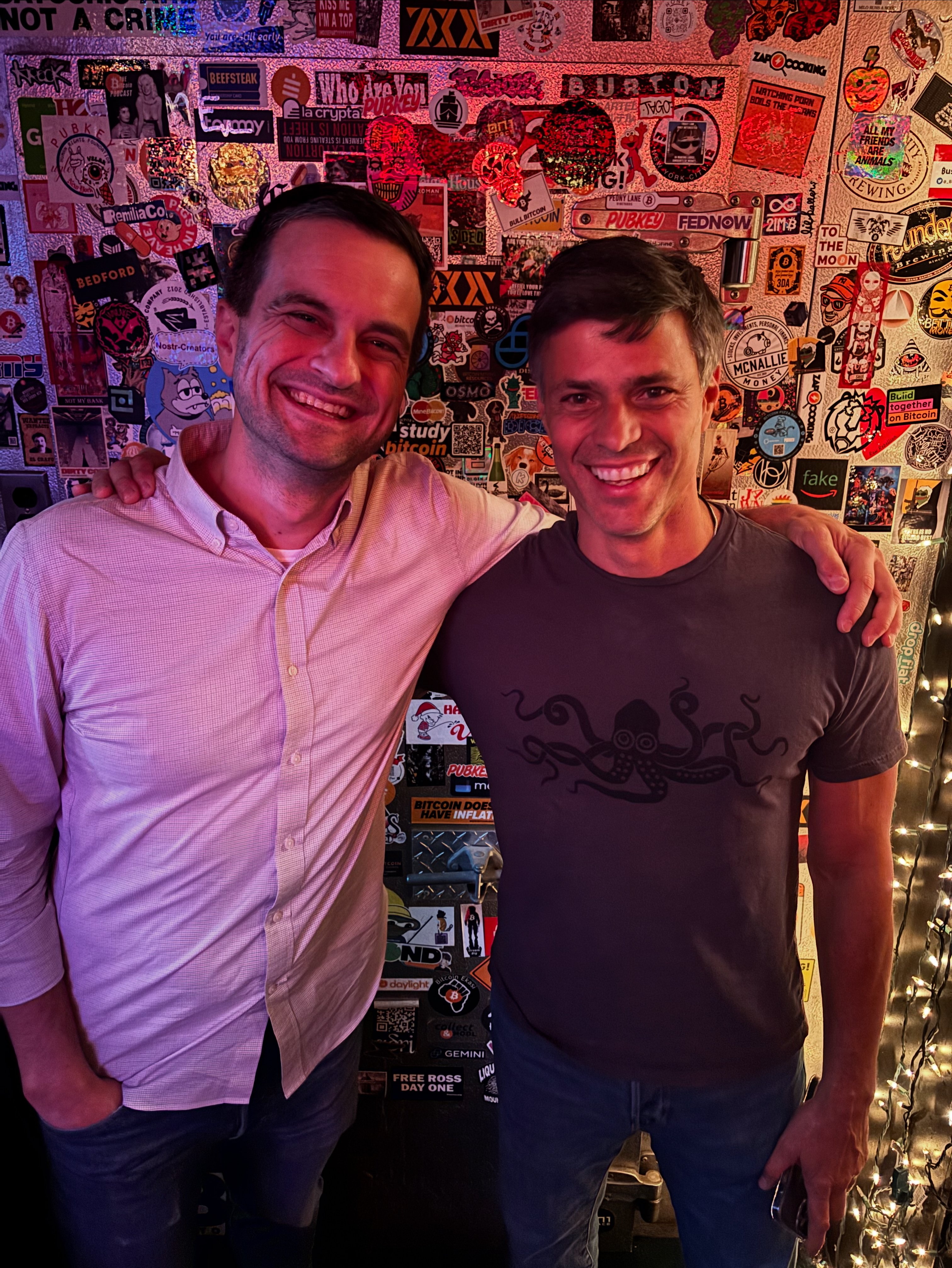
Tonight, I got to meet a true hero - @Leopoldo López 👍.
Despite having been persecuted, imprisoned, and maligned, he continues his work as an opposition leader for #Venezuela 🇻🇪
And after conducting an interview with him for an hour or so at @PUBKEY this evening, I’m convinced that nothing can defeat this man’s spirit, and I believe that with people like him fighting for Venezuela, the country will one day be free again.
#VenezuelaLibre

“It is the unconventional mind that understands that success isn’t about attention and accolades.
It’s about partnerships and progress.” -Brent Cole