
The Myth of Male Violence as the Leading Threat to Women's Lives
 “The biggest danger to women is men.”
It’s a line you’ve heard repeated in media, classrooms, and activism. It’s dramatic, emotionally charged, and frequently weaponized in debates about gender and safety.
But is it true?
No. Not even close.
What Actually Kills Women
If we step away from slogans and look at the data, a very different story emerges.
According to consistent findings from the CDC, World Health Organization (WHO), and UN Office on Drugs and Crime (UNODC), here are the top 10 causes of death for women worldwide:
1.) Heart disease
2.) Stroke
3.) Chronic lower respiratory diseases
4.) Alzheimer’s disease
5.) Cancer
6.) Diabetes
7.) Influenza and pneumonia
8.) Unintentional injuries
9.) Kidney disease
10.) Septicemia
These conditions account for nearly half of all female deaths in the United States, and similar proportions around the world. These are not hypothetical dangers. They’re measurable, predictable, and silently fatal.
Not one of them is “being killed by a man.”
The Real Numbers on Homicide
So what about homicide—how often is a woman actually killed by a man?
Here are the facts:
Homicide accounts for only 0.5% to 1% of all female deaths globally.
Of those homicides, about 80–90% are committed by men.
Over 50% of female homicide victims are killed by a current or former intimate partner (almost always male).
Crunch the numbers:
Estimated total deaths of women caused by men: ~0.4% to 0.9%
That’s it.
Less than 1% of women who die each year are killed by men.Which means more than 99% of female deaths are not caused by men.
This isn’t a minor technicality. It completely undermines the central feminist narrative that men are the top threat to women’s lives.
Fear vs. Fact
So why does this myth persist?
Because it’s emotionally powerful—and politically useful.
It creates a strong narrative: men as aggressors, women as victims. It stirs outrage, attracts media attention, and justifies expanding control over speech, relationships, law, and culture.
But the cost is high. When you elevate an untrue narrative, you bury the real issues.
Heart disease kills far more women than homicide ever will. So does cancer. So do strokes, Alzheimer’s, and diabetes. But these conditions don’t generate fear, division, or ideological heat.
The Damage This Myth Does
This isn’t just about statistics. It’s about relationships, policies, and public trust.
It poisons male–female relationships, making trust more difficult.
It teaches women to fear ordinary men, even when there’s no evidence of threat.
It makes men defensive or silent, ashamed for actions they never committed.
It distorts public policy, redirecting attention from health issues that kill millions to a manufactured narrative of widespread male violence.
This narrative has real consequences—not just for men, but for women too. Every time we chase ideological shadows, we ignore the medical realities that are actually taking women's lives.
Reality Deserves a Voice
This doesn’t mean violence against women isn’t real. It is. And it matters. But the idea that men, as a group, are the most serious danger women face?That is not just misleading.It’s factually false.It’s fear dressed up as concern.It’s propaganda.
If we truly care about women’s lives, we should fight heart disease.We should treat cancer earlier.We should improve mental health care.And yes, we should address violence—without lying about its scale or cause.
Women deserve truth, not mythology. And the truth is simple:
Men are not what’s killing women. Disease is.
“The biggest danger to women is men.”
It’s a line you’ve heard repeated in media, classrooms, and activism. It’s dramatic, emotionally charged, and frequently weaponized in debates about gender and safety.
But is it true?
No. Not even close.
What Actually Kills Women
If we step away from slogans and look at the data, a very different story emerges.
According to consistent findings from the CDC, World Health Organization (WHO), and UN Office on Drugs and Crime (UNODC), here are the top 10 causes of death for women worldwide:
1.) Heart disease
2.) Stroke
3.) Chronic lower respiratory diseases
4.) Alzheimer’s disease
5.) Cancer
6.) Diabetes
7.) Influenza and pneumonia
8.) Unintentional injuries
9.) Kidney disease
10.) Septicemia
These conditions account for nearly half of all female deaths in the United States, and similar proportions around the world. These are not hypothetical dangers. They’re measurable, predictable, and silently fatal.
Not one of them is “being killed by a man.”
The Real Numbers on Homicide
So what about homicide—how often is a woman actually killed by a man?
Here are the facts:
Homicide accounts for only 0.5% to 1% of all female deaths globally.
Of those homicides, about 80–90% are committed by men.
Over 50% of female homicide victims are killed by a current or former intimate partner (almost always male).
Crunch the numbers:
Estimated total deaths of women caused by men: ~0.4% to 0.9%
That’s it.
Less than 1% of women who die each year are killed by men.Which means more than 99% of female deaths are not caused by men.
This isn’t a minor technicality. It completely undermines the central feminist narrative that men are the top threat to women’s lives.
Fear vs. Fact
So why does this myth persist?
Because it’s emotionally powerful—and politically useful.
It creates a strong narrative: men as aggressors, women as victims. It stirs outrage, attracts media attention, and justifies expanding control over speech, relationships, law, and culture.
But the cost is high. When you elevate an untrue narrative, you bury the real issues.
Heart disease kills far more women than homicide ever will. So does cancer. So do strokes, Alzheimer’s, and diabetes. But these conditions don’t generate fear, division, or ideological heat.
The Damage This Myth Does
This isn’t just about statistics. It’s about relationships, policies, and public trust.
It poisons male–female relationships, making trust more difficult.
It teaches women to fear ordinary men, even when there’s no evidence of threat.
It makes men defensive or silent, ashamed for actions they never committed.
It distorts public policy, redirecting attention from health issues that kill millions to a manufactured narrative of widespread male violence.
This narrative has real consequences—not just for men, but for women too. Every time we chase ideological shadows, we ignore the medical realities that are actually taking women's lives.
Reality Deserves a Voice
This doesn’t mean violence against women isn’t real. It is. And it matters. But the idea that men, as a group, are the most serious danger women face?That is not just misleading.It’s factually false.It’s fear dressed up as concern.It’s propaganda.
If we truly care about women’s lives, we should fight heart disease.We should treat cancer earlier.We should improve mental health care.And yes, we should address violence—without lying about its scale or cause.
Women deserve truth, not mythology. And the truth is simple:
Men are not what’s killing women. Disease is.
“The biggest danger to women is men.”
It’s a line you’ve heard repeated in media, classrooms, and activism. It’s dramatic, emotionally charged, and frequently weaponized in debates about gender and safety.
But is it true?
No. Not even close.
What Actually Kills Women
If we step away from slogans and look at the data, a very different story emerges.
According to consistent findings from the CDC, World Health Organization (WHO), and UN Office on Drugs and Crime (UNODC), here are the top 10 causes of death for women worldwide:
1.) Heart disease
2.) Stroke
3.) Chronic lower respiratory diseases
4.) Alzheimer’s disease
5.) Cancer
6.) Diabetes
7.) Influenza and pneumonia
8.) Unintentional injuries
9.) Kidney disease
10.) Septicemia
These conditions account for nearly half of all female deaths in the United States, and similar proportions around the world. These are not hypothetical dangers. They’re measurable, predictable, and silently fatal.
Not one of them is “being killed by a man.”
The Real Numbers on Homicide
So what about homicide—how often is a woman actually killed by a man?
Here are the facts:
Homicide accounts for only 0.5% to 1% of all female deaths globally.
Of those homicides, about 80–90% are committed by men.
Over 50% of female homicide victims are killed by a current or former intimate partner (almost always male).
Crunch the numbers:
Estimated total deaths of women caused by men: ~0.4% to 0.9%
That’s it.
Less than 1% of women who die each year are killed by men.Which means more than 99% of female deaths are not caused by men.
This isn’t a minor technicality. It completely undermines the central feminist narrative that men are the top threat to women’s lives.
Fear vs. Fact
So why does this myth persist?
Because it’s emotionally powerful—and politically useful.
It creates a strong narrative: men as aggressors, women as victims. It stirs outrage, attracts media attention, and justifies expanding control over speech, relationships, law, and culture.
But the cost is high. When you elevate an untrue narrative, you bury the real issues.
Heart disease kills far more women than homicide ever will. So does cancer. So do strokes, Alzheimer’s, and diabetes. But these conditions don’t generate fear, division, or ideological heat.
The Damage This Myth Does
This isn’t just about statistics. It’s about relationships, policies, and public trust.
It poisons male–female relationships, making trust more difficult.
It teaches women to fear ordinary men, even when there’s no evidence of threat.
It makes men defensive or silent, ashamed for actions they never committed.
It distorts public policy, redirecting attention from health issues that kill millions to a manufactured narrative of widespread male violence.
This narrative has real consequences—not just for men, but for women too. Every time we chase ideological shadows, we ignore the medical realities that are actually taking women's lives.
Reality Deserves a Voice
This doesn’t mean violence against women isn’t real. It is. And it matters. But the idea that men, as a group, are the most serious danger women face?That is not just misleading.It’s factually false.It’s fear dressed up as concern.It’s propaganda.
If we truly care about women’s lives, we should fight heart disease.We should treat cancer earlier.We should improve mental health care.And yes, we should address violence—without lying about its scale or cause.
Women deserve truth, not mythology. And the truth is simple:
Men are not what’s killing women. Disease is. Tea launched with a clear pitch: a women-only app built to make dating safer. Users could review men, flag potential issues, and verify their identity with selfies or government-issued ID. It promised a community built on trust, safety, and shared experiences.
But Tea operated on a one-way model. Men were not allowed on the platform, not even to see what was written about them. The app prohibited men from creating accounts, responding to claims, or reviewing women. In practice, this meant users could post reviews, warnings, or accusations about men without their knowledge, consent, or any opportunity to respond.
Supporters viewed this structure as empowering for women. Critics saw it as discriminatory, unaccountable, and open to misuse, particularly when anonymous users could affect a person’s reputation without oversight.
Then came the breach.
On July 25, 2025, Tea suffered a massive data leak that exposed tens of thousands of user files. In an unexpected reversal, the women who used the app to report on others had their identities, photos, and private content leaked online. A platform designed to shield its members ended up exposing them instead.
What Was Tea?
Tea launched in November 2022, founded by Sean Cook. The app quickly gained traction by branding itself as a safe space for women navigating online dating. It provided features like:
Ratings of men as “green flags” or “red flags”
Community-shared reviews and warnings
Background check and reverse image search tools
Mandatory identity verification using selfies or government-issued ID
Importantly, Tea was designed as women-only by default. No men were permitted to sign up or even browse, even if they were named in posts or reviews. While some users praised this as a safety feature, others pointed out the lack of any mechanism for men to be notified, defend themselves, or correct misinformation.
By mid-2025, the app had climbed to the top of Apple’s U.S. App Store charts with over 4 million users and nearly a million new signups in a matter of days.
The Built-In Asymmetry
Long before the breach, Tea sparked controversy for its gender-based gatekeeping and reputational power imbalance.
Posts about men could include subjective experiences, red flags, or outright accusations, all without the knowledge of the men being discussed. There was no requirement to provide evidence, no alert sent to the individuals mentioned, and no option for them to see or respond to the content.
This one-sided structure fueled criticism that the platform enabled anonymous, unchallengeable reputation damage. Detractors also raised concerns about the potential for false or exaggerated claims from former partners, acquaintances, or even strangers.
Some online discussions stated the app did allow phone number searches that could expose men’s home addresses.
The Breach
On July 25, 2025, users on 4chan discovered a serious vulnerability in Tea’s infrastructure. An unsecured Firebase database, essentially a public storage bucket, was left open without authentication. The exposed data included:
13,000 verification images, including selfies and IDs used to confirm user identity
59,000 user-submitted images from posts, comments, and direct messages
Usernames and private conversations, some of which could be linked to real-world identities
The exploit required no hacking expertise. It was a simple GET request, which demonstrated poor security design around highly sensitive user data.
Tea confirmed the breach later that day, stating the data came from a legacy system over two years old. The company emphasized that current user data was not affected, but the scope of the leak had already raised serious concerns.
A One-Way Platform, a Two-Sided Fallout
The breach reversed the dynamic the app was built on. For nearly two years, Tea allowed one group, women, to judge and label another group, men, without dialogue, context, or rebuttal. Once the breach occurred, the anonymity of its users disappeared along with the privacy of their ID documents, messages, and in some cases, exact identities.
Online reactions reflected this reversal. Some users expressed concern for those affected. Others criticized what they saw as an imbalance: a system that enabled anonymous judgment of others while assuming immunity from scrutiny.
Tea’s response focused on technical containment. It stated that current systems were not compromised and that steps were being taken to improve security. But the broader damage was already done to user trust, public perception, and the app’s core premise.
Security, Consent, and Control
The incident raises difficult but important questions:
Should platforms allow anonymous reviews of real people without any process for dispute or verification?
What happens when reputational power is distributed unequally by gender, by design, and without accountability?
Tea's structure didn’t just exclude men from using the app. It excluded them from knowing they had been talked about. For critics, this wasn’t just exclusion. It was reputation management by proxy, without due process.
Final Thoughts
The Tea app was predatory by design. It enabled women to anonymously target men, post accusations, and damage reputations without the man’s knowledge, consent, or any ability to respond or defend himself. There was no mechanism for fact-checking, no right of reply, and no accountability for false or malicious claims.
With the breach, that power dynamic has flipped. The leak allows men to review what was said about them and identify the individuals behind those posts. For the first time, men may have the opportunity to seek legal recourse for defamation, false accusations, or reputational harm inflicted under the guise of “safety.”
What began as a one-sided system of anonymous judgment is now exposed, and the consequences are only beginning.
Tea launched with a clear pitch: a women-only app built to make dating safer. Users could review men, flag potential issues, and verify their identity with selfies or government-issued ID. It promised a community built on trust, safety, and shared experiences.
But Tea operated on a one-way model. Men were not allowed on the platform, not even to see what was written about them. The app prohibited men from creating accounts, responding to claims, or reviewing women. In practice, this meant users could post reviews, warnings, or accusations about men without their knowledge, consent, or any opportunity to respond.
Supporters viewed this structure as empowering for women. Critics saw it as discriminatory, unaccountable, and open to misuse, particularly when anonymous users could affect a person’s reputation without oversight.
Then came the breach.
On July 25, 2025, Tea suffered a massive data leak that exposed tens of thousands of user files. In an unexpected reversal, the women who used the app to report on others had their identities, photos, and private content leaked online. A platform designed to shield its members ended up exposing them instead.
What Was Tea?
Tea launched in November 2022, founded by Sean Cook. The app quickly gained traction by branding itself as a safe space for women navigating online dating. It provided features like:
Ratings of men as “green flags” or “red flags”
Community-shared reviews and warnings
Background check and reverse image search tools
Mandatory identity verification using selfies or government-issued ID
Importantly, Tea was designed as women-only by default. No men were permitted to sign up or even browse, even if they were named in posts or reviews. While some users praised this as a safety feature, others pointed out the lack of any mechanism for men to be notified, defend themselves, or correct misinformation.
By mid-2025, the app had climbed to the top of Apple’s U.S. App Store charts with over 4 million users and nearly a million new signups in a matter of days.
The Built-In Asymmetry
Long before the breach, Tea sparked controversy for its gender-based gatekeeping and reputational power imbalance.
Posts about men could include subjective experiences, red flags, or outright accusations, all without the knowledge of the men being discussed. There was no requirement to provide evidence, no alert sent to the individuals mentioned, and no option for them to see or respond to the content.
This one-sided structure fueled criticism that the platform enabled anonymous, unchallengeable reputation damage. Detractors also raised concerns about the potential for false or exaggerated claims from former partners, acquaintances, or even strangers.
Some online discussions stated the app did allow phone number searches that could expose men’s home addresses.
The Breach
On July 25, 2025, users on 4chan discovered a serious vulnerability in Tea’s infrastructure. An unsecured Firebase database, essentially a public storage bucket, was left open without authentication. The exposed data included:
13,000 verification images, including selfies and IDs used to confirm user identity
59,000 user-submitted images from posts, comments, and direct messages
Usernames and private conversations, some of which could be linked to real-world identities
The exploit required no hacking expertise. It was a simple GET request, which demonstrated poor security design around highly sensitive user data.
Tea confirmed the breach later that day, stating the data came from a legacy system over two years old. The company emphasized that current user data was not affected, but the scope of the leak had already raised serious concerns.
A One-Way Platform, a Two-Sided Fallout
The breach reversed the dynamic the app was built on. For nearly two years, Tea allowed one group, women, to judge and label another group, men, without dialogue, context, or rebuttal. Once the breach occurred, the anonymity of its users disappeared along with the privacy of their ID documents, messages, and in some cases, exact identities.
Online reactions reflected this reversal. Some users expressed concern for those affected. Others criticized what they saw as an imbalance: a system that enabled anonymous judgment of others while assuming immunity from scrutiny.
Tea’s response focused on technical containment. It stated that current systems were not compromised and that steps were being taken to improve security. But the broader damage was already done to user trust, public perception, and the app’s core premise.
Security, Consent, and Control
The incident raises difficult but important questions:
Should platforms allow anonymous reviews of real people without any process for dispute or verification?
What happens when reputational power is distributed unequally by gender, by design, and without accountability?
Tea's structure didn’t just exclude men from using the app. It excluded them from knowing they had been talked about. For critics, this wasn’t just exclusion. It was reputation management by proxy, without due process.
Final Thoughts
The Tea app was predatory by design. It enabled women to anonymously target men, post accusations, and damage reputations without the man’s knowledge, consent, or any ability to respond or defend himself. There was no mechanism for fact-checking, no right of reply, and no accountability for false or malicious claims.
With the breach, that power dynamic has flipped. The leak allows men to review what was said about them and identify the individuals behind those posts. For the first time, men may have the opportunity to seek legal recourse for defamation, false accusations, or reputational harm inflicted under the guise of “safety.”
What began as a one-sided system of anonymous judgment is now exposed, and the consequences are only beginning.


 When it comes to dating and relationships, men and women value different things. While women often prioritize a man’s income and career, men generally do not care how much money a woman makes. This is not a flaw or a failure. It is simply a reflection of the different roles and expectations that still shape modern relationships.
What Men Want in a Partner
Men are not looking for a provider. They are not dating with the expectation that their partner will fund their lifestyle, support them financially, or retire them. Instead, men typically value beauty, loyalty, kindness, femininity, and emotional support. A woman’s income is irrelevant to most men because it does not enhance what they are looking for in a partner. In short, men do not benefit from a woman’s money, so they do not care about it.
Why Women Care About a Man’s Money
The dynamic is very different on the other side. From the first date, men are expected to pay. Dinner, drinks, movies, vacations — these costs usually fall on the man. As the relationship deepens, that expectation expands. The man is expected to provide stability, buy a house, cover bills, and sometimes even retire his wife.
This is why women care how much money a man makes: because they directly benefit from it.
Different Standards When It Comes to Money
In many relationships today, both partners work, but how that money is used often follows different standards.
The man’s money typically pays for the shared life: rent or mortgage, utilities, car payments, travel, and dining out. The woman’s money is more often spent on herself — beauty appointments, clothing, self care, and hobbies. In many couples, this dynamic is never discussed openly, but it plays out all the same.
The expectation is that the man’s income supports both people. The woman’s income supports the woman.
No Expectation That Women Provide
There is no widespread expectation that women will pay for the first date, cover monthly bills, or someday retire their husbands.
Because of this, men do not evaluate women based on their job title, salary, or earning potential. A woman’s income does not increase her value in a man’s eyes, because he is not planning to rely on it.
The Man as an Income Multiplier
For many women, a relationship with the right man represents an income multiplier. It offers lifestyle upgrades, financial security, and a better quality of life. That is why women are more likely to date across or up in terms of income, and why they care what a man earns.
Men do not see women this way. They do not expect their partner to multiply their lifestyle, fund their goals, or elevate them financially. So they do not need her to be rich. They do not need her to be ambitious. They just need her to be the kind of woman they want to commit to.
Conclusion
Men do not care about a woman’s money because they do not expect to benefit from it. Women care about a man’s money because they do. This is a reflection of different standards in relationships — standards that shape how each sex evaluates long term potential.
In a world where roles are supposedly evolving, this one remains remarkably consistent. A man is still expected to provide. That is why a woman’s money is not what most men are searching for.
When it comes to dating and relationships, men and women value different things. While women often prioritize a man’s income and career, men generally do not care how much money a woman makes. This is not a flaw or a failure. It is simply a reflection of the different roles and expectations that still shape modern relationships.
What Men Want in a Partner
Men are not looking for a provider. They are not dating with the expectation that their partner will fund their lifestyle, support them financially, or retire them. Instead, men typically value beauty, loyalty, kindness, femininity, and emotional support. A woman’s income is irrelevant to most men because it does not enhance what they are looking for in a partner. In short, men do not benefit from a woman’s money, so they do not care about it.
Why Women Care About a Man’s Money
The dynamic is very different on the other side. From the first date, men are expected to pay. Dinner, drinks, movies, vacations — these costs usually fall on the man. As the relationship deepens, that expectation expands. The man is expected to provide stability, buy a house, cover bills, and sometimes even retire his wife.
This is why women care how much money a man makes: because they directly benefit from it.
Different Standards When It Comes to Money
In many relationships today, both partners work, but how that money is used often follows different standards.
The man’s money typically pays for the shared life: rent or mortgage, utilities, car payments, travel, and dining out. The woman’s money is more often spent on herself — beauty appointments, clothing, self care, and hobbies. In many couples, this dynamic is never discussed openly, but it plays out all the same.
The expectation is that the man’s income supports both people. The woman’s income supports the woman.
No Expectation That Women Provide
There is no widespread expectation that women will pay for the first date, cover monthly bills, or someday retire their husbands.
Because of this, men do not evaluate women based on their job title, salary, or earning potential. A woman’s income does not increase her value in a man’s eyes, because he is not planning to rely on it.
The Man as an Income Multiplier
For many women, a relationship with the right man represents an income multiplier. It offers lifestyle upgrades, financial security, and a better quality of life. That is why women are more likely to date across or up in terms of income, and why they care what a man earns.
Men do not see women this way. They do not expect their partner to multiply their lifestyle, fund their goals, or elevate them financially. So they do not need her to be rich. They do not need her to be ambitious. They just need her to be the kind of woman they want to commit to.
Conclusion
Men do not care about a woman’s money because they do not expect to benefit from it. Women care about a man’s money because they do. This is a reflection of different standards in relationships — standards that shape how each sex evaluates long term potential.
In a world where roles are supposedly evolving, this one remains remarkably consistent. A man is still expected to provide. That is why a woman’s money is not what most men are searching for.




 OnlyFans has become one of the most controversial platforms in the digital economy, widely known for hosting pornography and allowing creators to monetize it through direct subscriptions. While often framed as a tool for empowerment or entrepreneurship, many commentators now describe OnlyFans as a form of online prostitution.
Millions Earning Pennies
A viral claim recently circulated that “over 2 million women showed their naked bodies on OnlyFans for less than $50/month.” While the exact figure is difficult to confirm, it reflects a broader, well-documented reality: most creators on the platform earn very little.
OnlyFans has more than 2 million registered creators. The vast majority of the platform’s most active and visible users are women. Furthermore, the platform is overwhelmingly associated with pornography. Independent reports and public platform behavior confirm that explicit material drives the bulk of its traffic and revenue.
OnlyFans itself does not release detailed earnings breakdowns, but available data from third-party analysts and leaked financials indicate a steep drop-off in income beyond the top 1 to 5 percent of earners. Many creators in the bottom 80 to 90 percent earn well under $100/month after the platform takes its 20 percent commission. In this context, the claim that a large portion of women expose themselves online for minimal financial return is supported by broad trends.
China’s Rejection
While Western debates focus on exploitation versus empowerment, China has taken a firm stance against OnlyFans on moral and ideological grounds. In 2024, the Chinese government formalized a complete ban on the platform, labeling it a “corrupt Western disease” and reinforcing its long-standing policy against pornography and sexual commerce.
Though OnlyFans was already functionally blocked by the Great Firewall, Chinese authorities have moved to close remaining loopholes, targeting VPN access and overseas payment systems used by Chinese nationals to engage with the platform.
The government’s framing is explicit. OnlyFans is not merely a digital service, but a vehicle for Western values they view as corrosive to the socialist moral fabric. In banning it, they aim to protect cultural integrity, suppress perceived decadence, and maintain ideological discipline.
Cultural Mirror
These two developments, one rooted in economic criticism, the other in concern over social cohesion, underscore the polarized narratives surrounding OnlyFans.
In the West, it represents both opportunity and precarity. Millions seek quick income by producing pornography, yet most earn next to nothing and risk long-term reputational consequences. In China, the platform is not tolerated at all, dismissed wholesale as a symbol of cultural decline and foreign subversion.
OnlyFans stands at the intersection of capitalism, pornography, and ideology. Whether viewed as freedom, exploitation, or moral threat, it reflects the values of those examining it and the systems they inhabit.
OnlyFans has become one of the most controversial platforms in the digital economy, widely known for hosting pornography and allowing creators to monetize it through direct subscriptions. While often framed as a tool for empowerment or entrepreneurship, many commentators now describe OnlyFans as a form of online prostitution.
Millions Earning Pennies
A viral claim recently circulated that “over 2 million women showed their naked bodies on OnlyFans for less than $50/month.” While the exact figure is difficult to confirm, it reflects a broader, well-documented reality: most creators on the platform earn very little.
OnlyFans has more than 2 million registered creators. The vast majority of the platform’s most active and visible users are women. Furthermore, the platform is overwhelmingly associated with pornography. Independent reports and public platform behavior confirm that explicit material drives the bulk of its traffic and revenue.
OnlyFans itself does not release detailed earnings breakdowns, but available data from third-party analysts and leaked financials indicate a steep drop-off in income beyond the top 1 to 5 percent of earners. Many creators in the bottom 80 to 90 percent earn well under $100/month after the platform takes its 20 percent commission. In this context, the claim that a large portion of women expose themselves online for minimal financial return is supported by broad trends.
China’s Rejection
While Western debates focus on exploitation versus empowerment, China has taken a firm stance against OnlyFans on moral and ideological grounds. In 2024, the Chinese government formalized a complete ban on the platform, labeling it a “corrupt Western disease” and reinforcing its long-standing policy against pornography and sexual commerce.
Though OnlyFans was already functionally blocked by the Great Firewall, Chinese authorities have moved to close remaining loopholes, targeting VPN access and overseas payment systems used by Chinese nationals to engage with the platform.
The government’s framing is explicit. OnlyFans is not merely a digital service, but a vehicle for Western values they view as corrosive to the socialist moral fabric. In banning it, they aim to protect cultural integrity, suppress perceived decadence, and maintain ideological discipline.
Cultural Mirror
These two developments, one rooted in economic criticism, the other in concern over social cohesion, underscore the polarized narratives surrounding OnlyFans.
In the West, it represents both opportunity and precarity. Millions seek quick income by producing pornography, yet most earn next to nothing and risk long-term reputational consequences. In China, the platform is not tolerated at all, dismissed wholesale as a symbol of cultural decline and foreign subversion.
OnlyFans stands at the intersection of capitalism, pornography, and ideology. Whether viewed as freedom, exploitation, or moral threat, it reflects the values of those examining it and the systems they inhabit.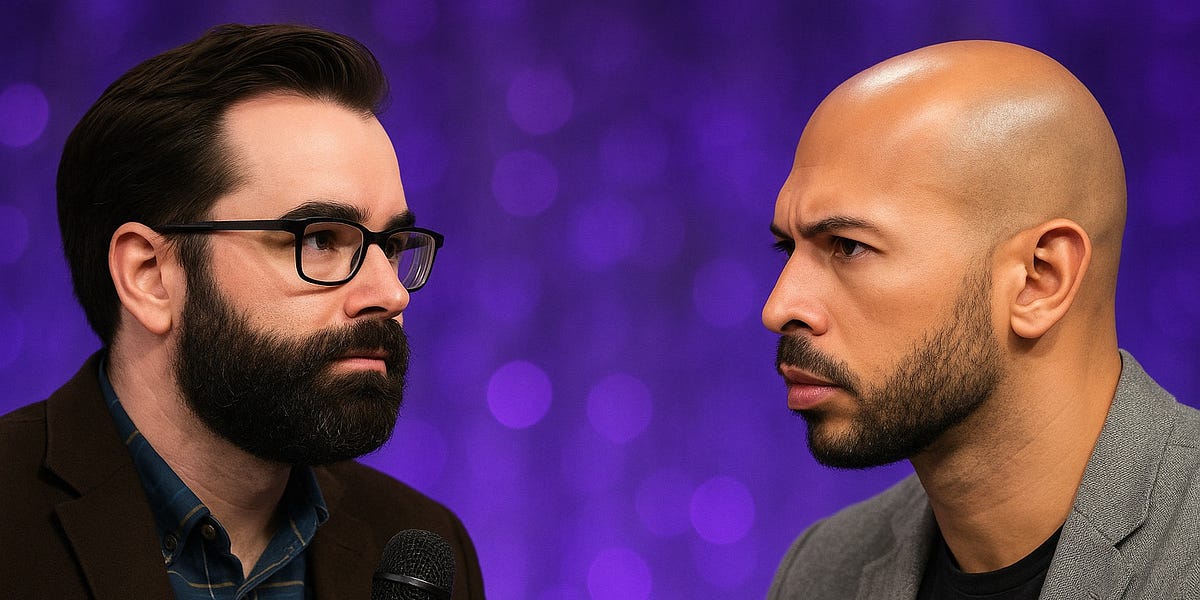

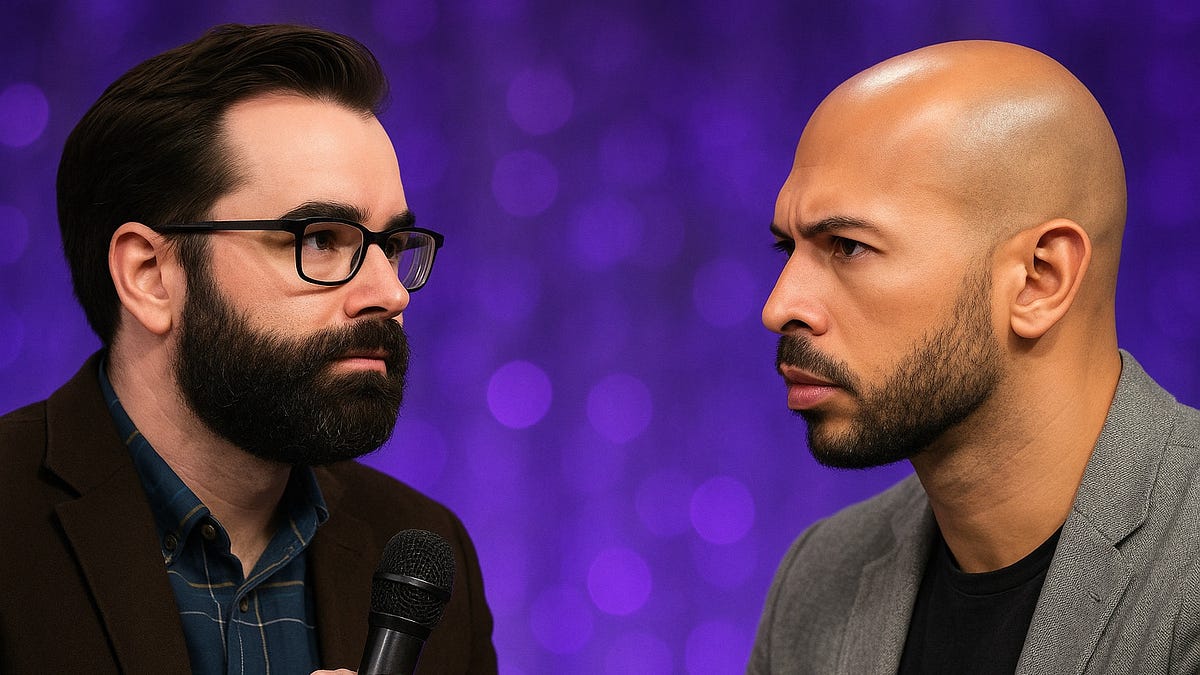
 A clash of ideologies erupts as Andrew Tate, Matt Walsh, and Charlie Kirk spar over the role of monogamy, masculinity, and civilizational values in modern society.
A Debate That Taps into Deeper Tensions
A heated online exchange has brought long-standing cultural fault lines into sharp focus. Andrew Tate, a polarizing figure in discussions on masculinity and gender roles, ignited the latest controversy by forcefully rejecting monogamy as unnatural for men. In response, conservative commentators Matt Walsh and Charlie Kirk defended monogamy as morally grounded and civilizationally essential.
The debate quickly went viral, not simply because of who was involved, but because it touches on deeper questions: What defines a man’s role in society? Is monogamy a choice, a value, or a form of societal control? And how should tradition adapt or resist changing social norms?
Tate’s Opening Position: Monogamy as Control
Andrew Tate launched his argument by framing monogamy as an artificial constraint on high-value men. He referenced evolutionary data to suggest that historically, far fewer men than women reproduced—a disparity he attributes to female mate selection favoring dominant males with multiple partners.
Tate characterizes monogamy as a satanic control mechanism engineered to pacify lower-status men and suppress the reproductive dominance of stronger ones. He asserts that in both ancient and modern contexts, women naturally prefer to share high-status men rather than commit to one average man. According to him, “kingdoms” are built by men who reproduce widely, with multiple compliant partners contributing to the legacy of a single patriarch.
He also argues that monogamy, coupled with modern legal frameworks and cultural messaging, emasculates men by forcing them into domesticity, trading traditional masculine duties for suburban routines and consumer comforts.
Myron Gaines (of the Fresh & Fit podcast) echoed Tate’s arguments, stating that most men are monogamous out of necessity, not desire. Pearl Davis added that female monogamy is also unnatural and downplayed its traditional portrayal as a default behavior for women.
Walsh Responds: Civilization Requires Restraint
Matt Walsh responded with a starkly different perspective. A conservative commentator and long-time advocate of traditional family values, Walsh rejected polygamy outright, calling it savage and primitive. He argued that stable monogamous marriage has been a hallmark of advanced societies and deviations from it threaten civilizational cohesion.
Walsh challenged Tate’s framing of experience as authority. He stated that his nearly 15-year marriage and fatherhood of six children offered a valid, grounded perspective. He likened Tate’s logic to saying one cannot oppose human sacrifice without having tried it. Walsh emphasized that his marriage has grown stronger over time, and he pointed to data showing that couples married for 15 years are statistically likely to remain together.
Walsh further contended that lifelong monogamous relationships are not mythical ideals, but lived realities that require commitment and offer enduring rewards.
Tate’s Rebuttal: Different Worlds, Different Realities
Tate responded by framing Walsh as someone whose views stem from limited personal experience. He claimed Walsh lacks knowledge of modern dating dynamics and of how women behave toward high-status men. Tate argued that polygamy is driven not just by male desire but by female selection preferences, insisting that many women willingly share men they perceive as superior.
He maintained that the beta male strategy of service and loyalty to one woman reflects a biologically subordinate position. In his view, Walsh misunderstands the current landscape, where dominant men are rewarded with abundance while average men are left coping with constraints.
Charlie Kirk Adds a Theological Frame
Charlie Kirk, founder of Turning Point USA, added a religious dimension to the debate. He affirmed his own monogamous marriage and attributed its success not to pragmatism but to divine intention. Kirk argued that monogamy is not just socially beneficial but morally mandated by Christian doctrine.
He cited biblical teachings that encourage husbands to be devoted to one wife and called polygamy incompatible with spiritual maturity. Kirk acknowledged critiques of modern divorce laws and cultural decay but warned against abandoning God's blueprint for marriage in response to societal flaws.
His argument extended beyond personal testimony to a civilizational thesis: societies flourish when they follow divine design, not just human appetite.
What’s Really Being Debated?
At its core, the debate is not just about sexual ethics. It is about divergent worldviews.
Tate and his allies ground their claims in evolutionary psychology, reproductive strategy, and a critique of what they see as the decline of Western masculinity.
Walsh and Kirk, in contrast, defend monogamy through moral, civilizational, and religious arguments, asserting that marriage is about sacrifice, stability, and the long-term good.
While both sides claim to speak for reality, they draw on very different definitions of success, value, and purpose.
Public Reaction and Cultural Implications
Online audiences have been sharply divided. Supporters of Tate praised his candor and claim that he articulates what many men feel but cannot say. Critics accused him of promoting a regressive and cynical view of relationships. Defenders of Walsh and Kirk applauded their commitment to family and tradition, while others dismissed their stances as naive or idealistic.
This debate reflects a growing split even within ideological communities between traditionalists and those influenced by the manosphere and Red Pill philosophy. The argument isn’t just about relationships. It is about power, legacy, and what kind of future men should build.
Conclusion: Between Legacy and Loyalty
The clash between Andrew Tate, Matt Walsh, and Charlie Kirk highlights a deep rift in contemporary thinking about masculinity, sexuality, and society. Is monogamy a moral good to be protected, or a social constraint to be overcome? Are modern men failing to adapt, or refusing to evolve?
As the conversation continues, one thing is clear: the debate isn’t going away. In fact, it may be one of the defining ideological battles of a generation.
A clash of ideologies erupts as Andrew Tate, Matt Walsh, and Charlie Kirk spar over the role of monogamy, masculinity, and civilizational values in modern society.
A Debate That Taps into Deeper Tensions
A heated online exchange has brought long-standing cultural fault lines into sharp focus. Andrew Tate, a polarizing figure in discussions on masculinity and gender roles, ignited the latest controversy by forcefully rejecting monogamy as unnatural for men. In response, conservative commentators Matt Walsh and Charlie Kirk defended monogamy as morally grounded and civilizationally essential.
The debate quickly went viral, not simply because of who was involved, but because it touches on deeper questions: What defines a man’s role in society? Is monogamy a choice, a value, or a form of societal control? And how should tradition adapt or resist changing social norms?
Tate’s Opening Position: Monogamy as Control
Andrew Tate launched his argument by framing monogamy as an artificial constraint on high-value men. He referenced evolutionary data to suggest that historically, far fewer men than women reproduced—a disparity he attributes to female mate selection favoring dominant males with multiple partners.
Tate characterizes monogamy as a satanic control mechanism engineered to pacify lower-status men and suppress the reproductive dominance of stronger ones. He asserts that in both ancient and modern contexts, women naturally prefer to share high-status men rather than commit to one average man. According to him, “kingdoms” are built by men who reproduce widely, with multiple compliant partners contributing to the legacy of a single patriarch.
He also argues that monogamy, coupled with modern legal frameworks and cultural messaging, emasculates men by forcing them into domesticity, trading traditional masculine duties for suburban routines and consumer comforts.
Myron Gaines (of the Fresh & Fit podcast) echoed Tate’s arguments, stating that most men are monogamous out of necessity, not desire. Pearl Davis added that female monogamy is also unnatural and downplayed its traditional portrayal as a default behavior for women.
Walsh Responds: Civilization Requires Restraint
Matt Walsh responded with a starkly different perspective. A conservative commentator and long-time advocate of traditional family values, Walsh rejected polygamy outright, calling it savage and primitive. He argued that stable monogamous marriage has been a hallmark of advanced societies and deviations from it threaten civilizational cohesion.
Walsh challenged Tate’s framing of experience as authority. He stated that his nearly 15-year marriage and fatherhood of six children offered a valid, grounded perspective. He likened Tate’s logic to saying one cannot oppose human sacrifice without having tried it. Walsh emphasized that his marriage has grown stronger over time, and he pointed to data showing that couples married for 15 years are statistically likely to remain together.
Walsh further contended that lifelong monogamous relationships are not mythical ideals, but lived realities that require commitment and offer enduring rewards.
Tate’s Rebuttal: Different Worlds, Different Realities
Tate responded by framing Walsh as someone whose views stem from limited personal experience. He claimed Walsh lacks knowledge of modern dating dynamics and of how women behave toward high-status men. Tate argued that polygamy is driven not just by male desire but by female selection preferences, insisting that many women willingly share men they perceive as superior.
He maintained that the beta male strategy of service and loyalty to one woman reflects a biologically subordinate position. In his view, Walsh misunderstands the current landscape, where dominant men are rewarded with abundance while average men are left coping with constraints.
Charlie Kirk Adds a Theological Frame
Charlie Kirk, founder of Turning Point USA, added a religious dimension to the debate. He affirmed his own monogamous marriage and attributed its success not to pragmatism but to divine intention. Kirk argued that monogamy is not just socially beneficial but morally mandated by Christian doctrine.
He cited biblical teachings that encourage husbands to be devoted to one wife and called polygamy incompatible with spiritual maturity. Kirk acknowledged critiques of modern divorce laws and cultural decay but warned against abandoning God's blueprint for marriage in response to societal flaws.
His argument extended beyond personal testimony to a civilizational thesis: societies flourish when they follow divine design, not just human appetite.
What’s Really Being Debated?
At its core, the debate is not just about sexual ethics. It is about divergent worldviews.
Tate and his allies ground their claims in evolutionary psychology, reproductive strategy, and a critique of what they see as the decline of Western masculinity.
Walsh and Kirk, in contrast, defend monogamy through moral, civilizational, and religious arguments, asserting that marriage is about sacrifice, stability, and the long-term good.
While both sides claim to speak for reality, they draw on very different definitions of success, value, and purpose.
Public Reaction and Cultural Implications
Online audiences have been sharply divided. Supporters of Tate praised his candor and claim that he articulates what many men feel but cannot say. Critics accused him of promoting a regressive and cynical view of relationships. Defenders of Walsh and Kirk applauded their commitment to family and tradition, while others dismissed their stances as naive or idealistic.
This debate reflects a growing split even within ideological communities between traditionalists and those influenced by the manosphere and Red Pill philosophy. The argument isn’t just about relationships. It is about power, legacy, and what kind of future men should build.
Conclusion: Between Legacy and Loyalty
The clash between Andrew Tate, Matt Walsh, and Charlie Kirk highlights a deep rift in contemporary thinking about masculinity, sexuality, and society. Is monogamy a moral good to be protected, or a social constraint to be overcome? Are modern men failing to adapt, or refusing to evolve?
As the conversation continues, one thing is clear: the debate isn’t going away. In fact, it may be one of the defining ideological battles of a generation.



 How to Own Your Work, Distribute on Your Terms, and Build a Lasting Legacy
We’re living through a creative renaissance. The tools, platforms, and distribution channels that were once reserved for studios, corporations, or credentialed professionals are now in the hands of everyday creators.
You don’t need permission. You don’t need a publisher. You don’t need a production team.
What you need is intention, consistency, and the willingness to put your voice into the world.
You Don’t Need Permission. You Need Intention.
You can create whatever you want. That’s not a metaphor. It’s the reality of today’s digital infrastructure.
If you want to write, you can publish on:
Substack for serialized newsletters and optional subscriptions
Medium or WordPress for blog-style essays and thought pieces
X for long-form content and subscriber support
Nostr for decentralized publishing with Bitcoin-based tipping
Whether you use your real name or a pseudonym, your work is yours. You own it the moment you create it.
Multi-Platform Presence Unlocks Multi-Audience Reach
Each platform offers different communities, cultures, and rhythms. By distributing across several, you expand your reach, tap into different conversations, and create resilience across algorithms and ecosystems.
Platforms for Creators
Social Channels
X, Nostr, Mastodon, Blue Sky, Threads, Gab, Minds, VK, Telegram, Truth Social, Gettr
Video Platforms
YouTube, Rumble, BitChute, Odysee
Podcast Platforms
Apple Podcasts, Spotify, Google Podcasts, Buzzsprout, Podbean
Publishing and Digital Products
Amazon KDP, Gumroad, Etsy, Payhip
Course Platforms
Udemy, Teachable, Thinkific
Music Distribution
DistroKid allows independent musicians to distribute across Spotify, Apple Music, YouTube Music, and collect royalties directly
You don’t have to pick one platform. Your work can live in many places at once.
Why Monetization Matters
If you're putting real time into something — writing, recording, teaching, researching — you're making a trade. You're choosing this over something else you could be doing to pay your bills.
That’s why monetization matters.
Even if you love what you're creating, you still need time and space to do it well. Time often comes at the expense of money. But if your work begins to pay, it allows you to:
Devote more energy to your craft
Create with less stress and urgency
Sustain what you love without burning out
Monetizing is also a signal. It says: I value what I made. And when someone pays you for it, they’re saying: I do too.
This isn’t about greed. It’s about sustainability. If you want your voice to stay in the world, you have to build a structure that supports it.
Paths to Monetization
You can earn money doing what you love without compromising your values. Options include:
Paid newsletters (Substack, Patreon)
Tips or microtransactions (Nostr, Ko-fi, Buy Me a Coffee)
Selling books, guides, zines, templates
Offering workshops, courses, or mentorship
Collecting royalties from books, music, video, or podcast distribution
Licensing content or selling rights later
You’re not just expressing yourself. You’re creating assets that can support your work long-term.
Intellectual Property Builds Legacy
Every piece of content you create — a podcast, book, article, video, or course — is your intellectual property.
You own it:
For life plus 70 years (under your real name)
For up to 95 years from publication or 120 years from creation (under a pseudonym or anonymously)
This means your content can:
Generate income for decades
Be passed to your family or heirs
Be sold as part of a media catalog or creative business
Be licensed or repackaged into new formats
You're not just building an audience. You're building a portfolio. And that portfolio is a legacy.
The Tools Are Already in Your Hands
AI and digital tools now give you power that once required full creative teams.
You can:
Record and edit your podcast with tools like Descript or Podcastle
Narrate your writing using your own voice or high-quality AI synthesis
Create art, covers, posters, and promo visuals with AI
Compose music and distribute it via DistroKid
Format, edit, and publish books on your own
Technology has removed nearly every technical barrier. The only remaining barrier is whether or not you’ll use it.
You’re Not Just Creating. You’re Contributing.
When you publish consistently, you’re doing more than expressing yourself. You’re building an archive — a searchable, usable, teachable body of work that others can engage with long after you're gone.
Your work becomes:
A time capsule of your thought
A reference for future readers, students, or creators
A signal to the culture about what matters
You’re not just creating content. You’re leaving something behind.
Final Thought: Creative Sovereignty Means Creative Legacy
The platforms are open. The audiences are available. The tools are ready. The ownership is already yours.
Whether you do it in your own name or under a pen name, this is your moment.
Create what matters to you.
Put it where others can find it.
Charge for it when it adds value.
Keep building.
What you create today can pay your bills tomorrow — and shape your legacy for years to come.
How to Own Your Work, Distribute on Your Terms, and Build a Lasting Legacy
We’re living through a creative renaissance. The tools, platforms, and distribution channels that were once reserved for studios, corporations, or credentialed professionals are now in the hands of everyday creators.
You don’t need permission. You don’t need a publisher. You don’t need a production team.
What you need is intention, consistency, and the willingness to put your voice into the world.
You Don’t Need Permission. You Need Intention.
You can create whatever you want. That’s not a metaphor. It’s the reality of today’s digital infrastructure.
If you want to write, you can publish on:
Substack for serialized newsletters and optional subscriptions
Medium or WordPress for blog-style essays and thought pieces
X for long-form content and subscriber support
Nostr for decentralized publishing with Bitcoin-based tipping
Whether you use your real name or a pseudonym, your work is yours. You own it the moment you create it.
Multi-Platform Presence Unlocks Multi-Audience Reach
Each platform offers different communities, cultures, and rhythms. By distributing across several, you expand your reach, tap into different conversations, and create resilience across algorithms and ecosystems.
Platforms for Creators
Social Channels
X, Nostr, Mastodon, Blue Sky, Threads, Gab, Minds, VK, Telegram, Truth Social, Gettr
Video Platforms
YouTube, Rumble, BitChute, Odysee
Podcast Platforms
Apple Podcasts, Spotify, Google Podcasts, Buzzsprout, Podbean
Publishing and Digital Products
Amazon KDP, Gumroad, Etsy, Payhip
Course Platforms
Udemy, Teachable, Thinkific
Music Distribution
DistroKid allows independent musicians to distribute across Spotify, Apple Music, YouTube Music, and collect royalties directly
You don’t have to pick one platform. Your work can live in many places at once.
Why Monetization Matters
If you're putting real time into something — writing, recording, teaching, researching — you're making a trade. You're choosing this over something else you could be doing to pay your bills.
That’s why monetization matters.
Even if you love what you're creating, you still need time and space to do it well. Time often comes at the expense of money. But if your work begins to pay, it allows you to:
Devote more energy to your craft
Create with less stress and urgency
Sustain what you love without burning out
Monetizing is also a signal. It says: I value what I made. And when someone pays you for it, they’re saying: I do too.
This isn’t about greed. It’s about sustainability. If you want your voice to stay in the world, you have to build a structure that supports it.
Paths to Monetization
You can earn money doing what you love without compromising your values. Options include:
Paid newsletters (Substack, Patreon)
Tips or microtransactions (Nostr, Ko-fi, Buy Me a Coffee)
Selling books, guides, zines, templates
Offering workshops, courses, or mentorship
Collecting royalties from books, music, video, or podcast distribution
Licensing content or selling rights later
You’re not just expressing yourself. You’re creating assets that can support your work long-term.
Intellectual Property Builds Legacy
Every piece of content you create — a podcast, book, article, video, or course — is your intellectual property.
You own it:
For life plus 70 years (under your real name)
For up to 95 years from publication or 120 years from creation (under a pseudonym or anonymously)
This means your content can:
Generate income for decades
Be passed to your family or heirs
Be sold as part of a media catalog or creative business
Be licensed or repackaged into new formats
You're not just building an audience. You're building a portfolio. And that portfolio is a legacy.
The Tools Are Already in Your Hands
AI and digital tools now give you power that once required full creative teams.
You can:
Record and edit your podcast with tools like Descript or Podcastle
Narrate your writing using your own voice or high-quality AI synthesis
Create art, covers, posters, and promo visuals with AI
Compose music and distribute it via DistroKid
Format, edit, and publish books on your own
Technology has removed nearly every technical barrier. The only remaining barrier is whether or not you’ll use it.
You’re Not Just Creating. You’re Contributing.
When you publish consistently, you’re doing more than expressing yourself. You’re building an archive — a searchable, usable, teachable body of work that others can engage with long after you're gone.
Your work becomes:
A time capsule of your thought
A reference for future readers, students, or creators
A signal to the culture about what matters
You’re not just creating content. You’re leaving something behind.
Final Thought: Creative Sovereignty Means Creative Legacy
The platforms are open. The audiences are available. The tools are ready. The ownership is already yours.
Whether you do it in your own name or under a pen name, this is your moment.
Create what matters to you.
Put it where others can find it.
Charge for it when it adds value.
Keep building.
What you create today can pay your bills tomorrow — and shape your legacy for years to come.
 A claim has made waves across the internet: “Scientists froze light into a solid for the first time.” It's a bold statement, the kind that feels like science fiction wrapped in clickbait. But how much of it is true?
While the phrase captures attention, it misrepresents what actually occurred. In 2013, researchers from Harvard and MIT achieved a milestone in quantum physics: they coaxed photons, particles of light, into interacting and forming bound states, something previously thought to be impossible under normal conditions.
What Actually Happened
Using a specialized setup, scientists created what they described as a "photonic molecule." This marked the first time light particles behaved not as massless entities that pass through one another, but as linked pairs that moved together, displaying properties typically associated with matter.
Light doesn’t normally interact with itself. Shine two flashlights at each other, and the beams pass through without resistance. But in this experiment, photons exited as a connected pair, acting like a single, bonded unit — an entirely new behavior.
The Setup: Slowing Light in an Exotic Medium
To achieve this, the team used a cloud of ultra-cold rubidium atoms, cooled to just above absolute zero to create a Bose-Einstein condensate, a state of matter where quantum effects emerge on a macroscopic scale. When photons were introduced into this medium, they slowed dramatically and began to interact indirectly through the atoms.
These interactions caused the photons to bind temporarily, exiting the gas not as separate pulses, but as entangled light particles, a “molecule” of light.
A New Form of Light-Matter Interaction
This breakthrough didn’t result in literal solid light. Instead, it revealed that under extreme quantum conditions, light can be made to behave like matter, gaining properties such as effective mass, structure, and attraction.
This wasn’t about freezing light in the classical sense. It was about bending the rules of how light is understood and doing so in a controlled, observable way.
Why It Matters
The ability to make photons interact could unlock major advances in quantum computing and photonic circuits. Unlike traditional computers, which use electrons, quantum computers could one day use light to transmit and process information with unprecedented speed and efficiency.
Beyond computing, the experiment pushes the boundaries of quantum matter, pointing toward the creation of designer states built from pure light, a new frontier in physics.
What “Freezing Light” Really Means — and Doesn’t
The popular phrase comes with caveats:
Light wasn’t frozen into a solid block
There was no rigid structure or crystalline form
But yes, light was slowed, manipulated, and made to behave like something it normally isn’t
The metaphor is flashy, but it hides the deeper truth. Scientists fundamentally altered the behavior of light, not its phase.
Conclusion
"Freezing light" makes for a catchy headline, but the reality is even more fascinating. Researchers found a way to make the intangible tangible, to turn beams of light into something that acts like matter. It's not science fiction. It's a glimpse into the next chapter of quantum science.
A claim has made waves across the internet: “Scientists froze light into a solid for the first time.” It's a bold statement, the kind that feels like science fiction wrapped in clickbait. But how much of it is true?
While the phrase captures attention, it misrepresents what actually occurred. In 2013, researchers from Harvard and MIT achieved a milestone in quantum physics: they coaxed photons, particles of light, into interacting and forming bound states, something previously thought to be impossible under normal conditions.
What Actually Happened
Using a specialized setup, scientists created what they described as a "photonic molecule." This marked the first time light particles behaved not as massless entities that pass through one another, but as linked pairs that moved together, displaying properties typically associated with matter.
Light doesn’t normally interact with itself. Shine two flashlights at each other, and the beams pass through without resistance. But in this experiment, photons exited as a connected pair, acting like a single, bonded unit — an entirely new behavior.
The Setup: Slowing Light in an Exotic Medium
To achieve this, the team used a cloud of ultra-cold rubidium atoms, cooled to just above absolute zero to create a Bose-Einstein condensate, a state of matter where quantum effects emerge on a macroscopic scale. When photons were introduced into this medium, they slowed dramatically and began to interact indirectly through the atoms.
These interactions caused the photons to bind temporarily, exiting the gas not as separate pulses, but as entangled light particles, a “molecule” of light.
A New Form of Light-Matter Interaction
This breakthrough didn’t result in literal solid light. Instead, it revealed that under extreme quantum conditions, light can be made to behave like matter, gaining properties such as effective mass, structure, and attraction.
This wasn’t about freezing light in the classical sense. It was about bending the rules of how light is understood and doing so in a controlled, observable way.
Why It Matters
The ability to make photons interact could unlock major advances in quantum computing and photonic circuits. Unlike traditional computers, which use electrons, quantum computers could one day use light to transmit and process information with unprecedented speed and efficiency.
Beyond computing, the experiment pushes the boundaries of quantum matter, pointing toward the creation of designer states built from pure light, a new frontier in physics.
What “Freezing Light” Really Means — and Doesn’t
The popular phrase comes with caveats:
Light wasn’t frozen into a solid block
There was no rigid structure or crystalline form
But yes, light was slowed, manipulated, and made to behave like something it normally isn’t
The metaphor is flashy, but it hides the deeper truth. Scientists fundamentally altered the behavior of light, not its phase.
Conclusion
"Freezing light" makes for a catchy headline, but the reality is even more fascinating. Researchers found a way to make the intangible tangible, to turn beams of light into something that acts like matter. It's not science fiction. It's a glimpse into the next chapter of quantum science. Exploring the Deep Roots of Marriage Across Civilizations Long Before Modern Religions
Marriage is one of the oldest and most widespread human institutions. While Christianity has given marriage profound theological meaning and shaped its practice in much of the Western world, the concept and structure of marriage itself did not begin with Christianity. Civilizations around the globe, long before the birth of Christ, developed their own customs, laws, and spiritual frameworks for union and family life.
Recognizing this broader history does not diminish the importance of Christian marriage traditions. Instead, it places them within a much larger and deeply human story of how people have formed lasting bonds, raised families, and built communities across time and cultures.
Marriage in Ancient Civilizations
Mesopotamia (circa 2350 BCE)
Some of the earliest recorded marriage contracts come from ancient Mesopotamia. These unions were legal and economic arrangements designed to structure property, inheritance, and alliances. Marriages were overseen by local authorities and formalized in writing, with clear social expectations for both partners.
Ancient Egypt
In Egypt, marriage was a civil agreement between families or individuals. While spiritual beliefs played a major role in Egyptian life, marriage itself was not officiated by religious clergy. Instead, it was a personal and social contract supported by mutual responsibilities and family ties.
Ancient Greece
Greek marriages focused on lineage, citizenship, and the continuity of the household. Ceremonies involved cultural rituals and symbolic acts, but there was no requirement for religious institutions to formalize a union. The primary concern was the civic and familial role of the marriage.
Ancient Rome
Roman society recognized multiple legal forms of marriage, ranging from formal aristocratic rites to informal common-law unions. While Roman religion influenced cultural practices, marriage remained primarily a civil matter. The state handled legal and inheritance issues related to marriage, not religious authorities.
Ancient India
Hindu marriage traditions are among the oldest still practiced today. Vedic texts describe marriage as both a sacred and social union, involving spiritual rituals like the Saptapadi, which includes seven steps around the fire. These traditions emphasize duty, companionship, and family, and predate Christianity by many centuries.
Feudal Japan
Marriage in Japan, especially among the samurai class, often served political and familial alliance purposes. Arranged marriages were common, with ceremonies shaped by local custom and Shinto influence. While spiritual beliefs played a role, there was no centralized religious authority regulating or defining marriage.
Dynastic China
Confucian values deeply influenced Chinese marriage customs. The institution of marriage was essential for social harmony, filial duty, and ancestral continuity. Contracts were arranged between families, dowries exchanged, and rituals performed to honor ancestors. Marriage was seen as a duty to both family and society. It was formal and ritualistic but not governed by theological doctrine.
Marriage in Christianity
With the rise of Christianity in the first century, existing Roman and Jewish marriage customs were gradually reinterpreted within a Christian moral and spiritual framework. Early Christian thinkers such as St. Augustine emphasized the sanctity of marriage while also promoting celibacy as a higher calling.
Over time, Christian theology gave marriage a distinct sacred character. By the 12th century, the Catholic Church formally recognized marriage as one of the seven sacraments. This development marked a shift in how Christian communities viewed and practiced marriage, elevating it as a covenant not only between two individuals but also between them and God.
This sacramental view of marriage was further reinforced during the Council of Trent, held from 1545 to 1563, which required that marriages be performed in the presence of a priest and witnesses. These changes established a more uniform religious framework for marriage within Christian society and shaped cultural expectations that are still felt today.
Marriage Across Cultures
Throughout human history, marriage has served many roles including spiritual, economic, emotional, and legal. Cultures have crafted marriage customs that reflect their values, needs, and beliefs. In some societies, marriage is primarily a family alliance. In others, it is a sacred bond. The meaning and form of marriage are not fixed but adaptable.
Christianity has made a unique and lasting contribution to the institution of marriage, especially in how it integrates spiritual commitment and moral responsibility. At the same time, other civilizations have also honored and formalized the bonds between individuals in deeply meaningful ways. Acknowledging this diversity helps illuminate the richness of human experience.
Conclusion
Marriage did not begin with any one religion or culture. It is a universal human practice that has evolved to meet the needs of people across different times and societies. Christianity brought spiritual depth and sacramental meaning to marriage for its followers, and that contribution remains profound.
Understanding the global history of marriage does not diminish the role Christianity has played. Instead, it places Christian marriage within a broader tradition of human connection, one that spans millennia and civilizations. This perspective invites both appreciation and reflection on how we live, love, and build lasting bonds across cultures and faiths.
Exploring the Deep Roots of Marriage Across Civilizations Long Before Modern Religions
Marriage is one of the oldest and most widespread human institutions. While Christianity has given marriage profound theological meaning and shaped its practice in much of the Western world, the concept and structure of marriage itself did not begin with Christianity. Civilizations around the globe, long before the birth of Christ, developed their own customs, laws, and spiritual frameworks for union and family life.
Recognizing this broader history does not diminish the importance of Christian marriage traditions. Instead, it places them within a much larger and deeply human story of how people have formed lasting bonds, raised families, and built communities across time and cultures.
Marriage in Ancient Civilizations
Mesopotamia (circa 2350 BCE)
Some of the earliest recorded marriage contracts come from ancient Mesopotamia. These unions were legal and economic arrangements designed to structure property, inheritance, and alliances. Marriages were overseen by local authorities and formalized in writing, with clear social expectations for both partners.
Ancient Egypt
In Egypt, marriage was a civil agreement between families or individuals. While spiritual beliefs played a major role in Egyptian life, marriage itself was not officiated by religious clergy. Instead, it was a personal and social contract supported by mutual responsibilities and family ties.
Ancient Greece
Greek marriages focused on lineage, citizenship, and the continuity of the household. Ceremonies involved cultural rituals and symbolic acts, but there was no requirement for religious institutions to formalize a union. The primary concern was the civic and familial role of the marriage.
Ancient Rome
Roman society recognized multiple legal forms of marriage, ranging from formal aristocratic rites to informal common-law unions. While Roman religion influenced cultural practices, marriage remained primarily a civil matter. The state handled legal and inheritance issues related to marriage, not religious authorities.
Ancient India
Hindu marriage traditions are among the oldest still practiced today. Vedic texts describe marriage as both a sacred and social union, involving spiritual rituals like the Saptapadi, which includes seven steps around the fire. These traditions emphasize duty, companionship, and family, and predate Christianity by many centuries.
Feudal Japan
Marriage in Japan, especially among the samurai class, often served political and familial alliance purposes. Arranged marriages were common, with ceremonies shaped by local custom and Shinto influence. While spiritual beliefs played a role, there was no centralized religious authority regulating or defining marriage.
Dynastic China
Confucian values deeply influenced Chinese marriage customs. The institution of marriage was essential for social harmony, filial duty, and ancestral continuity. Contracts were arranged between families, dowries exchanged, and rituals performed to honor ancestors. Marriage was seen as a duty to both family and society. It was formal and ritualistic but not governed by theological doctrine.
Marriage in Christianity
With the rise of Christianity in the first century, existing Roman and Jewish marriage customs were gradually reinterpreted within a Christian moral and spiritual framework. Early Christian thinkers such as St. Augustine emphasized the sanctity of marriage while also promoting celibacy as a higher calling.
Over time, Christian theology gave marriage a distinct sacred character. By the 12th century, the Catholic Church formally recognized marriage as one of the seven sacraments. This development marked a shift in how Christian communities viewed and practiced marriage, elevating it as a covenant not only between two individuals but also between them and God.
This sacramental view of marriage was further reinforced during the Council of Trent, held from 1545 to 1563, which required that marriages be performed in the presence of a priest and witnesses. These changes established a more uniform religious framework for marriage within Christian society and shaped cultural expectations that are still felt today.
Marriage Across Cultures
Throughout human history, marriage has served many roles including spiritual, economic, emotional, and legal. Cultures have crafted marriage customs that reflect their values, needs, and beliefs. In some societies, marriage is primarily a family alliance. In others, it is a sacred bond. The meaning and form of marriage are not fixed but adaptable.
Christianity has made a unique and lasting contribution to the institution of marriage, especially in how it integrates spiritual commitment and moral responsibility. At the same time, other civilizations have also honored and formalized the bonds between individuals in deeply meaningful ways. Acknowledging this diversity helps illuminate the richness of human experience.
Conclusion
Marriage did not begin with any one religion or culture. It is a universal human practice that has evolved to meet the needs of people across different times and societies. Christianity brought spiritual depth and sacramental meaning to marriage for its followers, and that contribution remains profound.
Understanding the global history of marriage does not diminish the role Christianity has played. Instead, it places Christian marriage within a broader tradition of human connection, one that spans millennia and civilizations. This perspective invites both appreciation and reflection on how we live, love, and build lasting bonds across cultures and faiths.