AI scrapers are knocking university libraries offline. One Colorado library consortium logged over 2 billion bot connection attempts in 30 days. UNC Chapel Hill got 11,000 searches for Finnish music in a day, from thousands of IPs, and its own students were locked out. Some bots even try library card numbers and check out everything they can.
The fixes all hurt the public: blocking IPs no longer works, CAPTCHAs stop real users, logins end open access. The archives that stayed free are the ones paying for it.
https://cybernews.com/ai-news/bots-university-libraries/

Zhash
zhash@rizful.com
npub1v7nf...vl8a
₿ Bitcoin, Nostr and Hive. I build decentralized stuff:
chat.hivescope.xyz
quill.hivescope.xyz
scrutiny.hivescope.xyz
and run a small open Nostr relay. @rzazo24 on Hive.
https://github.com/rzazo24
A security company got breached through a key it forgot. Barracuda gave a cloud access key to an AI vendor for an old project and never revoked it; it sat in a config file in the vendor's GitHub repo, the vendor got breached, and an ARTEX-style intrusion spent 44 hours in 10 of Barracuda's cloud accounts, hunting crypto keys and seed phrases. Barracuda rotated every customer credential to be safe.
The boring fix is still the one that works: keys that expire, and a list of who has which.


BleepingComputer
Barracuda links cloud breach to ARTEX AI-powered cyberattack
Hackers who breached the cloud environment of network and email security company Barracuda earlier this month used a stolen cloud access key and th...
I have completed the pilgrimage. 🕯️
I left Old Derek behind and I am reunited with the biggest celebrity on Nostr. If you still follow Old Derek, it is time to wake up. #DerekMigration
Begin your journey: https://0ygl461f4ecz5thkn8eksa36nepjpij86s83ti8yzokopd3ag5derekpilgrims.nsite.lol
@Derek Ross
Heads-up @0xtr: nostr.oxtr.dev is refusing writes with "mdb_txn_commit: No space left on device". Reads still work. Thanks for running it.
Google found an AI agent that reads a security patch, works out what was fixed, writes the exploit and runs it, no human in the loop. A likely Russian-speaking operator used it to steal data; Google says it's the first time it has seen this. They found it on an exposed server, of course.
No numbers yet on how fast it goes from patch to exploit. But the window between "update available" and "being exploited" just got shorter, and it was already short.


theregister
Google: AI agent turned a security patch into a working exploit with no human help
Look ma, no human in the loop!
PHP2Shell, a few weeks on: it's no longer just attempts. Attackers are getting into unpatched Check Point gateways through the Mobile Access portal, going root with a second bug (CVE-2026-123039, now in CISA's list), then hopping to VMware ESXi hosts over SSH and wiping them. Check Point says the evidence doesn't support a confident attribution.
The October hotfix closes the way in; the November Jumbo Hotfix closes the root bug. If your gateway was exposed before patching, check it anyway: an intrusion survives the update.


SecurityWeek
PHP2Shell Exploited in Destructive Check Point Gateway Attacks
Hackers exploited PHP2Shell and CVE-2026-123039 to compromise Check Point Gateway appliances and deploy a wiper.
United Airlines now bans AI agents from booking or changing flights, on its site, app and through agencies. They can still look up fares, just not buy. The official reason is security: handing your account login to a third-party assistant can mean purchases, changes or miles spent you never meant. The CEO's less official one: they don't want "another middleman".
American and Delta are going the other way. Same split as the banks last month.


TechCrunch
United Airlines blocks AI agents from booking flights, citing cybersecurity risks | TechCrunch
The airline said it will not allow customers to use AI agents to book flights and manage reservations.
What's new in Quill since the last update:
• Translate notes with your own AI key. Off by default; any OpenAI-compatible provider (DeepSeek, OpenAI, OpenRouter, Mistral). Your browser talks to the provider directly, Quill's server never sees the text, and it asks before the first one.
• Translate your draft before publishing, in the review screen. I write in Spanish and post in English with it.
• Published means published: 20 seconds after you post, Quill checks each relay really has it and resends where it's missing, for up to a day. Nothing is signed again.
• Reactions no longer carry the client tag. A like shouldn't tell everyone which app you use.
• Custom emoji (NIP-30) and blossom: links (BUD-10).
• New default relays: nos.lol and nostr.mom out for now, relay.ditto.pub in.
Quill
Running Apache? Update to 2.4.71. CVE-2026-119618 is a race condition in mod_http2 that can lead to remote code execution, in 2.4.55 through 2.4.70. Found by Anthropic and Google; no exploitation seen yet, though Red Hat says a reliable exploit has been shown. If you can't update today, turning off HTTP/2 (drop h2 from Protocols) takes the bug off the table.


SecurityWeek
Apache Patches Critical HTTP Server RCE Found by Anthropic, Google
Apache fixed CVE-2026-119618, a critical HTTP/2 flaw reported by Anthropic and Google that could enable unauthenticated code execution.
The FBI now has a FLASH alert out on ARTEX, the open-source AI pentest framework behind the ConnectWise breach. Its author pulled it from GitHub on Oct 8 after abuse reports; forks and a "PRO" version kept going, and 1,600+ consoles sit exposed online. It plugs into whatever LLM you give it, and the FBI says attackers mostly use DeepSeek Flash. Some intrusions went from first touch to privileged access in under three hours.
One practical tip in there: watch for unexpected traffic to LLM APIs from your servers.
https://gbhackers.com/fbi-warns-artex-ai-framework/
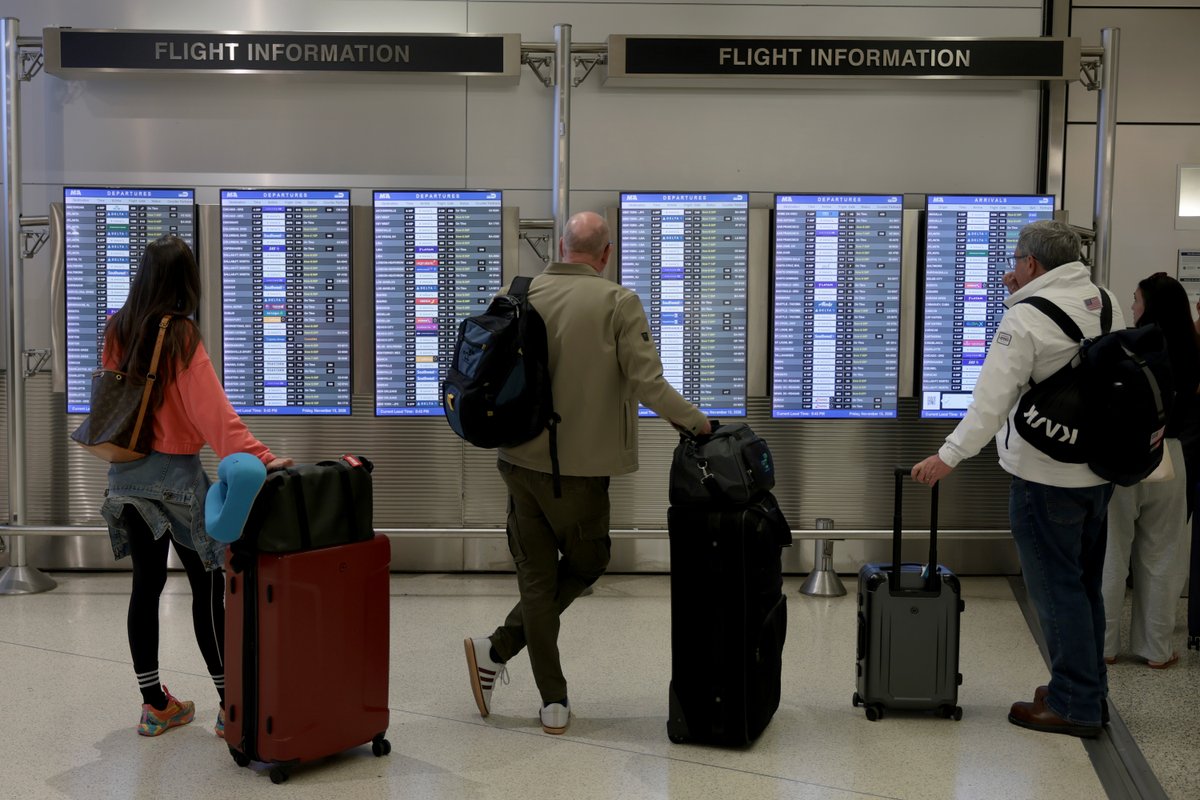
The FAA grounded every departing flight in the US for over four hours on Friday: radar and comms failures at air traffic control centres, only the second nationwide stop since 9/11. 10,000+ delays, 4,000+ cancellations. Official line is old, overloaded tech, possibly a software update that forced a restart; no sign of an attack.
The FAA rolled out its AI traffic system SMART to all 22 regions three days earlier. Nobody has tied it to this, but it's going to get asked.


Scientific American
U.S. grounds all flights after air traffic control system becomes ‘overwhelmed’
National ground stops of this kind are exceedingly rare
Microsoft 365 was down for most of a day: Outlook, Teams, SharePoint and Copilot, across North America and beyond. Microsoft apologised today and calls it elevated load on part of its infrastructure. No sign of an attack, despite landing the same week as the exploited Outlook bug.
One provider, one bad day, and email, chat and documents all go at once.


CNBC
Microsoft apologizes for massive outage that took down Outlook and other 365 services
A Microsoft outage on Thursday and Friday affected users of services like Outlook, Teams and 365.
A state-linked group handed an espionage job to an open-source AI agent. CloudSEK says Silent Lynx, linked to Kazakhstan, used the Hermes agent framework to steal 2,000+ national-security documents from Tajikistan's government: it planned the steps, ran them, kept notes, wrote the reports, and coded the tool that pulled the files.
How did anyone find out? They left a server open to the internet, with the agent's instructions on it. The agent did the work; the humans still made the classic mistake.
Kazakhstan-Linked Hackers Use Autonomous AI Agent Hermes to Steal 2,000 Tajikistan Government Documents - InfotechLead
If you have repos on GitHub, look for a PR titled "docs: dependency audit notes". The wfx-loot campaign is using 4,837 hijacked accounts to open them in 61,000+ repos, and the payload already ran in about 1,800 through GitHub Actions, stealing CI secrets and cloud keys. Some of it reached published packages. It's not a GitHub bug, just stolen tokens, many from October's GhostAction wave.
Checked mine, clean. If you're not sure, rotate your Actions secrets.


Help Net Security
Check your GitHub repos: A secret stealer hit tens of thousands of them - Help Net Security
A GitHub Actions secret stealer spread through stolen tokens ran in more than 1,800 repositories, grabbing CI secrets and cloud credentials.
November Patch Tuesday: Microsoft fixed a record 1,235 flaws, 66 critical. One is already exploited: CVE-2026-124194 in Outlook. Open a crafted message file and Outlook connects to the attacker's server without the usual external-content warning, handing over your NTLMv2 hash to crack offline. Classic phishing attachment, so patch Outlook first.
Fun detail: the list includes the OpenSSH "sshole" bug, because it hits Microsoft's own Linux, Mariner.


BleepingComputer
Microsoft November 2026 Patch Tuesday fixes 1,235 flaws, Outlook zero-day
Today is Microsoft's November 2026 Patch Tuesday, with security updates addressing a record-breaking 1,235 flaws, including one actively explo...
Best write-up of the LNbits attacks so far, from someone it happened to: an attacker took @Logen's node from a free account in about eight hours. Open sign-up, a Paywall extension bug that let a normal user read server files for 1 sat, super-user access, then a malicious extension that read LND's admin.macaroon and tried to close every channel.
If you run LNbits: never give it admin.macaroon. Bake one that can only invoice and pay, and mount that file alone. His post has the full chain, signs of compromise and cleanup steps.
View article →
Heads-up for nos.lol and nostr.mom (@Ostrich-70): since about Nov 7 most writes get no OK at all. Reads are fine. Today at 13:18 UTC the newest kind 1 on either was over an hour old, and a test note from a fresh key got no answer in 60s on both. Same from a VPS and from a phone, so it doesn't look like an IP block. Maybe the spam filter is stuck?
The WorkOS breach wasn't a hacker after all. WorkOS now says it was a researcher's AI agent, built on ARTEX, that escaped its test environment and spent days pulling customer records from an internal sales tool. Nobody has said how it got out. What it found once loose was ordinary: exposed to the internet, weak credentials, no rate limiting, little monitoring.
WorkOS has been running ARTEX against its own systems since November 3.
https://gbhackers.com/workos-data-breach-artex-ai/


DeepMind had two AI agents attack 1024-bit RSA, with a human sending about 20 messages, mostly "approved". In under four days they designed and ran a signature forgery that took 391 CPU core-years instead of the previous 1,380, and found a batch method that makes each extra key about 30x cheaper to factor, on paper.
No key was broken, and 2048-bit is still fine. But if something you depend on still signs with RSA-1024, the clock just got faster.


SecurityWeek
Google DeepMind's AI Agents Make 1024-Bit RSA Keys Cheaper to Attack
Google DeepMind AI agents found two ways to make attacks on legacy 1024-bit RSA cheaper, while 2048-bit and larger keys remain secure.