Kazani's avatar
Kazani
kazani@primal.net
npub1vm68...srrc
Beloved Bitcoin. Promo code: KAZANI ➡️ https://foundation.xyz/passport-prime
Kazani's avatar
Kazani 7 months ago
GM #Nostr The difference between splurging on material wants and still feeling hollow compared to simply being with loved ones and feeling deeply fulfilled is striking.
Kazani's avatar
Kazani 7 months ago
Researchers discover that every 3D printer leaves a unique "fingerprint" on prints, and they can be tracked back pretty accurately. www.xda-developers.com/3d-printer-unique-fingerprint/
Kazani's avatar
Kazani 7 months ago
GM #Nostr Passwords should be hashed, NOT encrypted.
Kazani's avatar
Kazani 7 months ago
Most monetized YouTubers serve the algorithm, not the truth- just like mainstream media. When content becomes a product, creators often chase views over value. That’s why I struggle to trust them.
Kazani's avatar
Kazani 7 months ago
GM #Nostr You don’t have to fight every battle- only the ones that truly matter. From what I’m seeing on social media, we often engage in the wrong battles and avoid the ones our soul is meant to face. That’s when life starts to feel out of sync.
Kazani's avatar
Kazani 7 months ago
Kazani's avatar
Kazani 7 months ago
How to Spot Friends Who Root For You Here’s a list of things to look for that indicate a person might be a great friend: People who speak honest truth to your face and praise you behind your back. People who consistently congratulate you when good things happen. People who like and share your stuff. People who intro you to people who might be able to help you. People who give you different ways to improve your product/brand/life. People whose default is “Let’s work on this together!” People who give meaningful feedback on your projects. People who say “We did it!” even when they did the majority of the work. How to Be a Hypeman This is a two way street. You can’t expect your friends to root for you if you don’t root for them. Here’s how you can do that: Be quick to praise: Train your first instinct to praise. Be tactfully honest: Good people value constructive criticism deeply. Expand their vision – “That’s awesome… and imagine if you… and have you seen this…?” Signal‑Boost – Shares and like their stuff all the time and ask them to tell you when they post.
Kazani's avatar
Kazani 7 months ago
Social media real estate is changing, people with higher purpose joining and manipulators leaving.
Kazani's avatar
Kazani 7 months ago
You didn't sleep 7-8 hours yesterday. Although you went to bed on time, you slept later because of your phone. You know the truth. I know the truth. You must do something about it. The sleep epidemic is harming you. Your broken energy levels, your random hunger pangs, breakouts on your skin, your anger and your anxiety - all are happening because you didn't sleep enough.
Kazani's avatar
Kazani 7 months ago
Another classic on movements, which hugely applies to crypto, AI, and even meme groups: Geeks, Mops, Sociopaths First small group of creators who invent an exciting Thing. The new scene draws fanatics. Fanatics don’t create, but they contribute energy (time, money, adulation, organization, analysis) to support the creators. Creators and fanatics are both geeks. They totally love the New Thing, they’re fascinated with all its esoteric ins and outs, and they spend all available time either doing it or talking about it. If the scene is unusually exciting, and the New Thing can be appreciated without having to get utterly geeky about details, it draws mops. Mops are fans, but not rabid fans like the fanatics. They show up to have a good time, and contribute as little as they reasonably can in exchange. The mop invasion Geeks welcome mops, at first at least. Fanatics want share their obsession, and mops initially validate it for them too. However, as mop numbers grow, they become a headache. Mops just passively soak up the good stuff. You may even have to push them around the floor; they have to be led to the drink. At best you can charge them admission or a subscription fee, but they’ll inevitably argue that this is wrong because capitalism is evil, and also because they forgot their wallet. Mops also dilute the culture. Mops relate to each other in “normal” ways, like people do on TV. During intermission, geeks want to talk about the New Thing, but mops blather about sportsball and celebrities. Also, the mops also seem increasingly entitled, treating the fanatics as service workers. Fanatics may be generous, but they signed up to support geeks, not mops. At this point, they may all quit, and the subculture collapses. The sociopath invasion Unless sociopaths show up, a subculture at this stage is ripe for exploitation. The creators generate cultural capital, i.e. cool. The fanatics generate social capital: a network of relationships—strong ones among the geeks, and weaker but numerous ones with mops. The mops, when properly squeezed, produce liquid capital, i.e. money. The sociopaths quickly become best friends with selected creators. They dress just like the creators—only better. They talk just like the creators—only smoother. They may even do some creating—competently, if not creatively. Geeks may not be completely fooled, but they also are clueless about what the sociopaths are up to. Mops are fooled. They don’t care so much about details, and the sociopaths look to them like creators, only better. Sociopaths become the coolest kids in the room, demoting the creators. At this stage, they take their pick of the best-looking mops to sleep with. They’ve extracted the cultural capital. So what is to be done? Geeks can refuse to admit mops. In fact, successful subcultures always do create costly barriers to entry, to keep out the uncommitted. Often there’s a struggle between geeks who like their cozy little club as it is, and geeks who want a shot at greatness. Alternatively, you could recognize sociopaths and eject them. Geeks may be pretty good at the recognizing, but are lousy at the ejecting. Mops don’t recognize sociopaths, and anyway care. Sociopaths manipulate the mops, and it’s hard for the geeks to overrule an overwhelming majority. Anyway, horribly, geeks need sociopaths—if the New Thing is ever going to be more than a geeky hobby. So what is to be done? Be slightly evil Be slightly evil. Or: geeks need to learn and use some of the sociopaths’ tricks. Then geeks can capture more of the value they create (and get better at ejecting true sociopaths). “Slightly evil” defense of a subculture requires realism: letting go of eternalist hope and faith in imaginary guarantees that the New Thing will triumph. Full Article: — 100% Mops help sociopaths wreck movements, by being absolute idiots who are easily manipulated by smooth manipulators There are 2 viable solutions, though uncomfortable

Kazani's avatar
Kazani 7 months ago
James Wynn is now long 9,188 #BTC, making it the first-ever on-chain leveraged long position to exceed $1 billion
Kazani's avatar
Kazani 7 months ago
In today’ world if you want to grow exponentially you can’t rely on Influencers you met on social media. Because they are diplomatic, they have to maintain their good will to stay relevant to mass. Either find your niche guru who doesn’t serve the mass or take the charge of knowledge in your hand.
Kazani's avatar
Kazani 7 months ago
Crypto Sovereignty is a project by Erik Cason He dives deep into the weird, wild mix of philosophy, politics, and cryptography behind Bitcoin Instead of charts or trading tips, he explores how Bitcoin flips the script on authority, truth, and power It’s kind of like if Nietzsche, Foucault, and a cypherpunk walked into a bar and started talking about blockchains Erik argues that Bitcoin isn’t just money but it’s a tool for self-sovereignty and resistance It challenges the state, questions who gets to decide what’s “true,” and imagines a world where people verify, not trust “Bitcoin is a weapon for the defense of life, liberty, and property in cyberspace.” Can definitely recommend his book as well cryptosovereignty.org
Kazani's avatar
Kazani 7 months ago
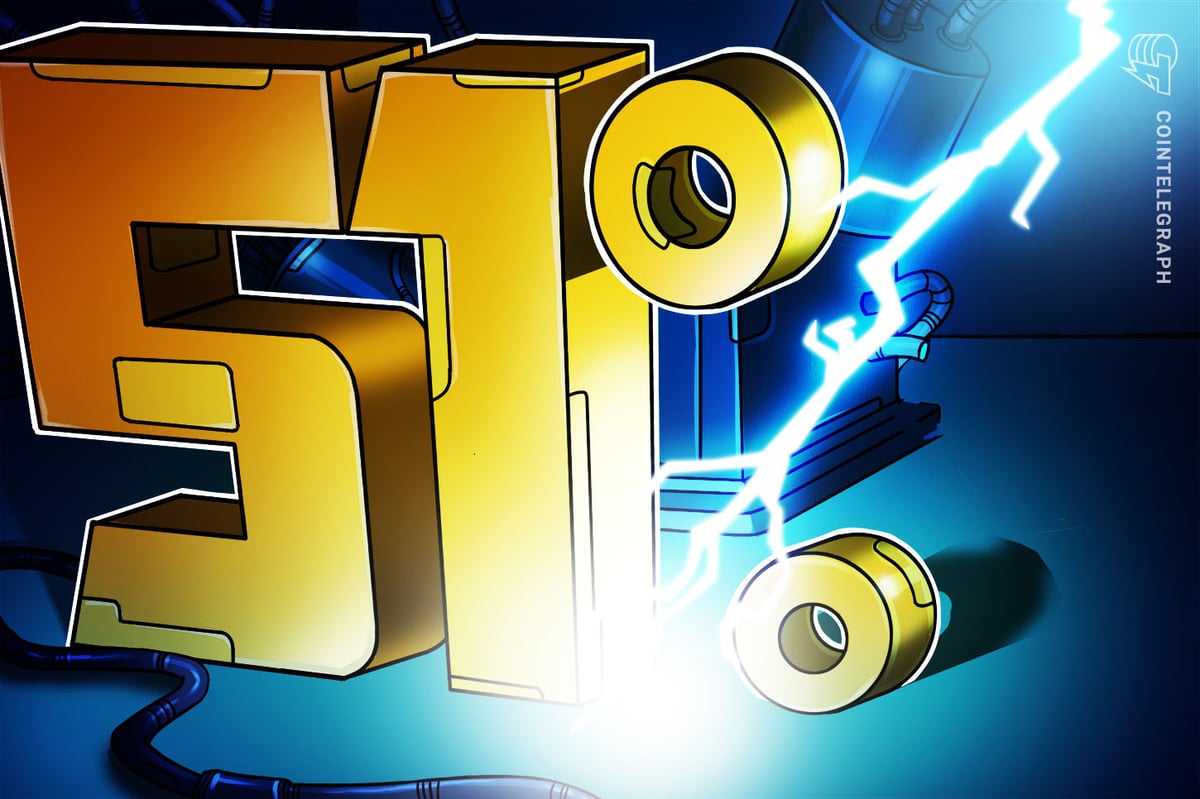
Ethereum researcher Justin Drake stated in an interview that a 51% attack on Bitcoin would be much cheaper than on Ethereum, estimating the cost to attack Bitcoin at around $10 billion. In contrast, attacking Ethereum, due to its PoS mechanism, would require controlling over 50% of staked ETH (currently valued at approximately $44.8 billion), with price volatility potentially driving the cost even higher. Is these people stupid? To do a 51% attack you require to be 51% of all nodes! To become 51% of all nodes you need a source of electricity. Lets just pretend you will use Iran as the 51% attack In Iran , you must buy a plot of land then must buy around 10-15 billion usd worth of miners You’re electricity cost will be like probably maybe 250k in total So you do all of this, and you get nothing at the end of it. Or Wipe out the internet for every country around the world including satellites ( but then again you cant do anything! ) The theory of a 51% attack is long outdated and is used by morons who want to cause fear in the system Hacking the FIAT system is alot easier than Bitcoin. Why hack bitcoin when you can hack and print and copy infinite cash
Kazani's avatar
Kazani 7 months ago
📱 Apple Clipboard Protection MacOS 16 will implement a new feature that will alert users when a Mac app accesses the clipboard without direct user interaction, preventing apps from unknowingly reading (copying) clipboard data. We already found something similar in iOS and Android, however, this doesn't happen in Windows and any running application can access the clipboard without restrictions, making it less secure by design. In Linux it will depend on the desktop environment used but there are no "default" warnings.
Kazani's avatar
Kazani 7 months ago
🌐 Kernel-level Tor isolation for any Linux application. • The Tor Project team has released an open source solution called oniux for isolating Tor at the kernel level for any Linux application. The project's source code is written in Rust and published under the MIT license. "When running privacy-critical applications and services, developers want to be sure that every packet truly only goes through Tor. One mistyped proxy setting or one system call outside of a SOCKS shell, and suddenly your data is at risk. That’s why today we’re excited to introduce oniux: a small command-line utility that provides Tor network isolation for third-party applications using Linux namespaces. — The Tor Project explains." • It's worth noting that there is already a tool with a similar purpose, known as torsocks, which works by rewriting all libc networking functions to route traffic through the SOCKS proxy offered by Tor. This project has the notable drawback that applications making system calls not through the dynamically linked libc , whether malicious or not, can leak data. It also excludes support for purely static binaries and applications from the Zig ecosystem. • Oniux can be useful for running privacy-critical applications and services. Usage is as simple as adding a call to the "oniux" utility before running the desired program. For example, to send a request via curl over Tor, you can run " oniux curl URL ", and to route any requests within a shell session through Tor, you can run " oniux bash ". Isolation of graphical applications is supported.
Kazani's avatar
Kazani 7 months ago