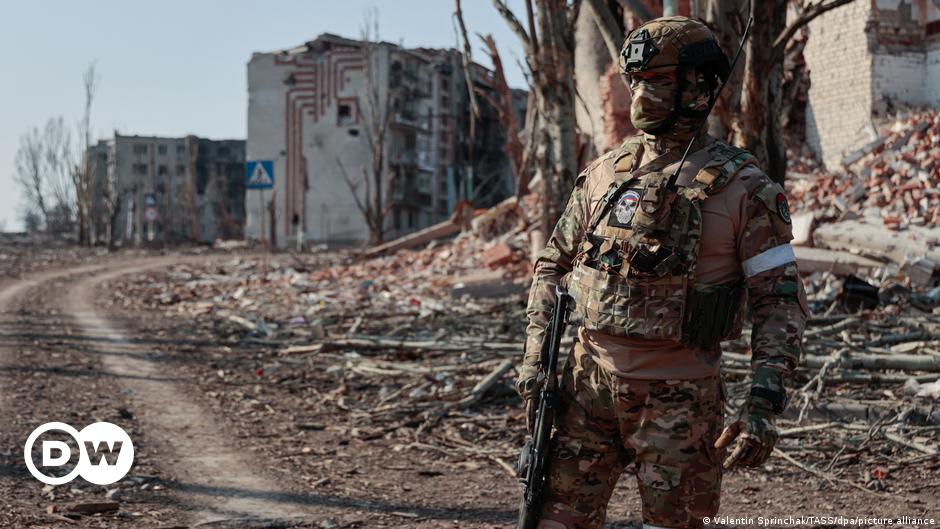
Along with inflation and taxation, the destruction of physical wealth has historically been one of the greatest threats to the overall prosperity of humanity.
But, most of humanity still uses physical goods to store value. This baffles me. What to do if a war breaks out?
Even in ancient times, armies ruthlessly plundered cities and stole and destroyed the residents' belongings. I came across an interesting conversation on reddit about how war loot was divided among armies in ancient Rome.(https://reddit.com/r/AskHistorians/comments/3bdppz/how_was_war_loot_split_amongst_armies_in_the/).
The destruction of housing infrastructure during the Syrian Civil War, for example, offers a stark illustration of the problems associated with storing wealth in physical assets. Over 40% of the country's #realestate stock was reportedly damaged or destroyed, along with the value stored in it, resulting in billions of dollars in economic losses. By the end of 2019, the conflict had cost Syria $530.1 billion, or 9.7 times the country's GDP in 2010. The figure covers the loss of local production, estimated at $420.9 billion. As the civil war in Syria reaches the 10 year mark, the economic cost of the conflict has risen to close to $1.2 trillion.
This scenario highlights the risks associated with physical assets in conflict zones and highlights the advantage of Bitcoin as an immutable, indestructible and mobile store of value.
Leon
@leonwankum@BitcoinNostr.com
npub1v5k4...8rd9
Bitcoin. Real Estate. Philosophy & Ethics. Proof-of-Work. Newsletter: leonwankum.substack.com
Today, finding focus is the ultimate superpower.
Bitcoin helps.
1. There is no need to waste time worrying about making investments.
2. There is no need to waste time managing an investment portfolio.
3. There is no need to waste money on management or consulting fees.
Ever thought of bitcoin as digital real estate? Here's a simple take on it. 👇
Just like owning a piece of prime real estate in a bustling city lets you tap into the city's economic growth, holding bitcoin is like having a stake in the internet of value (the world's digital economy).
In #realestate, your property's value is linked to the city's economic activities – whether it's New York's finance and fashion scenes or its bustling tourism. The more the city thrives, the more valuable your property becomes.
Bitcoin works similarly but in the digital space. It's like owning a plot in the vast digital landscape. As more people and businesses use the Bitcoin network, your 'digital plot' (i.e., bitcoin) potentially grows in value. The best part? This digital plot isn't tied to any one location; it's global.
So, possessing bitcoin is like having prime real estate in the ever-expanding digital world. It's a new way to be part of the global digital economy.
Bitcoin will strip #realestate of its monetary premium.
A significant portion of capital inflow into Bitcoin in the coming bull market will come from #realestate investors. Here's why 👇
1. Bitcoin is primarily seen as an alternative to gold (market cap: $10 -12 T) due to its limited supply and excellent monetary properties. In fact, however, bitcoin is a competitor to the world's most used store of value, #realestate ($330 T).
2. If you think about it, Bitcoin's characteristics reflect many of the value propositions of real estate, in addition to inherently safer custody, easier maintenance, and, most importantly, the ability to liquidate or move your wealth in times of crisis.
3. ≈ 67% of the world’s net wealth is currently stored in real estate. Given bitcoin’s vastly superior properties as a store of value, it has the potential to absorb a significant portion of the monetary premium that real estate carries as a store of value.
4. We can already observe this dynamic. While the bitcoin price is attractive due to its long-term price trend, real estate is in crisis. Driven by high interest rates and lower demand. This encourages real estate investors to buy bitcoin (see attached article).
5. I expect this trend to continue. Real estate investors understand the advantages of scarce assets in an inflationary environment. Once they realize the advantages of BTC over RE as a store of value, billions, even trillions in value will flow into #Bitcoin.
5.

Bitcoin Magazine
Real Estate Investors Are Flocking To Bitcoin In Record Numbers, Says Swiss Exchange
Bitcoin is also rapidly siphoning capital from other traditional assets like securities and bonds, says the exchange.
If #realestate is not properly cared for, its value will literally degrade over time. Bitcoin on the other hand provides the ultimate form of transferable value because it preserves the encapsulated wealth.
I'm getting more and more reactions to my posts on Nostr. I feel like more people are active here than a few weeks ago ?
Bitcoin & Real Estate – I’m working on a book. 📖
In 2012, during my philosophy studies, I heard about Bitcoin for the first time. Since 2016, I have been working full-time in the real estate industry. For a long time I thought that real estate and Bitcoin didn't have much in common. But, this is not the case.
Bitcoin and real estate are similar in many ways: hard, tangible, scarce. Scarcity has quite a lot to do with the value of things, which is why certain unique pieces of art are worth so much and why real estate in a densely populated area is more expensive than in a non-densely populated area (surferjim , 2020).
Yes, RE has utility value because people pay rent to live in it or use it for production, but the value is primarily determined by the limited supply of building land.
Bitcoin’s appeal also stems from the fact that its supply is limited. There will never be more than 21 M bitcoin.
As a store of value, real estate competes with bitcoin. The properties associated with bitcoin make it an ideal store of value.
The supply is finite, it is easily portable, divisible, durable, fungible, censorship-resistant and noncustodial. Real estate cannot compete with bitcoin as a store of value. Bitcoin is rarer, more liquid, easier to move and harder to confiscate. It can be sent anywhere in the world at almost no cost at the speed of light.
This could have two consequences:
1. Bitcoin could reduce demand for real estate by acting as an easily accessible store of value that people may prefer to use for savings rather than real estate.
2. Real estate might lose the monetary premium it has accumulated in an inflationary financial system, which could flow into #bitcoin. A superior store of value.
I have developed explicit strategies for real estate investors to integrate Bitcoin into their existing business processes. So that they can benefit from the digital disruption that Bitcoin represents
Now I would like to take the time and compile the relevant articles that I have published into a book.
The overall purpose of this book is to make people aware of the disruption that Bitcoin could bring to the real estate industry because it is a superior store of value. I will share the strategies I developed so that entrepreneurs can apply them in their businesses. I will also highlight the positive social and economic disruption caused by Bitcoin's digital disruption.
The target audience of my book are RE investors and developers with an in depth knowledge about finance that want to understand why and how Bitcoin is going to disrupt the #realestate business and what particular strategies they have to learn and apply in order to benefit from this technological paradigm shift.
A second target audience is people who have in-depth knowledge of Bitcoin and are interested in learning how it will revolutionize the real estate industry, the largest asset class in the world. Its disruption will therefore have fundamental implications for the global financial system and societies worldwide.
Real estate is the world's most important store of value and the preferred form of collateral when banks lend money. Bitcoin will likely take on this role in the future.
Digital Real Estate is thus the working title of the book.
#Bitcoin #Realestate #DigitalRealEstate #book
“How did #realestate investors cope with the rising CapEx caused by currency devaluation in the 1970s?“
From research and conversations with RE developers who were active in the 1970s and 1980s, I learned that to cope with rising maintenance costs, inflation, and interest rates, landlords simply raised rents and passed the costs onto tenants.
According to a business partner, this is the reason why there are rent caps in Germany, Sweden etc.
In my opinion this illustrates how the fiat system, with its inherent inflation, forces rational market participants to do things (in this case, increase rents) that have negative social consequences.
This is further evidence of the negative impact that central banks, currency devaluation and inflation can have on individuals, society, and the market.
Bitcoin as a disinflationary money and deflationary currency system obviously offers a better alternative here.
1. Property owners can use bitcoin to protect their cash flow from inflation and are not forced to pass on the higher costs to tenants.
2. This means that, in theory, property rental costs and valuations are not rising as quickly.
3. In the best case scenario, this will make housing affordable and building attractive again in the long term.


Bitcoin Magazine
Replacing The World’s Preferred Store Of Value, Bitcoin Will Make Housing Affordable Again
As fiat loses its purchasing power over time, real estate becomes a preferred store of value and housing prices skyrocket. Bitcoin fixes this.

I would like to thank you all for the positive feedback on my last podcast. The topics of Bitcoin and #realestate fascinate me.
I will be publishing a series of papers on the topic this year.
It was an honour to discuss Bitcoin & #realestate with @preston.
In a world marked by increasing violence and hostility, the ability to protect wealth with Bitcoin becomes critical.


dw.com
Global conflicts: Death toll at highest in 21st century – DW – 06/28/2023
Conflict deaths are higher than they have ever been this century with over 238,000 people killed in conflicts last year.
Sharpening mind, body and soul. Day for day. Night for night.


With rising interest rates, #realestate has become less affordable as people cannot afford financing. Therefore, I expect people to gravitate towards buying bitcoin, an accessible and affordable store of value.
How Cannabis Affects Disciplined People.
Balancing Bricks and Bytes: The Evolving Role of Bitcoin in #RealEstate - a new article of mine is online.
https://en.coinfinity.co/blog/bitcoin-and-real-estate-leon-wankum
Bitcoin is pristine collateral for lending. Since #realestate development is very capital intensive, credit is important. That is, the more bitcoin you own, the more collateral you have to finance construction. We've discussed this in detail at Bitcoin Amsterdam.
Money is highly spiritual.
Some of my thoughts on what interest rates would look like under a Bitcoin standard? 👇
In a free market under hard money, the actual or market interest rate depends on various factors, in particular the supply and demand for capital.
When the supply of capital exceeds demand, the market interest rate falls, while it rises when demand exceeds supply. The market interest rate is therefore the price at which capital is exchanged on the market.
A net interest rate would likely emerge naturally. We can assume that the interest rate would reflect the general time preference of people in the economy. Under a Bitcoin standard, interest rates would likely be higher, as the risk of capital loss is higher with a finite money such as bitcoin than with a fiat currency. This will likely result in higher interest rates being demanded to compensate for the higher risk.
Under a fiat standard, the "risk-free" interest rate is tied to inflation. A US Treasury bond with a yield of 5-6% would be considered risk-free, among other things, because the yield theoretically compensates for the loss of purchasing power that fiat money experiences.
More importantly, the "risk-free" interest rate component of fiat money refers to a country's risk of default, which is generally considered very unlikely since states are able to produce money “endlessly”.
The term "risk-free" is misleading. It does not exist per se. Opportunity costs exist always and everywhere and the market interest rate depends on various factors, including the risk of capital loss.
There is also a historical certainty that any fiat currency will eventually go to zero, which is often not reflected in the fiat market's "risk-free" interest rate.
Under a Bitcoin standard, the lowest risk component relates to the risk of loss of bitcoin held in self-custody. When stored in cold storage, those bitcoin are the holder’s alone and not in danger of confiscation or inflation by third parties.
The lowest risk return for #bitcoin is directly related to productivity. Since bitcoin is finite, the value of individual units increases with human productivity. There is a risk of not participating in the increase in the value of bitcoin (deflation) in the event of a loss. The interest rate on a loan under a Bitcoin standard would likely be the deflation rate plus a risk premium to compensate for the potential loss of bitcoin.
Full article: 

Bitcoin Magazine
Bitcoin Will Completely Change Real Estate Markets And Interest Rates
Bitcoin as a new variable in global markets will have a drastic effect on other market prices the larger it grows.
Have you ever wondered what the cost of rent would be under a Bitcoin standard? 👇 #BitcoinUrbanism #Housing
An important factor in determining the average cost of rent in a given geographic area would be the average disposable income of a household in that area. Over time, rental prices would emerge naturally from the market. This is a very complex subject.
According to the Austrian economist Ludwig von Mises, rent is not the specific revenue from land, it is a market phenomenon, where entrepreneurs are willing to take risk by investing funds in the production of a house to earn a return (rent).
Mises called this “originary interest,” which refers to the markup between factor prices and the expected revenues from the sale of the finished product. The implied rate of return on a production project.
When renting, the surplus money from not purchasing a house can be used for something else that is considered more important. For example, to finance a business or to save (for comparison: Under fiat, excess cash can be used to buy bitcoin).
We can expect the #rent to be close to the risk-free interest rate under sound money, plus an adjustment for risk, because after all, the rental is not risk-free. The property could be damaged and rent not paid. Yes, insurance could be purchased, but it would be costly and time-consuming.
The market interest rate would reflect the overall time preference of people in the economy. A risk-free interest rate would naturally emerge from the market, as will for example the average rents.
Full article: 

Bitcoin Magazine
Bitcoin Will Completely Change Real Estate Markets And Interest Rates
Bitcoin as a new variable in global markets will have a drastic effect on other market prices the larger it grows.