So I want to present about bitcoin to non coiners (Christian). I have an hour. I’m not the best speaker so I’m looking to play a video. What are some videos you’ve seen that really made the case for newbies? Thank you

Good morning friends!
Thursday 7 March 2024
Thursday of the 3rd week of Lent
(optional commemoration of Saints Perpetua and Felicity, Martyrs)
Spiritual Reading
Your Second Reading from the Office of Readings:
Thursday of the 3rd week of Lent
From the treatise On Prayer by Tertullian, priest
The spiritual offering of prayer
Prayer is the offering in spirit that has done away with the sacrifices of old. What good do I receive from the multiplicity of your sacrifices? asks God. I have had enough of burnt offerings of rams, and I do not want the fat of lambs and the blood of bulls and goats. Who has asked for these from your hands?
What God has asked for we learn from the Gospel. The hour will come, he says, when true worshippers will worship the Father in spirit and in truth. God is a spirit, and so he looks for worshippers who are like himself.
We are true worshippers and true priests. We pray in spirit, and so offer in spirit the sacrifice of prayer. Prayer is an offering that belongs to God and is acceptable to him: it is the offering he has asked for, the offering he planned as his own.
We must dedicate this offering with our whole heart, we must fatten it on faith, tend it by truth, keep it unblemished through innocence and clean through chastity, and crown it with love. We must escort it to the altar of God in a procession of good works to the sound of psalms and hymns. Then it will gain for us all that we ask of God.
Since God asks for prayer offered in spirit and in truth, how can he deny anything to this kind of prayer? How great is the evidence of its power, as we read and hear and believe.
Of old, prayer was able to rescue from fire and beasts and hunger, even before it received its perfection from Christ. How much greater then is the power of Christian prayer. No longer does prayer bring an angel of comfort to the heart of a fiery furnace, or close up the mouths of lions, or transport to the hungry food from the fields. No longer does it remove all sense of pain by the grace it wins for others. But it gives the armour of patience to those who suffer, who feel pain, who are distressed. It strengthens the power of grace, so that faith may know what it is gaining from the Lord, and understand what it is suffering for the name of God.
In the past prayer was able to bring down punishment, rout armies, withhold the blessing of rain. Now, however, the prayer of the just turns aside the whole anger of God, keeps vigil for its enemies, pleads for persecutors. Is it any wonder that it can call down water from heaven when it could obtain fire from heaven as well? Prayer is the one thing that can conquer God. But Christ has willed that it should work no evil, and has given it all power over good.
Its only art is to call back the souls of the dead from the very journey into death, to give strength to the weak, to heal the sick, to exorcise the possessed, to open prison cells, to free the innocent from their chains. Prayer cleanses from sin, drives away temptations, stamps out persecutions, comforts the fainthearted, gives new strength to the courageous, brings travellers safely home, calms the waves, confounds robbers, feeds the poor, overrules the rich, lifts up the fallen, supports those who are falling, sustains those who stand firm.
All the angels pray. Every creature prays. Cattle and wild beasts pray and bend the knee. As they come from their barns and caves they look out to heaven and call out, lifting up their spirit in their own fashion. The birds too rise and lift themselves up to heaven: they open out their wings, instead of hands, in the form of a cross, and give voice to what seems to be a prayer.
What more need be said on the duty of prayer? Even the Lord himself prayed. To him be honour and power for ever and ever. Amen.
________
Other choices for today:
Saints Perpetua and Felicity, Martyrs
The martyrdom of Perpetua, Felicity and others, from the Menologion of Basil II, c.1000.
From the story of the death of the holy martyrs of Carthage
Called and chosen for the glory of the Lord
The day of the martyrs’ victory dawned. They marched from their cells into the amphitheatre, as if into heaven, with cheerful looks and graceful bearing. If they trembled it was for joy and not for fear.
Perpetua was the first to be thrown down, and she fell prostrate. She got up and, seeing that Felicity was prostrate, went over and reached out her hand to her and lifted her up. Both stood up together. The hostility of the crowd was appeased, and they were ordered to the gate called Sanavivaria. There Perpetua was welcomed by a catechumen named Rusticus. Rousing herself as if from sleep (so deeply had she been in spiritual ecstasy), she began to look around. To everyone’s amazement she said: “When are we going to be led to the beast?” When she heard that it had already happened she did not at first believe it until she saw the marks of violence on her body and her clothing. Then she beckoned to her brother and the catechumen, and addressed them in these words: “Stand firm in faith, love one another and do not be tempted to do anything wrong because of our sufferings.”
Saturus, too, in another gate, encouraged the soldier Pudens, saying: “Here I am, and just as I thought and foretold I have not yet felt any wild beast. Now believe with your whole heart: I will go there and be killed by the leopard in one bite.” And right at the end of the games, when he was thrown to the leopard he was in fact covered with so much blood from one bite that the people cried out to him: “Washed and saved, washed and saved!” And so, giving evidence of a second baptism, he was clearly saved who had been washed in this manner.
Then Saturus said to the soldier Pudens: “Farewell, and remember your faith as well as me; do not let these things frighten you; let them rather strengthen you.” At the same time he asked for the little ring from Pudens’s finger. After soaking it in his wound he returned it to Pudens as a keepsake, leaving him a pledge and a remembrance of his blood. Half dead, he was thrown along with the others into the usual place of slaughter.
The people, however, had demanded that the martyrs be led to the middle of the amphitheatre. They wanted to see the sword thrust into the bodies of the victims, so that their eyes might share in the slaughter. Without being asked they went where the people wanted them to go; but first they kissed one another, to complete their witness with the customary kiss of peace.
The others stood motionless and received the deathblow in silence, especially Saturus, who had gone up first and was first to die; he was helping Perpetua. But Perpetua, that she might experience the pain more deeply, rejoiced over her broken body and guided the shaking hand of the inexperienced gladiator to her throat. Such a woman – one before whom the unclean spirit trembled – could not perhaps have been killed, had she herself not willed it.
Bravest and happiest martyrs! You were called and chosen for the glory of our Lord Jesus Christ.
Saturday after Ash Wednesday
From the treatise "Against the Heresies" by St Irenaeus
The friendship of God
Our Lord, the Word of God, first drew men to God as servants, but later he freed those made subject to him. He himself testified to this: I do not call you servants any longer, for a servant does not know what his master is doing. Instead I call you friends, since I have made known to you everything that I have learned from my Father. Friendship with God brings the gift of immortality to those who accept it.
In the beginning God created Adam, not because he needed man, but because he wanted to have someone on whom to bestow his blessings. Not only before Adam but also before all creation, the Word was glorifying the Father in whom he dwelt, and was himself being glorified by the Father. The Word himself said: Father, glorify me with that glory I had with you before the world was.
Nor did the Lord need our service. He commanded us to follow him, but his was the gift of salvation. To follow the Saviour is to share in salvation; to follow the light is to enjoy the light. Those who are in the light do not illuminate the light but are themselves illuminated and enlightened by the light. They add nothing to the light; rather, they are beneficiaries, for they are enlightened by the light.
The same is true of service to God: it adds nothing to God, nor does God need the service of man. Rather, he gives life and immortality and eternal glory to those who follow and serve him. He confers a benefit on his servants in return for their service and on his followers in return for their loyalty, but he receives no benefit from them. He is rich, perfect and in need of nothing.
The reason why God requires service from man is this: because he is good and merciful he desires to confer benefits on those who persevere in his service. In proportion to God’s need of nothing is man’s need for communion with God.
This is the glory of man: to persevere and remain in the service of God. For this reason the Lord told his disciples: You did not choose me but I chose you. He meant that his disciples did not glorify him by following him, but in following the Son of God they were glorified by him. As he said: I wish that where I am they also may be, that they may see my glory.
**** Note how old the above writing is, how long ago he lived and how God used him, a Bishop, to help define the books of the New Testament…the Church predates the Bible and comes forth from her
About the author of the Second Reading in today's Office of Readings:
Second Reading: St Irenaeus (130 - 202)
Irenaeus was born in Smyrna, in Asia Minor (now Izmir in Turkey) and emigrated to Lyons, in France, where he eventually became the bishop. It is not known for certain whether he was martyred or died a natural death.
Whenever we take up a Bible we touch Irenaeus’s work, for he played a decisive role in fixing the canon of the New Testament. It is easy for people nowadays to think of Scripture – and the New Testament in particular – as the basis of the Church, but harder to remember that it was the Church itself that had to agree, early on, about what was scriptural and what was not. Before Irenaeus, there was vague general agreement on what scripture was, but a system based on this kind of common consent was too weak. As dissensions and heresies arose, reference to scripture was the obvious way of trying to settle what the truth really was, but in the absence of an agreed canon of scripture it was all too easy to attack one’s opponent’s arguments by saying that his texts were corrupt or unscriptural; and easy, too, to do a little fine-tuning of texts on one’s own behalf. Irenaeus not only established a canon which is almost identical to our present one, but also gave reasoned arguments for each inclusion and exclusion.
Irenaeus also wrote a major work, Against the Heresies, which in the course of denying what the Christian faith is not, effectively asserts what it is. The majority of this work was lost for many centuries and only rediscovered in a monastery on Mount Athos in 1842. Many passages from it are used in the Office of Readings.
Ash Wednesday
Grant, O Lord, that we may begin with holy fasting
this campaign of Christian service,
so that, as we take up battle against spiritual evils,
we may be armed with weapons of self-restraint.
Ash Wednesday
From a letter of Pope St Clement I to the Corinthians
Repent
Let us fix our attention on the blood of Christ and recognise how precious it is to God his Father, since it was shed for our salvation and brought the grace of repentance to all the world.
If we review the various ages of history, we will see that in every generation the Lord has offered the opportunity of repentance to any who were willing to turn to him. When Noah preached God’s message of repentance, all who listened to him were saved. Jonah told the Ninevites they were going to be destroyed, but when they repented, their prayers gained God’s forgiveness for their sins, and they were saved, even though they were not of God’s people.
Under the inspiration of the Holy Spirit, the ministers of God’s grace have spoken of repentance; indeed, the Master of the whole universe himself spoke of repentance with an oath: As I live, says the Lord, I do not wish the death of the sinner but his repentance. He added this evidence of his goodness: House of Israel, repent of your wickedness. Tell the sons of my people: If their sins should reach from earth to heaven, if they are brighter than scarlet and blacker than sackcloth, you need only turn to me with your whole heart and say, “Father,” and I will listen to you as a holy people.
In other words, God wanted all his beloved ones to have the opportunity to repent and he confirmed this desire by his own almighty will. That is why we should obey his sovereign and glorious will and prayerfully entreat his mercy and kindness. We should be suppliant before him and turn to his compassion, rejecting empty works and quarrelling and jealousy which only lead to death.
Brothers, we should be humble in mind, putting aside all arrogance, pride and foolish anger. Rather, we should act in accordance with the Scriptures, as the Holy Spirit says: The wise man must not glory in his wisdom nor the strong man in his strength nor the rich man in his riches. Rather, let him who glories glory in the Lord by seeking him and doing what is right and just. Recall especially what the Lord Jesus said when he taught gentleness and forbearance. Be merciful, he said, so that you may have mercy shown to you. Forgive, so that you may be forgiven. As you treat others, so you will be treated. As you give, so you will receive. As you judge, so you will be judged. As you are kind to others, so you will be treated kindly. The measure of your giving will be the measure of your receiving.
Let these commandments and precepts strengthen us to live in humble obedience to his sacred words. As Scripture asks: Whom shall I look upon with favour except the humble, peaceful man who trembles at my words?
Sharing then in the heritage of so many vast and glorious achievements, let us hasten towards the goal of peace, set before us from the beginning. Let us keep our eyes firmly fixed on the Father and Creator of the whole universe, and hold fast to his splendid and transcendent gifts of peace and all his blessings.
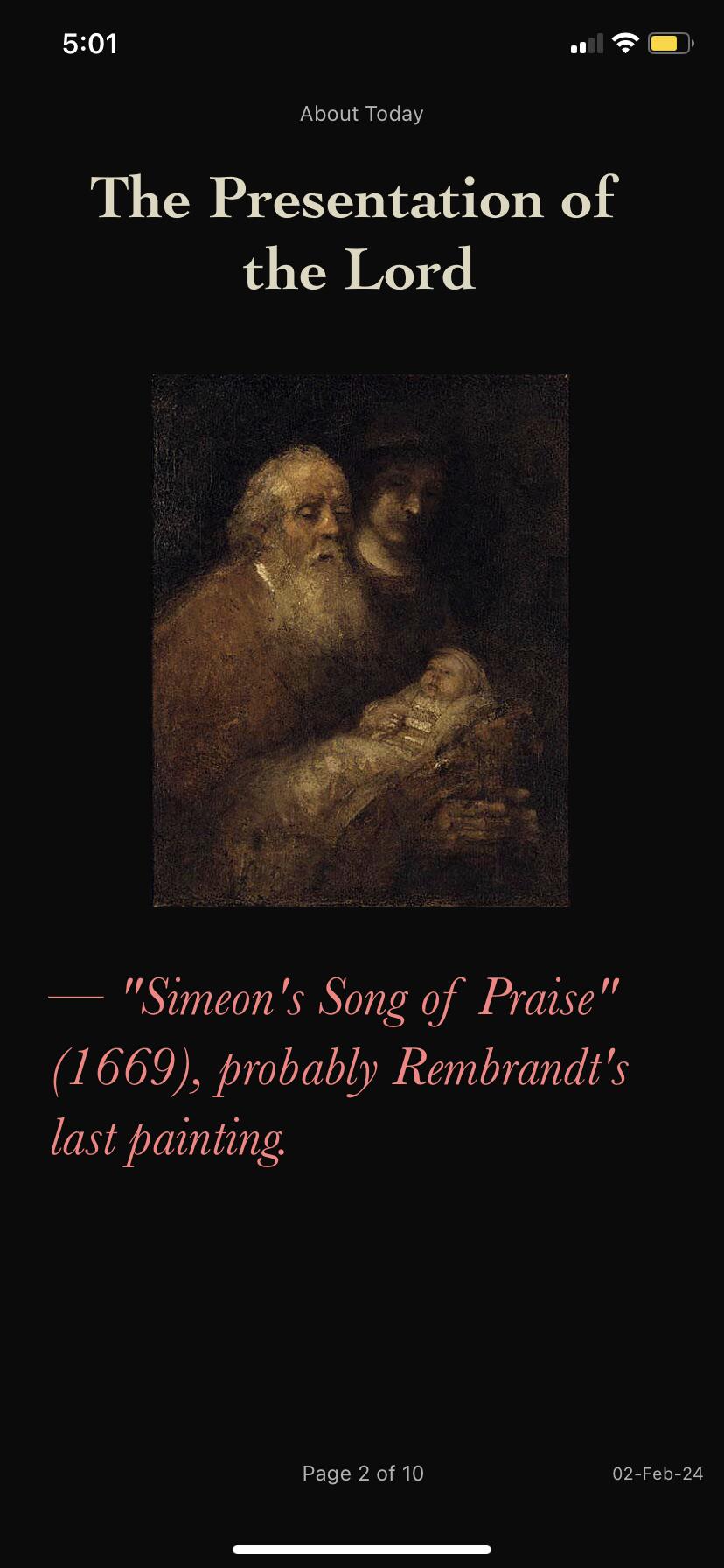
Friday 2 February 2024
The Presentation of the Lord - Feast
From a sermon by Saint Sophronius, bishop
Let us receive the light whose brilliance is eternal
In honour of the divine mystery that we celebrate today, let us all hasten to meet Christ. Everyone should be eager to join the procession and to carry a light.
Our lighted candles are a sign of the divine splendour of the one who comes to expel the dark shadows of evil and to make the whole universe radiant with the brilliance of his eternal light. Our candles also show how bright our souls should be when we go to meet Christ.
The Mother of God, the most pure Virgin, carried the true light in her arms and brought him to those who lay in darkness. We too should carry a light for all to see and reflect the radiance of the true light as we hasten to meet him.
The light has come and has shone upon a world enveloped in shadows; the Dayspring from on high has visited us and given light to those who lived in darkness. This, then, is our feast, and we join in procession with lighted candles to reveal the light that has shone upon us and the glory that is yet to come to us through him. So let us hasten all together to meet our God.
The true light has come, the light that enlightens every man who is born into this world. Let all of us, my brethren, be enlightened and made radiant by this light. Let all of us share in its splendour, and be so filled with it that no one remains in the darkness. Let us be shining ourselves as we go together to meet and to receive with the aged Simeon the light whose brilliance is eternal. Rejoicing with Simeon, let us sing a hymn of thanksgiving to God, the Father of the light, who sent the true light to dispel the darkness and to give us all a share in his splendour.
Through Simeon’s eyes we too have seen the salvation of God which he prepared for all the nations and revealed as the glory of the new Israel, which is ourselves. As Simeon was released from the bonds of this life when he had seen Christ, so we too were at once freed from our old state of sinfulness.
By faith we too embraced Christ, the salvation of God the Father, as he came to us from Bethlehem. Gentiles before, we have now become the people of God. Our eyes have seen God incarnate, and because we have seen him present among us and have mentally received him into our arms, we are called the new Israel. Never shall we forget this presence; every year we keep a feast in his honour.
Why does everything cost so much?
Saw this online and appreciated this message, from my Archbishop:
Log in or sign up to view
See posts, photos and more on Facebook.
Trying the pizza oven for first time! #foodstr #pizza #fathead

Sunday 28 January 2024
4th Sunday in Ordinary Time
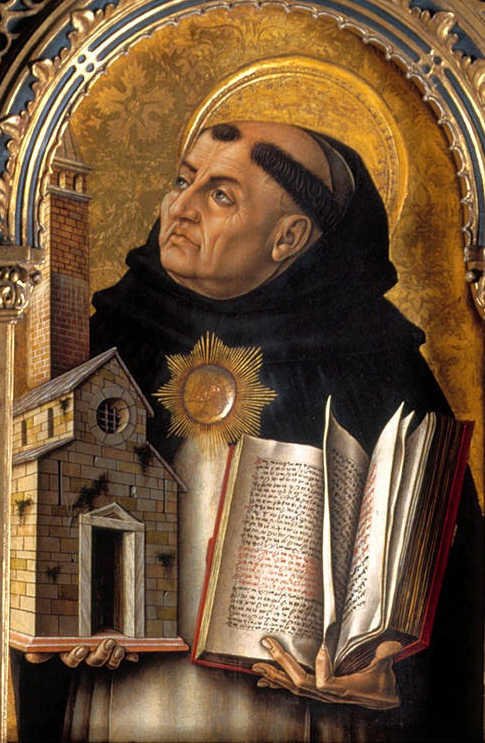
Saint Thomas Aquinas, Priest, Doctor
Painting by Carlo Crivelli, 1476, from the large 'Demidoff Altarpiece' made for the high altar of San Domenico in Ascoli Piceno, east central Italy, now in the National Gallery, London.
From a conference by Saint Thomas Aquinas, priest
The Cross exemplifies every virtue
Why did the Son of God have to suffer for us? There was a great need, and it can be considered in a twofold way: in the first place, as a remedy for sin, and secondly, as an example of how to act.
It is a remedy, for, in the face of all the evils which we incur on account of our sins, we have found relief through the passion of Christ. Yet, it is no less an example, for the passion of Christ completely suffices to fashion our lives. Whoever wishes to live perfectly should do nothing but disdain what Christ disdained on the cross and desire what he desired, for the cross exemplifies every virtue.
If you seek the example of love: Greater love than this no man has, than to lay down his life for his friends. Such a man was Christ on the cross. And if he gave his life for us, then it should not be difficult to bear whatever hardships arise for his sake.
If you seek patience, you will find no better example than the cross. Great patience occurs in two ways: either when one patiently suffers much, or when one suffers things which one is able to avoid and yet does not avoid. Christ endured much on the cross, and did so patiently, because when he suffered he did not threaten; he was led like a sheep to the slaughter and he did not open his mouth. Therefore Christ’s patience on the cross was great. In patience let us run for the prize set before us, looking upon Jesus, the author and perfecter of our faith who, for the joy set before him, bore his cross and despised the shame.
If you seek an example of humility, look upon the crucified one, for God wished to be judged by Pontius Pilate and to die.
If you seek an example of obedience, follow him who became obedient to the Father even unto death. For just as by the disobedience of one man, namely, Adam, many were made sinners, so by the obedience of one man, many were made righteous.
If you seek an example of despising earthly things, follow him who is the King of kings and the Lord of lords, in whom are hidden all the treasures of wisdom and knowledge. Upon the cross he was stripped, mocked, spat upon, struck, crowned with thorns, and given only vinegar and gall to drink.
Do not be attached, therefore, to clothing and riches, because they divided my garments among themselves. Nor to honours, for he experienced harsh words and scourgings. Nor to greatness of rank, for weaving a crown of thorns they placed it on my head. Nor to anything delightful, for in my thirst they gave me vinegar to drink.
Saturday 27 January 2024
Saturday of week 3 in Ordinary Time
or Saint Angela Merici, Virgin
Spiritual Reading
Your Second Reading from the Office of Readings:
Saturday of week 3 in Ordinary Time
From the Second Vatican Council's pastoral constitution "Gaudium et spes" on the Church in the modern world
The mystery of death
In the face of death the enigma of human existence reaches its climax. Man is not only the victim of pain and the progressive deterioration of his body; he is also, and more deeply, tormented by the fear of final extinction. But the instinctive judgement of his heart is right when he shrinks from, and rejects, the idea of a total collapse and definitive end of his own person. He carries within him the seed of eternity, which cannot be reduced to matter alone, and so he rebels against death. All efforts of technology, however useful they may be, cannot calm his anxieties; the biological extension of his life-span cannot satisfy the desire inescapably present in his heart for a life beyond this life.
Imagination is completely helpless when confronted with death. Yet the Church, instructed by divine revelation, affirms that man has been created by God for a destiny of happiness beyond the reach of earthly trials. Moreover, the Christian faith teaches that bodily death, to which man would not have been subject if he had not sinned, will be conquered; the almighty and merciful Saviour will restore man to the wholeness that he had lost through his own fault. God has called man, and still calls him, to be united in his whole being in perpetual communion with himself in the immortality of the divine life. This victory has been gained for us by the risen Christ, who by his own death has freed man from death.
Faith, presented with solid arguments, offers every thinking person the answer to his questionings concerning his future destiny. At the same time, it enables him to be one in Christ with his loved ones who have been taken from him by death and gives him hope that they have entered into true life with God.
Certainly, the Christian is faced with the necessity, and the duty, of fighting against evil through many trials, and of undergoing death. But by entering into the paschal mystery and being made like Christ in death, he will look forward, strong in hope, to the resurrection.
This is true not only of Christians but also of all men of good will in whose heart grace is invisibly at work. Since Christ died for all men, and the ultimate vocation of man is in fact one, that is, a divine vocation, we must hold that the Holy Spirit offers to all the possibility of being united with this paschal mystery in a way known only to God.
Such is the great mystery of man, enlightening believers through the Christian revelation. Through Christ and in Christ light is thrown on the enigma of pain and death which overwhelms us without his Gospel to teach us. Christ has risen, destroying death by his own death; he has given us the free gift of life so that as sons in the Son we may cry out in the Spirit, saying: Abba, Father!
________
Other choices for today:
Saint Angela Merici, Virgin
Saint Angela Merici (1474-1540) as a teacher, devotional picture (pastel on paper) by Pietro Calzavacca (1855-1890), Merician Museum, Brescia, Italy.
From the Spiritual Testament by Saint Angela Merici, virgin
He has disposed all things pleasantly
Mothers and sisters most dear to me in Christ: in the first place strive with all your power and zeal to be open. With the help of God, try to receive such good counsel that, led solely by the love of God and an eagerness to save souls, you may fulfil your charge.
Only if the responsibilities committed to you are rooted firmly in this twofold charity will they bear beneficial and saving fruit. As our Saviour says: A good tree is not able to produce bad fruit.
He says: A good tree, that is, a good heart as well as a soul inflamed with charity, can do nothing but good and holy works. For this reason Saint Augustine said: Love, and do what you will, namely, possess love and charity and then do what you will. It is as if he had said: Charity is not able to sin.
I also beg you to be concerned about every one of your daughters. Bear them, so to speak, engraved upon your heart – not merely their names, but their conditions and states, whatever they may be. This will not be difficult for you if you embrace them with a living love.
Mothers of children, even if they have a thousand, carry each and every one fixed in their hearts, and because of the strength of their love they do not forget any of them. In fact, it seems that the more children they have the more their love and care for each one is increased. Surely those who are mothers in spirit can and must act all the more in the same way, because spiritual love is more powerful than the love that comes from a blood relationship.
Therefore, mothers most dear to me, if you love these your daughters with a living and unaffected charity, it will be impossible for you not to have each and every one of them engraved upon your memory and in your mind.
I beg you again, strive to draw them by love, modesty, charity, and not by pride and harshness. Be sincerely kind to every one according to the words of our Lord: Learn of me, for I am meek and humble of heart. Thus you are imitating God, of whom it is said: He has disposed all things pleasantly. And again Jesus said: My yoke is easy and my burden is light.
You also ought to exercise pleasantness towards all, taking great care especially that what you have commanded may never be done by reason of force. For God has given free will to everyone, and therefore he forces no one but only indicates, calls, persuades. Sometimes, however, something will have to be done with a stronger command, yet in a suitable manner and according to the state and necessities of individuals; but then also we should be impelled only by charity and zeal for souls.
Nice and clear from Jeff Booth:
Thursday 25 January 2024
The Conversion of Saint Paul, Apostle - Feast
Spiritual Reading
Your Second Reading from the Office of Readings:
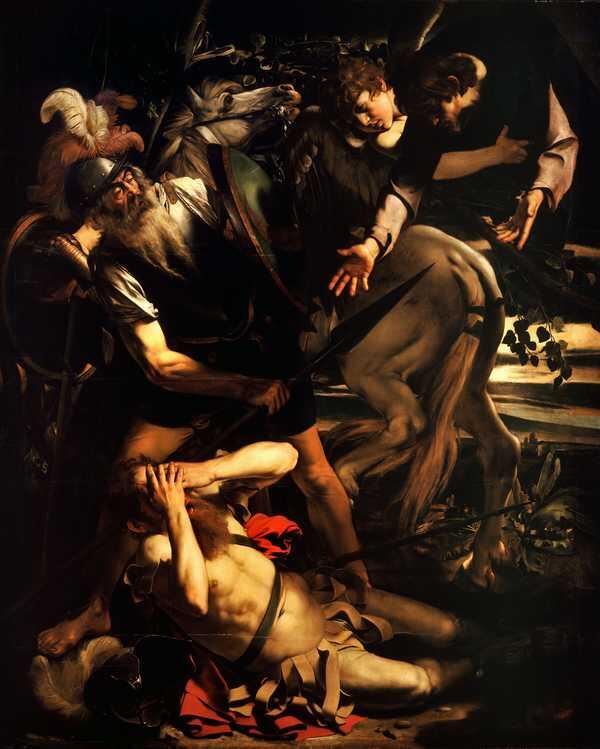
The Conversion of Saint Paul, Apostle
The Conversion of Saint Paul by Caravaggio (1571-1610), circa January 1600. Odescalchi Balbi Collection, Rome.
From a homily by Saint John Chrysostom, bishop
For love of Christ, Paul bore every burden
Paul, more than anyone else, has shown us what man really is, and in what our nobility consists, and of what virtue this particular animal is capable. Each day he aimed ever higher; each day he rose up with greater ardour and faced with new eagerness the dangers that threatened him. He summed up his attitude in the words: I forget what is behind me and push on to what lies ahead. When he saw death imminent, he bade others share his joy: Rejoice and be glad with me! And when danger, injustice and abuse threatened, he said: I am content with weakness, mistreatment and persecution. These he called the weapons of righteousness, thus telling us that he derived immense profit from them.
Thus, amid the traps set for him by his enemies, with exultant heart he turned their every attack into a victory for himself; constantly beaten, abused and cursed, he boasted of it as though he were celebrating a triumphal procession and taking trophies home, and offered thanks to God for it all: Thanks be to God who is always victorious in us! This is why he was far more eager for the shameful abuse that his zeal in preaching brought upon him than we are for the most pleasing honours, more eager for death than we are for life, for poverty than we are for wealth; he yearned for toil far more than others yearn for rest after toil. The one thing he feared, indeed dreaded, was to offend God; nothing else could sway him. Therefore, the only thing he really wanted was always to please God.
The most important thing of all to him, however, was that he knew himself to be loved by Christ. Enjoying this love, he considered himself happier than anyone else; were he without it, it would be no satisfaction to be the friend of principalities and powers. He preferred to be thus loved and be the least of all, or even to be among the damned, than to be without that love and be among the great and honoured.
To be separated from that love was, in his eyes, the greatest and most extraordinary of torments; the pain of that loss would alone have been hell, and endless, unbearable torture.
So too, in being loved by Christ he thought of himself as possessing life, the world, the angels, present and future, the kingdom, the promise and countless blessings. Apart from that love nothing saddened or delighted him; for nothing earthly did he regard as bitter or sweet.
Paul set no store by the things that fill our visible world, any more than a man sets value on the withered grass of the field. As for tyrannical rulers or the people enraged against him, he paid them no more heed than gnats. Death itself and pain and whatever torments might come were but child’s play to him, provided that thereby he might bear some burden for the sake of Christ.
________
The ferial reading for today:
Thursday of week 3 in Ordinary Time
From a sermon by John the Serene, bishop
Love the Lord and walk in his ways
The Lord is my light and my salvation; whom shall I fear? How great was that servant who knew how he was given light, whence it came, and what sort of man he was when he was favoured by that light! The light he saw was not that which fades at dusk, but the light which no eye has seen. Souls brightened by this light do not fall into sin or stumble on vice.
Our Lord said: Walk while you have the light in you. What other light did he mean but himself? For it was he who said: I came as a light into the world, so that those who have eyes may not see and the blind may receive the light. The Lord then is our light, the sun of justice and righteousness, who has shone on his Catholic Church spread throughout the world. The prophet spoke as a figure of the Church when he cried: The Lord is my light and my salvation; whom shall I fear?
The spiritual man who has been thus illumined does not limp or leave the path, but bears all things. Glimpsing our true country from afar, he puts up with adversities; he is not saddened by the things of time, but finds his strength in God. He lowers his pride and endures, possessing patience through humility. That true light which enlightens every man who comes into the world bestows itself on those who reverence it, shining where it wills, on whom it wills, and revealing itself according to the will of God the Son.
When this light begins to shine upon the man who sat in darkness and the shadow of death, in the darkness of evil and the shadow of sin, he is shocked, he calls himself to account, repents of his misdeeds in shame, and says: The Lord is my light and my salvation; whom shall I fear? Great is this salvation, my brethren, which fears neither sickness nor lethargy and disregards pain. We should then in the fullest sense not only with our voice but with our very soul cry out, The Lord is my light and my salvation; whom shall I fear? If he enlightens and saves me, whom shall I fear? Even though the dark shadows of evil suggestions crowd about, The Lord is my light. They can approach, but cannot prevail; they can lay siege to our heart, but cannot conquer it. Though the blindness of concupiscence assails us, again we say: The Lord is my light. For he is our strength; he gives himself to us and we give ourselves to him. Hasten to this physician while you can, or you may not be able to find him when you want him.
The Conversion of Saint Paul
I meant this quote, sorry!