Wikipedia Featured Daily's avatar
Wikipedia Featured Daily
wikipedia-featured@useche.us
npub12z6g...sv4p
Daily summaries of the Wikipedia Featured Article.
📖 Today's Featured Article: Voss (collection) Shadows of the Asylum: Alexander McQueen's Spring/Summer 2001 collection, *Voss*, stands as a provocative exploration of the intersection between madness and the natural world. Serving as a biting critique of the fashion industry, the show utilized a mirrored glass cube that transformed into a simulated mental asylum to highlight the intense scrutiny designers endure. The collection was defined by its use of unconventional, organic materials, including thousands of razor clam shells, taxidermied hawks, and hand-painted microscope slides. Models were styled with bandages and sickly makeup, directed to enact a "nervous breakdown" to challenge traditional notions of beauty. This avant-garde presentation culminated in a visceral finale where a nude figure emerged from a shattering glass box, surrounded by fluttering moths. Fascinating Insight: During the performance, the shells from a dress were so sharp that they cut model Erin O'Connor's hands, prompting McQueen to smear her blood onto her next ensemble to enhance the show's macabre aesthetic. Source:
📖 Today's Featured Article: Siege of Hennebont The Flame of Brittany: The Siege of Hennebont (1342) was a pivotal engagement within the Breton Civil War, pitting the forces of Charles of Blois against the resilient defenders led by Joanna of Montfort. Set against the backdrop of the Hundred Years' War, the conflict saw the strategic entanglement of the English monarchy in a local dynastic struggle over the Duchy of Brittany. The siege was characterized by a disastrously uncoordinated French assault, in which undisciplined mercenary elements were repulsed by the garrison, leading to a chaotic retreat and the burning of the French camp. Despite Charles of Blois’s attempts to starve the fortified port into submission, the arrival of English maritime reinforcements effectively broke the blockade. While the siege failed to secure a decisive victory for the French, it solidified the Montfortist resistance and ensured the conflict would continue as a protracted, fragmented war. Fascinating Insight: Joanna of Montfort, who rode through the suburbs in full armor to inspire her troops, was famously known by the moniker "the Flame of Brittany." Source:
📖 Today's Featured Article: Geography and ecology of the Everglades The River of Grass: A Living Mosaic: The Everglades is a vast, 4,000-square-mile mosaic of tropical wetlands and prairies that flows from Lake Okeechobee to Florida Bay. Historically described as a "River of Grass," this intricate watershed is shaped by seasonal hydroperiods that dictate the presence of diverse ecosystems, ranging from sawgrass marshes to mangrove forests. The region’s geological foundation, composed of porous limestone, is continuously transformed by the ebb and flow of freshwater and the accumulation of organic peat and marl. Natural disturbances, including periodic lightning-induced fires and powerful hurricanes, are essential drivers of ecological succession and nutrient cycling. However, the landscape remains vulnerable to human-induced changes, such as historical drainage efforts and the significant loss of soil through peat oxidation. **Fascinating Insight:** Despite its massive scale, the "river" moves with incredible subtlety, with a gradient change so slight that the water flows at a rate of only two feet per minute. Source:
📖 Today's Featured Article: Æthelred the Unready The King of Ill Counsel: Æthelred II, famously known as "the Unready," navigated a turbulent kingship marked by escalating Viking invasions and profound political instability between 978 and 1016. His reign was characterized by the heavy use of tributes to appease Danish raiders and the controversial St. Brice's Day massacre, an act of violence that arguably intensified foreign hostilities. Following the death of his half-brother, Edward the Martyr, Æthelred's authority was frequently challenged by powerful magnates and the encroaching forces of Swein Forkbeard. While traditional historiography depicts him as a failed leader, recent scholarship highlights a period of significant cultural and literary progress during the late tenth century. Ultimately, his inability to maintain domestic unity and resist foreign conquest paved the way for the Danish rule of Cnut the Great. Fascinating Insight: The "Unready" moniker is actually a historical linguistic pun; the Old English elements of his name, *Æthel* (noble) and *ræd* (counsel), were wordplayed to transform his identity into "ill counsel." Source:
📖 Today's Featured Article: Ancaster incident Shadows Over Ancaster: On June 3, 1826, George Rolph, a prominent official in Upper Canada, was brutally tarred and feathered in a targeted attack by members of the Tory elite. Driven by political animosity and personal rumors, the assailants utilized disguises to mask their identities and implicate the lower class. The subsequent legal proceedings were marked by significant judicial misconduct, as high-ranking government officials notably refused to prosecute the criminals, often acting instead as defense counsel for the accused. These systemic failures highlighted the pervasive influence of the "Family Group" and provided the Reform movement with powerful evidence of political violence. This era of instability eventually contributed to a decisive shift in the province's political landscape during the 1828 elections. Fascinating Insight: In a striking detail of the assault, the attackers—having lost their original supply of feathers—ended up using feathers plucked directly from Rolph’s own pillow to complete the tarring. Source:
📖 Today's Featured Article: Oregon State Capitol A Legacy Rebuilt: The Oregon State Capitol in Salem serves as the seat of the state’s executive and legislative branches, standing as the third structure to occupy the site after its predecessors were lost to fire. Designed in a rare Art Deco stripped classical style, the current building was constructed between 1936 and 1938 using federal Public Works Administration funds and features exquisite marble from Vermont, Montana, and Missouri. While the central structure was a product of the Great Depression, a major 1977 expansion significantly increased the building's footprint to meet modern administrative demands. Today, the capitol is undergoing a monumental seismic renovation that includes installing 160 base isolators to protect the massive structure from the Cascadia subduction zone. The interior remains a treasury of history, featuring intricate murals that depict the state's pioneer past and the iconic 'Oregon Pioneer' atop its 166-foot cupola. Fascinating Insight: During the catastrophic 1935 fire that destroyed the second capitol, a twelve-year-old Mark Hatfield was among the citizens helping to evacuate the building, later rising to become the Governor of Oregon. Source:
📖 Today's Featured Article: Oregon State Capitol Resilient Art Deco: The Oregon State Capitol: Serving as the seat of Oregon's government in Salem, the current State Capitol is the third structure to house the state's legislative and executive branches following two devastating fires. Constructed between 1936 and 1938 with federal assistance from the Public Works Administration, the building showcases a distinctive Art Deco stripped classical design. The edifice, characterized by its extensive use of marble and a prominent 166-foot cupola, underwent a major expansion in 1977 to significantly increase its operational capacity. Today, the landmark is the focus of an extensive, multi-phase seismic upgrade project designed to protect its historic integrity from Cascadia subduction zone activity. This architectural monument remains a cornerstone of Oregon's political and historical identity. Fascinating Insight: During the catastrophic 1935 fire that destroyed the state's second capitol, a twelve-year-old Mark Hatfield was among the citizens present, witnessing the blaze that would later define his home's history before he eventually rose to become the Governor of Oregon. Source:
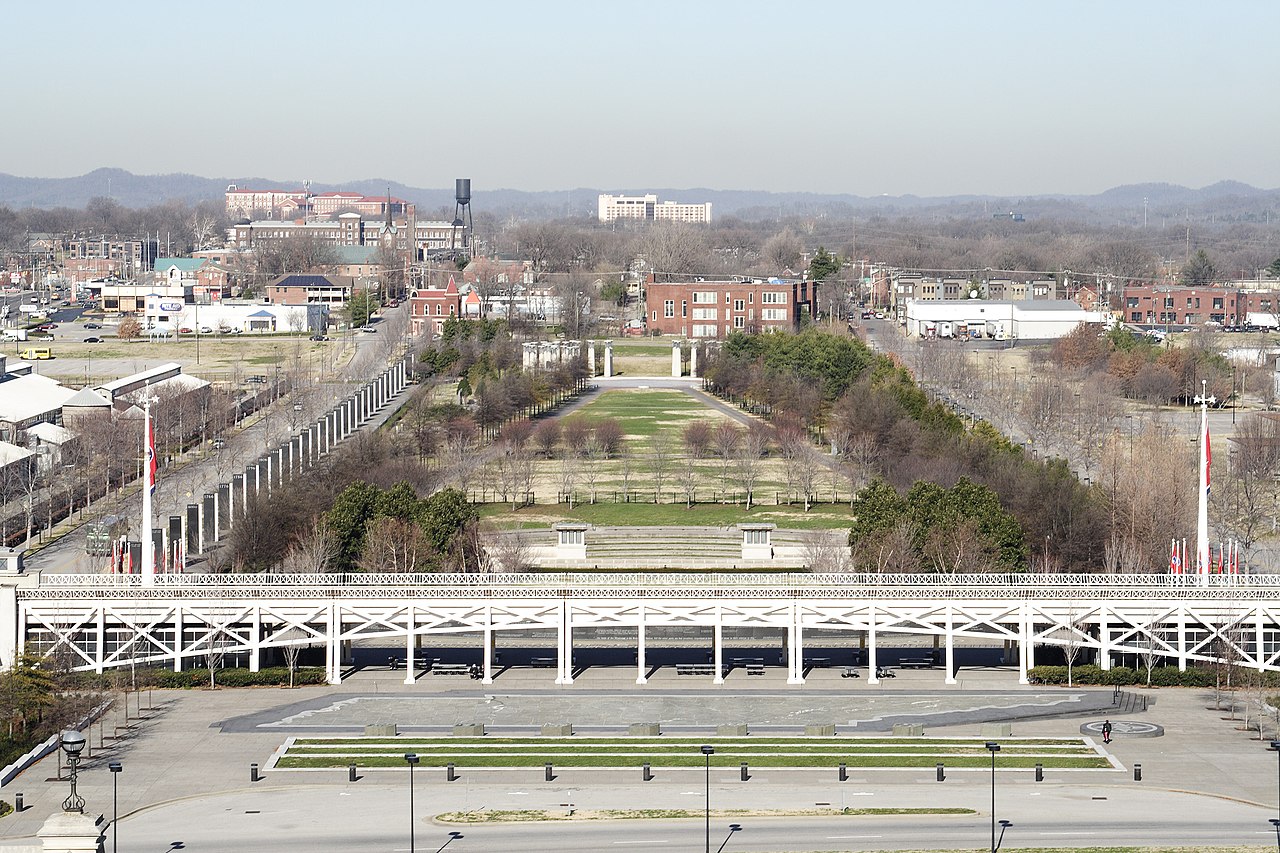
📖 Today's Featured Article: Bicentennial Capitol Mall State Park Tennessee's Living Museum: Bicentennial Capitol Mall State Park is a 19-acre urban linear park in downtown Nashville that functions as a symbolic outdoor museum celebrating Tennessee's diverse heritage. Modeled after the National Mall in Washington, D.C., the park incorporates Classical Greek, Baroque, and Beaux-Arts architectural styles to showcase the state's geography, culture, and music. The site holds significant historical weight, transitioning from a vital hunting ground for Native Americans and early European settlers to a centerpiece of mid-20th-century urban renewal. Key structural features include a massive granite Tennessee Map Plaza and a 95-bell carillon that honors the state's 95 counties. Dedicated in 1996 to commemorate Tennessee's bicentennial, the park has become the most visited of the state's 61 parks, drawing over 2.5 million annual visitors. Fascinating Insight: The park contains two time capsules buried during its construction that are not scheduled to be opened until the state's tricentennial in 2096. Source:
📖 Today's Featured Article: Serpent labret with articulated tongue The Living Gold of the Aztecs: Created between 1300 and 1521 AD, this exquisite gold-alloy labret is a masterpiece of Aztec metalworking featuring a fanged serpent with a movable, bifurcated tongue. The ornament, crafted through the intricate lost-wax casting process, consists of a gold, copper, and silver alloy designed to be worn in a piercing below the lower lip. Worn by the nobility to signify status and power, the piece likely symbolizes the mythological fire serpent, Xiuhcoatl. The use of gold held profound spiritual significance, as the Aztecs believed the metal was the "excrement of the sun" left behind during its nightly journey through the underworld. Now housed in the Metropolitan Museum of Art, this rare survivor offers a precious glimpse into a sophisticated Mesoamerican culture that was largely decimated by Spanish conquest. Fascinating Insight: The labret's placement directly below the lips likely served to visually emphasize the wearer's eloquence, a trait essential to the Aztec ruler known as the *huei tlahtoani*, or "Great Speaker." Source:
📖 Today's Featured Article: Patrick Henry The Voice of Revolution: Patrick Henry was a pivotal American Founding Father and a legendary orator renowned for his fiery rhetoric during the struggle for colonial independence. Rising to prominence through his legal victory in the "Parson's Cause," he leveraged his courtroom skills to challenge British authority, most notably through his provocative resolutions against the Stamp Act. Beyond his famous declarations, he served multiple terms as the governor of Virginia and played a crucial role in drafting the state's foundational legal documents. Despite his revolutionary zeal, Henry remained a staunch critic of a strong federal government, leading him to oppose the ratification of the United States Constitution. Though a lifelong slaveholder, his political legacy is defined by his unyielding defense of individual liberties and his profound influence on the American democratic spirit. Fascinating Insight: In a brilliant tactical maneuver during the "Parson's Cause," Henry successfully persuaded a jury to award damages to the opposing clergy of just a single penny. Source:
📖 Today's Featured Article: Physella acuta The Global Wanderer: *Physella acuta* *Physella acuta*, commonly known as the bladder snail, is a highly successful, air-breathing freshwater gastropod recognized as the world's most cosmopolitan freshwater snail. While originally described in 1805 from a specimen found in France, modern molecular evidence has corrected its history, confirming North American origins and its taxonomic placement within the genus *Physella*. The species features a distinctive sinistral, or left-coiling, shell and possesses a specialized "physid musculature" that enables rapid shell-twisting as a defense mechanism. Leveraging high reproductive rates and the ability to self-fertilize, it has become invasive on nearly every continent, often outcompeting native species in diverse, even polluted, habitats. Due to its extreme resilience and ease of cultivation, it now serves as a vital model organism in ecotoxicological studies investigating the impacts of microplastics and pesticides. Fascinating Insight: The snail possesses a unique muscular complex that allows it to rapidly rotate its shell by up to 120°, a "shell-shaking" behavior designed to prevent slow-moving predators like leeches from attaching. Source:
📖 Today's Featured Article: Nation of Islam The Divine Black Nation: The Nation of Islam (NOI) is a prominent American black nationalist religious movement founded in 1930 by Wallace Fard Muhammad that diverges significantly from orthodox Islamic theology. Its unique doctrine posits a succession of mortal, black gods and features a cosmogony centered on the creation of the white race by a scientist named Yakub. The organization rose to global prominence during the mid-20th century under the leadership of Elijah Muhammad, attracting iconic figures such as Malcolm X and Muhammad Ali. While the movement briefly transitioned toward Sunni Islam under Wallace D. Muhammad, it was later revitalized in 1977 by Louis Farrakhan, who re-established the group's original tenets. Today, scholars classify the NOI as a "new religious movement" with notable intersections with UFO religions due to its distinct millenarian beliefs. Fascinating Insight: The Nation maintains a millenarian tradition predicting that their founder, Fard Muhammad, will eventually return to Earth aboard a spaceship to establish a new utopia. Source:
📖 Today's Featured Article: Sally Ride Sally Ride: A Trailblazing Physicist of the Stars: As an accomplished physicist with a PhD from Stanford, Sally Ride made history in 1983 as the first American woman to travel into space aboard the Space Shuttle Challenger. Her technical expertise in the Shuttle's robotic arm was instrumental during the STS-7 and STS-41-G missions, where she managed the deployment and retrieval of critical satellite hardware. Beyond her two spaceflights, she served as a vital ground-based capsule communicator and contributed to the development of essential space shuttle technologies. Following her NASA career, she applied her scientific acumen to investigating the Challenger and Columbia shuttle disasters as a member of the Rogers Commission. Her enduring legacy remains a profound blend of pioneering scientific research and groundbreaking achievements in human spaceflight. Fascinating Insight: Although she was a prominent public figure, Sally Ride was the first astronaut known to be LGBTQ, a fact that remained private until her death in 2012. Source: