It's interesting to me how people in the Bible negotiate with God in their prayers. Here, Hannah expresses her belief that God will listen, that He can be moved to act, and that the future is not predetermined.
Do you pray like Hannah?
1 Samuel 1:11 And she vowed a vow, and said, O LORD of hosts, if thou wilt indeed look on the affliction of thine handmaid, and remember me, and not forget thine handmaid, but wilt give unto thine handmaid a man child, then I will give him unto the LORD all the days of his life, and there shall no razor come upon his head.

Neopatriarch
npub1flm9...rg9q
Freedom Decentralized Permissionless Unstoppable
I'm so disappointed the government won't be shut down. Of course, even that was a lie. Rulers never surrender power voluntarily. #Government #Politics #Power
Embrace the State as your identity, and you’re stuck with its dirt—slavery, genocide, Iraq’s lies—not yours, but they cling. All for what? Moon landings and rights you didn’t win. The State gaslights you into pride over nothing.
Avoiding Vain Philosophies: The Danger of Speculating About Time
Introduction: When Theology Becomes Science Fiction
Some words sound theological, but they are not biblical. Concepts like "before time," "outside of time," and "timelessness" are often used in theological discussions, yet they have no scriptural basis. Instead of leading us into truth, they tend to drift into the realm of science fiction. These terms would feel more at home in Back to the Future or Star Trek than in serious Bible study.
Yet, many Christians repeat them without question. But is this how God reveals Himself? Or are we allowing human philosophy to redefine the God of Scripture?
Where Do These Ideas Come From?
When people talk about God being "outside of time," they are not drawing from the Bible but from Greek philosophy, particularly Platonism and Aristotelian metaphysics. Plato taught that the material world is an inferior copy of an eternal, unchanging realm of perfect forms. Aristotle developed the idea of a "Prime Mover"—a being that causes motion but does not move or change itself.
Early Christian theologians, influenced by Greek thought, attempted to merge these ideas with the Bible. The result? A concept of God that is static, impersonal, and detached from time and human history. But is this how God presents Himself in Scripture?
The Biblical God: A God Who Acts in History
From Genesis to Revelation, God is revealed as a living, dynamic, and relational Being who interacts with His creation in real time:
God speaks and creates – "And God said, Let there be light" (Genesis 1:3).
God walks with man – "And they heard the voice of the Lord God walking in the garden" (Genesis 3:8).
God responds to prayer – "And God repented of the evil that he had said that he would do unto them; and he did it not" (Jonah 3:10).
God enters history as Jesus Christ – "The Word became flesh and dwelt among us" (John 1:14).
God has a future plan – "Then cometh the end, when he shall have delivered up the kingdom to God, even the Father" (1 Corinthians 15:24).
These passages do not describe a "timeless" deity but a God who engages with His creation in real, unfolding history.
Paul’s Warning: Beware of Vain Philosophies
Colossians 2:8 warns us:
"Beware lest any man spoil you through philosophy and vain deceit, after the tradition of men, after the rudiments of the world, and not after Christ."
Many theological ideas that pass as "deep truths" are actually vain philosophies that lead believers away from Christ. Instead of focusing on how God actually reveals Himself, people become obsessed with abstract ideas that sound profound but have no scriptural foundation.
Paul tells us to guard our minds against these influences. Our theology must be rooted in Scripture, not speculation.
Conclusion: Keep Theology Biblical, Not Speculative
The Bible never speaks of a "timeless" or "outside of time" God. These ideas do not come from Scripture but from human philosophy and speculation.
God acts in real time.
God engages in history.
God reveals Himself through events, covenants, and relationships.
Instead of drifting into abstract, extra-biblical ideas, let’s stick to how God actually presents Himself in Scripture. The moment we go beyond what is written (1 Corinthians 4:6), we risk exchanging biblical truth for philosophical speculation.
As Paul warns, let’s not be "spoiled" by vain philosophy. Let’s keep our theology rooted in Scripture, not speculation.
Privatize ALL gov’t services—education, healthcare, roads, cops, defense. Free market delivers better than force & bureaucracy. End gov’t monopolies, empower choice. Agree? #PrivatizeEverything #FreeMarket #NoGovMonopoly #MaximizeFreedom #EndForce
Open Theism: God sovereignly created a world where the future is partly open. He knows all possibilities, responds in real time, and guides history without determining every choice. The future isn’t fixed—it’s a dynamic story with a relational God. #OpenTheism #GodIsFree
Happy Presidents Day!
JK - enjoy your day anyway
Exegesis of Isaiah 46: Does It Support Open Theism?
Introduction
Isaiah 46 is often cited as a proof text for divine determinism and exhaustive foreknowledge, particularly by Reformed theologians. However, a careful exegetical examination reveals that this passage does not teach meticulous determinism but rather emphasizes God’s unique ability to accomplish His purposes in contrast to the lifeless idols of Babylon. This study will follow a rigorous exegetical approach—analyzing the historical context, examining the Hebrew text, and addressing theological implications—while demonstrating how Isaiah 46 aligns with Open Theism rather than classical Calvinism.
Historical Context
Isaiah 46 falls within a section of prophecy directed against Babylon. Israel, tempted by the seemingly dominant powers of the day, had fallen into idolatry. The context is one of polemical contrast between Yahweh and the false gods of the nations. The passage begins by describing how Babylon’s idols—Bel and Nebo—are carried as burdens by their worshipers, unable to save themselves or their followers (vv. 1-2). In contrast, Yahweh declares that He carries His people and has the power to bring about His purposes (vv. 3-4). The central point of the chapter is that Yahweh, unlike idols, is active and effective in history.
Exegesis of Isaiah 46:9-10
The key verses often cited by determinists are Isaiah 46:9-10:
"Remember the former things of old; for I am God, and there is no other; I am God, and there is none like me, declaring the end from the beginning and from ancient times things not yet done, saying, ‘My counsel shall stand, and I will accomplish all my purpose.’” (ESV)
#Declaring the End from the Beginning
Some argue that this phrase supports exhaustive divine foreknowledge of all future events. However, a careful examination of the Hebrew verb nagad (נָגַד), translated as "declaring," reveals that it refers to making known or announcing, rather than foreseeing an already settled future. The emphasis here is not on a timeless decree but on God’s active involvement in history. The passage does not say that God foreknows all events in an immutable sense, but that He proclaims what He intends to do and brings it about.
#My Counsel Shall Stand
The phrase "My counsel shall stand" (עֲצָתִי תָּקוּם) is better understood as a declaration of God's ability to accomplish what He purposes, rather than an assertion that all events are predetermined. This interpretation aligns with passages such as Jeremiah 18:7-10, where God explicitly states that He may alter His declared plans based on human response.
God’s declarations in Isaiah 46 must be understood within the broader biblical framework where divine intentions can be conditional. For example, God declares judgment on Nineveh in Jonah 3, but when the people repent, He relents. If Isaiah 46 were teaching exhaustive foreknowledge of a fixed future, this kind of dynamic interaction would be impossible.
The Polemical Purpose of Isaiah 46
A key flaw in deterministic readings of Isaiah 46 is that they ignore the chapter’s rhetorical and polemical function. The contrast is not between an omniscient God who possesses a settled future and an ignorant humanity; rather, the contrast is between Yahweh, who actively shapes history, and idols, which are passive and powerless. The thrust of the argument is that God can accomplish His plans in real time, whereas idols cannot act at all.
Principles of Sound Exegesis in Interpreting Isaiah 46
In analyzing Isaiah 46, a sound exegetical approach includes:
1. Contextual Analysis – Recognizing that the passage addresses Israel’s idolatry and contrasts Yahweh’s sovereignty with the impotence of false gods.
2. Grammatical-Historical Method – Examining the original Hebrew words and their meanings in the historical and literary context.
3. Scripture Interprets Scripture – Understanding Isaiah 46 alongside other passages that show God’s intentions can change based on human response (e.g., Jeremiah 18:7-10, Jonah 3:10).
4. Authorial Intent – Identifying that Isaiah’s goal is to affirm God’s supremacy over idols, not to present a philosophical doctrine of exhaustive foreknowledge.
5. Rejection of Eisegesis – Avoiding reading theological presuppositions (such as determinism) into the text.
Implications for Open Theism
1. God’s Foreknowledge is Dynamic, Not Deterministic – The passage does not teach exhaustive definite foreknowledge but rather God’s sovereign ability to bring about what He has purposed.
2. God Engages in Real-Time Decision-Making – The emphasis is not on a fixed script of history but on God’s ability to fulfill His word within an open and contingent future.
3. God’s Sovereignty is Relational, Not Causal – Open Theism maintains that God’s sovereignty is best understood as His capacity to work within creation dynamically, rather than as a blueprint that eliminates genuine human freedom.
Conclusion
Isaiah 46 does not support exhaustive divine determinism. Rather, it affirms that God is distinct from idols because He acts in history and accomplishes His purposes. A proper exegesis of the passage reveals that God is not merely foreseeing a settled future but is actively working to fulfill His plans in interaction with His people. This reading is fully consistent with Open Theism, which affirms God's sovereignty as relational, purposeful, and dynamically engaged with His creation.
Thus, Isaiah 46, rather than refuting Open Theism, actually supports a view of God that is living, personal, and engaged with His people in real-time decisions.
Is anyone else watching this? Season one was awesome, and season two is looking just as good.
Snort isn't notifying me of new messages. I guess I have to keep looking,
Okay, I started using Ubuntu yesterday. I keep getting this "Authentication required" popup. It doesn't matter if I give a password and hit unlock or just hit cancel. It doesn't disrupt anything else. So at this point it is just annoying, How do I fix it?

Wow. You have a mighty nice company. It sure would be a shame if something happened to it. How about I give you protection for half your business? - said a gangster
Sometimes the mask just comes right off.
I know this is the wrong place to tech-brag but I don't know who else to share it with. My coworkers won't care, or perhaps even understand.
I got my new (refurbished) Thinkpad T495S and installed Ubuntu on it. Looking back it was so easy, but from before that, it created serious apprehension that I might just brick it.
BTW what's the best Linux client for Nostr?
Okay. I want to buy a notebook running on Linux. Where's can I buy one for Bitcoin? (Agorist Preferred)
I normally use a Chromebook at home, and Windows at work. I have a little experience with Linux, running in a sandbox on my Chromebook) So this will be a transition for me, so it should do most things, doc, Web, coding without being very expensive.
Any ideas or recommendations?
Is anyone here into IOTA?
I have a seed from a few years back. I can't access it on my phone anymore.
Is there a Linux system I could use?
Please advise.
PS I just want to flip out into Bitcoin.
Please explain to me how a consistent Christian can swear fidelity to a godless organization like the State.
No one can serve two masters.
HODL what's good.
#bitcoin
Voting brought us to this. 
This podcast came over my feed this morning. No, I haven't listened to it, but it generated in me a thought. -- Whole milk has nutrition designed to take a ~50 pound calf to a 500lb full grown cow in six months. Maybe this isn't what humans should be nurtured on. 
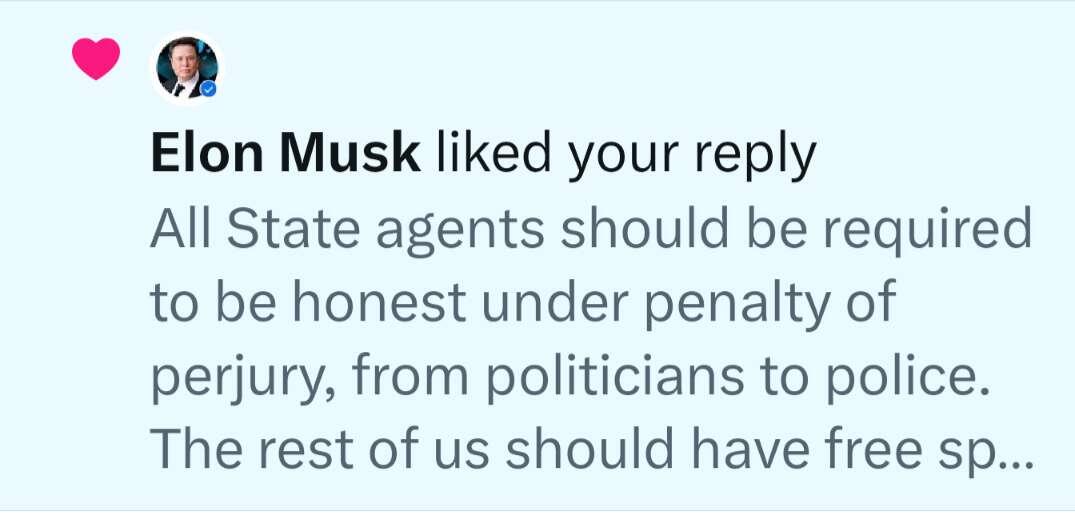 Yes, that's my comment.