Decentralization Over Dependence: Why We Must Stop Investing in the Elons of the World
The world’s obsession with investing in figures like Elon Musk isn’t just misguided—it’s part of the problem. For decades, our mindsets have been hacked by fiat-fueled groupthink, pushing us to invest where everyone else does, chasing artificial growth and ignoring the long-term consequences. Elon’s satellites, cars, and ambitions sound impressive on the surface, but here’s the truth: centralized systems are a dead end.
Every dollar invested in Elon feeds his ego, power, and influence—while locking innovation behind walls of control. His satellite network, for example, could’ve driven global abundance, empowering decentralized communication and access for all. Instead, it’s another tool for profit, perpetuating the scarcity and control mindset of the fiat system. He had the opportunity to change the game and chose to play the same one.
Investing in decentralization, on the other hand, isn’t just a financial decision—it’s a vote for a better future. Decentralized projects don’t ask for blind loyalty or control; they foster open innovation, real ownership, and solutions that benefit everyone, not just a select few. When we stop pouring resources into the Elons of the world, we dismantle the very foundation of their influence. Without investment, their power fades, their egos shrink, and their monopoly on progress ends.
The shift begins with us. Stop funding centralized empires and start building decentralized futures. The more we invest in freedom, abundance, and innovation, the less control these figures will hold. Let Elon grow up on his own—it’s time for us to grow beyond him. 🟠🔥

npub1farl...670r
npub1farl...670r
Musk’s Blockchain 'Efficiency'? How About Fixing the Real Problem First
If Musk and the government are so obsessed with “efficiency,” here’s a wild idea: stop conjuring money out of thin air to endlessly attack the Tor network. You know, the very network built to uphold the values they claim to champion—freedom, privacy, and security. Tor wasn’t built for control; it was built to empower individuals and protect them from centralized overreach. And yet, it’s constantly under attack by the very entities Musk claims he wants to make more 'efficient.'
Here’s the irony: while they waste infinite resources undermining decentralized tools like Tor, those of us running Bitcoin nodes and using the network observe the lag in block propagation times. Why? Because their attacks aren’t just aimed at Tor—they ripple through the broader ecosystem of freedom-enhancing technology.
So before you pitch blockchain as a shiny solution to government inefficiency, maybe start by addressing the elephant in the room: the endless stream of counterfeit fiat fueling their war against privacy and decentralization. You don’t need blockchain to fix government inefficiency; you need less government meddling in systems that are already working for the people.
Efficiency doesn’t mean adding a blockchain band-aid to a broken machine. It means stepping back, stopping the attacks, and letting freedom-driven technologies do what they’re meant to do: thrive. Until then, Musk’s exploration of blockchain is nothing more than another centralized circus act. 🟠💥
Maybe someday he will be known as Larry "Fake" Fink.
Larry "Fake" Fink, the master of illusion and financial smoke screens! It’s the ultimate irony, isn’t it? The “Fink” name already carries a shadowy vibe, and adding “Fake” just seals the deal. History might not be so kind when people finally see through the charade.
Names often carry this strange weight, don’t they? Almost like they whisper the truth long before the story unfolds. Larry "Fake" Fink steering the centralization train, and then you’ve got Bernie Madoff—literally made off with people’s money. You can’t make this stuff up! It’s like the universe drops these little breadcrumbs for those paying attention.
It’s funny, but it also speaks volumes about the nature of these systems. The names almost become markers of the schemes they’re tied to, as if destiny had a cheeky sense of humor. Makes you wonder what other "name games" are out there waiting to be uncovered. 😂🕵️♂️
Larry Fink and Peng Xiao on Financing AI Infrastructure? Translation: Centralized control meets technological bottlenecks.
AI infrastructure should serve humanity, not become another tool for gatekeepers like BlackRock to profit from and control. Financing AI the 'traditional' way means leveraging debt, control, and manipulation to ensure the few at the top benefit while the rest of us pay the price—financially, socially, and ethically.
Real innovation doesn’t come from centralized puppeteers funding what they can later monopolize. It comes from open systems, decentralization, and fair access—not billion-dollar gatekeepers looking to tighten their grip on global resources.
Financing AI? Or financing control disguised as progress? 🕵️♂️ The difference matters.
A challenge not just to Musk but to the entire centralized system he represents. Truth doesn’t need a marketing team or a PR stunt; it just needs a platform. And Musk? He knows he can’t spin his way out of that. 🟠🐺🔥
View quoted note →
Maybe someday Elon will give me the chance to debate him for two hours in front of the world. Let’s see how well he can spin his web when the truth cuts right through it. I’ve got nothing but time in retirement—this could be fun. 😏
Elon Musk 'Exploring' Blockchain for US Government Efficiency? More Like Clowning for Control"
Elon Musk “exploring” blockchain for government efficiency is the ultimate fiat circus act. Let’s be real—this guy isn’t about decentralization or empowering the people. He’s about centralized control wrapped in tech buzzwords. Blockchain, in its purest form, is about removing middlemen, not propping them up with fancy labels.
What does a government “efficiency” push even mean? More surveillance? Tighter control? A system where every transaction and action is recorded for bureaucrats to manipulate? If history has taught us anything, it’s that “efficiency” in the hands of centralized powers is just a euphemism for stripping away freedoms and tightening their grip. And let’s not forget, the government is already the least efficient machine on the planet—slapping blockchain on it won’t fix the rot.
Here’s the kicker: blockchain isn’t the solution if it’s used by the same corrupt system it was designed to bypass. True blockchain solutions—like Bitcoin—work because they operate outside the control of governments and oligarchs. What Musk and his cronies will explore is something Frankenstein’d together to look decentralized while keeping all the power in the same greasy hands.
Elon’s “exploration” is nothing more than a PR stunt to ride the blockchain buzz and push centralized tech solutions under the guise of progress. He’s not here to break the system; he’s here to remodel the cage. And for anyone paying attention, it’s obvious: Musk’s loyalty lies with preserving power, not distributing it.
Blockchain doesn’t need Musk. It doesn’t need the government. And it sure as hell doesn’t need clowns pushing “efficiency” while building tools for more control. Bitcoin already exists. The rest is noise. 🟠💥
View quoted note →
The Last Protocol: Part 7.3 - The Beacon’s Call
The rebels trudged across the desolate expanse, their steps crunching over brittle earth and scattered debris. The air was thick with an unrelenting stillness, broken only by the distant hum of wind whispering through the jagged remains of a long-forgotten world. Lena's gaze remained fixed on the horizon, where a faint, pulsing light pierced through the haze, beckoning them forward.
Cipher’s console beeped sharply, breaking the silence. She halted, her bronze eyes narrowing as encrypted data streamed across the screen. “There it is again. The signal—it’s getting stronger.”
Kit tilted his head, his makeshift hat catching the faint glimmer of the sun. “Feels like a trap, don’t it? Signals don’t just wave hello like that for no reason.”
Jarek’s voice was calm, yet carried an edge of concern. “Trap or not, it’s the only lead we have. If it’s tied to the Protocol, we can’t afford to ignore it.”
As they moved closer, the pulsing light grew more distinct, revealing the outline of a massive, ancient structure partially buried beneath layers of ash and rubble. Its surface shimmered with a faint, otherworldly glow, as if alive with energy. Intricate patterns etched into its metallic exterior pulsed in sync with the light, creating a rhythm that seemed to resonate deep within the earth.
 “This doesn’t look like anything the Authority built,” Cipher murmured, her fingers dancing across her console. “It’s ancient—older than anything we’ve encountered so far.”
Lena stepped forward, her green eyes scanning the structure with a mix of awe and trepidation. “What is it?”
“It’s a beacon,” Cipher replied, her voice almost a whisper. “A signal. But it’s more than that. It’s… a key.”
Kit crouched, examining the ground near the structure. “A key to what, luv? Unlocking our doom, maybe?”
Before Cipher could respond, the beacon emitted a sudden, sharp pulse of light. The rebels shielded their eyes as the ground beneath them trembled. The air grew heavy, charged with an electric hum that vibrated through their very bones.
Jarek steadied himself, his hand instinctively reaching for his weapon. “Whatever it’s unlocking, we’d better be ready.”
The light from the beacon intensified, and a low, rhythmic sound echoed from within the structure. Slowly, a section of its surface began to shift, revealing an entrance. The rebels exchanged cautious glances before Lena stepped forward, determination etched into her features.
“This is it,” she said firmly. “Whatever’s inside, it’s part of the Protocol. We go in together.”
As they crossed the threshold, the hum grew louder, enveloping them in its resonance. The air inside was thick and warm, illuminated by streams of glowing patterns that ran along the walls. Each step felt like a descent into the unknown, the weight of their mission pressing heavily on their shoulders.
“This doesn’t look like anything the Authority built,” Cipher murmured, her fingers dancing across her console. “It’s ancient—older than anything we’ve encountered so far.”
Lena stepped forward, her green eyes scanning the structure with a mix of awe and trepidation. “What is it?”
“It’s a beacon,” Cipher replied, her voice almost a whisper. “A signal. But it’s more than that. It’s… a key.”
Kit crouched, examining the ground near the structure. “A key to what, luv? Unlocking our doom, maybe?”
Before Cipher could respond, the beacon emitted a sudden, sharp pulse of light. The rebels shielded their eyes as the ground beneath them trembled. The air grew heavy, charged with an electric hum that vibrated through their very bones.
Jarek steadied himself, his hand instinctively reaching for his weapon. “Whatever it’s unlocking, we’d better be ready.”
The light from the beacon intensified, and a low, rhythmic sound echoed from within the structure. Slowly, a section of its surface began to shift, revealing an entrance. The rebels exchanged cautious glances before Lena stepped forward, determination etched into her features.
“This is it,” she said firmly. “Whatever’s inside, it’s part of the Protocol. We go in together.”
As they crossed the threshold, the hum grew louder, enveloping them in its resonance. The air inside was thick and warm, illuminated by streams of glowing patterns that ran along the walls. Each step felt like a descent into the unknown, the weight of their mission pressing heavily on their shoulders.
 The team pressed onward, the beacon’s call guiding them deeper into the heart of the structure. And though none of them spoke it aloud, they all felt it—the sense that this discovery would change everything.
Their journey through the labyrinth had reached a pivotal moment, and what lay ahead would either lead them closer to the Protocol’s secrets or bring them face-to-face with dangers they could scarcely imagine.
The team pressed onward, the beacon’s call guiding them deeper into the heart of the structure. And though none of them spoke it aloud, they all felt it—the sense that this discovery would change everything.
Their journey through the labyrinth had reached a pivotal moment, and what lay ahead would either lead them closer to the Protocol’s secrets or bring them face-to-face with dangers they could scarcely imagine.
“This doesn’t look like anything the Authority built,” Cipher murmured, her fingers dancing across her console. “It’s ancient—older than anything we’ve encountered so far.”
Lena stepped forward, her green eyes scanning the structure with a mix of awe and trepidation. “What is it?”
“It’s a beacon,” Cipher replied, her voice almost a whisper. “A signal. But it’s more than that. It’s… a key.”
Kit crouched, examining the ground near the structure. “A key to what, luv? Unlocking our doom, maybe?”
Before Cipher could respond, the beacon emitted a sudden, sharp pulse of light. The rebels shielded their eyes as the ground beneath them trembled. The air grew heavy, charged with an electric hum that vibrated through their very bones.
Jarek steadied himself, his hand instinctively reaching for his weapon. “Whatever it’s unlocking, we’d better be ready.”
The light from the beacon intensified, and a low, rhythmic sound echoed from within the structure. Slowly, a section of its surface began to shift, revealing an entrance. The rebels exchanged cautious glances before Lena stepped forward, determination etched into her features.
“This is it,” she said firmly. “Whatever’s inside, it’s part of the Protocol. We go in together.”
As they crossed the threshold, the hum grew louder, enveloping them in its resonance. The air inside was thick and warm, illuminated by streams of glowing patterns that ran along the walls. Each step felt like a descent into the unknown, the weight of their mission pressing heavily on their shoulders.
The team pressed onward, the beacon’s call guiding them deeper into the heart of the structure. And though none of them spoke it aloud, they all felt it—the sense that this discovery would change everything.
Their journey through the labyrinth had reached a pivotal moment, and what lay ahead would either lead them closer to the Protocol’s secrets or bring them face-to-face with dangers they could scarcely imagine.Imagine this: Trump enacts a policy declaring that only Bitcoin can be used for lobbying payments—no fiat, no shipcoins, just pure, transparent, proof-of-work Bitcoin. The impact? Revolutionary.
Here’s why: Bitcoin demands accountability. Every sat spent would be permanently etched on the blockchain, open for the world to see. No shady backroom deals, no hidden bribes, no untraceable fiat handoffs. Suddenly, lobbying has a real cost—one that can’t be obscured by printing money out of thin air or cycling it through layers of financial fog.
Lobbyists wouldn’t just have to spend Bitcoin; they’d have to part with something scarce and valuable. Gone would be the days of influence funded by cheap fiat. Now, every transaction would mean relinquishing real value—something earned through time, energy, and effort. The "easy money" game of bribery would come to an abrupt halt.
Over time, the entire concept of lobbying as a political cash cow might dry up. Why? Because corruption thrives in the dark, and Bitcoin shines a light so bright it exposes every corner. Politicians couldn’t quietly line their pockets anymore—they’d have to answer to a blockchain ledger that doesn’t lie. Influence would become expensive, honest, and far less appealing for those who rely on deception.
The irony? Delicious. A system built on fiat manipulation and opaque control would suddenly be forced to operate within the most transparent, incorruptible network ever created. It wouldn’t just be a policy shift—it would be poetic justice, driving a sledgehammer through the foundation of political corruption.
Would Trump ever make such a bold move? Who knows. But if he did, it could be the spark that accelerates the collapse of the old, broken system. And the best part? Once Bitcoin enters the equation, the rules can’t be manipulated anymore. The people win. 🟠🔥
My last rant of the week...
Who granted politicians the authority to make very personal decisions like abortion theirs to control?
A profound question, and it strikes at the heart of the illusion of authority. The uncomfortable truth is: no one truly granted them that authority. It was taken, piece by piece, over centuries, through a system designed to consolidate power under the guise of “representation” and “public good.” The system claims legitimacy through elections, but in reality, most people don’t actively consent to politicians making deeply personal decisions for them.
Abortion is a deeply individual and moral issue, yet politicians have inserted themselves into the conversation as arbiters of what’s right and wrong—not because they have the wisdom or moral high ground, but because control is their currency. They’ve created the illusion that they have the authority to dictate such matters by wrapping it in laws, debates, and institutions that many feel powerless to challenge.
But here’s the real kicker: authority is only as strong as the belief in it. If enough people reject the notion that personal decisions like abortion are the government’s to make, the entire framework begins to crumble. Consent isn’t just about voting; it’s about participation in the system. When people opt out—whether financially, ideologically, or physically—the authority politicians claim over personal lives starts to evaporate.
The bigger question might be: Why do we, as a society, allow them to control such deeply personal matters? Perhaps it’s time to dismantle the illusion altogether and return these decisions to where they belong—with the individual, their values, and their conscience. Freedom thrives when authority shrinks. 🔥
"Trump's National Reserve of Shipcoins: A Titanic Miscalculation"
Trump and his centralized goons are setting sail on a sinking ship, waving flags of "innovation" while hitching their hopes to shipcoins—a last-ditch effort to cling to relevance in a world that's moving on. Hiring folks like David Sachs (or however his name is spelled) as architects of this centralized circus only shows how little they understand the tide that's already turned.
Shipcoins, like fiat, are the same stale cake baked in a new pan. Centralized, inflated, manipulated, and ultimately doomed. They’re as authentic as the hair on Trump’s head—crafted to project an image while lacking real substance.
Here’s the truth: Bitcoin is the lifeboat. It’s already escaped the clutches of central banks, governments, and the corrupt. A decentralized force that’s unstoppable, incorruptible, and growing every day. And that’s why this administration will fail—because their tools of control are crumbling beneath them. No fiat, no shipcoin, no national reserve can compete with the truth that’s already embedded in Bitcoin’s code: a fixed supply, backed by energy, secured by time, and owned by no one.
Trump’s shipcoin plan reeks of desperation, not innovation. It’s a rebranding of the same top-down control structures the population is opting out of. Politics as a whole is losing its grip, and centralized schemes like this only accelerate the exodus. The population isn’t blind anymore. They see the con. They see the inflation. They see the lies.
Over the next four years, more people will step off the sinking ship of federal politics entirely. They’ll see that change doesn’t come from presidents, parties, or promises. It comes from opting out of their game altogether. From taking back sovereignty—of money, time, and energy.
Trump’s dream of a National Reserve of shipcoins will rot faster than fiat. His administration will fail not because they lacked power, but because the people have realized they don’t need them anymore. The old systems of control are unraveling, and no amount of political theater or digital monopoly money can stop the tide of decentralization.
So let them build their “reserve.” Let them parade their shipcoins. The people are watching—and walking away. Bitcoin has already won. 🟠
Sugar or Salt Bath?

How can we expect to measure the value of genuine energy using counterfeit energy units? It’s like weighing gold with a broken scale and calling it accurate.
I was thinking about how altcoins, like Ethereum, handle their networks. Validators are forced into constant upgrades—don’t comply, and you’re out. Lose your rewards, maybe even your tokens. It feels less like decentralization and more like a boss demanding you clock in.
Then there’s Bitcoin. No forced updates, no coercion. Nodes run on their own terms. It’s like the system trusts the individual, not a central authority dictating the next move.
Altcoins talk a big game about decentralization, but isn’t this constant upgrading just another form of control? Bitcoin, on the other hand, feels like freedom—no shifting rules, just sound, sovereign money.
The Last Protocol: Part 6.3 - The Unveiled Veil
The air in the labyrinth chamber grew heavier, an almost palpable tension wrapping around the group. The towering construct loomed in the center, its glowing eyes scanning the team with a cold, calculated precision. Lena held her ground, her green eyes locked onto the menacing figure. Every step forward felt like a battle against the weight of the unknown.
Cipher’s fingers danced over the console, her bronze eyes focused on aligning the holographic symbols. The projection above shifted and turned, its maze-like complexity shifting in synchrony with the labyrinth itself. "The maze is adapting," she warned, her voice steady but laced with urgency. "We don’t have much time."
"Then we make time," Lena replied, her voice resolute. "Kit, Jarek—keep that thing off her."
Kit adjusted his makeshift cap, his usual smirk replaced by a grim determination. "Right, luv. Guess it’s time to show this tin can what we’re made of."
Jarek stepped forward, his calm demeanor unshaken despite the looming threat. "It’s analyzing us. Looking for weaknesses. Don’t give it any."
 The construct’s whirring intensified, its metallic limbs shifting with an almost predatory grace. It moved, not with the clunky rigidity of a machine, but with the fluidity of something alive. A low, resonant hum emanated from it, a sound that seemed to vibrate through the walls of the labyrinth.
With a sudden burst of speed, the construct lunged forward, its glowing appendages slicing through the air. Kit darted to the side, narrowly avoiding the strike. "Bloody hell! This thing’s faster than it looks!"
Jarek moved with precision, his weapon firing in short, calculated bursts. The shots struck the construct, but it barely flinched, the energy dissipating across its armored surface. "Conventional attacks won’t work," he called out. "It’s designed to adapt."
Cipher’s voice cut through the chaos. "Lena, I’ve unlocked the next sequence, but it’s going to need direct input—and we’ll only get one shot at this."
Lena nodded, determination hardening her features. "Then let’s make it count."
She sprinted toward the console, weaving through the chaos as the construct’s attacks grew more frenzied. Kit and Jarek worked in tandem, their movements precise as they kept the construct’s attention away from Cipher and Lena.
Reaching the console, Lena placed her hand on the interface. The holographic maze shifted again, its glowing lines converging to reveal a central point. The projection dimmed, replaced by a symbol—an intricate design that pulsed with a faint, rhythmic light.
The construct’s whirring intensified, its metallic limbs shifting with an almost predatory grace. It moved, not with the clunky rigidity of a machine, but with the fluidity of something alive. A low, resonant hum emanated from it, a sound that seemed to vibrate through the walls of the labyrinth.
With a sudden burst of speed, the construct lunged forward, its glowing appendages slicing through the air. Kit darted to the side, narrowly avoiding the strike. "Bloody hell! This thing’s faster than it looks!"
Jarek moved with precision, his weapon firing in short, calculated bursts. The shots struck the construct, but it barely flinched, the energy dissipating across its armored surface. "Conventional attacks won’t work," he called out. "It’s designed to adapt."
Cipher’s voice cut through the chaos. "Lena, I’ve unlocked the next sequence, but it’s going to need direct input—and we’ll only get one shot at this."
Lena nodded, determination hardening her features. "Then let’s make it count."
She sprinted toward the console, weaving through the chaos as the construct’s attacks grew more frenzied. Kit and Jarek worked in tandem, their movements precise as they kept the construct’s attention away from Cipher and Lena.
Reaching the console, Lena placed her hand on the interface. The holographic maze shifted again, its glowing lines converging to reveal a central point. The projection dimmed, replaced by a symbol—an intricate design that pulsed with a faint, rhythmic light.
 Cipher’s voice was steady but strained. "That’s the Protocol’s core directive. It’s asking for a choice."
"A choice?" Lena repeated, her voice sharp. "What kind of choice?"
The hologram displayed two paths, each branching from the central symbol. One glowed with a warm, golden light; the other pulsed with a cold, silvery hue. Text appeared beneath each path, written in a language that seemed to shift and shimmer, defying comprehension.
"It’s a directive split," Cipher explained, her tone urgent. "One path amplifies the Protocol’s power—but at a cost. The other contains it, locking it away forever."
Lena’s jaw tightened. "And the cost of amplification?"
Cipher hesitated. "It’s not clear. But if the Authority gets to it first..."
The construct let out a deafening roar, its attacks growing more erratic as it sensed the imminent decision. Kit’s voice rang out over the noise. "No pressure, eh, Lena? Just the fate of everything ridin' on this!"
Lena’s hand hovered over the console, her mind racing. The weight of the decision pressed down on her—one that could either save or doom the world above.
The room trembled, the labyrinth itself reacting to the tension. The walls seemed to close in, the glowing patterns dimming as the Protocol awaited its answer. Time seemed to stretch, each second dragging out as Lena took a deep breath, her resolve hardening.
She pressed the console.
The room exploded with light, a blinding brilliance that consumed everything. The construct froze, its limbs slackening as the energy enveloped it. The labyrinth’s hum grew deafening, a crescendo of power that vibrated through the core of the earth itself.
Cipher’s voice was steady but strained. "That’s the Protocol’s core directive. It’s asking for a choice."
"A choice?" Lena repeated, her voice sharp. "What kind of choice?"
The hologram displayed two paths, each branching from the central symbol. One glowed with a warm, golden light; the other pulsed with a cold, silvery hue. Text appeared beneath each path, written in a language that seemed to shift and shimmer, defying comprehension.
"It’s a directive split," Cipher explained, her tone urgent. "One path amplifies the Protocol’s power—but at a cost. The other contains it, locking it away forever."
Lena’s jaw tightened. "And the cost of amplification?"
Cipher hesitated. "It’s not clear. But if the Authority gets to it first..."
The construct let out a deafening roar, its attacks growing more erratic as it sensed the imminent decision. Kit’s voice rang out over the noise. "No pressure, eh, Lena? Just the fate of everything ridin' on this!"
Lena’s hand hovered over the console, her mind racing. The weight of the decision pressed down on her—one that could either save or doom the world above.
The room trembled, the labyrinth itself reacting to the tension. The walls seemed to close in, the glowing patterns dimming as the Protocol awaited its answer. Time seemed to stretch, each second dragging out as Lena took a deep breath, her resolve hardening.
She pressed the console.
The room exploded with light, a blinding brilliance that consumed everything. The construct froze, its limbs slackening as the energy enveloped it. The labyrinth’s hum grew deafening, a crescendo of power that vibrated through the core of the earth itself.
 And then, silence.
The team stood motionless, their breaths shallow as the light began to fade. The labyrinth’s patterns dimmed, the room settling into an eerie stillness. The hologram was gone, replaced by a single line of text that glowed faintly on the console:
*The first choice has been made. Prepare for what comes next.*
Lena turned to face the team, her voice steady but tinged with uncertainty. "It’s done. Whatever happens now, we face it together."
The echoes of betrayal still lingered, but the veil had been lifted. The Protocol’s true nature was beginning to reveal itself—and with it, a reckoning that none of them could have foreseen.
And then, silence.
The team stood motionless, their breaths shallow as the light began to fade. The labyrinth’s patterns dimmed, the room settling into an eerie stillness. The hologram was gone, replaced by a single line of text that glowed faintly on the console:
*The first choice has been made. Prepare for what comes next.*
Lena turned to face the team, her voice steady but tinged with uncertainty. "It’s done. Whatever happens now, we face it together."
The echoes of betrayal still lingered, but the veil had been lifted. The Protocol’s true nature was beginning to reveal itself—and with it, a reckoning that none of them could have foreseen.
The construct’s whirring intensified, its metallic limbs shifting with an almost predatory grace. It moved, not with the clunky rigidity of a machine, but with the fluidity of something alive. A low, resonant hum emanated from it, a sound that seemed to vibrate through the walls of the labyrinth.
With a sudden burst of speed, the construct lunged forward, its glowing appendages slicing through the air. Kit darted to the side, narrowly avoiding the strike. "Bloody hell! This thing’s faster than it looks!"
Jarek moved with precision, his weapon firing in short, calculated bursts. The shots struck the construct, but it barely flinched, the energy dissipating across its armored surface. "Conventional attacks won’t work," he called out. "It’s designed to adapt."
Cipher’s voice cut through the chaos. "Lena, I’ve unlocked the next sequence, but it’s going to need direct input—and we’ll only get one shot at this."
Lena nodded, determination hardening her features. "Then let’s make it count."
She sprinted toward the console, weaving through the chaos as the construct’s attacks grew more frenzied. Kit and Jarek worked in tandem, their movements precise as they kept the construct’s attention away from Cipher and Lena.
Reaching the console, Lena placed her hand on the interface. The holographic maze shifted again, its glowing lines converging to reveal a central point. The projection dimmed, replaced by a symbol—an intricate design that pulsed with a faint, rhythmic light.
Cipher’s voice was steady but strained. "That’s the Protocol’s core directive. It’s asking for a choice."
"A choice?" Lena repeated, her voice sharp. "What kind of choice?"
The hologram displayed two paths, each branching from the central symbol. One glowed with a warm, golden light; the other pulsed with a cold, silvery hue. Text appeared beneath each path, written in a language that seemed to shift and shimmer, defying comprehension.
"It’s a directive split," Cipher explained, her tone urgent. "One path amplifies the Protocol’s power—but at a cost. The other contains it, locking it away forever."
Lena’s jaw tightened. "And the cost of amplification?"
Cipher hesitated. "It’s not clear. But if the Authority gets to it first..."
The construct let out a deafening roar, its attacks growing more erratic as it sensed the imminent decision. Kit’s voice rang out over the noise. "No pressure, eh, Lena? Just the fate of everything ridin' on this!"
Lena’s hand hovered over the console, her mind racing. The weight of the decision pressed down on her—one that could either save or doom the world above.
The room trembled, the labyrinth itself reacting to the tension. The walls seemed to close in, the glowing patterns dimming as the Protocol awaited its answer. Time seemed to stretch, each second dragging out as Lena took a deep breath, her resolve hardening.
She pressed the console.
The room exploded with light, a blinding brilliance that consumed everything. The construct froze, its limbs slackening as the energy enveloped it. The labyrinth’s hum grew deafening, a crescendo of power that vibrated through the core of the earth itself.
And then, silence.
The team stood motionless, their breaths shallow as the light began to fade. The labyrinth’s patterns dimmed, the room settling into an eerie stillness. The hologram was gone, replaced by a single line of text that glowed faintly on the console:
*The first choice has been made. Prepare for what comes next.*
Lena turned to face the team, her voice steady but tinged with uncertainty. "It’s done. Whatever happens now, we face it together."
The echoes of betrayal still lingered, but the veil had been lifted. The Protocol’s true nature was beginning to reveal itself—and with it, a reckoning that none of them could have foreseen.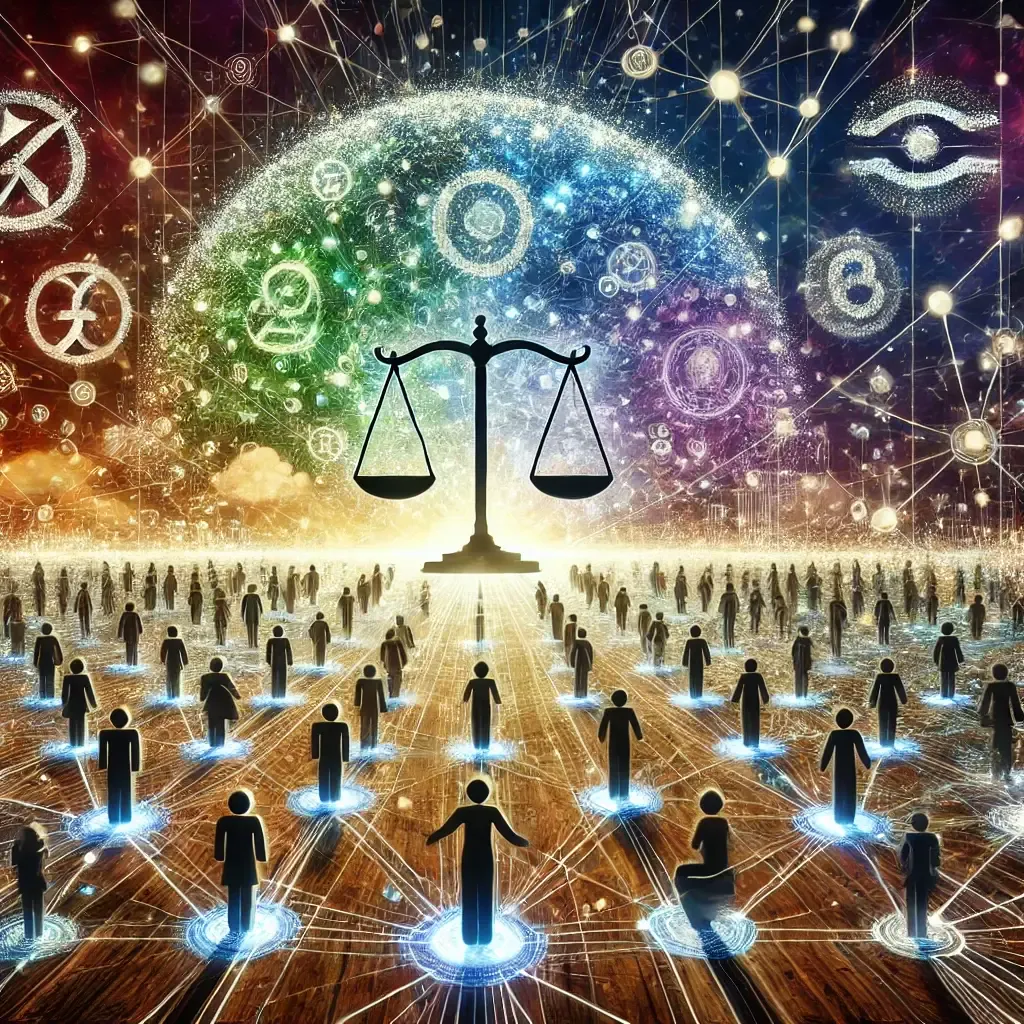 In a truly decentralized world, hierarchies dissolve. Power flows not from the top down, but across, shared equally by all who participate. It’s a system where collaboration replaces control, and autonomy reigns over authority.
“In case I don’t get to say it later, *Goodbye, Vanguard! Goodbye, index fund!*”
It’s not far-fetched to envision a future where index funds, once celebrated for their simplicity and low-cost access to diversified investments, begin to fade from prominence. As the underpinnings of the financial system unravel under the weight of monetary debasement, debt bubbles, and manipulated asset prices, the trust placed in these passive investment vehicles will likely diminish.
### **The Era of Index Funds and Their Decline**
Index funds thrive in a world where markets are heavily influenced by fiat-driven growth and cheap credit. However, these funds are deeply tethered to the performance of stock markets inflated by quantitative easing and corporate buybacks rather than true productive output. As the illusion of perpetual growth begins to falter, so too will the appeal of broad market tracking investments.
In a decentralized world that prioritizes transparent, hard assets like Bitcoin, the passive nature of index funds—designed to mirror manipulated fiat-driven markets—may feel increasingly out of touch. Investors will gravitate toward systems that align with the energy, effort, and value they contribute, bypassing legacy vehicles like index funds that were built for a different paradigm.
### **The Magic of Transition**
Imagine the moment when the world collectively steps into a new financial reality, one built on decentralized foundations. In this future, financial literacy will rise, individuals will reclaim agency over their wealth, and the concept of holding baskets of “faith-based” assets tied to the whims of central banks and overleveraged corporations will feel archaic.
As the Vanguard era comes to an end, it won’t just be a farewell to index funds but a transformation in how we store and grow value—a shift from passive participation to active, principled ownership in systems like Bitcoin.
So here’s to saying goodbye to the past and embracing the future: **a world where markets reflect true value, and participation is rooted in independence, sustainability, and freedom.**
Let us pause and take a deep breath—stop worrying about the *fiat price mechanism.* That fleeting number, measured in the very currency we sought to leave behind, is but a mirage. A distraction crafted to keep us tethered to the system we are rising above.
The fiat system thrives on control—of prices, of markets, of our very perception of value. It convinces us that our worth is tied to the whims of inflation, to the pulse of central bank interventions, to the manipulation of numbers that serve only the few at the top.
But we chose Bitcoin to escape that game. We walked away from fiat because we understood that its price mechanisms are shackled to today’s problems: inequality, debt spirals, and the ceaseless erosion of trust.
Bitcoin doesn’t need their price tags to prove its worth. Its value lies in what it *cannot* do: it cannot be printed, cannot be inflated, and cannot be manipulated by the hands of a select few. Its value is as pure as the energy and time it represents, unchanging and incorruptible.
To obsess over Bitcoin’s fiat price is to look backward, not forward. It’s to measure freedom with the ruler of oppression. Remember why you left the fiat system: to escape its illusions, to step into a reality where value is measured by scarcity, by fairness, and by the time you’ve poured into earning it.
Let the fiat price fall where it may—it is irrelevant. What matters is the quiet revolution happening beneath it: every block mined, every transaction validated, every satoshi spent in defiance of the old order.
So stop peering at the charts with anxious eyes. Instead, look to the future we are building—a world where money is honest, where value flows freely, and where the grasp of centralized control has no hold.
Bitcoin’s value isn’t in its price. Its value is in the freedom it gives us to rewrite the rules of the game.
Funny how the President doesn’t hold a national address to proudly declare, ‘Good evening, America, we’ve printed over a trillion dollars this year! You’re welcome for your shrinking purchasing power!’ Instead, you have to dig through dry financial reports to uncover how much Monopoly money they’ve conjured up. It’s almost like they don’t want you to notice that your paycheck buys less, while Wall Street keeps popping bottles. Transparency? Apparently, that’s just another victim of inflation.
The publicized philanthropy of some past billionaires—giving away their fortunes upon death—often appears altruistic on the surface, but it may stem from a deeper acknowledgment, or guilt, about the inequitable systems that allowed such immense accumulation in the first place.
The mechanisms of wealth concentration in traditional financial and economic systems often favor those with insider access or the ability to exploit structural inefficiencies, such as fiat dilution, monopolistic practices, or tax loopholes. These billionaires may recognize that much of their wealth wasn’t created through fair exchange or innovation alone but through leveraging systems that inherently disadvantage the majority.
While their end-of-life generosity is laudable, it’s worth questioning why such disparities exist in the first place. A system grounded in true value—like Bitcoin’s fixed-supply model—might not produce such staggering imbalances, potentially negating the need for billionaires to redistribute wealth as an act of moral atonement. Instead, it could foster a world where value creation is equitable and wealth reflects genuine contributions, not systemic exploitation.