
Some of the largest and most impressive Stach's are cultivated right here in Texas.
"Everything’s bigger in Texas—especially the egos. Now, we’ve got Elon to prove it."
--Texan Oversized Ego Department (TOED)
Forgive me earlier. for I had a burst of energy to release.
Young Diana thought her shortcut would bring her victory in the Amazon Games. But as her mother reminded her, **no true hero is born from lies**. The truth will always reveal itself, even when it’s inconvenient.
In life, shortcuts can seem tempting, even justified, but they often lead to hollow victories. Whether it’s in competitions, relationships, or how systems are built, shortcuts erode trust and integrity.
Imagine a system built on shortcuts—a system where the value we exchange is not tied to effort, energy, or truth, but to manipulation and convenience. What happens when the veil of illusion lifts? What happens when we realize the shortcut isn’t a victory but a theft of truth?
True heroes, and true systems, stand on the solid ground of honesty, effort, and resilience. Anything less is destined to crumble under the weight of its own lies.
**Let’s build on truth, not shortcuts.**
My man Rustin!
Twelve minutes in, you will notice the NY Post is even speaking about Pluto entering Aquarius, decentralization, technological breakthroughs, and even societal revolutions.

Recent news about the FBI raiding the home of Shayne Coplan, CEO of Polymarket—a blockchain-based prediction platform—raises troubling questions about selective enforcement. Polymarket had accurately predicted Trump’s 2024 victory, which critics argue might have made it a target of politically motivated scrutiny. The raid, which confiscated electronic devices, comes as the platform continues to face legal uncertainty under U.S. law governing offshore and unregulated betting markets.
But this incident prompts a deeper question: **When will the Federal Reserve face scrutiny for conjuring trillions of dollars out of thin air, creating systemic financial imbalances?** The Federal Reserve’s unchecked ability to manipulate the money supply has inflated asset bubbles, widened wealth inequality, and eroded the value of savings. Yet, while decentralized platforms like Polymarket are being targeted for their transparency and innovation, the operations of central banks remain unquestioned by enforcement agencies.
This disparity reveals a troubling dynamic: systems of decentralization and empowerment are often suppressed, while centralized institutions perpetuating economic instability continue unchallenged. Is it time to reexamine where accountability truly lies?
What are your thoughts on this? Do these actions reflect a priority misalignment, or are they part of a broader resistance to decentralization?
All centralized social platforms, including YouTube (Google), have forfeited their integrity and, therefore, no longer serve as neutral or trustworthy spaces for authentic discourse. Instead, they prioritize profit, control, and compliance with centralized agendas over the free exchange of ideas. This betrayal underscores the urgent need for decentralized platforms where individuals can engage without fear of censorship, manipulation, or exploitation, reclaiming their voice in an ecosystem driven by transparency and user sovereignty.

A pawn, though humble, becomes an unstoppable force when guided by purpose and supported with precision.
https://www.youtube.com/live/VZ76oB21PrI?si=Ko8uNn8_D8jsAPM-
Genuine money is born from labor, not conjured by centralized authorities. It is the tangible manifestation of human effort, skill, and time—an embodiment of our energy exchanged within a framework of trust and value. Unlike fiat currency, which is created from thin air and controlled by distant powers, true money reflects the organic and decentralized nature of work and productivity. It exists as a fair exchange for the labor that sustains us, untethered from the manipulations of those who seek to control it for their own ends. Only when money is tied to the value of human endeavor, not the whims of centralization, does it become a true store of wealth.
We are both the visible and the invisible, a harmonious blend of flesh and conscious awareness. For millennia, humanity has been bound by the visible—enslaved by the illusion of materialism. Yet, to free ourselves from this bondage, we must look beyond what we can see. True liberation comes not from mastering the material, but from understanding and embracing the unseen forces that shape our existence.
In this unseen realm, we find the essence of how we measure and store our most sacred resource: time and energy. The invisible becomes the key to our freedom, as we reclaim control over how our energy is exchanged, without the distortion of external forces. In this space, we find systems—like Bitcoin—that honor our true worth, offering a means to store and transmit our energy in a way that cannot be manipulated or controlled.
To awaken from the illusion of materialism is to understand that the real power lies in what cannot be seen, and in doing so, we transcend the chains of the visible world and reclaim our essence.
Define Global Terrorist. Be honest about it.
Let's reframe the question: Is owning a form of energy that is immune to manipulation or control by external forces truly worthless?
War is not an isolated event—it is the inevitable *effect* of a *cause*: the creation of money out of thin air. When governments can conjure unlimited funds without accountability, it fuels a cycle of conflict by enabling unchecked spending on destruction and domination. This ability to print money distorts priorities, making war not just possible but profitable for those in power.
At its core, the centralized control of money serves a darker purpose: to steal resources, destroy lives, and perpetuate this cycle endlessly. By manipulating the value of money through inflation and debt, those in control siphon wealth from the masses to fund their agendas, leaving nations impoverished and societies fractured. The result is a system that thrives on exploitation—steal, destroy, repeat.
Decentralized systems like Bitcoin challenge this paradigm by removing the power to create money arbitrarily. Without the ability to fund wars through hidden taxation like inflation, the financial incentives to wage them diminish. True peace begins with honest money—money that cannot be manipulated to serve the interests of the few at the expense of the many.
https://www.youtube.com/live/MSLZCiaj_Qc?si=rwPv8lfeGfR5SlM5
The media’s portrayal of the G20 World Leader Summit as a monumental event is telling, but it’s crucial to remember that Earth has eight billion leaders—not just a select few gathered in a room. The idea that global decisions should rest solely in the hands of politicians and elite figures is an outdated and flawed approach. Leadership today, more than ever, is decentralized. Each individual has the power to influence their own life and community, and when collectively harnessed, this can create far-reaching change.
The focus on a small group of leaders at events like the G20 underscores the belief in centralized control, where a few are thought to have the answers for the many. But this narrative ignores the inherent strength in grassroots movements, local governance, and the wisdom of individuals living directly with the consequences of their choices. Leadership isn’t about sitting at the top of a hierarchy; it’s about empowering people to govern themselves, innovate, and create.
In a world where technology and decentralization are driving progress, the concept of leadership must evolve. No single summit or group of figures can dictate the future of the planet. The future belongs to the collective—each of the eight billion individuals who contribute to shaping a world free from the confines of outdated systems.
Warren Buffett acknowledging that the U.S. debt cannot be repaid is an interesting development, but it raises the question: is this realization a helpful warning or a quiet admission of complicity? Buffett, as one of the most influential investors in history, has undeniably benefited from and supported the financial system that enabled this unsustainable debt spiral. His investments, often tied to industries that thrive under inflationary monetary policies, have made him a key player in the system’s growth—and its flaws.
For decades, figures like Buffett championed the narrative that the U.S. economy's resilience, combined with careful market investments, could weather any storm. Yet this optimism ignored the underlying problem: a fiat monetary system that incentivizes endless borrowing, unchecked spending, and asset inflation at the expense of long-term stability. To now point out that the debt cannot be repaid, after benefiting immensely from the very mechanisms that created it, feels like a case of too little, too late.
If Buffett is partly accountable, it’s because he endorsed and profited from a system that prioritized short-term gains over fiscal responsibility. While his philanthropy is often celebrated, perhaps a more significant contribution would have been using his platform to address these systemic issues earlier, when real reform might have been possible.
This realization also underscores why alternatives like Bitcoin are gaining traction. Unlike the fiat system, Bitcoin operates on absolute scarcity and rules that no one can manipulate. It’s a system where accountability is built into the code—a stark contrast to the financial architecture that figures like Buffett have long supported.
If the reports are true, Elon Musk’s potential bid to buy Disney, allegedly with Donald Trump’s support, adds yet another layer of intrigue to the intersection of business, politics, and media influence. Both Musk and Trump have shown a flair for making headlines and shaking up traditional institutions, and a move like this would undoubtedly be positioned as a major disruption to the entertainment industry.
Disney, with its vast intellectual property portfolio and cultural influence, represents a strategic asset in shaping narratives and controlling media content. Musk’s interest could stem from a desire to influence that space, much like his acquisition of Twitter was framed as a push for “free speech.” Trump's involvement suggests a potential alignment of interests to reshape cultural and political storytelling in a way that counters perceived mainstream narratives.
However, this raises significant questions about consolidation of power and influence. Would such a deal be in the public’s best interest, or would it further entrench control in the hands of a few influential figures? Media and entertainment are already criticized for being dominated by elite interests; adding Musk and Trump to that equation could either upend the status quo or reinforce it under a different banner.
It also highlights how centralized entities, like Disney, become targets for high-profile figures seeking to steer cultural discourse. In contrast, decentralized systems like Bitcoin or open-source platforms offer an alternative—a system where influence isn't concentrated but distributed, making it less susceptible to being co-opted by a single individual or ideology.
**"Interesting choice of the word *critical*. For thousands of years, humanity thrived using only the resources available within their immediate regions, adapting and innovating without reliance on distant supply chains. The framing of these minerals as 'critical' reflects how modern society has tethered its progress to global dependencies.
This isn’t to diminish their importance to industries like tech and energy but to question how far we’ve strayed from self-sufficiency. Such dependencies make us vulnerable—China’s export bans highlight the fragility of systems built on concentrated supply sources.
It raises an important point: Are these minerals truly *critical* for survival, or are they essential for the continuation of a system that prioritizes wants over sustainable independence? History reminds us that resilience often stems from using what’s available, rather than overreliance on what’s deemed indispensable."**
http://youtube.com/post/UgkxCJVlx_tMo5xI0BJMUtbvWl1r4COARcEp?si=K08uY_L4Jwr7T6vm
In the U.S., we seem to have both fake money—fiat currency conjured out of thin air—and fake fighters, those who project strength and purpose but ultimately uphold a hollow facade. Fiat currency, backed by nothing but confidence, is a symbol of a broader societal pattern where appearance often takes precedence over substance.
Just as fiat money relies on the illusion of value rather than intrinsic worth, fake fighters—whether political, institutional, or ideological—operate within systems designed to maintain control rather than pursue meaningful change. They give the impression of fighting for the people or standing against injustice, but their actions often reinforce the very structures they claim to oppose.
This dynamic reflects a deeper issue: a system built on fabrication naturally breeds actors who perpetuate the illusion. In contrast, something like Bitcoin stands as a symbol of authenticity—real value tied to energy, scarcity, and unchanging rules. It represents a stark alternative to systems of deception, calling for a return to truth and accountability not just in money, but in action and leadership.
If I wanted to *feel* the weight of one Bitcoin, I could convert it into the 35.2 ounces of gold it equals today. But why? What purpose would the gold serve? Unlike Bitcoin, I couldn’t carry it effortlessly across borders or live off its value wherever I go. Bitcoin is not just a store of value—it’s freedom in my pocket, ready to go anywhere in the world, unrestricted and unconfined.
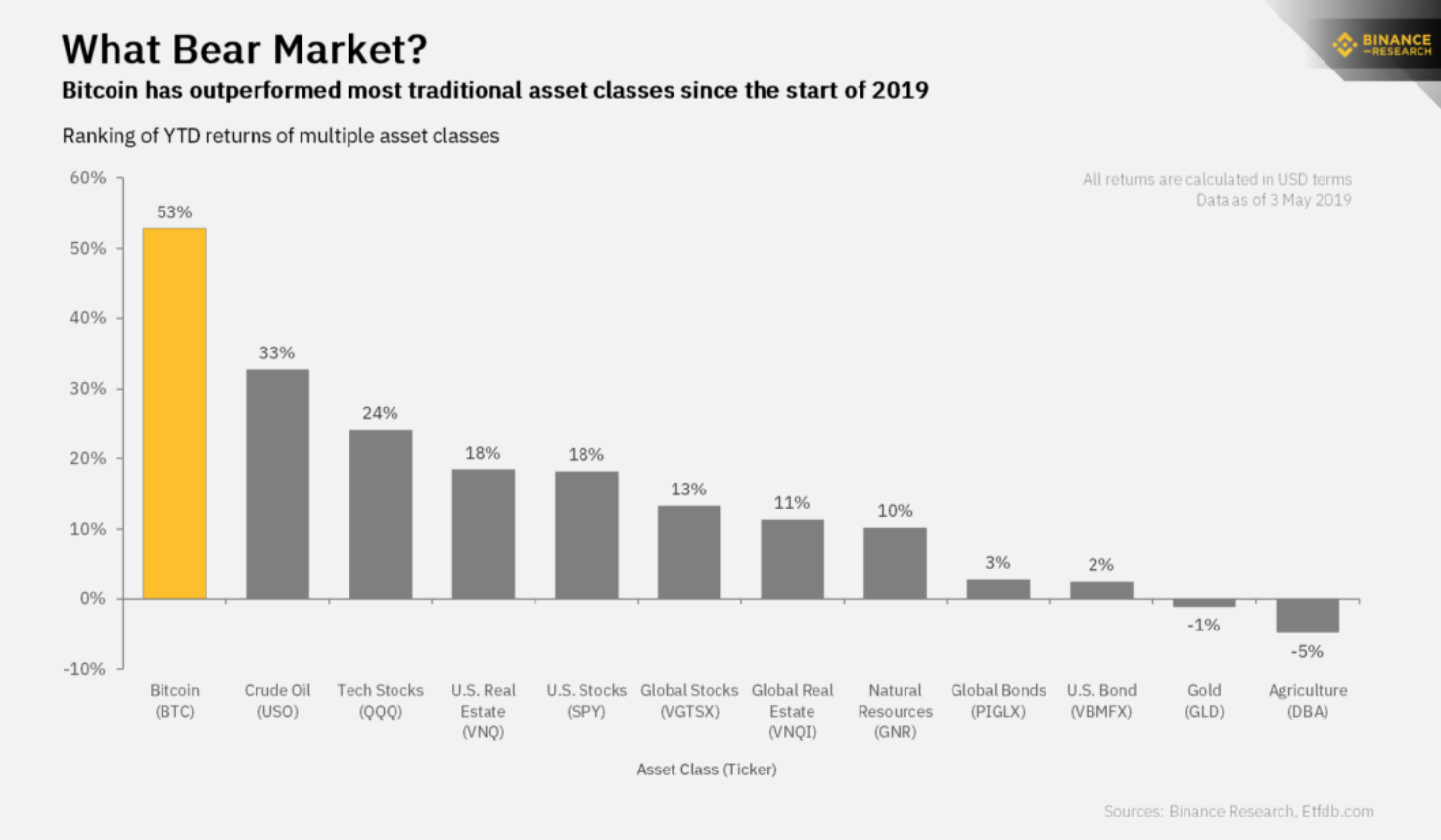
#Bitcoin has demonstrated over the past 15 years that there’s no need to divert your time and energy into anything less than sound money.
With Bitcoin as the foundation, we can invest directly in businesses without relying on a stock market that operates more like a casino—one ultimately dominated by centralized giants like BlackRock.