Nap trapped by the little one earlier today meant I got to watch this talk by
@Jameson Lopp on ossification! 🤓
- - - -
So many gems in this 20 minute presentation. Lovers of computer and Internet history will enjoy the detour into how SMTP went from decentralized to something controlled by a handful of gatekeepers. In that example, ossification prevented changes at the protocol level so fixes had to be bolted on top.
Generally speaking, ossification makes it harder for a protocol to adapt to new problems and respond to changes in the environment. Of course we also have to acknowledge the argument for ossification. It can increase safety by protecting against unwanted changes and consequences, particularly anything that can weaken the protocol.
- - - -
When we think about ossification we have to consider the current state and future of Bitcoin. Is it just money? Or can it empower users to reclaim their sovereignty in more ways?
“Do we want bitcoin to be able to provide sovereignty to the masses, not just financial stuff? How do we get a UTXO into the hands of eight billion people, or something UTXO-like that can give them that same level of sovereignty?
Are we going to resign ourselves to creating a system of custodians because it’s not possible to scale the protocol?”
- - - -
Okay so that’s all good, important stuff to to keep in mind. But consider this scary and humbling thought about the future:
Bitcoin is not inevitable.
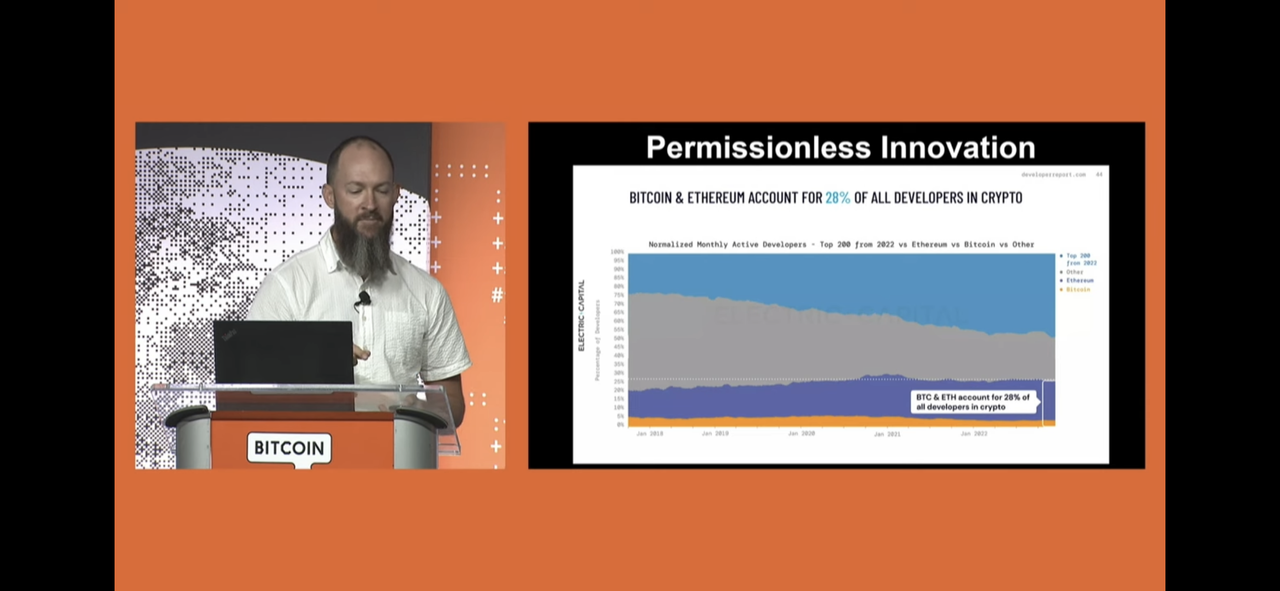
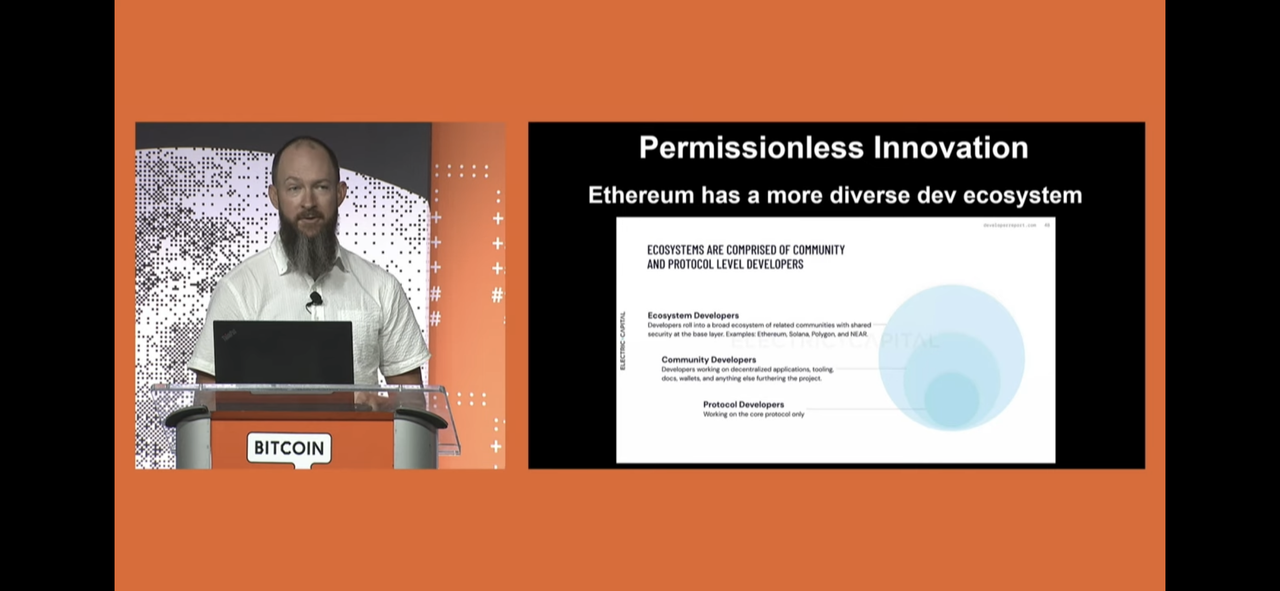
If you look at the numbers, Bitcoin and Ethereum account for just 28% of developers in crypto. Of that 28% it’s no surprise that the majority of those are Ethereum devs. How are we going to attract the best, brightest and, for better or worse, the most influential to work on Bitcoin? It makes you wonder just how much of the talent pool Bitcoin is missing out on.
This was initially brought to my attention by
@npub1dq94...2pg8 who spends so much of his time trying to grow and enrich Bitcoin’s developer ecosystem. This is the kind of work that really excites me. I believe we are still in the early days of what the developer ecosystem can become. Look at how cool coding is now. 20 years ago it was for nerds. I was embarrassed to tell people that was what I did in my free time. Now every facet of software engineering has its own little community complete with conferences, podcasts, and other resources to help everyone from the middle schooler, to the hobbyist, to the professional software architect.
Growing community is not a particularly sexy problem to solve. There aren’t really any technical challenges to work through. You don’t get the same kind of recognition. It’s more about education and outreach.
But it’s important. In order for Bitcoin to succeed we need to expand the developer ecosystem. “We need optionality, we need builders to have a platform with many different types of functionality, extensibility, and the ability to innovate, and take risks in a way that isn’t a risk to bitcoin itself.”
Premature ossification can get in the way of this. At the worst, it can cause Bitcoin to go the way of SMTP where only a small handful of companies have the resources to run the complex rules that have been built on top of the protocol, creating a kind of centralization that we have been working so hard to prevent.
In the words of Lopp’s presentation, “Ossification should be a phenomenon not a goal.”
—-