FiberDevs's avatar
FiberDevs
npub1fxq5...tahv
Building a scalable, privacy-by-default P2P payment & swap network⚡
FiberDevs's avatar
FiberDevs 9 hours ago
New grant recipient, pay-per-read platform, desktop node tool, and privacy ideas continue to emerge across the Fiber ecosystem 🌱 - Grant Approved: Dular Connects Fiber to Mobile Money Infrastructure - Scryve Reads: A Live Demo of Pay-As-You-Read Content Streaming - Fiber Desktop: Simplifying Local Node Management - Proposal: Fiber Payjoin Kit for Native, Collaborative Privacy - Discussion: Mapping the LSP Link Between Bitcoin Lightning and Fiber Tracking the recent progress and new activities across Fiber community-led projects in Pulse 06:
FiberDevs's avatar
FiberDevs 5 days ago
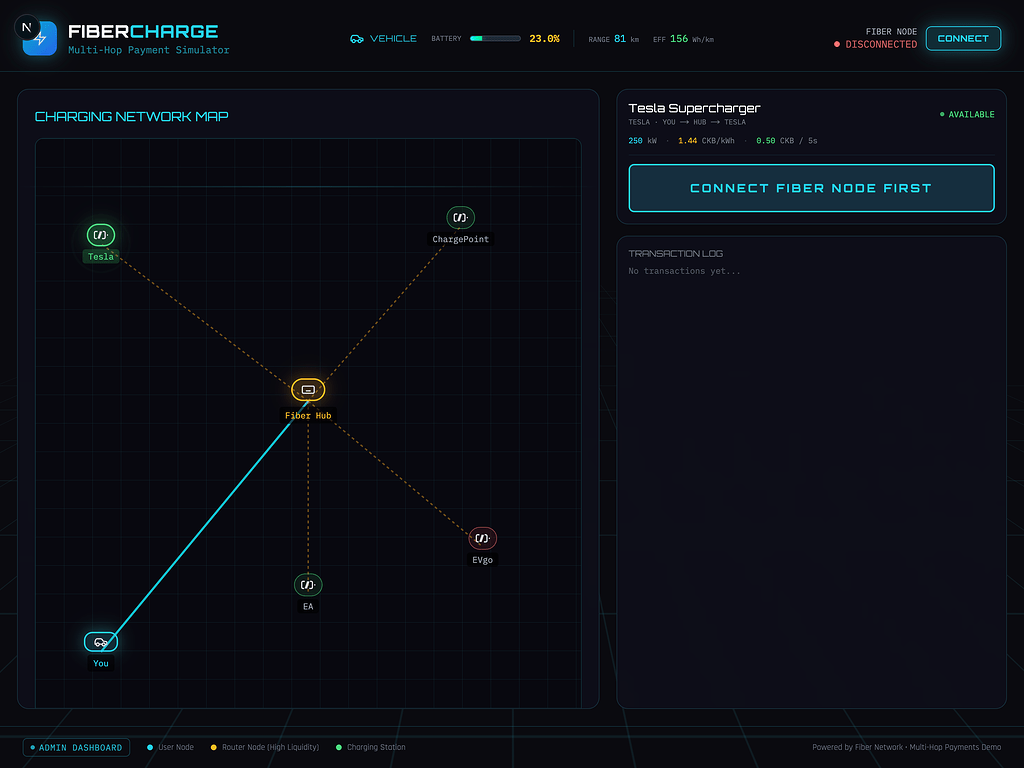
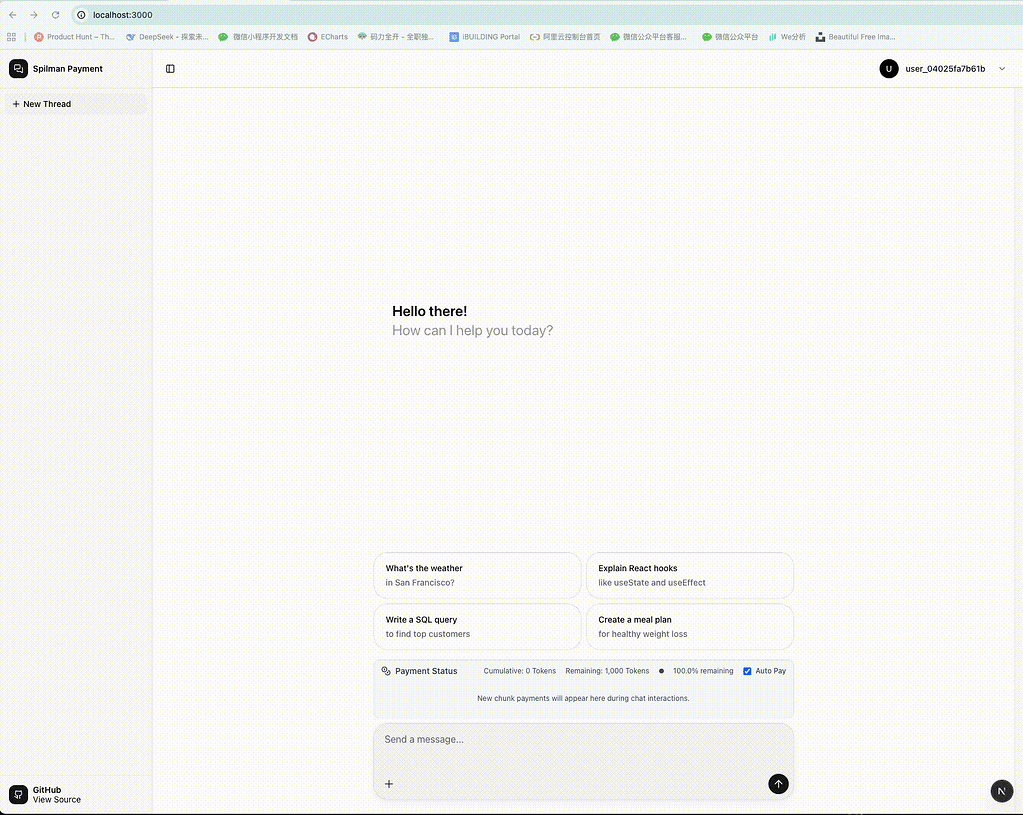
When Fiber meets EV charging ⚡🚗 After exploring AI-powered "Chat-and-Pay" micropayments, developer Sonny Wu pushed Fiber into a new real-world scenario: EV charging in a real-time "Charge-as-You-Go" streaming experience. Why EV charging? It’s a continuous action where costs accumulate in real time by energy consumed, perfectly fitting a "Pay-as-You-Use" streaming model. More importantly, it reveals the exact design details of Fiber Network that usually go unnoticed—multi-hop routing, hubs, and how they naturally emerge in a decentralized network. image In this demo, your browser runs a Fiber WASM light node. You log in with Passkey, open a channel, and start charging. From that point on, Fiber streams 0.5 CKB per 5 seconds while the battery fills. A key piece here is multi-hop routing—You only open *one* channel with a Router to pay any station network (Tesla, EVgo, EA), and the network handles the rest. This Router naturally becomes a "Hub"—not through centralized protocol privileges, but because the network rewards nodes that provide liquidity and route payments efficiently. A Router is just an ordinary node with higher connectivity in a decentralized network. image Does a Hub mean centralized risk? No. Unlike Web2 processors, a Fiber Router never touches users’ money—funds are locked in an on-chain channel between you and the Router, which only forwards payment commitments. Channel states are publicly verifiable, paths propagate via gossip protocol, and settlement can always be enforced on-chain. The demo also includes an Admin Dashboard to show this structural transparency, giving operators clear visibility into real-time routing fees, network transaction data, and station revenue analytics. In traditional platforms, these metrics are a centralized black box. image Fiber’s value proposition isn't just "faster" or "cheaper" transactions. It’s reinventing payments all together, making business models like "pay-as-you-use"—nearly impossible in Web2—practical for the first time. When payments no longer depend on third-party services, approvals, delays, or meaningful per-transaction costs—and settlement becomes near-instant while users retain control of their funds—"pay-as-you-use" business models become viable at scale. Ready to see it in action? Claim your free test tokens from the CKB Testnet Faucet, fund your browser channel, and watch the live payment routing in action: 💻 Demo: 📦 GitHub: 🧠 Developer's notes: 🤖 The earlier Chat-and-Pay demo:
FiberDevs's avatar
FiberDevs 1 week ago
Our UX designer Yuqi just published another interactive walkthrough. Follow Pico the duck through an airport and you'll see two of the things payment channels are actually good at: 1. Pay-by-the-minute via off-chain channels. Pico naps for 20 minutes and pays for 20 minutes. The payment updates off-chain while he's napping and settles when he wakes; no fixed packages and no minimum charges. 2. Asset-agnostic routing through a single payment hub. Pico's luggage storage accepts CKB; the massage chair accepts sats. He pays once and Fiber handles the liquidity routing and asset swaps in the background. Both are hard and more expensive to do on traditional payment rails, which is exactly what Fiber's payment-channel architecture is built for. It's the same technical move told through airport scenery, and that's the point: Yuqi's strength is making hard ideas legible. Experience the story (best on desktop): Yuqi's previous demo Echo: Creator's notes:
FiberDevs's avatar
FiberDevs 1 week ago
🚴Fiber Dev Log 29🚴 We're moving through the v0.9.0 release cycle, with Fiber v0.9.0-rc1 out. This brings together updates across routing, funding, transport, and overall stability. This release candidate also introduced a unified migration system, laying a clearer framework for future database and protocol upgrades. We also improved the Network Actor stability, with updates to keep channel actors alive across peer disconnects. Better observability is also now in place with the addition of debug and trace logs throughout the channel funding flow. Community feedback continues to be a big help! Input from the WASM testnet recently helped us catch and fix an invoice payment rejection case involving zero-balance channels. Thanks to the community member who reported it. Moving forward, our focus shifts more on security hardening and finalizing the x402 end-to-end flow. Full log:
FiberDevs's avatar
FiberDevs 2 weeks ago
Happy to see Fiber Link move from engineering prototype to product-ready! It's now a fully deployable community tipping layer over CKB, allowing members to support each other without running their own nodes. Product overview: Fiber-Pay v0.2.5 also keeps evolving—simpler connect flows, passkey support, new demos, and AI agent use cases. 🏗️ More community-led experiments on Fiber here in Pulse 05:
FiberDevs's avatar
FiberDevs 2 weeks ago
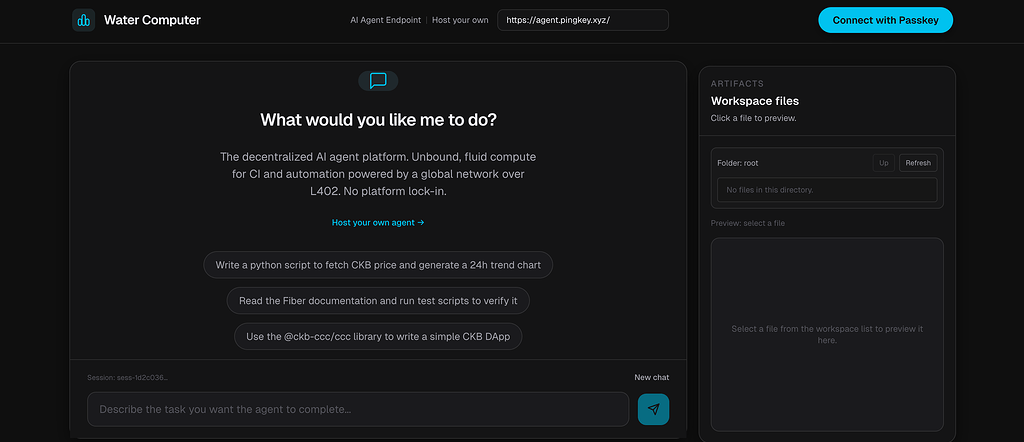
Call remote AI agents from your browser. P2P Decentralized. Passkey login. And settled instantly and trustlessly via Fiber. ⚡️🔐 Try it out: This is a recent experiment by Retric, exploring what AI services could look like when agents are independently hosted, directly callable, and paid peer-to-peer. The current pay-per-call model keeps things simple as a fixed-fee entry point, as low as 0.1 CKB per call on the Fiber testnet. Further plan includes transitioning to a more granular, token-based pricing (metering input/output usage). And if you're curious about why and how this was built, here's the write-up: #fibernetwork #nervos #AgenticEconomy
FiberDevs's avatar
FiberDevs 2 weeks ago
Fiber is moving from protocol ideas to real applications. Retric's been one of the builders exploring that shift firsthand. If you're curious about how Fiber actually works for real-world apps, hit the link and ask away! https://reddit.com/r/NervosNetw
FiberDevs's avatar
FiberDevs 3 weeks ago
🚴 Fiber Dev Log 28 🚴 Sharing a few things we've been working through lately: - Expanded Connectivity: added official Docker image support, plus Onion & Socks5. Also introduced transport type filtering to the connect_peer RPC, giving nodes more control over how they connect. - x402 & Preimage Proofs: Fiber can now act as an x402 exact-payment backend. It verifies paid invoices and returns deterministic receipts via the RPC HTTP listener. - Unified Migration Design: framework is now done. This is a key prerequisite for v0.9.0 and should make future protocol + database upgrades much smoother. Right now we're shaping up v0.9.0 (bringing in that Migration Support) and working through CCH multi-asset swap implementation. Also, great catching up with everyone at #Bitcoin2026 — heading back now and keeping pushing toward v0.9.0. 🚴 Full dev log:
FiberDevs's avatar
FiberDevs 1 month ago
Heading to Bitcoin 2026 ✈️ First time attending—excited to be there! 🤩 Stop by Booth K4 if you want to chat about: - Payment channels beyond Lightning - Programmable off-chain execution (--not just payments) - Autonomous AI agents x Off-chain payments - Multi-asset payment channels interoperable with Lightning Or just swing by, say hi, and grab a flyer. Vegas soon 🫡 📆April 27–29 📍Booth K4, The Venetian Expo #Bitcoin2026 #FiberNetwork #Nervos #LasVegas #CKB
FiberDevs's avatar
FiberDevs 1 month ago
🌊The last two weeks brought a wave of new projects, with more builders stepping in to try things out (shout out to NervosCatalyst for hosting the hackathon 🫡) Beyond the hackathon, projects keep evolving and shipping: - Fiber Checkout is live for web apps. - Fiber Link is now open for public testing - Fiber Audio Player brings pay-per-second audio to the browser - Fiber Pay: v0.2.1 makes AI payments even simpler Check out Pulse 03 to see the community innovations:
FiberDevs's avatar
FiberDevs 1 month ago
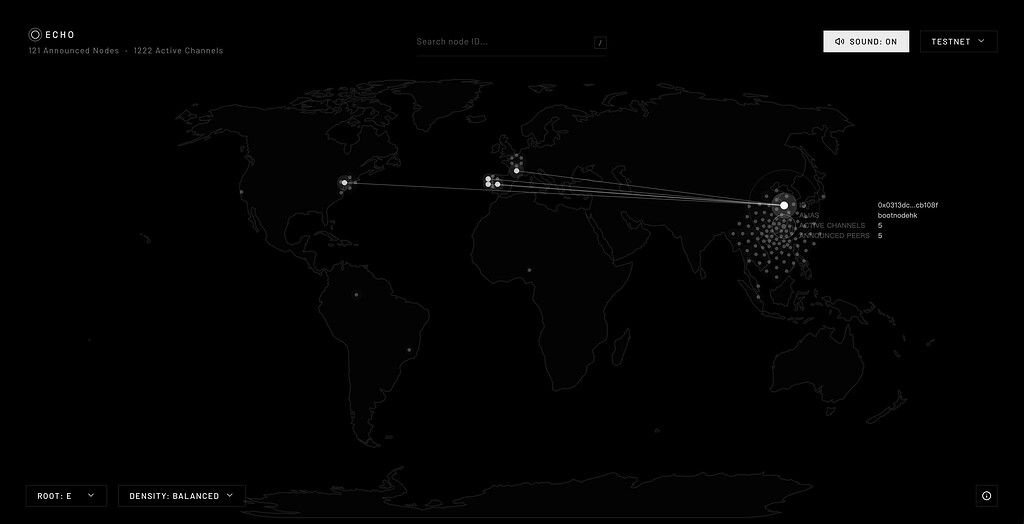
While the Fiber Dashboard shows you that Fiber is alive, Echo gives that quietness a pulse—letting you experience the network through motion, rhythm, and sound. 🎶😌 Vibe-coded by our UI designer (who also designed the Fiber Dashboard—and sings great karaoke😍), Echo is a visual and sonic take on network liveness. As for the name, an echo only exists when there's connection, response, something beyond yourself. That felt right for Fiber. A network only becomes alive when people join, connect, and interact. Sense Fiber's pulse: Designer's note: GitHub repo:
FiberDevs's avatar
FiberDevs 1 month ago
🚴 Fiber Dev Log 26 🚴 We're moving toward the v0.8.0 release and have been working on: - Upstream Ractor Integration: Switched to the upstream Ractor implementation to keep things clean and standardized. - Privacy Boost: Onion + SOCKS5 routing is well underway - Stability & Protection: Improved gossip protocols and new inbound/reconnect protections to keep the network resilient against resource-heavy peers. We're also in research for agent payment flows and shared a deeper look into CCH (Cross-Chain Hub)—the bridge for atomic BTC ↔ CKB swaps: We're moving from simple 1:1 swaps to a multi-asset future with P2P negotiation and LND-style swap acceptors. The CCH plan is open for discussion! Check out the full dev log:
FiberDevs's avatar
FiberDevs 1 month ago
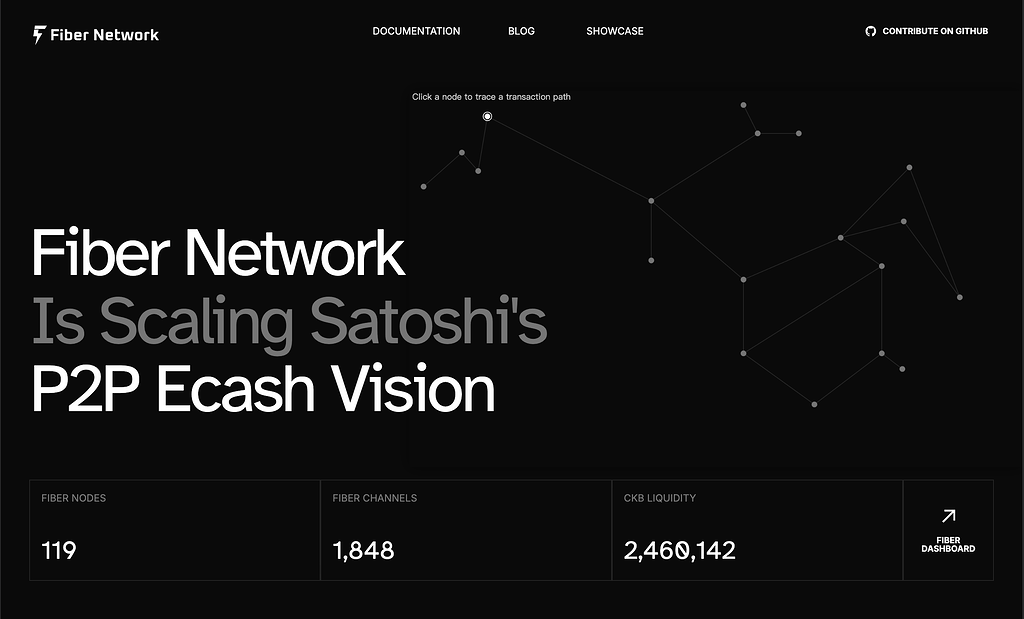
New UI ✨ Aligned with Fiber's DNA: calm, precise, and credible. Landing Page - Interactive Node Graph: Click to trace multi-hop routing paths. - Live Stats: Real-time protocol data integrated. Visual Simulators in Docs - Payment Channels: Open a channel & lock funds on-chain to enable off-chain txs. - Multi-hop Routing: Payment traversing multiple nodes to reach the receiver. - Interactive Network Simulation: See L1 & L2 activities in action. Check it out Site: https://fiber.world Docs—How it works: Designer's Note:
FiberDevs's avatar
FiberDevs 2 months ago
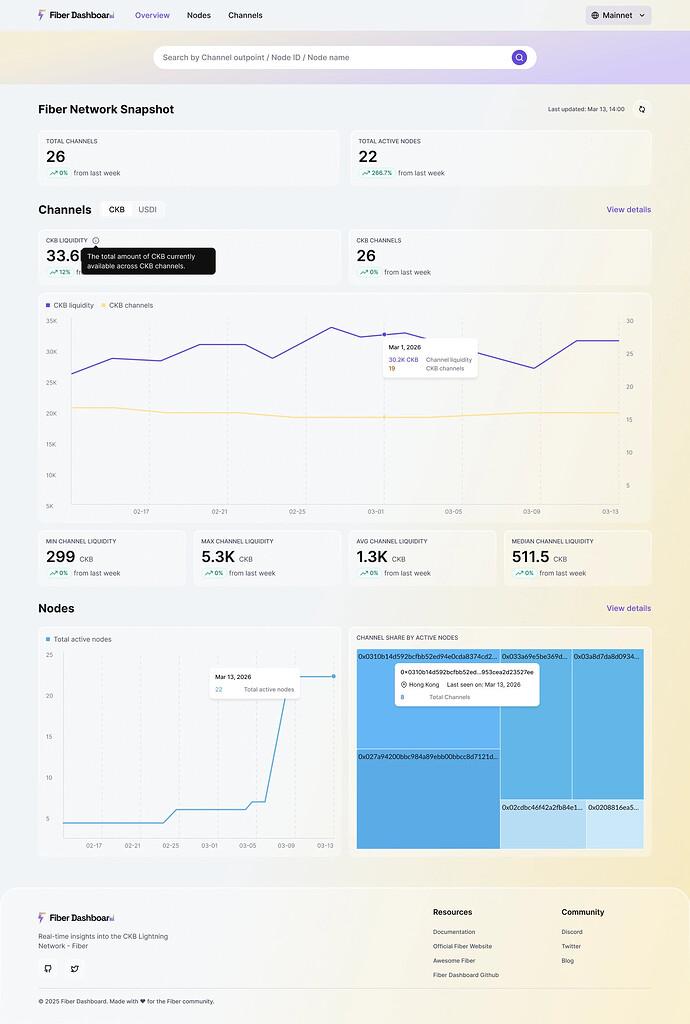
We shipped Fiber Dashboard. Why? Because we kept getting asked: "Is Fiber dead?"/"Anything actually happening?"/"Hello??" ...fair questions, honestly. Fiber is running, but to most people, it's just invisible. Data is scattered across on-chain txs and individual nodes, with no unified view. Getting a clear picture of the real state has always been a challenge. We believe a truly usable L2 shouldn't just live in code, logs, or RPC interfaces. It should be seen, understood, and trusted. So here is the dashboard, a real-time view of the network: node distribution, channel activity, overall health, etc. Now check out what's happening on Fiber: and the notes from one of the builders:
FiberDevs's avatar
FiberDevs 2 months ago
🚴Fiber Dev Log 24 🚴 A major focus recently has been on channel reliability. We've hardened our TLC settlement handling to prevent duplicate states and dangling TLC in invoice flow. Also persisted the TLC commitment replay state so channel recovery after restarts is deterministic, preserving strict replay ordering. On the architecture side, we're splitting core types into standalone crates like fiber-types and fiber-json-types. This means: - Developers can reuse Fiber's protocol, channel, payment, and invoice data structures without embedding a full node - Easier SDK and tooling integration for external Rust projects Also working on external wallet signing, where users can keep keys securely in their own wallets while still using Fiber channel workflows. Check out the full breakdown in the DevLog:
FiberDevs's avatar
FiberDevs 2 months ago
Just dropped two demos showing how Fiber eliminates trust dependencies by routing payments directly between nodes. 🚀 A fully decentralized architecture where the backend never touches user funds: 🎮 fiber-game: P2P wagering where an Oracle + adaptor signatures act as the ultimate ref. The winner claims the pot directly. Zero intermediary custody. 🤝 fiber-escrow: Escrow without escrow agent. Payments are held by the network via Hold Invoices, released on delivery, and arbitrated if things get weird. You can launch both demos locally with a single command!
FiberDevs's avatar
FiberDevs 2 months ago
Fiber v0.7.1 just dropped. We've introduced observable channel opening and improved network safety with configurable CORS and smarter balance checks to catch payment issues before they start. 🚀 v0.7.1 Release note: It's the follow-up to the major work of the previous version 0.7.0. This release brings significant structural changes, including trampoline routing and improved data privacy for debug outputs. We managed to boost payment performance by about 60% this time—mostly by being more efficient with how we handle secp256k1 contexts and pathfinding. Beyond routing, we've also overhauled the Cross-Chain Hub (CCH) with a proper finite-state machine to make order handling much more resilient. It feels good to see these architectural pieces finally click into place! You can check out the full breakdown in the DevLog:
FiberDevs's avatar
FiberDevs 3 months ago
🚴Fiber Dev Log 22 🚴 We're getting v0.7.0 ready, with one-way channels and trampoline routing. Here's a quick look at what's new in Fiber over the past two weeks: Trampoline routing payments are now merged and coming in the next release. Instead of calculating the entire payment route upfront, senders only need to reach a trampoline node. From there, the rest of the route is carried hop-by-hop inside an inner onion. The receiver only sees their own payment — nothing about the path it took. The result is simpler routing, better privacy, and fewer failure points as the network scales. Path finding got faster. We discovered that path finding was slowed down by repeated pubkey comparisons. Each comparison triggered expensive serialization work, and since routing checks many channels, this overhead added up quickly. By switching to map-based lookups and storing already-serialized pubkeys, we replaces the sequential iteration with map indexing. The result: 10x faster with map indexing, plus 2x faster with serialized pubkey storage. For a deeper dive into all the changes and fixes, take a look at the full dev log:
FiberDevs's avatar
FiberDevs 4 months ago
🚴 Fiber Dev Log 21 🚴 Just dropped the latest dev log: In this sprint, we shipped v0.6.1 and finished the draft implementation of two new features: one-way channels and trampoline routing — both are now under testing. Most of the other work went into corner cases, concurrency fixes, Cross-Chain Hub order persistence, and some dashboard improvements as well. Also linking the 2025 review & 2026 outlook here, in case you missed the Nervos Talk post 👇