Astrólogo Berlanda's avatar
Astrólogo Berlanda
berlanda@iris.to
npub1g7rl...65lr
Astrologia Científica Astrologia (Mapa Astral) Yoga Chi Gong (Chi Kung) Meditação WhatsApp: 55 41 99770 4243 Sites: Astrologia: www.astrol.com.br Yoga, Meditação, Auto-ajuda: www.ebys.com.br Hinduísmo http://www.ebys.com.br/hinduismo/index.html Canais web canal youtube https://www.youtube.com/@astrol.com.br_astrologo canal odysee https://odysee.com/@emersonberlanda:9?page=1
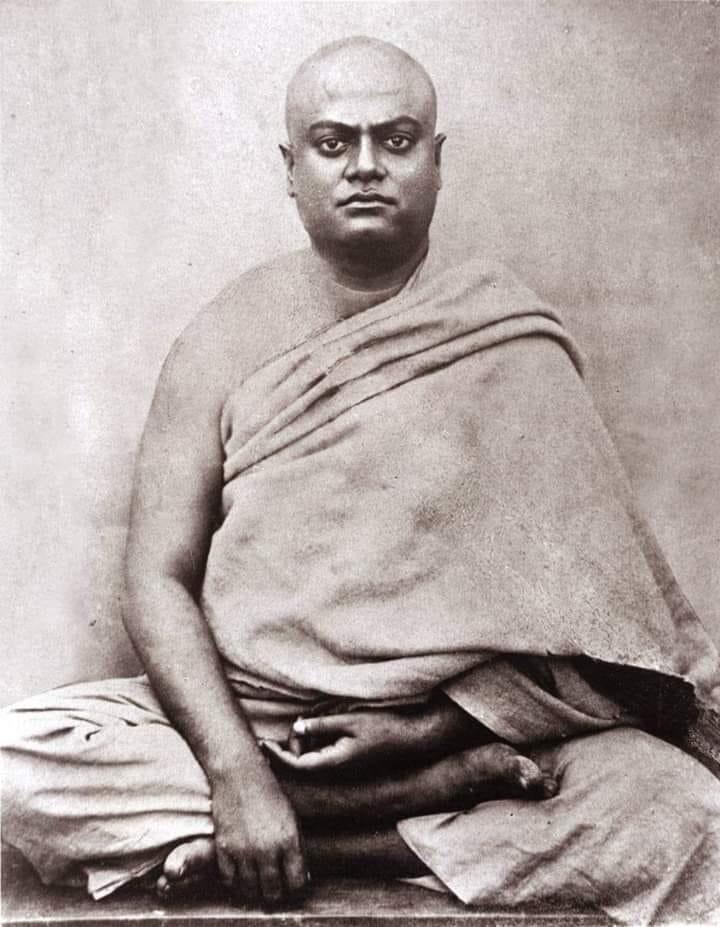
In olden times the churches had prestige, but today science has got it. And just as in olden times people never inquired for themselves — never studied the Bible, and so the priests had a very good opportunity to teach whatever they liked — so even now the majority of people do not study for themselves and, at the same time, have a tremendous awe and fear before anything called scientific. You ought to remember that there is a worse popery coming than ever existed in the church — the so-called scientific popery, which has become so successful that it dictates to us with more authority than religious popery. These popes of modern science are great popes indeed, but sometimes they ask us to believe more wonderful things than any priest or any religion ever did. Swami Vivekananda THE FIRST STEP TO JNANA The Complete Works image
Antigamente as igrejas tinham prestígio, mas hoje a ciência o tem. E assim como antigamente as pessoas nunca inquiriram por si mesmos - nunca estudaram a Bíblia, e assim os sacerdotes tinham uma oportunidade muito boa de dizer o que quisessem - por isso, mesmo agora, a maioria das pessoas não estuda por conta própria e, ao mesmo tempo, tem uma tremenda admiração e medo diante de qualquer coisa chamada científica. Você deve se lembrar que existe um papado pior vindouro do que jamais existiu na igreja - o chamado papado científico, que se tornou tão bem-sucedido que nos dita com mais autoridade do que o papado religioso. Esses papas da ciência moderna são realmente grandes papas, mas às vezes eles nos pedem para acreditar em coisas mais fantasiosas do que qualquer sacerdote ou qualquer religião já fez. Swami Vivekananda O PRIMEIRO PASSO PARA JNANA As Obras Completas image
First, meditation should be of a negative nature. Think away everything. Analyse everything that comes in the mind by the sheer action of the will. Next, assert what we really are — existence, knowledge and bliss — being, knowing, and loving. Meditation is the means of unification of the subject and object. Meditate: Above, it is full of me; below, it is full of me; in the middle, it is full of me. I am in all beings, and all beings are in me. Om Tat Sat, I am It. I am existence above mind. I am the one Spirit of the universe. I am neither pleasure nor pain. The body drinks, eats, and so on. I am not the body. I am not mind. I am He. I am the witness. I look on. When health comes I am the witness When disease comes I am the witness. I am Existence, Knowledge, Bliss. I am the essence and nectar of knowledge. Through eternity I change not. I am calm, resplendent, and unchanging. Swami Vivekananda Gnana-yoga meditation The Complete Works image Temple in honor of Swami Vivekananda, Kolkata
Primeiro, a meditação deve ser de natureza negativa. Pense em tudo. Analise tudo o que vem na mente pela pura ação da vontade. Em seguida, afirme o que realmente somos – existência, conhecimento e felicidade – sendo, sabendo e amando. A meditação é o meio de unificação do sujeito e do objeto. Meditar: Acima, está cheio de mim; abaixo, está cheio de mim; no meio, está cheio de mim. Eu estou em todos os seres, e todos os seres estão em mim. Om Tat Sat, eu sou Ele. Eu sou a existência acima da mente. Eu sou o único Espírito do universo. Não sou nem prazer nem dor. O corpo bebe, come e assim por diante. Eu não sou o corpo. Eu não me importo. Eu sou Ele. Eu sou a testemunha. Eu olho. Quando a saúde chega, eu sou a testemunha. Quando a doença chega, eu sou a testemunha. Eu sou Existência, Conhecimento, Felicidade. Eu sou a essência e o néctar do conhecimento. Através da eternidade eu não mudo. Sou calmo, resplandecente e imutável. Swami Vivekananda Meditação de Gnana-yoga As Obras Completas image Templo Em homenagem a Swami Vivekananda, Calcutá
A primeira coisa da qual aquele que deseja ser um Jnâni (conhecedor) deve se livrar é do medo. O medo é um dos nossos piores inimigos. Em seguida, não acredite em nada até conhecê-lo. Diga constantemente a si mesmo: “Não sou o corpo, não sou a mente, não sou pensamento, nem sequer sou consciência; sou o Atman”. Quando você puder jogar tudo fora, apenas o verdadeiro Eu permanecerá. A meditação do Jnani é de dois tipos: (1) negar e não se identificar com tudo o que não somos; (2) insistir no que realmente somos – o Atman, o Ser Único – Existência, Conhecimento e Bem-aventurança. O verdadeiro racionalista deve prosseguir e seguir destemidamente a sua razão até aos seus limites mais distantes. Não vai obedecer e parar em nenhum lugar da estrada. Quando começamos a negar, tudo deve ir-se até chegarmos ao que não pode ser jogado fora ou negado, que é o verdadeiro “eu”. Esse “eu” é a testemunha do universo, é imutável, eterno, infinito. Agora, camada após camada de ignorância cobre isso de nossos olhos, mas Ele permanece sempre o mesmo. Como conheceremos o conhecedor? A Vedanta diz: “Nós somos Ele, mas nunca poderemos conhecê-Lo, porque Ele nunca poderá se tornar objeto de conhecimento”. A ciência moderna também diz que não pode ser conhecido. Podemos, no entanto, ter vislumbres dEle de vez em quando. Quando a ilusão deste mundo for quebrada, ela voltará para nós, mas não terá mais nenhuma realidade para nós. Conheceremos ela como uma miragem. Alcançar o que está além da miragem é o objetivo de todas as religiões. Que o homem e Deus são um é o ensinamento constante dos Vedas, mas apenas poucos são capazes de penetrar além do véu e alcançar a realização desta verdade. Swami Vivekananda Discursos sobre Jnana-Yoga As obras completas image
The first thing to be got rid of by him who would be a Jnâni (knower) is fear. Fear is one of our worst enemies. Next, believe in nothing until you know it. Constantly tell yourself, "I am not the body, I am not the mind, I am not thought, I am not even consciousness; I am the Atman." When you can throw away all, only the true Self will remain. The Jnani's meditation is of two sorts: (1) to deny and think away everything we are not; (2) to insist upon what we really are — the Atman, the One Self — Existence, Knowledge, and Bliss. The true rationalist must go on and fearlessly follow his reason to its farthest limits. It will not answer to stop anywhere on the road. When we begin to deny, all must go until we reach what cannot be thrown away or denied, which is the real "I". That "I" is the witness of the universe, it is unchangeable, eternal, infinite. Now, layer after layer of ignorance covers it from our eyes, but it remains ever the same. How shall we know the knower? The Vedanta says, "We are It, but can never know It, because It can never become the object of knowledge." Modern science also says that It cannot be known. We can, however, have glimpses of It from time to time. When the delusion of this world is once broken, it will come back to us, but no longer will it hold any reality for us. We shall know it as a mirage. To reach behind the mirage is the aim of all religions. That man and God are one is the constant teaching of the Vedas, but only few are able to penetrate behind the veil and reach the realisation of this truth. Swami Vivekananda Discourses on Jnana-Yoga The Complete works image
The cardinal features of the Hindu religion are founded on the meditative and speculative philosophy and on the ethical teachings contained in the various books of the Vedas, which assert that the universe is infinite in space and eternal in duration. It never had a beginning and it never will have an end. Innumerable have been the manifestations of the power of the Spirit in the realm of matter, of the force or the Infinite in the domain of the finite, but the Infinite Itself is self-existent, eternal, and unchangeable. The passage of time makes no mark whatever on the dial of eternity. In its super Sensuous region, which cannot be comprehended at all by the human understanding, there is no past and there is no future. The Vedas teach that the soul of man is immortal. The body is subject to the law of growth and decay what grows must of necessity decay. But the indwelling spirit is related to the infinite and eternal life; it never had a beginning, and it will never have an end. One of the chief distinctions between the Vedic and the Christian religion is that the Christian religion teaches that each human soul had its beginning at its birth into this world; whereas the Vedic religion asserts that the spirit of man is an emanation of the Eternal Being and had no more a beginning than God Himself. Innumerable have been and will be its manifestations in its passage from one personality to another, subject to the great law of spiritual evolution, until it reaches perfection, when there is no more change. Swami Vivekananda The Complete Works Notes on Vedanta image
P. — Como você pode conciliar suas visões otimistas com a existência do mal, com a prevalência universal da tristeza e dor? R. (Swami Vivekananda)– Só posso responder à questão se primeiro for provada a existência do mal; mas isso a religião Vedanta não Admite. A dor eterna sem mistura de prazer seria um mal positivo; mas dor temporal e tristeza, se tiverem contribuído para um elemento de ternura e nobreza tendendo à bem-aventurança eterna, não são males: pelo contrário, eles pode ser um bem supremo. Não podemos afirmar que algo é mau até que tenhamos traçado sua sequência até o reino da eternidade. A crença ou adoração do diabo não faz parte da religião hindu. A raça humana está em processo de desenvolvimento; todos não têm atingiram a mesma altitude. Portanto, alguns são mais nobres e puros em suas vidas terrenas do que outros. Cada um tem um oportunidade, dentro dos limites da esfera de seu desenvolvimento atual, de se tornar melhor. Não podemos nos desfazer de nós mesmos; não podemos destruir ou prejudicar a força vital dentro de nós, mas temos a liberdade de dar-lhe diferentes instruções. P. – A realidade da matéria cósmica não é simplesmente a imaginação de nossas próprias mentes? R. — Na minha opinião, o mundo externo é certamente uma entidade e tem uma existência fora da nossa mente. concepções. Toda a criação está avançando e subindo, obediente à grande lei da evolução do espírito, que é diferente da evolução da matéria. Este último simboliza, mas não explica, o processo do primeiro. Não somos indivíduos agora, no nosso atual ambiente terreno. Não teremos alcançado a individualidade até que teremos ascendido ao estado superior, quando o espírito divino dentro de nós terá um meio perfeito para a expressão de seus atributos. Swami Vivekananda As Obras Completas Perguntas e respostas (Na Brooklyn Ethical Society, Brooklyn, EUA, 1898) image
Q. — How can you reconcile your optimistic views with the existence of evil, with the universal prevalence of sorrow and pain? A. (swami Vivekananda) — I can only answer the question if the existence of evil be first proved; but this the Vedantic religion does not admit. Eternal pain unmixed with pleasure would be a positive evil; but temporal pain and sorrow, if they have contributed an element of tenderness and nobility tending towards eternal bliss, are not evils: on the contrary, they may be supreme good. We cannot assert that anything is evil until we have traced its sequence into the realm of eternity. Devil worship is not a part of the Hindu religion. The human race is in process of development; all have not reached the same altitude. Therefore some are nobler and purer in their earthly lives than others. Every one has an opportunity within the limits of the sphere of his present development of making himself better. We cannot unmake ourselves; we cannot destroy or impair the vital force within us, but we have the freedom to give it different directions. Q. — Is not the reality of cosmic matter simply the imagining of our own minds? A. — In my opinion the external world is certainly an entity and has an existence outside of our mental conceptions. All creation is moving onwards and upwards, obedient to the great law of spirit evolution, which is different from the evolution of matter. The latter is symbolical of, but does not explain, the process of the former. We are not individuals now, in our present earthly environment. We shall not have reached individuality until we shall have ascended to the higher state, when the divine spirit within us will have a perfect medium for the expression of its attributes. Swami Vivekananda The Complete Works Questions and Answers (At the Brooklyn Ethical Society, Brooklyn, U. S. A., 1898) image
“Levando uma vida mundana, tem-se que aturar pessoas de mente mesquinha e fazer dessas coisas. Depois de atingir o meu exaltado estado, vi como as coisas eram à minha volta. Disse à Mãe Divina: “Ó Mãe, muda o rumo da minha mente para que eu não tenha que bajular as pessoas ricas.” (A Adhar): “Fique satisfeito com o emprego que tem. As pessoas correm atrás de um lugar que paga cinqüenta a cem rupias, e você ganha trezentas! É um magistrado. Vi um magistrado em Kamarpukur. Seu nome era Ishwar Ghoshal. Usava um turbante. Os ossos daspessoas tremiam diante dele. Lembro-me de tê-lo visto em minha infância. É um magistrado uma pessoa que deva ser menosprezada? “Sirva aquele a quem já está servindo. A mente torna-se maculada com o serviço a um senhor. Imagine, servindo a cinco senhores! “Uma vez uma mulher apegou-se a um muçulmano e convidou-o para ir a seu quarto. Mas ele era um homem correto; disse que desejava usar o vaso sanitário e deveria ir à sua casa apanhar o jarro de água para se lavar. A mulher ofereceu seu jarro, mas ele disse: ‘Não, o seu não serve. Devo usar aquele que uso sempre. Não posso usar um novo.’ Com estas palavras foi embora. Isto trouxe a mulher à razão. Compreendeu que um jarro novo, neste caso, queria dizer uma amante.” Ramakrishna O Evangelho de Ramakrishna image
A pedido do Mestre, o músico cantou algumas canções, uma das quais descrevia o despertar da Kundalini e dos seis centros: Desperta, Mãe! Desperta! A quanto tempo Tu estás dormindo No lótus do Muladhara! Cumpre Tua função secreta, Mãe: Sobe até o lótus de mil pétalas dentro da cabeça. Onde o poderoso Shiva tem Sua morada. Rapidamente penetra os seis lótus E retira minha tribulação, Ó Essência de Consciência! Mestre: “A canção fala da passagem da Kundalini através dos seis centros. Deus está tanto dentro como fora. No interior Ele cria os diversos estados mentais. Depois de ter passado pelos seis centros, o jiva vai além do domínio de maya e une-se à Alma Suprema. Esta é a visão de Deus. “Não se pode ver Deus a não ser que maya saia da porta. Rama, Lakshamana e Sita estavam caminhando juntos. Rama ia na frente, Sita no meio e Lakshmna os seguia, mas Lakshmana não podia ver Rama porque Sita interpunha-se entre eles. Do mesmo modo, uma pessoa não pode ver Deus porque maya está no meio. (A Mani Mallick): Mas maya se afasta da porta quando Deus concede Sua gra- ça ao devoto. Quando o visitante fica de pé defronte da porta, o porteiro diz ao patrão: ‘Senhor, dê-nosordem e nós o deixaremos passar.’ “Há duas escolas de pensamento: Vedanta e Puranas. Segundo a Vedanta, o mundo é uma ‘estrutura de ilusão’, isto é, tudo é ilusório como um sonho, mas segundo os Puranas, livros de devoção, o Próprio Deus tornou-Se os vinte quatro princípios cósmicos. Adore Deus interior e exteriormente. Esta história é narrada no Mahabharata. Drona recusou-se a ensinar a arte de manejar o arco e a flecha a Ekalavya, porque este último pertencia a uma casta inferior. Por conseguinte, Ekalavya foi para a floresta e treinou diante da imagem de barro de Drona, a quem considerava seu mestre. Ao longo do tempo, tornou-se um exímio arqueiro. Quando Drona descobriu que ele havia ultrapassado o próprio Arjuna, seu discípulo muito amado, nessa arte, pediu a Ekalavya para lhe dar seu polegar como taxa de instrutor. Ao obedecê-lo, Ekalavya demonstrou seu espírito de sacrifício e também, amor ao mestre. “Enquanto Deus mantém a consciência do ‘eu’ em nós, o objetos dos sentidos existem e não podemos falar do mundo como sendo um sonho. Há fogo no fogão, portanto, o arroz, os grãos, as batatas e outros vegetais pulam na panela. Pulam como se dissessem: ‘Estamos aqui! Estamos pulando!’ Este corpo é a panela. A mente e a inteligência são a água. Os objetos dos sentidos são o arroz, as batatas e outros vegetais. A consciência do ‘eu’ identificada como os sentidos diz: ‘Estou pulando’. Satchidananda é o fogo. “Em conseqüência as escrituras bhakti descrevem este mundo como uma ‘mansão de alegria’. Ramprasad cantou em uma das canções. ‘Este mundo é uma estrutura de ilusão.’ Um outro devoto deu a resposta: ‘Este mundo é uma mansão de alegria.’ Como diz o ditado: ‘O devoto de Kali, livre enquanto vive, está pleno de Bem-aventurança Eterna.’ O bhakta vê que Aquele que é Deus, também tornou-Se maya. Assim também, Ele Próprio tornou-Se o universo e todos os seres vivos. O bhakta vê Deus, maya, o universo e o seres vivos como um. Alguns devotos vêem tudo como Rama; é apenas Rama que Se tornou tudo. Alguns vêem tudo como Radha e Krishna. Para eles é apenas Krishna quem Se tornou os vinte e quatro princípio cósmicos. É como ver tudo verde através de óculos verdes Sri Ramakrishna O Evangelho de Ramakrishna capítulo 11: - COM OS DEVOTOS EM DAKSHINESWAR (I) Domingo, 10 de junho de 1883 Templo Ramakrishna Calcutá Índia image
At the Master's request the musician sang a few songs, one of which described the awakening of the Kundalini and the six centres: Awake, Mother! Awake! How long Thou hast been asleep In the lotus of the Muladhara!Fulfil Thy secret function, Mother: Rise to the thousand-petalled lotus within the head, Where mighty Siva has His dwelling; Swiftly pierce the six lotuses And take away my grief, O Essence of Consciousness! MASTER: "The song speaks of the Kundalini's passing through the six centres. God is both within and without. From within He creates the various states of mind. After passing through the six centres, the jiva goes beyond the realm of maya and becomes united with the Supreme Soul. This is the vision of God. "One cannot see God unless maya steps aside from the door. Rama, Lakshmana, and Sita were walking together. Rama was in front, Sita walked in the middle, and Lakshmana followed them. But Lakshmana could not see Rama because Sita was between them. In like manner, man cannot see God because maya is between them. (To Mani Mallick) But maya steps aside from the door when God shows His grace to the devotee. When the visitor stands before the door, the door-keeper says to the master, 'Sir, command us, and we shall let him pass.' "There are two schools of thought: the Vedanta and the Purana. According to the Vedanta this world is a 'framework of illusion', that is to say, it is all illusory, like a dream. But according to the Purana, the books of devotion, God Himself has become the twenty-four cosmic principles. Worship God both within and without. "As long as God keeps the awareness of 'I' in us, so long do sense-objects exist; and we cannot very well speak of the world as a dream. There is fire in the hearth; therefore the rice and pulse and potatoes and the other vegetables jump about in the pot. They jump about as if to say: 'We are here! We are jumping!' This body is the pot. The mind and intelligence are the water. The objects of the senses are the rice, potatoes, and other vegetables. The 'I-consciousness' identified with the senses says, 'I am jumping about.' And Satchidananda is the fire. "Hence the Bhakti scriptures describe this very world as a 'mansion of mirth'. Ramprasad sang in one of his songs, 'This world is a framework of illusion.' Another devotee gave the reply, 'This very world is a mansion of mirth.' As the saying goes, 'The devotee of Kali, free while living, is full of Eternal Bliss.' The bhakta sees that He who is God has also become maya. Again, He Himself has become the universe and all its living beings. The bhakta sees God, maya, the universe, and the living beings as one. Some devotees see everything as Rama: it is Rama alone who has become everything. Some see everything as Radha and Krishna. To them it is Krishna alone who has become the twenty-four cosmic principles. It is like seeing everything green through green glasses. Sri Ramakrishna the gospel of Ramakrishna chapter 11: - WITH THE DEVOTEES AT DAKSHINESWAR (I) Sunday, June 10, 1883 Temple Ramakrishna Calcutta India image