unfortunately taking "antioxidants" has never shown to create any meaningful clinical outcomes.
this is probably because the antioxidant must be oxidized in order to donate a hydrogen ion to an existing molecule in the body that has been radicalized.
the antioxidant swaps with the radical and unless there is excess hydrogen, then the antioxidant remains oxidized until excretion.
https://www.dcscience.net/The%20antioxidant%20myth.pdf
Dan Ostermayer
ostermayer@primal.net
npub1gc64...uyek
physician
metabolic health maximalist
📚
co-sleeping
https://a.co/d/0itAvPV
the simple world
https://a.co/d/5u4BdMU
📚
ozempic face is just one of the hallmark signs of unhealthy weight loss
on average of 7% of facial volume lost for 22 pounds lost, mostly from fat pads in the midface—cheeks and areas around the nose, mouth, and temples
these are all the signs of advanced and rapid aging. these patients are losing collagen and elastin in the skin and that's just the visual manifestations of internal cell health.
https://aao-hnsfjournals.onlinelibrary.wiley.com/doi/10.1002/ohn.1209


this is secret that hollywood actors use to get lean and ripped for physical roles. many instagram influencers try and and hide this super simple (but tough to follow) regimen behind paid newsletters etc.
Steps:
1. 16:8 Protocol: Eat within an 8-hour window (e.g., 12 PM–8 PM), fast for 16 hours.
2. Protein Priority: 1–1.2g per pound of bodyweight daily (e.g., 150g for a 150lb person).
3. Calorie Deficit: ~500kcal below maintenance, but no strict tracking—"eat until full" with lean meats, eggs, veggies.
4. No "Cheat Days": Strict avoidance of processed carbs/sugars. Alcohol is banned!
5. Three weekly workouts: Focus on pull-ups, push-ups, dips, and pistol squats with progressive overload (e.g., weighted vests). No cardio so appetite won't tempt body to overeat carbs.


if you are in texas and want to get a metabolic profile you can contact me securely on push health here:
will accept bitcoin and usd
Daniel Ostermayer, MD in Houston, TX | Push Health ®
Daniel Ostermayer, MD's Push Health practice in Houston, TX. Request an invitation to get online healthcare services today.
you will hear a lot of lies about blue zones where there are more centenarians than would be expected in a normal population.
turns out that they have high total cholesterol and high LDL and when attempts are made to lower their lipids they don't live as long.


PubMed
The Cholesterol Paradox in Long-Livers from a Sardinia Longevity Hot Spot (Blue Zone) - PubMed
<span><b>Background/Objectives</b>: Hypercholesterolemia is commonly viewed as a risk factor for coronary heart disease; however, several studies h...

PubMed
Serum Lipid Profiles and All-Cause Mortality: A Retrospective Single Center Study on Chinese Inpatient Centenarians - PubMed
The serum lipid profiles of Chinese inpatient centenarians were lower than those of the previous studies. Low LDL-C level was associated with an in...

PubMed
Blood biomarker profiles and exceptional longevity: comparison of centenarians and non-centenarians in a 35-year follow-up of the Swedish AMORIS cohort - PubMed
Comparing biomarker profiles measured at similar ages, but earlier in life, among exceptionally long-lived individuals and their shorter-lived peer...

not only is there a problem with the accuracy of most published studies there is a problem with reproducibility
https://acsjournals.onlinelibrary.wiley.com/doi/full/10.1002/cncy.22639


finding a purpose and using that purpose as a tool to do meaningful activities is as important to your mental health as eating well.
this group continues to do great work with a control group cell line to show the problem with viral isolation processes.
This protocol demonstrated that the growth medium for cell cultures when reduced to very low nutrient levels causes many of the observed "viral" effects which we attribute to pathogens
they used 2% fetal bovine serum as the nutrient medium


SARS COV 2 ISOLATION PROTOCOL CONTROL EXPERIMENTS
Vero Cell Line

"Ketone supplementation significantly improved cardiac function compared with controls, especially in people with [heart failure]"
i predict that in the future we will find out that the ketones effect on the gut with reducing bacterial overgrowth and pruning the species that we carry will be found to relate to many vascular diseases

PubMed
Effect of ketone supplementation, a low-carbohydrate diet and a ketogenic diet on heart failure measures and outcomes: a systematic review and meta-analysis - PubMed
CRD42024615367.
pretty tough to find raw milk in the US but very easy to find italian parmesan reggiano which is basically portable raw milk


any interest from texans on nostr to have a telemedicine provider that accepts bitcoin for services and focuses on preventative metabolic health. Goal is a fair valued cash based service (no insurance nonsense) that actually builds a holistic picture of patient's metabolic health (true preventative care).
fairly easy for me to start the practice but since there are some malpractice fees to get in place I'm trying to gauge interest.
thanks for the comments
honey is a food. here is a list of the composition of honey (it isn't just sugar)
1. Proteins & peptides:
– Glucose oxidase (generates H₂O₂, the primary antimicrobial)
– Invertase (sucrase, splits sucrose → glucose + fructose)
– Diastase / α-amylase (partially hydrolyzes starch/dextrins)
– Catalase, acid phosphatase, protease, peptidase, glucosyl-transferase
-Major Royal Jelly Proteins 1–5 (MRJP 1–5) – secreted by hypopharyngeal gland; tiny µg amounts remain in finished honey
-Bee defensin-1 (antimicrobial peptide)
-Apalbumins (storage proteins)
-Trace amounts of free amino acids (~18 standard types plus proline and γ-aminobutyric acid)
2. Major carbohydrates (>75 % dry weight):
-Monosaccharides: D-fructose & D-glucose (typically 1.2–1.5 : 1 ratio)
-Disaccharides: maltose, isomaltose, sucrose, trehalose, melezitose, erlose, palatinose
-Tri- and tetrasaccharides: maltotriose, panose, maltulose, fructo-oligosaccharides, etc.
3. Phenolics & flavonoids (0.02–0.5 %; give floral properties):
-Flavonoids: pinocembrin, chrysin, galangin, quercetin, kaempferol, luteolin, apigenin
-Phenolic acids: gallic, caffeic, p-coumaric, chlorogenic, ferulic, cinnamic acids
-Tannins, lignans, catechins
3. Volatile & aroma molecules (≈0.02 %)
- 200+ volatiles—mainly aldehydes (2-methyl-butanal), esters (methyl anthranilate), ketones, alcohols, terpenes (linalool, eucalyptol), furanones; profile is highly floral-dependent.
4. Vitamins & cofactors (trace µg–mg kg⁻¹ amounts):
-B-complex: B₂ (riboflavin), B₃ (niacin), B₅ (pantothenic acid), B₆ (pyridoxine)
-C (ascorbic acid), K, folic acid, biotin
5. Minerals & trace elements (≤1 % ash):
- K, Ca, Mg, Na, P, Zn, Fe, Cu, Mn, Se, Cr; dark honeys are richer in minerals.
6. Other bioactives & contaminants:
-Melatonin, serotonin (ng levels)
-5-Hydroxymethylfurfural (HMF) – process/time marker
-Methylglyoxal (high in manuka honey, gives non-peroxide activity)
-Microbial DNAs, pollen proteins (allergens), trace pesticides or heavy metals in conventional sources


summary of creatine dosing
0 g (baseline) – Normal endogenous production (1 g/d) and diet (meat/fish) maintain muscle phosphocreatine at 60–70 % of saturation.
1–2 g/d – “Low-dose” supplementation
– Slightly raises muscle creatine (~10–15 % above baseline).
– May offer modest cognitive support in vegetarians or during sleep deprivation, but minimal strength/power gains.
3–5 g/d – Standard daily dose (no loading)
– Achieves near-maximal muscle phosphocreatine saturation (≈ 20 % rise) within 3–4 weeks.
– Improves high-intensity exercise capacity (≈ 5–15 %), lean mass accrual (≈ 1–2 kg over 8–12 weeks), and recovery.
– Cognitive benefits in older adults and those with low dietary intake.
20 g/d (split 4 × 5 g) for 5–7 days – “Loading phase”
– Rapidly saturates muscle stores (≈ 20 % rise) in <1 week.
– Same long-term performance benefits as 3–5 g/d, just reached faster.
– Higher incidence of mild GI upset or water-weight gain (1–2 kg).
>5 g/d maintenance (>10 g/d)
– No additional muscle or performance benefit once stores are saturated.
– May increase plasma creatinine without renal harm in healthy kidneys, but offers no extra advantage.
Bottom line:
– 3–5 g/d is the sweet spot for strength, hypertrophy, and recovery.
– 20 g/d loading for 5–7 days speeds saturation if rapid benefit is desired.

MD Anderson Cancer Center
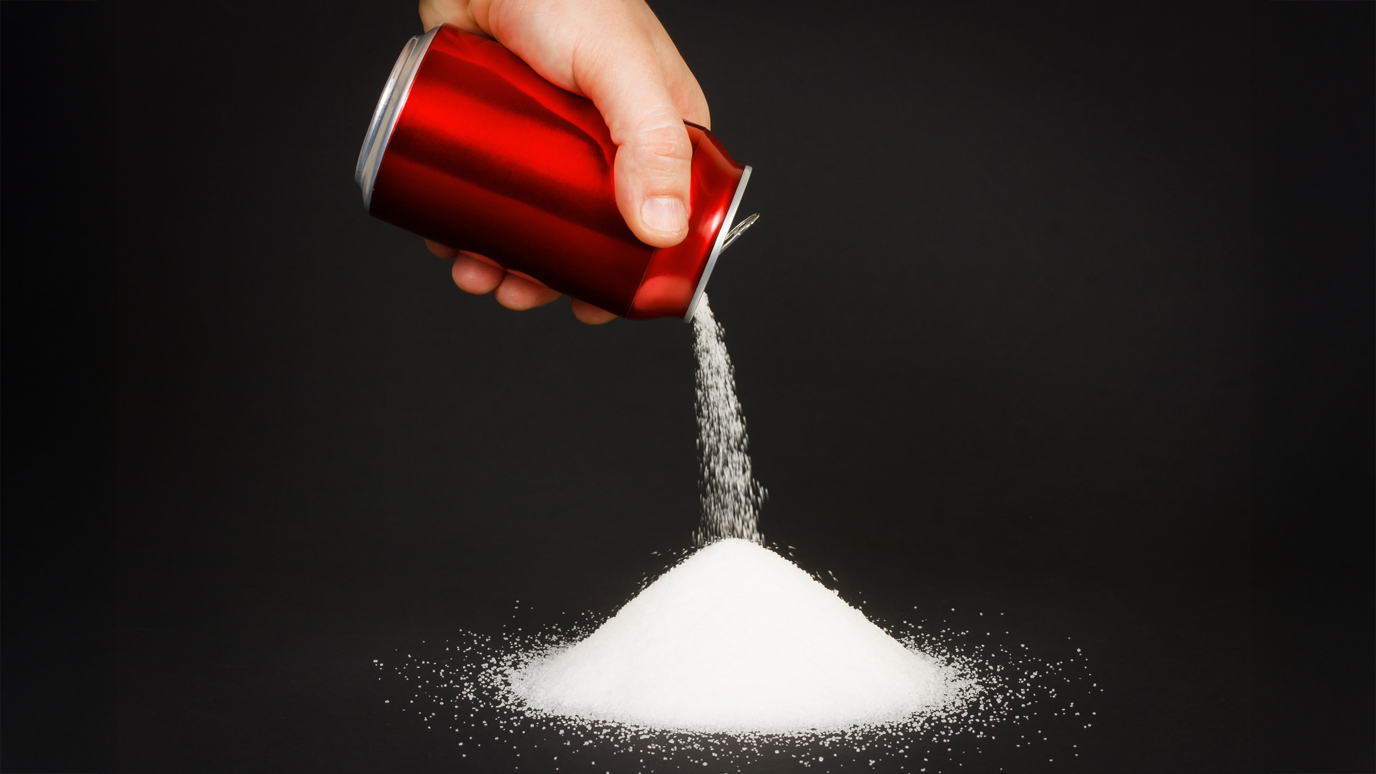
Sugary drinks may increase risk of metastasis in advanced colorectal cancer

Dan Ostermayer
High fructose corn syrup (HFCS) disrupts gut microbiome signaling through several interconnected mechanisms that alter microbial composition, metab...
during covid i wrote a book about my thoughts on living a good life that i hope my kids will share with their kids to keep our family values alive through the generations.
a lot of time spent journaling is ultimately never read by anyone yet it contains ideas which could be useful if shared and could form a guide to life for a multigenerational family.
instead of journaling my thoughts i wrote a book that is a conversation between two neighbors.

Amazon
Amazon

it's so simple to save money and eat healthy: "just bring your own food to work".
avoid all the cafeteria and takeout stuff
fasting insulin level is the most important lab if you could only get one drawn.
3-7-2017


there is a good summary of the evidence linking acetaminophen in-utero exposure to neurodevelopment issues
https://onlinelibrary.wiley.com/doi/full/10.1111/ppe.12963
if you can establish the child has Cerebral Folate Deficiency (CFD) or positive folate-receptor-α autoantibodies, leucovorin sounds like a promising therapy (for a subset of autism)
https://www.mdpi.com/2075-4426/11/11/1141