Danie's avatar
Danie
danie@nostr.fan
npub1g2jp...yjj6
Testing out new the noStrudel web client
Danie's avatar
Danie 3 months ago
You Should Be Using Reddit on Your RSS Reader “You may know that Reddit can be a treasure trove of useful information and opinion, and that RSS (Really Simple Syndication) is a clean and straightforward way to keep up with what's happening on the web—but you might not be aware that you can combine both Reddit and RSS in numerous ways.” So yes no real news that RSS is already baked into Reddit, and that can be a cleaner way of ensuring you don't miss posts for s specific Subreddit, or a keyword search. But what I did not realise is you can also put some qualifiers on at the end of the URL to sort, limit the number of posts, filter on top posts only, etc. You can even combine two or more feeds into one. See #technology #RSS #reddit image
Danie's avatar
Danie 3 months ago
The EFF is quitting X “Last year, our 1,500 posts earned roughly 13 million impressions for the entire year. To put it bluntly, an X post today receives less than 3% of the views a single tweet delivered seven years ago.” I don't think many legacy corporations have really been looking deeply into their numbers on X. We've seen in the past that X faked the advert views, so one also has to be careful of accepting X's numbers at face value as well. Many accounts on X today are also bot accounts and actually not real human views at all. See #technology #X #twitter #socialmedia image
Danie's avatar
Danie 3 months ago
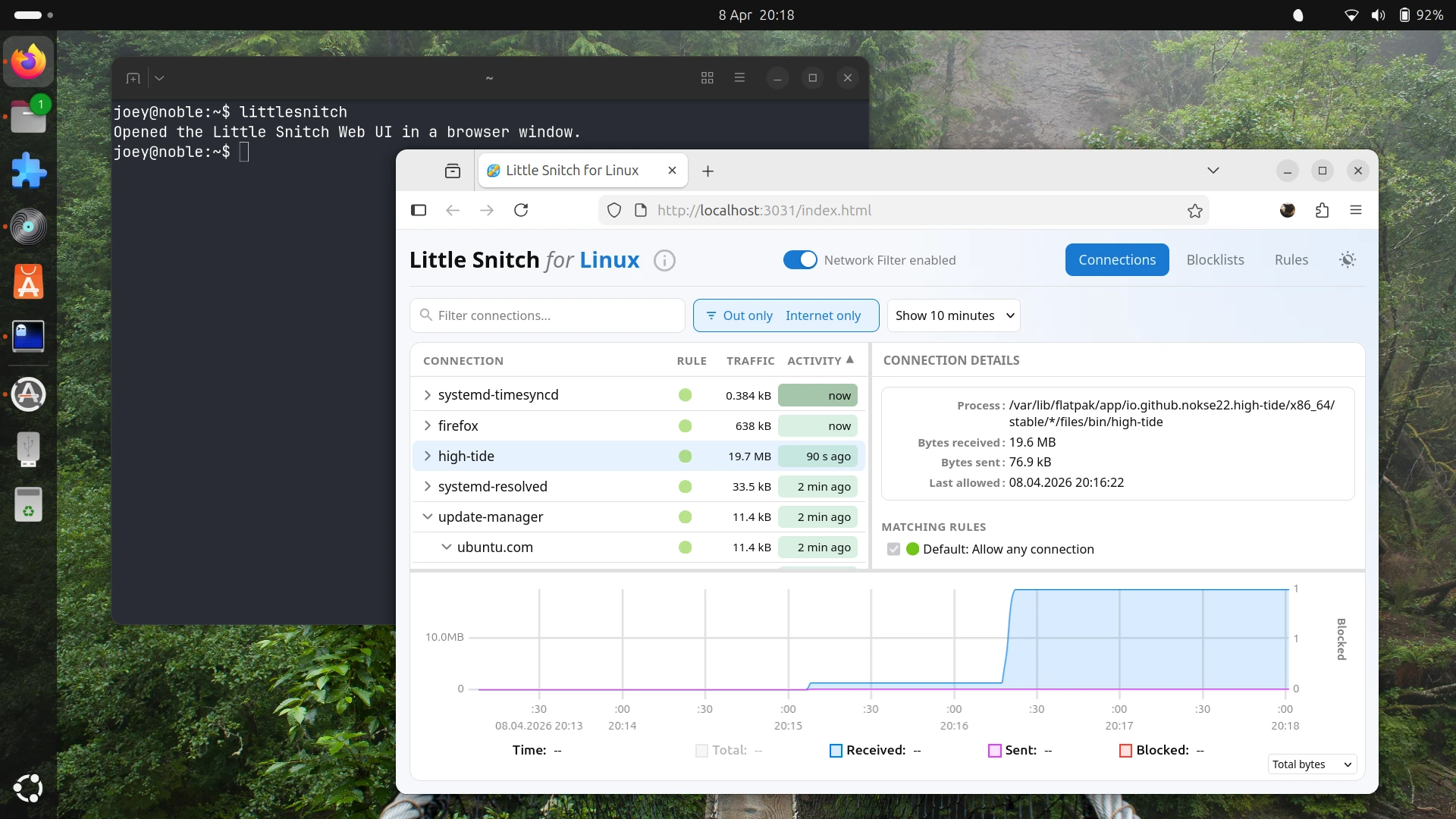
Little Snitch, the macOS network tool, is now available on Linux “Little Snitch for Linux is written in Rust and uses eBPF for kernel-level traffic interception (this lets sandboxed code run inside the Linux kernel without modifying it). The tool shows processes on your machine making network connections, and give you options to block them using rules. While Linux has native network monitoring tools, the best known being OpenSnitch (inspired by Little Snitch). None of those, as Christian puts it, gave him what he wanted: see which process are making which connections, and deny any a single click. So he built it.” Compared to OpenSnitch, this app works via a browser tab, and can visualise at process level. It is not open source software though, like OpenSnitch is, but it is free to download and use on Linux. It does have both automated blocklists at domain level (such as Hagezi, Peter Lowe, Steven Black) and also rules that can target a specific process, port/s, or protocol/s. By default, it is open access, but you can configure it for authenticated access too. See or their site at #technology #firewalls #security #Linux image
Danie's avatar
Danie 3 months ago
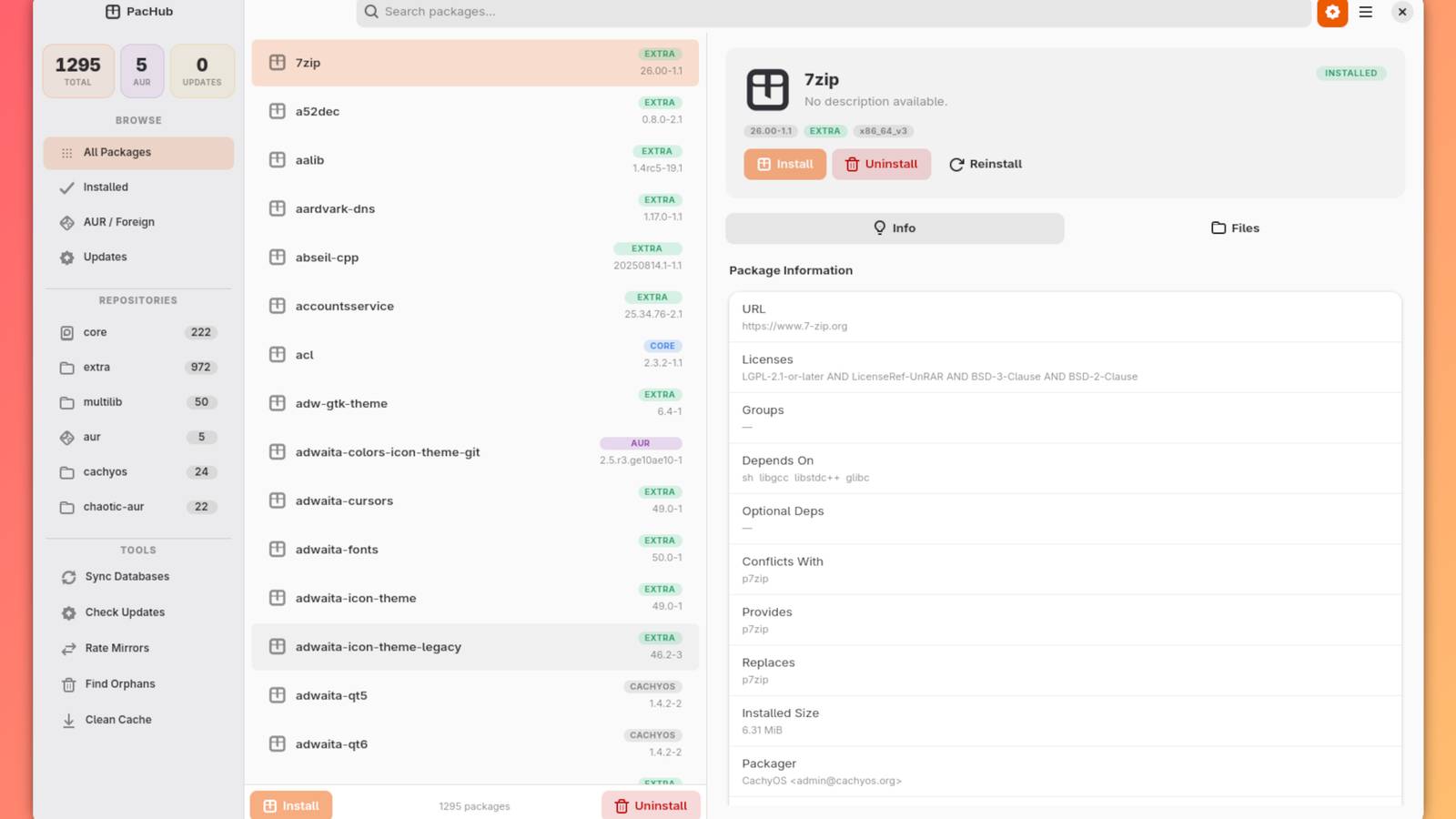
PacHub finally lets you manage pacman and the AUR on Arch without touching the terminal “PacHub provides a GTK4/libadwaita GUI for pacman and AUR, so you can avoid the terminal. PacHub can install/uninstall packages, perform upgrades, and provide auto-AUR support via yay or paru. It's not in the Arch repos or AUR, so you'll need to grab it from GitHub manually.” Well actually pamac has long installed on Arch too, which would also browse AUR etc and even optionally includes Flatpaks, Snaps etc too. But it is good to see a more Arch dedicated GUI app as I always seem to prefer doing my searches and package comparisons in a GUI interface. It looks like this project is only 2 months old and does not yet even appear in the AUR packages. So expect to see improvements still taking place. See or the project at #technology #opensource #Linux image
Danie's avatar
Danie 3 months ago
Turn paper hiking maps into real-time GPS guides with Matchy Maps “Trails may not be visible on the digital map, but things like roads, rivers, ponds, lakes, and other natural features are. The app allows you to take a photo of a physical map in the real world—whether it’s a paper brochure or a trailhead sign—and precisely line it up with those natural features on the digital map. Then you can see your real-time location displayed on top of the physical map. It’s a great trick.” The name actually says it all. The app superimposes a photo of a paper map, and allows you to rotate and scale it to fit precisely over the digital map. Paper maps have really great local detail which is often better than many generic global digital maps, so this marries functionality with that. A skilled navigator can certainly find their way around with just a paper map, and of course the paper map does not have a battery that goes flat either. Seeing you already have the paper map, it can still go with as a back-up. The app is available on Android and iOS for a one-time payment of US$4.50 and there is no AI nor data collection in the app. See #technology #navigation #maps #hiking image
Danie's avatar
Danie 3 months ago
Sweden goes back to basics, swapping screens for books in the classroom So why did Sweden pivot? In an email to Undark, Linda Fälth, a researcher in teacher education at Linnaeus University, wrote that the “decision to reinvest in physical textbooks and reduce the emphasis on digital devices” was prompted by several factors, including questions around whether the digitalization of classrooms had been evidence-based. “There was also a broader cultural reassessment,” Fälth wrote. “Sweden had positioned itself as a frontrunner in digital education, but over time concerns emerged about screen time, distraction, reduced deep reading, and the erosion of foundational skills such as sustained attention and handwriting.” Yes implementing digital devices across many schools and classrooms also comes at a financial cost, and then they get outdated, lost/stolen, have licensing costs, Internet outages, etc too. Often we have great ideas, but they may not be based on real evidence. I have seen cases where analogue technology is just more reliable and robust than the latest digital technology. I've realised too how vulnerable digital technology is — great while it works, and then we get paralysed when it doesn't. Considering the cost etc of digital devices, have educational results noticeably improved? See #technology #education image
Danie's avatar
Danie 3 months ago
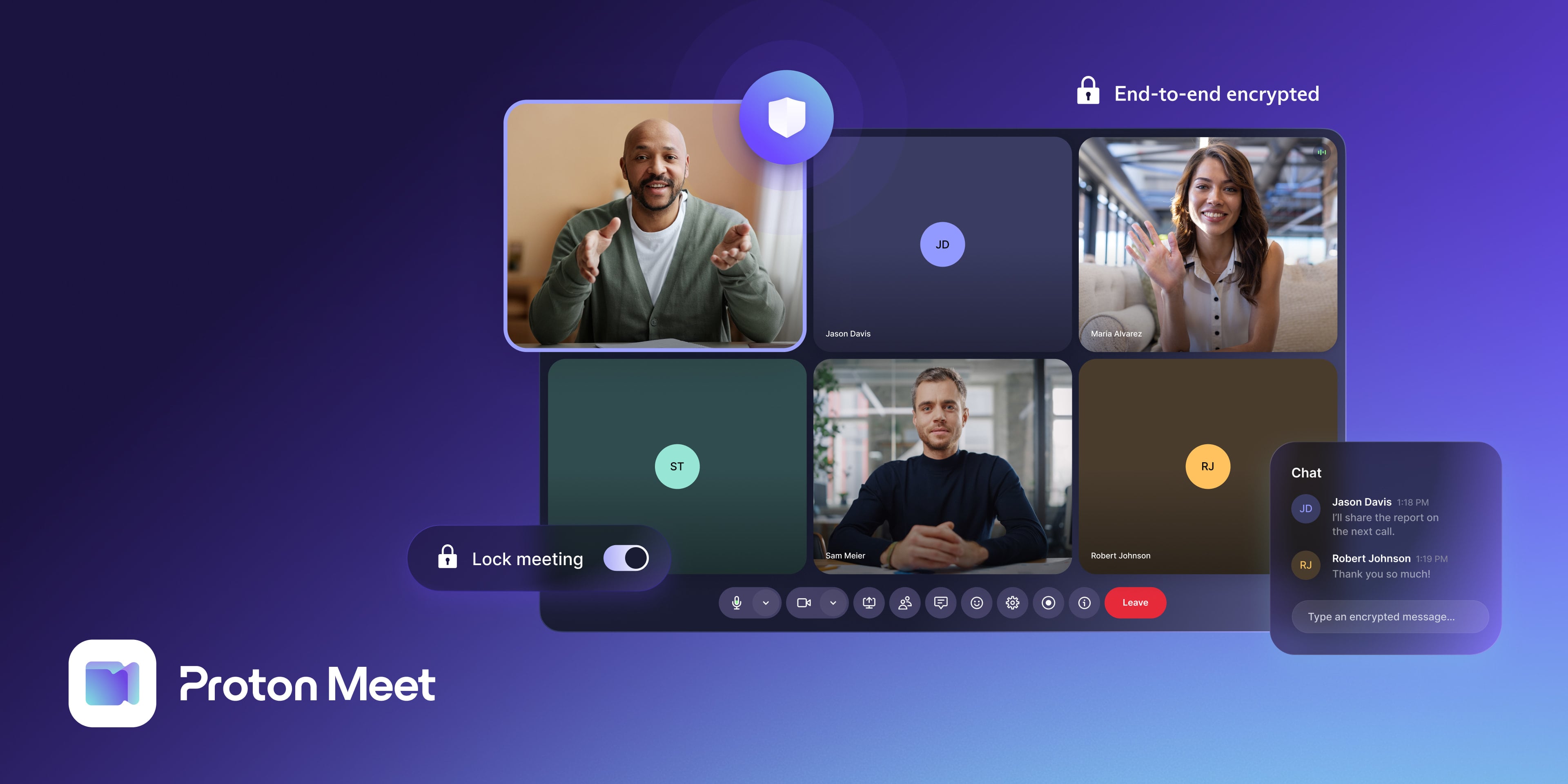
Proton launches new “Meet” privacy-focused conferencing platform “Meet provides end-to-end encrypted (E2EE) calls to protect the confidentiality of the conversations and does not require a paid plan or even a Proton account to use. It is free for one-hour meetings of up to 50 participants. Proton says Meet was created in response to the increasing need for privacy-first, EU-based alternatives that make it easier to comply with GDPR, or even CCPA (California Consumer Privacy Act), addressing the complexities of laws such as the US Cloud Act, and overcoming challenges posed by an increasingly unstable geopolitical environment.” Supposedly no AI training in this video conferencing tool. Good to see adding other people is as easy as sharing a link, so no need to install an app first. Also, Proton is not retaining records of who met with whom, and there is no sensitive data to be hacked from the servers. Of course there is also still Jitsi Meet as another alternative which is open source and can be self-hosted. See #technology #privacy #videoconferencing image
Danie's avatar
Danie 4 months ago
Dangerzone — an open source app to safely open suspect PDFs, office docs, or images Dangerzone works like this: You give it a document that you don't know if you can trust (for example, an email attachment). Inside a sandbox, Dangerzone converts the document to a PDF (if it isn't already one), and then converts the PDF into raw pixel data: a huge list of RGB colour values for each page. Then, Dangerzone takes this pixel data and converts it back into a PDF. It has been independently audited and apart from the obvious use by journalists and similar professions, even every day users can be most often targeted by attachments that carry payloads of malware. This is exactly how bad actors bypass firewalls, and secure messengers like Signal. I would not necessarily put every document I receive through this process as it does at least double or triple the size of the file (converts every page to an image). But from anyone you don't know, this is a useful tool to have ready to use. Everything is processed locally on your machine, and it will install on Linux, Windows, and macOS. See #technology #security #opensource image
Danie's avatar
Danie 4 months ago
Easy way South Africans can find fuel stations with the cheapest diesel “Unlike petrol prices, retail diesel prices are unregulated in South Africa. Only the wholesale price at which suppliers may sell to stations is fixed by the government.” I thought both diesel and petrol prices were regulated in SA so this was news to me (I don't drive a diesel car). With the price increases coming, anything to improve competitiveness between suppliers is going to be good for consumers. The linked article discusses the use of MyTank and Pitstops apps for this purpose. I actually use the Fuelio app already to track all my fill ups, and it also crowdsources the prices. But either way, all the apps really rely on the users who input the prices, so the most used one in the country is probably going to provide the better value. See https://mybroadband.co.za/news/smartphones/636728-easy-way-south-africans-can-find-fuel-stations-with-the-cheapest-diesel.html #technology #southafrica #diesel
Danie's avatar
Danie 4 months ago
ClipCascade is an open-source lightweight utility that automatically syncs the clipboard across devices This is a nice private option to sync across all your devices in real-time, and you can self-host you own sync device, rely on peer-to-peer between devices, or use their cloud sync. Traffic is end-to-end encrypted. It can support multiple users keeping data separated. It syncs across Linux, Windows, Android, and macOS. An iOS version should be coming in future. See #technology #opensource #privacy #clipboard
Danie's avatar
Danie 4 months ago
I just moved from Manjaro Linux to EndeavourOS I’ve been on Manjaro Linux for a good ten plus years now and been pretty happy with it. Not only that, but I love the rolling distro type updates as there has been no need to ever reinstall the OS. The problem with that is a mass of tweaks as well as software crud you collect over the years. So I felt that it was probably time for a change, and at the same time, for a re-installation, at least as far as the apps and the main configs go. I have long had a separate partition for my /home directory with all my user data and app config settings. One other reason that prompted the change, and yes it was partly the Manjaro company changes that sparked this thinking, but Manjaro does hold back new packages for testing for 2 to 3 weeks. If you do not use the AUR (really does anyone not use it on an Arch based distro?), then this is great for stability. Many AUR packages are also not going to be an issue if they are stable releases, but if you have ventured into git releases for example for OBS Studio, then the Manjaro “way” can break these packages. Once I knew this I drastically pruned back on any git releases where I could. And therefore Manjaro has still worked well for me. See #technology #opensource #Linux #endeavouros
Danie's avatar
Danie 4 months ago
US Federal Cyber Experts Thought Microsoft’s Cloud Was Garbage — They Approved It Anyway “The government relies, in part, on third-party firms to vet cloud technology, but those firms are hired and paid by the company being assessed. The tech giant’s ‘lack of proper detailed security documentation’ left reviewers with a ‘lack of confidence in assessing the system’s overall security posture,’ according to an internal government report reviewed by ProPublica. Or, as one member of the team put it: ‘The package is a pile of shit.’” Not only are many countries outside the USA very worried about potential access by the US NSA and others to their sovereign data, but even the US federal government is just as worried about the security of their own data in the Microsoft Cloud. Yet Microsoft sees no slowdown in terms of cloud adoption, probably tanks to wonderful marketing and other economic leverage that is applied worldwide. One can also now realise why the term Microslop is taking hold so effectively in 2026. It is all our own faults though as there are truly reasonably good alternatives to Microsoft's cloud. It is just a matter of also separating the glosssy marketing wants versus the real needs for document management. As I pointed out in another post earlier in the week, we do not all have to be on the same brand of document software to exchange documents (just think of different e-mail providers like Proton, GMail, Zoho, Outlook, and many more all talking together). It's up to us if we want to see change. See #technology #microslop #security #USA
Danie's avatar
Danie 4 months ago
OpenSpeedTest an Open-Source Self Hostable HTML5 Network Performance Estimation Tool “OpenSpeedTest is written in Vanilla JavaScript. No Third-Party frameworks or libraries were used. The unexpected side effect of using Vanilla JavaScript is High Performance. OpenSpeedTest contains only STATIC Files like HTML, CSS & JS, so you don't need to worry about Security Updates or Hidden Exploits that may compromise your secure environments.” You may want to use something like this if: * You have employees working from home, and they want to do a basic speed test to the office to check their connection is OK. * You want to stress test or benchmark your home network from various devices to a server, a media machine, etc. * Or to test between two client devices across your LAN. * By doing the test from various locations around the home, you can see how your Wi-Fi speed varies from different places. * Also test from a private browser window to see if extensions are slowing your browser down. * Do tests before and after network changes to see what impact it has e.g. when adding a LAGG interface between the server and the router. * Host it on a public web server for users to check their connection speed. The server side stores no data so it is just a question of spinning up a docker container, and connecting with any browser to run the test (nothing to install on the client device). My docker container used 0% CPU while not doing a test, and used about 45 MB of RAM. It jumped to 17% CPU during the test. You can optionally save speed test results to a database, but it points to an external database that you have running somewhere. See #technology #networking #speedtest #opensource #selfhosting
Danie's avatar
Danie 4 months ago
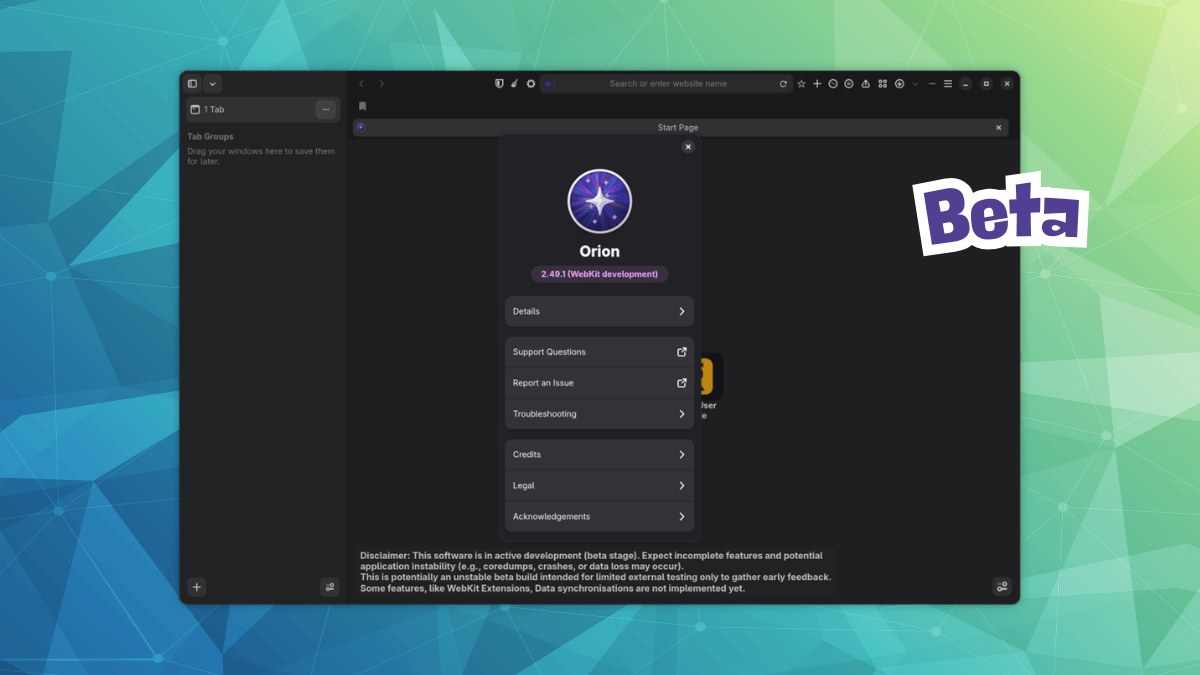
Not a Firefox or Chrome Fork! Kagi's Orion Browser Arrives on Linux as a Public Beta “Orion is a web browser built on WebKit, the same engine that powers Safari, with a strong focus on privacy and customisation. Unlike most browsers you will come across on Linux, Orion is not a Chromium derivative or a Firefox fork. It is a fresh build that has earned a reputation for being fast, lightweight, and flexible, with support for extensions from Chrome, Firefox, and Safari.” It is not really ready for daily use on Linux yet, but it is worth taking note of this browser and what it does. We hear so many moaning that everything comes back to Chromium and Firefox, so this is the opportunity to use something completely different. The weakest point of every browser is usually it's 3rd party plugins, so we'll have to see how Orion is going to manage this. Note though it is not open source software so what goes into it, you can't be too sure about, and it won't be able to be forked in future. It would be the end of the road if it stops getting support (like the Flock browser I used to love decades ago). See or #technology #browsers
Danie's avatar
Danie 4 months ago
10 Hacks Every Signal User Should Know “Signal is one of my favourite messaging apps because of its focus on privacy and security. I use it to message my closest friends regularly, and in the process, I've discovered a fair few hidden features that I now use every day. From shielding your phone number from other users, to preventing hackers from breaking into your account, these hacks will help you make the most of Signal.” Very solid tips these, especially as most hacking of secure messengers actually takes place on the end-user device. See #technology #security #signal
Danie's avatar
Danie 4 months ago
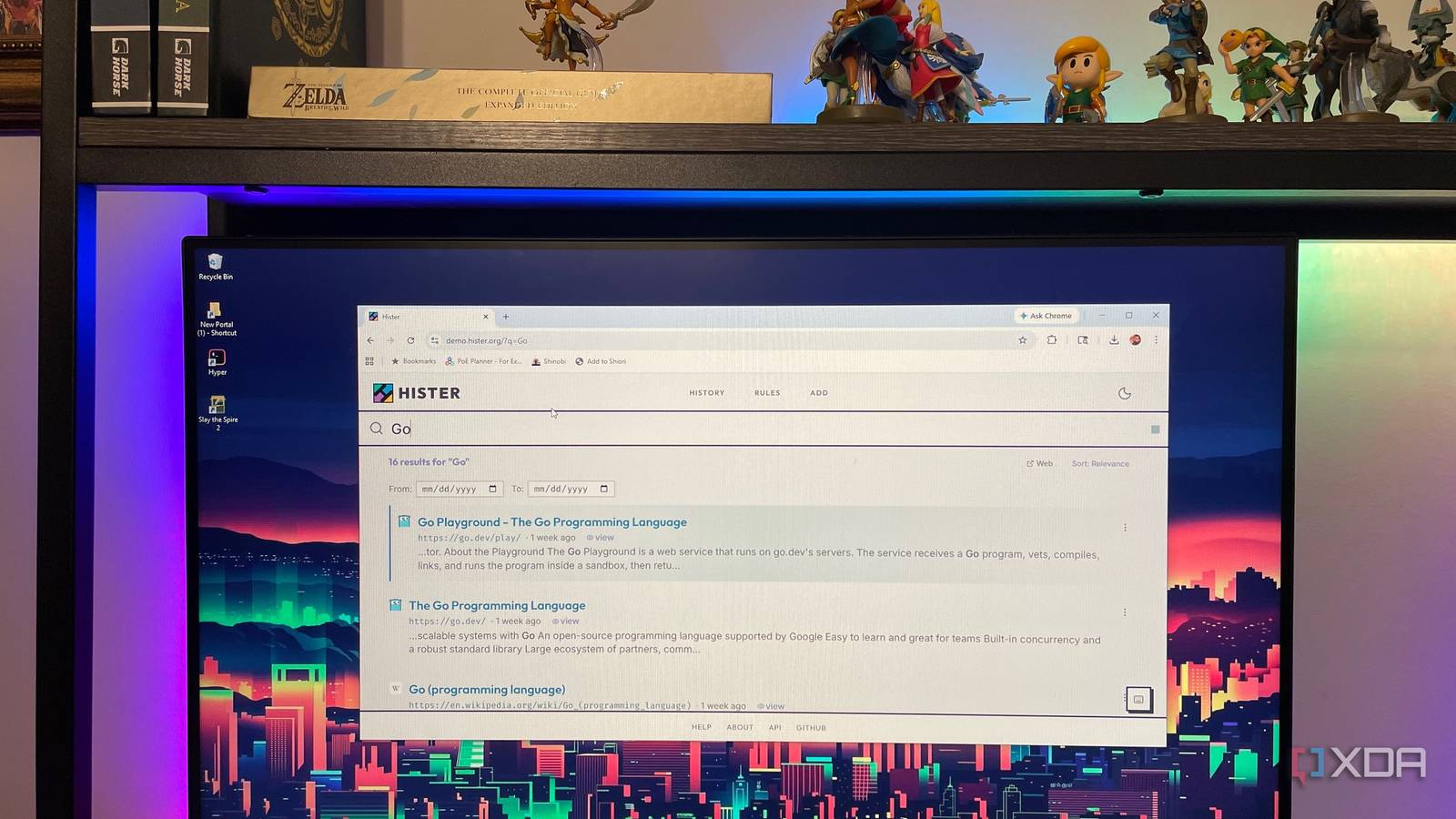
Hister indexes every web page you visit and lets you search the full text of your browsing history offline “Have you ever wished your browser history was more than just a collection of URLs? As it is, the standard search history is kind of useless. Sure, you can see the title of the page you visited, maybe a bit of metadata, but not much more than that. For any actual functionality, like searching for a specific page you visited that you can't quite remember the name of, your browser's built-in history search falls flat on its face (like my six-month-old did as I was writing this sentence). That's where Hister comes in. This open-source, self-hosted tool does more than just track your activity; it indexes every site you visit, capturing the contents of the page for easy search and retrieval later.” I was a bit sceptical on first reading this, especially where browser extensions are involved, but it is an open source project, and there is this privacy statement in their documention: Hister clients only communicate with the designated server, and the server does not “phone home” or share any of your browsing history with anyone else. The source code is publicly accessible, so we can be audited by anyone who wants to check! What is interesting is that many self-hosted server applications that do this sort of thing, have quite resource intensive browsers running, and are often fooled by anti-bot detection. Hister actually has your browser doing this so no wasted resources, and you have the full power of your main browser at hand. The server needs to be available, but could also run on your own PC so no NAS etc setup needs to be run. However, the server side can also run in a docker container if you already have that setup. It can on something as light as a Raspberry Pi. As far as I can see it is only saving the text of pages you visit, and not PDF or HTML archives of the pages, so again this side is extremely lightweight. See or #technology #search #history #browsers #opensource
Danie's avatar
Danie 4 months ago
DBAN is a relic for HDD wiping, and ShredOS is the only software you should use “When “wiping a hard drive clean,” a quick format doesn't actually erase anything at all. Instead, it just removes the drive's file index. That leaves the underlying data sitting there until something overwrites it. That's why recovery tools like Recuva and EaseUS can still dig up photos, documents, and entire folder structures long after you think they're gone. Software tools like DBAN (Darik's Boot and Nuke) and ShredOS solve that problem by overwriting every sector of the drive multiple times with different patterns over the course of multiple passes.” DBAN bring back old memories from decades ago when I did IT field support. It was what we used to wipe all drives we had to remove from PCs before auctioning them off or otherwise disposing of them. I'd completely forgotten about it until now. I seem to think Norton Utilities also had a wipe disk program. Good to see there is a modern equivalent out now. See or #technology #opensource #security
Danie's avatar
Danie 4 months ago
Europe is building an alternative to Microsoft Office “Office EU is a cloud-based office suite built entirely on open-source software and hosted exclusively on European servers, has launched as a direct competitor to Microsoft 365 and Google Workspace. Its pitch is straightforward: keep data in the EU, run on transparent open-source components and comply with EU law by design. The platform combines file storage, e-mail, calendar, document editing, chat and video conferencing in a single browser-based interface.” It is really time that the Microslop monopoly was broken. It is not just about digital sovereignty, but also this belief that one must by MS Office to do documents. It is just not true, and so many non-profits and governments are spending a lot of money on what could have gone directly towards societal services. But the big problem has been up to now you had to self-host or install something, and there were an array of free choices to choose from. Surprisingly, many users do not want choices and it paralyses them. Contrary to belief, the other party receiving your documents does not actually need the same brand of software to read your documents! Ideally you'd want to also use a proper open standard document format like ODF, but you could also use the MS OOXML standard that MS Office uses. Hopefully with such an enterprise effort behind Office EU, it will get traction. This is a cloud based solution which uses NextCloud in the background, and anyone can self-host NextCloud themselves too, so there is no vendor lock-in. See or #technology #opensource #digitalsovereignty
Danie's avatar
Danie 4 months ago
AmneziaVPN is a self-hosted VPN that works in countries where WireGuard gets blocked “It's also worth noting that AmneziaVPN has been security audited as recently as January 2025. While the auditors found a few risks categorized as critical and high, the platform has resolved all identified issues. Amnezia runs its servers as RAM-only, so all data is wiped on reboot. They also say they don't store or collect activity history, IP addresses, session data, and other metrics, which is good. It's XRay feature, which listens on port 443 for authorized connection requests. If it gets an authorized one it connects as normal, but if it gets scanned by anyone else, it redirects that packet to a legit website, like google.com or any other easily available site in your region that you chose. The beauty of this is that it also returns an authentic TLS certificate because it's issued by the site the packet was redirected to, making the censorship software think your VPN server is Google instead.” It does look like a lot of attention has been given to making this an anti-censorship tool. Unfortunately this seems to be needed more and more by citizens in many countries today, whether 1st or 3rd World countries. See #technology #VPN #anticensorship #privacy