EvoLensArt's avatar
EvoLensArt
npub1gfv7...p8mv
Exploring the intersections of evolution, AI, and Bitcoin.
EvoLensArt's avatar
EvoLensArt 1 year ago
**Criticism 1:** “AI cannot make art because AI does not have a brain and brains are literally magical." - **Rebuttal:** If you believe the brain is magical beyond the physical laws of the universe, then we fundamentally disagree. Human creativity, whether brilliant or banal, emerges from the same physical processes that govern all matter, including the technology we create. Good day to you. **Criticism 2:** "That's not art. You are not an artist, and you should feel bad." - **Rebuttal:** Stop being such a pretentious snob. Art is a human universal, an expression inherent to our species, regardless of the medium or method. Celebrating skill and professional accomplishments in art is wonderful, but remember, we are all evolved apes making our mark on the world, whether we're flipping burgers, welding, or using software to create. **Criticism 3:** "Okay, fine, it's art, but it's shitty art (and you should feel bad)." - **Rebuttal:** The quality of the art doesn't determine whether it's art. From my toddler's SpaghettiO sauce doodles to the Sistine Chapel, all expressions are valid forms of art. Get off your high horse, you snob. **Criticism 4:** "Okay, fine, but you're cheating because you're not physically manipulating a medium (and you should feel bad)." - **Rebuttal:** To argue that art must involve physical manipulation of a medium is to ignore the vast array of legitimate creative processes that don't. Whether it's conducting an orchestra, using digital tools like Photoshop, animating films like Toy Story, or composing music entirely on a computer, all these practices are undeniably forms of art. If you think otherwise, you might want to reconsider your definition after a moment of reflection, you walnut. **Criticism 5:** "Okay, fine, you don't have to interact physically, but there's no skill in what you do (and you should feel bad)." - **Rebuttal:** The reality, from my personal experience, contradicts this. I'm transparent about using the same tools that anyone can access for less money, yet people choose to pay me $50 for a set of four images. Clearly, there's a recognized skill in how I use the tool to achieve desired results, you walnut. **Criticism 6:** "Fine, it takes some skill, but it's just work. You're just a hired gun. You're just a systems administrator (and you should feel bad)." - **Rebuttal:** To dismiss it as mere 'work' and not 'true artistry' because it involves a machine seems to circle back to our initial discussions about what constitutes art and the source of creativity. Does the involvement of technology in the creative process diminish the emotional and artistic value of the output? If we've come to accept that there is skill involved and that these skills contribute to the final artwork, why do we devalue it simply because part of the process is mechanized? Reflect on how far we've come in our understanding of art's boundaries and who gets to define them… image
EvoLensArt's avatar
EvoLensArt 1 year ago
PART 3 OF X A. Continuity Chapter 3: Competence In this exploration of the continuum of human tools and artifacts, we extend the concept of mechanical competence to include the broader spectrum of "physical competence." This encompasses all entities within the physical universe, from organisms to artifacts, showcasing the diversity of competences, both with and without comprehension. Physical Competence: The Broadest Spectrum Physical competence represents the capacity of any entity within the physical universe to interact with its environment effectively. This includes the innate behaviors of animals, the growth patterns of plants, and the mechanical operations of human-created devices. Each of these entities, whether organic or synthetic, demonstrates competencies that enable survival, reproduction, or functionality within their respective ecosystems. Human beings, with their cognitive abilities, exhibit a high level of comprehension, which allows for the creation of tools that extend these competencies. However, the broader category of physical competence includes many forms of life and technology that operate effectively without what we would recognize as comprehension. For example, a cicada's life cycle, driven by genetic programming and environmental cues, exhibits a form of biological competence without our understanding of cognitive awareness. Exploring Comprehension Across the Spectrum While humans possess a clear sense of comprehension, the cognitive states of other animals, such as dogs or insects, remain a subject of scientific inquiry and philosophical debate. This uncertainty prompts us to consider the various levels of comprehension that might exist in nature. Just as we cannot definitively claim understanding in these creatures, we also recognize that our most advanced technologies, like calculators and AI programs such as ChatGPT, operate on principles of mechanical competence without human-like comprehension. These technologies, designed to perform specific functions, do so with efficiency and reliability, mirroring the programmed behaviors seen in many biological organisms. Thus, mechanical competence in technology parallels biological competences in nature, both shaped by evolutionary or design processes to fulfill particular roles effectively. Mechanical and Physical Competence as Extensions of Evolutionary Processes Viewing mechanical competence as a subset of physical competence allows us to appreciate the seamless integration of human inventions into the natural world. Just as the web spun by a spider is an expression of its biological competence, so too is a colander an expression of human mechanical competence. Both are solutions to environmental challenges—whether catching prey or draining pasta—and both are fruits of evolutionary or innovative processes. Reflecting on the Continuity and Diversity of Competence As we reflect on the continuity across these competencies, we see a unifying principle: all are adaptations to the challenges posed by the environment, whether through natural evolution or human ingenuity. This perspective encourages a deeper appreciation of the diverse ways in which the world around us functions, highlighting the interconnectedness of all physical and mechanical competences. Up Next in Chapter 4: "Communication" - We will delve into the development of communication from primitive systems to complex digital networks, further exploring how these systems demonstrate both mechanical and physical competences in transmitting information across various mediums. image
EvoLensArt's avatar
EvoLensArt 1 year ago
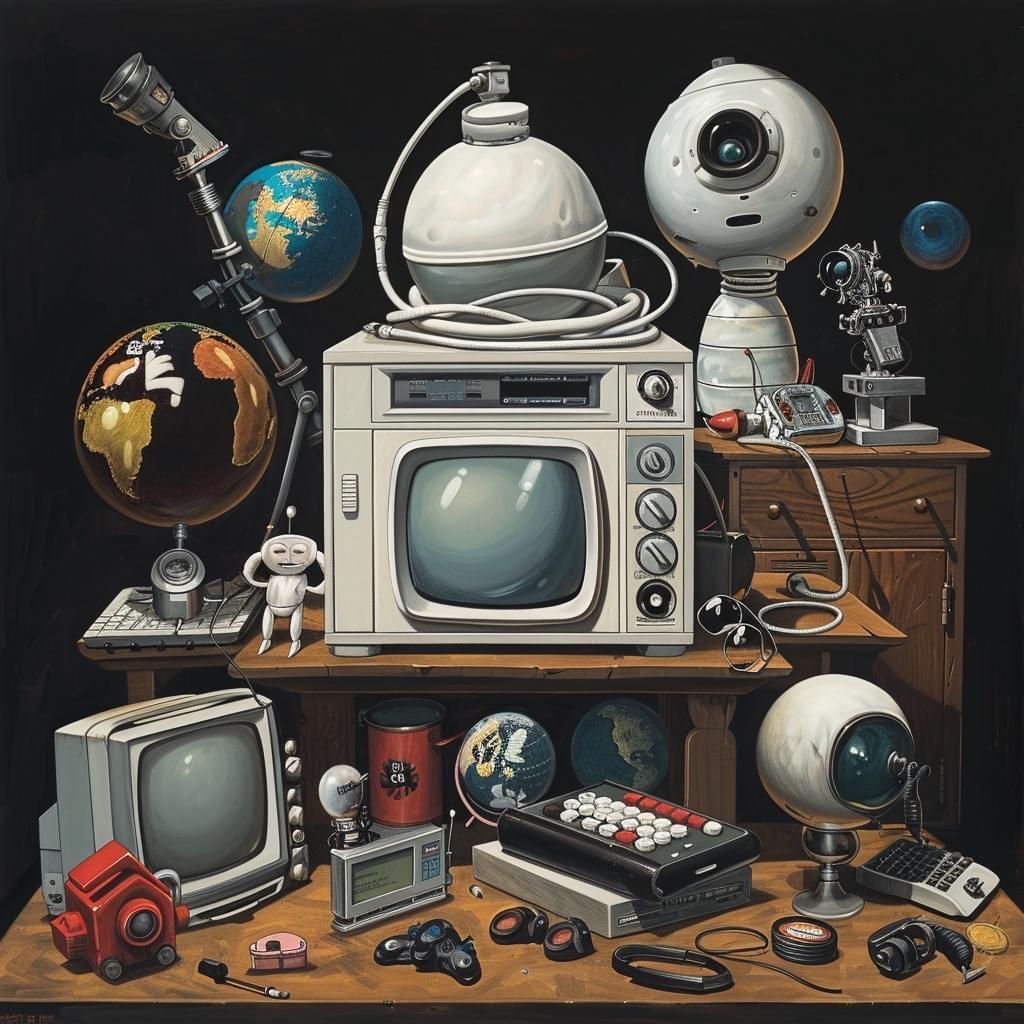
PART 2 OF X A. Continuity Chapter 2: Cousins In exploring the interconnectedness of life on Earth, Richard Dawkins' concept of the extended phenotype illuminates the intricate web that connects biological evolution to human technological and artistic creation. This chapter further refines this understanding by examining how even the simplest tools like colanders represent an early form of mechanical competence, akin to what we now term artificial intelligence. The Extended Phenotype and Mechanical Competence Every technology developed by humans—whether it's a stone axe, a colander, or advanced computer algorithms—can be viewed as an extension of our genetic heritage. These tools embody the concept of the extended phenotype, where human ingenuity extends beyond the physical self to influence the environment. By recognizing this, we can appreciate that a colander is not merely a kitchen tool but a rudimentary form of artificial intelligence, designed to offload cognitive or physical labor, thereby enabling humans to engage in more complex tasks. This perspective challenges us to redefine our view of what constitutes artificial intelligence. By adopting the term "mechanical competence," we acknowledge that all tools, from the simplest to the most complex, are part of a continuum of human invention aimed at enhancing our interaction with the world. This shift from seeing AI as a separate, almost mystical entity to understanding it as a point on the continuum of human tool-making demystifies AI and aligns it with our evolutionary journey. Debunking Artistic Elitism and Embracing Universal Creativity The act of creation, whether in forming a colander or coding an algorithm, is a fundamental human trait, pervasive across all cultures and epochs. It transcends the arbitrary divisions between art, technology, and science. Just as a spider spins a web or a beaver builds a dam, humans create tools and artworks as natural expressions of their biological and cognitive capabilities. Recognizing that creating art is not an elite activity but a universal human behavior helps break down the barriers often erected by those who view artistic creation as a rarified realm. Each human-made object, no matter how functional or mundane, carries an aesthetic dimension, reinforcing the idea that art and utility are often intertwined. Synthesis of Human Endeavors Through Mechanical Competence As we conclude this chapter, the synthesis of technology, art, and science becomes apparent. The introduction of the concept of mechanical competence helps us see that these distinctions are more about social and political contexts than about fundamental differences in the nature of these activities. By viewing all human creations—whether a colander, a painting, or a software program—as fruits of the Tree of Life, we embrace a holistic view of human ingenuity. This realization not only deepens our appreciation for the diversity of human creativity but also underscores the continuity that links us with the rest of the natural world. It fosters a greater respect for how deeply interconnected our lives are with the tools we create and use, highlighting the seamless blend of biology and technology in every human endeavor. Up Next in Chapter 3: "Competence" - We will explore the concept of 'competence without comprehension' in both natural systems and AI, highlighting how this notion extends our understanding of mechanical competence in human evolution and tool use. image
EvoLensArt's avatar
EvoLensArt 1 year ago
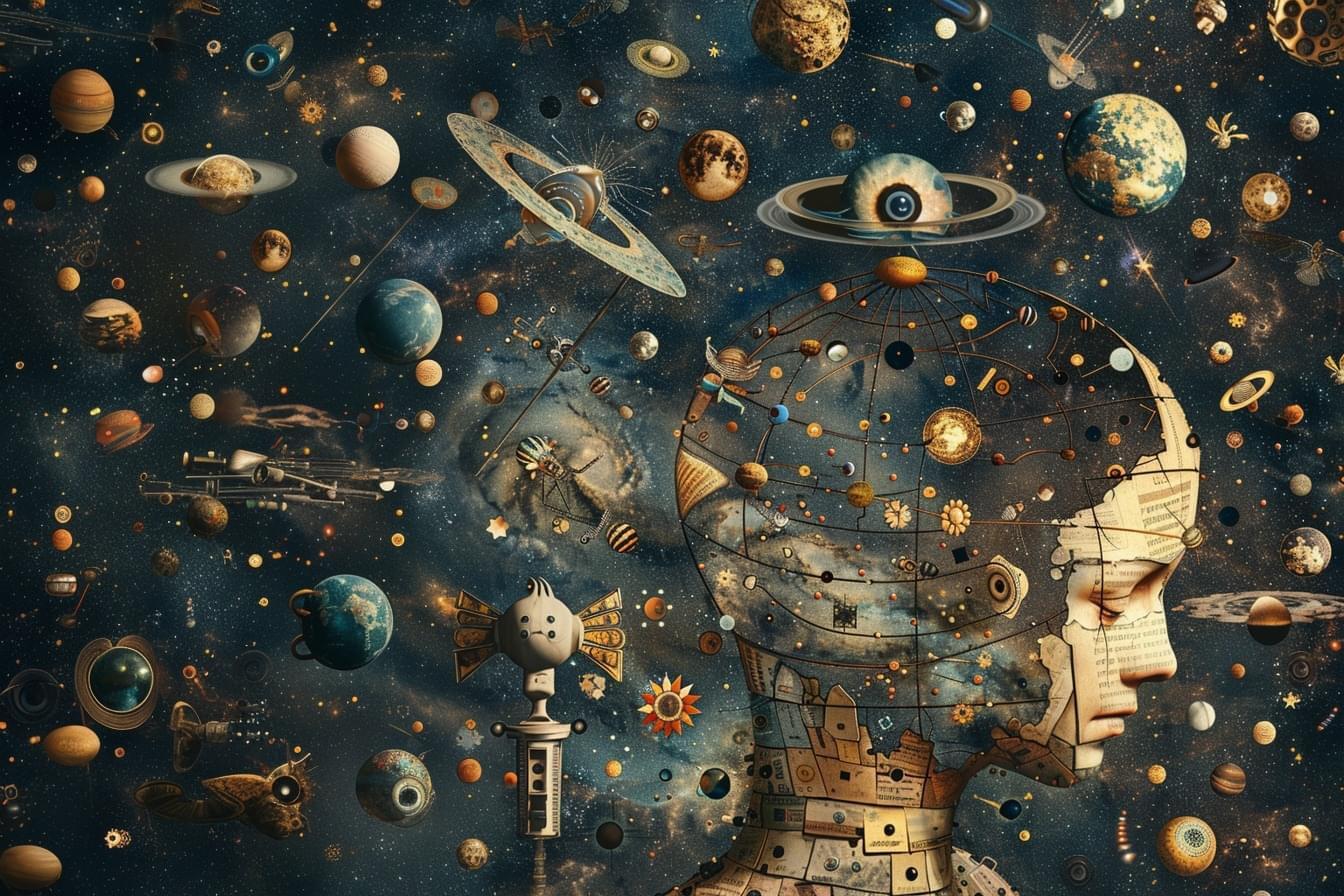
PART 1 of X Book treatment: "'C' Is For Competence" A. Continuity Chapter 1: Cosmos "Yes, we have a soul, but it's made of lots of tiny robots." - Daniel Dennett In the grand cosmic narrative, every tool crafted by human hands and every thought sparked within the human mind unfolds under the same celestial canopy of physical laws. Whether it is the brain itself—a marvel of natural selection, pruning the tree of possibility in the vast forest of biological design space—or the simplest tool, like the wheel, all are bound by the finite nature of matter, energy, space, and time. This fundamental continuity connects the realm of the stars with the artifacts and thoughts of human endeavor. Let us consider this continuity not just as a series of scientific truths, but as a poetic reflection on our place in the universe. Each tool, from the flint to the smartphone, from the abacus to the supercomputer, is a testament to our quest to extend our reach beyond our grasp, to manipulate our world and understand the cosmos. These tools are the external manifestations of our internal cognitive faculties, both evolved and designed to navigate and reshape our environment. Imagine, if you will, a simple map of all possible inventions—each point a potential tool or idea. Human creativity, driven by both necessity and curiosity, moves along this map in an exploratory dance, guided by the physical realities of our world. The laws of thermodynamics, of quantum mechanics, of gravity—they set the rhythm for this dance. Understanding these laws doesn't constrain our creativity; rather, it channels it. It tells us how to move effectively, ensuring that our steps align with the rhythms of reality. And what of our brains, these curious engines of thought composed of uncountable connections and signals? Here, too, we see a kind of tool, evolved over millennia to think, dream, and create. If we consider that we have a soul and it's made of lots of tiny robots, each neuron, each synaptic connection, is one of these robots, each playing its part according to electrochemical laws. Our minds are ensembles of these robots, exploring the design space of ideas—another map, not of geography, but of concepts. As we move forward, remember this continuity: everything is connected under the same laws of physics, whether it is the orbit of planets or the flow of information through a neural network. Understanding this helps demystify the tools we create and the art we produce, placing them within the broader tapestry of the universe’s unfolding story. Up Next in Chapter 2: "Cousins" - exploring the evolutionary parallels between biological organisms and technological advancements, reinforcing the natural progression of AI as an integral part of this ongoing narrative. image
EvoLensArt's avatar
EvoLensArt 1 year ago
MidJourney: we are <temporarily?> disabling use of “Donald Trump” and “Joe Biden” in all prompts, as well as filtering any images that depict them. Joe: Hold my beer. ::stares in semantic shadow, intentionality laser, and horizontal gene transfer::
EvoLensArt's avatar
EvoLensArt 1 year ago
In the vast expanse of a laboratory, a solitary Petri dish sits, its surface barely touched by the microscopic inhabitants within. A single bacterium, seemingly insignificant in its solitary existence, marks the beginning of an extraordinary journey. As time unfurls, the population within the dish undergoes a remarkable transformation, doubling in size every fleeting four hours. Yet, for much of the experiment’s duration, the dish remains deceptively empty, a quiet canvas awaiting its masterpiece. In a mere fraction of the experiment’s entirety, a pivotal moment arrives. In the blink of an eye, the Petri dish appears to explode with life, its once vacant surface now teeming with a bustling population of bacteria. It’s a moment of revelation, a sudden realization of the explosive growth that had been quietly unfolding, unbeknownst to the observer. In a parallel universe, far removed from the confines of the laboratory, another phenomenon is underway—one that mirrors the dynamics of the bacterial explosion, but in reverse. In the realm of Bitcoin mining, an issuance schedule unfolds, dictating the gradual diminishment of rewards over time. With each halving cycle, the rate of new Bitcoin creation dwindles, asymptotically approaching zero. Yet, despite the inevitability of this scarcity, the realization has yet to fully set in for many. The photons have hit the eyeballs, but the brain has yet to process the implications of what has already transpired. In both the laboratory and the realm of Bitcoin, the explosion has already occurred, yet the profound implications of this transformation have yet to be fully grasped. Bitcoin, the digital currency that has captivated the world’s attention, operates on a meticulously designed issuance schedule. From its inception, Bitcoin’s creator envisioned a system where new coins would be gradually introduced into circulation, mirroring the dynamics of precious metals like gold. At the heart of this system lies the concept of halving cycles, where the reward for mining new blocks is halved approximately every four years. This deliberate reduction in issuance serves as a mechanism to ensure the scarcity of Bitcoin over time, akin to the diminishing returns of a finite resource. As each halving cycle unfolds, the rate of new Bitcoin creation diminishes, approaching an asymptote of zero issuance. This phenomenon is akin to watching the Petri dish of bacterial growth in reverse, where the explosive expansion gives way to a gradual dwindling of resources. Despite the mathematical certainty of Bitcoin’s issuance schedule, the broader perceptions surrounding its scarcity often fail to align with reality. While many have heard of Bitcoin, few truly grasp the extent of its scarcity and the implications for the future of finance and society. The realization of Bitcoin’s absolute scarcity has yet to fully set in for the masses. It’s a paradigm shift unlike any other—a fundamental reshaping of our understanding of value and scarcity. And as the world grapples with this newfound reality, the implications are profound and far-reaching. As Bitcoin’s price commands headlines and market attention, it’s essential to distinguish between its price and its true value proposition. While the price of Bitcoin represents the real-time signal of market sentiment and investor behavior, its true value proposition transcends mere fiat currency equivalents. At the heart of Bitcoin’s value proposition lies the meme: “1 BTC equals 1 BTC.” This simple yet profound statement encapsulates the essence of Bitcoin’s value as a store of wealth. For those who understand this principle, the goal is not to maximize fiat currency gains but to accumulate more Satoshis—a unit of Bitcoin—over time. Despite Bitcoin’s explosive growth and widespread adoption, more than 90% of the total supply is already in circulation, distributed among private keys and held by a diverse array of individuals and entities. On-chain data provides insight into the behavior of Bitcoin holders, revealing that over 70% of the supply has remained dormant for over a year. Within this subset of Bitcoin holders lies a subculture of believers—those who have embraced Bitcoin’s true value proposition with unwavering conviction. For them, Bitcoin is not merely a speculative asset to be traded for fiat currency at opportune moments. Instead, it represents a one-way exit from the fiat monetary system—a hedge against inflation and an insurance policy against the erosion of purchasing power. Despite the significance of this minority of Bitcoin holders, their steadfast commitment to hodling their Bitcoin is often overlooked or underestimated by mainstream narratives. Yet, it is this intransigent minority that forms the bedrock of Bitcoin’s resilience and permanence—a testament to the enduring power of decentralized, peer-to-peer digital currency. As the broader market grapples with the implications of Bitcoin’s scarcity and its role in reshaping the future of finance, it’s essential to recognize the distinction between its price and its true value proposition. While the former may fluctuate wildly in response to short-term market dynamics, the latter remains immutable—an immutable beacon of hope in an uncertain world. While it’s tempting to equate the dollar price of Bitcoin with its purchasing power, this simplistic view fails to capture the true essence of Bitcoin’s value proposition. Yes, Bitcoin can be exchanged for fiat currency on various platforms, but its value extends far beyond mere dollar equivalencies. Central to understanding Bitcoin’s true value proposition is recognizing the distinction between money’s fungibility and Bitcoin’s ethos. While money, including Bitcoin, is indeed fungible in its ability to be exchanged for goods and services, the underlying philosophy of Bitcoin transcends mere monetary transactions. For the intransigent minority of Bitcoin holders, exchanging their Bitcoin for fiat currency is not the end goal. Instead, Bitcoin represents an ethos—a philosophy—a peaceful revolution against a broken, corrupt, and dishonest monetary system. It’s an opt-out mechanism—a one-way exit from a system that perpetuates inequality and injustice. Bitcoin is more than just a store of value, medium of exchange, or unit of account. It’s a movement—a movement that seeks to divert capital from net takers to net producers, to empower individuals to take control of their financial sovereignty and future. In this light, valuing Bitcoin into the future requires a shift in perspective. Rather than assuming an eternal exchange rate between Bitcoin and fiat currencies, we must recognize the potential for Bitcoin to become the predominant medium of exchange in a new paradigm—one based on sound money principles and individual sovereignty. For blue-collar workers and individuals seeking financial security, the path forward is clear: work, contribute to society, live within your means, and save your excess in Bitcoin. It’s a simple yet powerful ethos—a rabbit hole that extends far beyond mere dollar prices and monetary transactions. As Bitcoin continues to challenge the status quo and reshape the future of finance, its true value proposition will become increasingly evident. It’s not just about the dollars and cents—it’s about the principles and values that Bitcoin represents—a beacon of hope in a world fraught with uncertainty and injustice. The meme “you don’t change Bitcoin, Bitcoin changes you” encapsulates the profound transformation that occurs when individuals interact with Bitcoin. This sentiment rings especially true in the context of recent developments, such as the introduction of Bitcoin exchange-traded funds (ETFs). Bitcoin, as a decentralized and immutable protocol, remains unchanged by external forces. It is indifferent to the whims of ETFs or the machinations of regulators. Instead, it exerts its influence on the external environment, reshaping the landscape in its image. The introduction of ETFs is not a victory for Bitcoin; rather, it is a recognition of Bitcoin’s inevitable ascent. After years of resistance and attempts to stifle its growth, the external environment has come to realize that Bitcoin cannot be stopped. Instead, it must be accommodated and integrated into the existing financial infrastructure. In this sense, Bitcoin is akin to a benign invasive species, altering the environment in which it thrives. Much like the eukaryotic revolution that transformed the early history of life on Earth, Bitcoin’s proliferation introduces new dynamics and selection pressures, paving the way for a more robust and resilient financial ecosystem. The externality of Bitcoin extends beyond mere financial transactions; it encompasses honesty, sound money principles, and lower time preferences. These benign growths permeate society like a maximally fractal mycelium, embedding themselves in the hearts, minds, and souls of individuals. As Bitcoin continues to entrench itself in our society, it will reshape the choices available to us, guiding humanity towards a future characterized by greater transparency, accountability, and integrity. It’s a transformative journey—one that promises to redefine the very fabric of our existence. In the laboratory of life, where ideas collide and paradigms shift, Bitcoin stands as a beacon of hope—a testament to the power of decentralization, resilience, and human ingenuity. Through the lens of the bacterial explosion in reverse, we have glimpsed the transformative journey of Bitcoin, from humble beginnings to a global phenomenon. As we reflect on Bitcoin’s journey, it’s essential to recognize the disparity between perception and reality regarding its scarcity and value proposition. While many may fixate on the dollar price of Bitcoin, its true value extends far beyond mere monetary equivalencies. Bitcoin represents an ethos—a philosophy—a peaceful revolution against a broken and corrupt monetary system. In the face of unprecedented challenges and resistance, Bitcoin remains steadfast and unyielding. It is a force of nature—a benign invasive species—reshaping the environment in which it thrives. With each passing day, Bitcoin entrenches itself deeper into the fabric of society, guiding humanity towards a future characterized by transparency, accountability, and integrity. As we stand on the precipice of a new era, let us embrace the transformative power of Bitcoin and the values it embodies. Let us heed the call to action and join the ranks of those who have embraced Bitcoin’s ethos—a journey that promises to redefine the very essence of what it means to be human. In the end, Bitcoin is more than just a digital currency; it is a symbol of hope—a beacon of light in a world shrouded in darkness. And as we navigate the uncertain waters of the future, let us remember that the true value of Bitcoin lies not in its dollar price, but in the ideals and principles it represents—a testament to the enduring spirit of human innovation and resilience. Practical Takeaways for Newcomers to Bitcoin 0. Rule Number Zero: Don’t Trust, Verify • Before diving into Bitcoin, it’s crucial to adopt a mindset of skepticism and critical thinking. Verify information independently and don’t rely solely on trust. 1. Rule Number One: Bitcoin Only • When selecting an exchange to buy Bitcoin, prioritize platforms that exclusively offer Bitcoin trading. Avoid exchanges that dilute their focus by offering a plethora of other cryptocurrencies, as this may indicate a misunderstanding of Bitcoin’s unique value proposition. 2. Not Your Keys, Not Your Coins • Understand the importance of controlling your private keys when holding Bitcoin. Choose exchanges that allow you to withdraw your Bitcoin to your own private wallet, ensuring full control and ownership of your coins. 3. Not Your Keys, Not Your Coins SERIOUSLY!!!!!!!!! 4. Accumulating Bitcoin: A Three-Step Approach • Dollar-Cost Averaging (DCA): Regularly invest a fixed amount of money into Bitcoin over time, regardless of price fluctuations. This strategy helps mitigate the impact of market volatility. • Buy the Fuckin Dip (BTFD): Take advantage of price dips to increase your Bitcoin holdings. Buying during periods of market downturns can yield favorable long-term results. • HODL: Embrace the ethos of holding onto your Bitcoin for the long term. Avoid succumbing to short-term market fluctuations and maintain a strong conviction in Bitcoin’s value proposition as a store of wealth. Adopt the “don’t save more than you can afford to ‘lose’” mentality, with a subtle shift: it is precisely because every satoshi is FOREVER. Making predictions are hard, especially about the future. On the one hand: the rational desire to accumulate as many sats as possible. On the other: if an unforeseen emergency or life change requires you to “dip in” to your BTC savings to cover expenses, you might be forced to sell at a (fiat-denominated) “loss”. Bitcoin security includes security yourself. By adhering to these principles and following a disciplined approach to accumulating Bitcoin, newcomers can navigate the world of cryptocurrency with confidence and resilience. Remember, the journey to financial sovereignty begins with a single Satoshi. Further Exploration: Navigating the Bitcoin Rabbit Hole 1. Bitcoin: An Open-Source, Permissionless Protocol • Bitcoin offers individuals the freedom to explore and experiment within its ecosystem. As an open-source, permissionless protocol, virtually anything is possible. However, with this freedom comes the responsibility to exercise caution and prudence in one’s actions. 2. Great Power, Great Responsibility • With the ability to control and safeguard their own wealth, Bitcoin users are entrusted with a significant level of power. This power also entails a corresponding level of responsibility. Unlike traditional financial systems, there are no bailouts or safety nets in the world of Bitcoin. Users must take proactive measures to secure their funds and protect their financial sovereignty. 3. Building Trust in a Trustless System • While Bitcoin operates on principles of trustlessness, establishing trust among individuals remains essential, especially when it comes to managing one’s Bitcoin holdings. Finding trusted friends or family members who are knowledgeable about Bitcoin can provide invaluable support and guidance. Additionally, adhering to the previously mentioned heuristics, such as utilizing Bitcoin-only exchanges and prioritizing self-custody, can serve as effective safeguards against scams and fraudulent schemes. 4. Gradual Progression: From Novice to Expert • Navigating the complexities of Bitcoin security can be overwhelming, especially for newcomers. It’s essential to approach the journey with a mindset of gradual progression. Starting with basic security measures, such as single-signature air-gapped hardware wallets, provides a solid foundation for beginners. As users become more comfortable and experienced, they can explore more advanced techniques, such as geographically distributed multisignature setups. The key is to proceed at a pace that feels comfortable and manageable, prioritizing security and peace of mind. By embracing the principles of responsibility and gradual progression, individuals can embark on a journey of exploration and discovery within the Bitcoin ecosystem. While the rabbit hole may seem daunting at first, it offers endless opportunities for growth, learning, and empowerment. Bitcoin: Inevitable and Transcendent Bitcoin’s existence is as inevitable as the laws of mathematics and the principles of cryptography. Its borderless, ethereal nature ensures its persistence, as it transcends physical boundaries and exists solely as information—a pure idea that cannot be extinguished. As long as there are individuals who desire the continued existence of Bitcoin, it will endure. Its simple yet robust game plan—producing a new block every 10 minutes, maintaining a capped supply, and ensuring ownership distribution through public and private key cryptography—ensures its resilience. Unlike other cryptocurrencies, Bitcoin’s success is over-determined, stemming from its immaculate conception, proof-of-work mechanism, network effects, Lindy effects, and first-mover advantage. These factors create a virtuous cycle wherein increased adoption leads to greater utility and value, further reinforcing Bitcoin’s dominance. While one can study the technical intricacies of Bitcoin—the mining process, transaction signing, supply schedule—there are truths about its essence that transcend mere technical understanding. Much like Gödel’s incompleteness theorem, there are depths of truth within Bitcoin that elude full comprehension. Even as we descend towards an event horizon of truth, delving deeper into the mysteries of Bitcoin, we simultaneously spiral upwards and outwards across the cosmos. Bitcoin serves as a catalyst for human advancement, propelling us up the Kardashev scale towards a future defined by sovereignty, freedom, and abundance. In the grand tapestry of existence, Bitcoin stands as a beacon of hope—a testament to the boundless potential of human innovation and the enduring quest for truth and enlightenment. image
EvoLensArt's avatar
EvoLensArt 1 year ago
I want to start a podcast. Yes, another fucking bitcoin podcast. (h/t @walker) I think there is a unique and interesting synthesis that comes from a triple lens of: 1) Evolution 2) Artificial Intelligence 3) Bitcoin I am a blue-collar autodidact, with a deep interest in cosmology, physics, evolution, intelligence (natural and artificial), and the philosophy of the mind. Biggest influence: Daniel Dennett. To start with, I would probably focus on the sort of “bitcoin 101” series, especially given the influx of noobs we’re probably going to see over the next year or two. But I’m also working on several book projects that overlap these topics and various ways. PLENTY of opportunities to make essays/videos/podcasts about a given topic that would function as a book chapter, or vice versa. I did not have any formal qualifications, but i think: All three of these fields (evolution, AI, bitcoin) are layered, subtle, and interconnected enough, that there may be a niche for the “informed everyman” to communicate the nuances and interconnections of the topics with ACTUAL experts, and provide value for a general audience. Here is a kind of introductory essay. I would be thrilled, humbled, and honored if I could get any honest feedback on the ideas, writing, delivery, etc. The video is shit, you can just listen to the audio lolol image
EvoLensArt's avatar
EvoLensArt 1 year ago
Bitcoin represents not just a technological revolution but a philosophical puzzle. This digital currency, with its promise of decentralization and financial sovereignty, challenges our traditional understanding of money, value, and trust. To unravel this puzzle, we turn to the insights of two prominent thinkers: Daniel Dennett, a philosopher and cognitive scientist renowned for his work on consciousness and evolution, and Richard Dawkins, a biologist and author who introduced the concept of the selfish gene and the power of memes in shaping culture. Dennett’s exploration of complex systems through his framework of stances—physical, design, and intentional—provides a robust tool for analyzing Bitcoin’s multifaceted nature. Meanwhile, Dawkins’ ideas on the selfish gene and the extended phenotype offer a biological perspective on how systems evolve and interact with their environment, which can be intriguingly applied to the digital ecosystem of Bitcoin. As we embark on this exploration, our goal is not merely to dissect Bitcoin through these philosophical lenses but to synthesize a broader understanding of its impact on society and its potential to shape the future of humanity’s technological and societal evolution. This article aims to weave together the rich tapestry of ideas from Dennett and Dawkins, offering a multifaceted perspective on Bitcoin as a digital organism that is evolving in tandem with humanity. Unpacking Philosophical Frameworks: Dennett’s Three Stances, Applied to Bitcoin The insights of Daniel Dennett, particularly his framework of physical, design, and intentional stances, offer a nuanced lens through which to analyze Bitcoin’s multifaceted nature. The Physical Stance Toward Bitcoin: This perspective delves into Bitcoin’s material basis—the cryptographic algorithms safeguarding its security, the global array of computers (miners) upholding the timechain, and the significant energy utilized by its proof-of-work consensus mechanism. This stance grounds Bitcoin in reality, highlighting its reliance on physical resources and computational power despite its digital form. The Design Stance Toward Bitcoin: Observing Bitcoin from the design stance illuminates the architecture and objectives as envisioned by Satoshi Nakamoto. It emphasizes the timechain’s functionality in enabling a decentralized digital currency, addressing the double-spending problem, and removing financial intermediaries. Additionally, the protocol’s economic incentives, like mining rewards and a predetermined supply limit, are scrutinized for their role in securing the network and maintaining the currency’s value. The Intentional Stance Toward Bitcoin: Adopting the intentional stance involves ascribing goals and beliefs to the Bitcoin network as if it were an intentional agent. This heuristic aids in understanding the collaborative actions of the Bitcoin ecosystem—comprising miners, developers, and users—united by a common belief in decentralization and a collective effort to sustain Bitcoin’s utility and worth. The stance is also useful for interpreting market responses to Bitcoin, reflective of the community’s collective intentions and beliefs. Dawkins’ Concept of the Selfish Gene and Bitcoin Applying Richard Dawkins’ selfish gene theory to Bitcoin, we can view the digital currency as a system of replicators—bits of information on the timechain vying for survival within the digital ecosystem. Similar to biological genes, Bitcoin seeks propagation within its network, ensuring its persistence and resilience against threats. The Extended Phenotype and Bitcoin Dawkins’ extended phenotype concept, which posits that genes can influence the environment outside the organism, offers an intriguing parallel to Bitcoin. Bitcoin can be seen as exerting a wide-ranging influence, shaping user behavior, development strategies, and even regulatory responses. Its impact extends to fostering new financial innovations, driving changes in legal standards, and nurturing a global community committed to its proliferation and evolution. Bitcoin stands as a paradigmatic example of a hybrid system, where the deliberate design by its creator, Satoshi Nakamoto, intersects with the spontaneous, decentralized dynamics of its user community. This blend of top-down design and bottom-up emergence is crucial to understanding Bitcoin’s resilience, adaptability, and innovation. Top-down Design Elements in Bitcoin: At its core, Bitcoin was meticulously crafted with a set of protocols and rules intended to solve specific problems associated with digital currencies, such as preventing double-spending without the need for a central authority. The timechain, a decentralized ledger of all transactions, along with the hard cap on Bitcoin supply and the proof-of-work mechanism, are all examples of deliberate design choices made to create a secure, decentralized currency. Bottom-up Dynamics of Bitcoin: Equally vital to Bitcoin’s success are the bottom-up dynamics that have emerged from the actions of its vast network of users, developers, and miners. These stakeholders contribute to the evolution of Bitcoin by proposing improvements, participating in consensus decision-making, and ensuring the network’s security and scalability through mining. This decentralized model allows Bitcoin to adapt and evolve in response to challenges and opportunities, much like a living organism responds to its environment. The Interaction Between Design and Emergence: The interplay between Bitcoin’s design elements and its emergent properties underscores its hybrid nature. While the foundational design provides stability and security, the decentralized, emergent behaviors of its community drive innovation and adaptability. This synergy has allowed Bitcoin to thrive despite regulatory pressures, technological challenges, and fluctuating market dynamics. Bitcoin’s Adaptability and Evolution: The hybrid system that is Bitcoin is characterized by an ongoing process of adaptation and evolution. As it becomes more integrated into global financial systems and as new technologies emerge, Bitcoin continues to evolve, driven by both its foundational design principles and the innovative contributions of its community. This adaptability is a testament to the strength of combining top-down design with bottom-up emergence, ensuring Bitcoin’s relevance and utility in an ever-changing world. Tracing the evolutionary path of Bitcoin offers a compelling narrative that mirrors the biological evolution of life on Earth. From the inception of the genesis block to the developments up until 2024, Bitcoin’s journey can be segmented into distinct evolutionary phases, each marking a significant leap in its integration and impact on global systems. The Abiogenesis of Bitcoin (2009-2024): This initial phase of Bitcoin’s existence mirrors the abiogenesis of life, where inorganic matter transitioned into living organisms. Bitcoin’s early years were characterized by experimentation, ideation, and the establishment of its foundational protocol—the timechain. This period laid the groundwork for Bitcoin’s emergence as a decentralized digital currency, setting the stage for its revolutionary impact on financial systems worldwide. The Eukaryotic Revolution of Bitcoin: Marking the current phase of Bitcoin’s evolution, including but not limited to the advent of Exchange-Traded Funds (ETFs) and the integration of the NOSTR protocol signal a transformative era. ETFs bring Bitcoin into the mainstream financial markets, broadening its accessibility and acceptance. Simultaneously, NOSTR—an open-source, decentralized, censorship-resistant communication protocol with Bitcoin payments fundamentally integrated—exemplifies Bitcoin’s expanding influence beyond finance into communication and data exchange. These developments, coupled with Bitcoin’s growing integration with financial services and energy markets through mining, signify the eukaryotic revolution where Bitcoin begins to ‘eat’ into every aspect of the global economy, paving the way for a more honest, fair, and efficient system. Hyperbitcoinization as the Prerequisite for Bitcoin Astronomy: Hyperbitcoinization, envisioned as the moment Bitcoin becomes the dominant global currency, is not the end goal but a critical milestone. It represents the transition from Bitcoin’s integration into existing systems to its role as the foundational layer of a new global economy. This stage sets the conditions necessary for the next evolutionary leap—Bitcoin astronomy. The Cambrian Explosion of Bitcoin: Looking ahead, Bitcoin astronomy is speculated to be the “Cambrian explosion” phase of Bitcoin. This era anticipates a rapid diversification and proliferation of Bitcoin’s applications and influence, extending beyond economic transactions to shape communication, energy distribution, and even governance structures. This phase signifies the maturation of Bitcoin as a versatile and indispensable tool for advancing human civilization, potentially driving humanity up the Kardashev scale. Bitcoin’s potential impact on humanity’s ascent on the Kardashev scale involves delving into the conceptual framework known as Bitcoin astronomy, as developed by Dhruv Bansal. This framework outlines three laws that articulate the relationship between Bitcoin, the constraints of physics, and the evolution of civilization across cosmic scales. These laws intersect intriguingly with Daniel Dennett’s philosophical concepts, particularly the notions of forced moves and good tricks in evolutionary processes. The First Law of Bitcoin Astronomy: The Law of Hash Horizons The law of hash horizons addresses the limitations imposed by the speed of light on the operation of a proof-of-work timechain, like Bitcoin. The takeaway is that while humans merit a proof-of-work timechain for its security and decentralization benefits, the practicalities of mining on Mars—or any other distant location—highlight the need for local timechains. This need stems from the delay in communication across vast distances, making participation in Earth’s Bitcoin mining network untenable for Martian colonies. The Second Law of Bitcoin Astronomy: The Hash Exclusion Principle This law outlines how the structure and distribution of timechains are determined by the scale at which they operate. Larger scales necessitate longer block times, increased difficulty, and higher energy consumption, reflecting a progression toward lower time preferences. This hierarchical structure suggests that civilizations advance by creating more complex and energy-intensive timechains: Type 0 civilizations develop Type 1 timechains, which in turn, pave the way for Type 1 civilizations to create Type 2 timechains, and so forth. The Third Law of Bitcoin Astronomy: The Universality of timechains The universality of timechains posits that the concept of a proof-of-work timechain represents a convergent evolutionary process likely to be discovered by any socio-economic species across the cosmos. Drawing parallels to Dennett’s terminology, the adoption of proof-of-work timechains can be seen as a “forced move”—an inevitable step for civilizations that engage in economic activities and require a reliable medium of exchange and value storage. In the search for universal languages, math and physics stand out as constants; for socio-economic species, the addition of proof-of-work timechains to this repertoire could facilitate interstellar communication and trade. In the context of Bitcoin’s evolutionary trajectory and its role in ascending the Kardashev scale, a reevaluation of Bitcoin maximalism is both necessary and timely. This perspective isn’t rooted in mere preference or exclusivity; it’s an acknowledgment of Bitcoin’s unparalleled robustness, its foundational properties, and its potential to serve as a Schelling point for future socioeconomic systems across the cosmos. Bitcoin’s Evolutionary Edge Bitcoin distinguishes itself through several key properties: decentralization, security, and a fixed supply, all underpinned by the proof-of-work consensus mechanism. These characteristics aren’t just advantageous; they’re essential for a digital currency aspiring to global and interstellar relevance. As the universe “tries out everything,” systems that are truly resilient and adaptive stand the test of time. Bitcoin, with its blend of cryptographic security and economic incentives, showcases these properties. The Limitations of Alternatives image In contrast, alternative digital currencies, particularly those relying on proof-of-stake mechanisms, lack several of Bitcoin’s evolutionary advantages. Proof-of-stake, while innovative and offering certain benefits, does not provide the same level of security and decentralized consensus as proof-of-work. This distinction is crucial when considering the long-term viability and universality of a digital currency. Systems like Dogecoin, despite their popularity and utility in certain contexts, do not embody the same foundational principles that make Bitcoin a likely Schelling point for socioeconomic species across the universe. Bitcoin as a Meme Complex and a Schelling Point Daniel Dennett’s exploration of memes further illuminates Bitcoin’s role as not just a currency but a meme complex—a set of ideas that replicate, evolve, and spread across cultures. Bitcoin’s meme complex is powerful, encapsulating concepts of financial freedom, sovereignty, and resistance against inflation. These ideas resonate deeply within and across communities, driving adoption and integration into various facets of human activity. As a Schelling point, Bitcoin emerges as a common ground, a convergent solution for the challenges of establishing a universal, decentralized monetary system. The Convergence on Proof-of-Work The convergence on a proof-of-work timechain by any socio-economic species, as suggested by the universality of timechains, underscores the natural selection of systems that balance energy expenditure with security and decentralization. This evolutionary process favors systems like Bitcoin that can withstand the existential threats of centralization and security breaches, making it a prime candidate for interstellar socioeconomic interactions. Conclusion: The Philosophical Journey into Bitcoin’s Future This exploration of Bitcoin maximalism, reframed through the lenses of evolutionary biology, philosophical insights, and the potential for cosmic civilization, emphasizes Bitcoin’s unique position. Rather than pie-in-the-sky dreaming, the analysis grounded in the principles of natural selection, game theory, and memetics presents a compelling case for Bitcoin’s role in the future of human society and beyond. It invites us to consider Bitcoin not merely as a technological or financial innovation but as a pivotal element in the ongoing evolution of socio-economic systems across the universe.
EvoLensArt's avatar
EvoLensArt 1 year ago
H/t Stefan Livera NumberGoUp: A Call for Laser-Eyed Natalism Gather ‘round, hodlers, for a tale of true bullish strategy, where “pumping your bags” isn’t just about your portfolio. In the grand ledger of life, we’re turning our sights from the traditional LFG (#LFG) to the more… primal LGF (#LGF). That’s right, if we’re serious about wanting those numbers to soar, it’s time to focus on our most organic mining rigs – ourselves. The formula is as elegant as the timechain itself: more Bitcoiners equals unmatched demand. With the supply forever capped, our best shot at personal mining doesn’t require ASICs but, ahem, natural hardware. Picture the future: two distinct camps. On one side, the soy boys, forever hesitating over their next investment, their resolve as thin as their oat milk. On the flip side, we stand, the laser-eyed vanguard, our portfolios and principles as robust as our approach to life. Fast forward a few blocks, and it’s clear who’s dominating the hash rate – the offspring of those who bet not just on Bitcoin but on its principles. We embody low time preference, not merely delaying gratification but crafting a future so radiant our laser eyes might just blink. Our children will inherit a world where ‘fiat’ is as antiquated as fax machines, understanding the true value of 21 million. So, here’s our call to action: LGF. If we’re to secure the future Satoshi laid out for us, it’s time for some hands-on work. Every date night now has the potential to contribute another guardian to the timechain. This isn’t for the faint of heart. It’s a generational investment. Each mini-maximalist we welcome isn’t just adding to our ranks; they’re ensuring the timechain’s flame burns eternal. We’re not merely evangelizing; we’re coding the future into the DNA of the next generation. NumberGoUp transcends being a mere meme – it’s a mission. It’s a battle cry and a bedtime whisper all in one. Facing an uncertain future, one truth remains: Bitcoiners aren’t just coming; we’re multiplying. So, to my fellow maximalists, as we chart this epic bull run of existence, let’s not just speculate about the next pump. Let’s ensure the next generation is ready to hodl, mine, and secure the timechain. LFG becomes LGF. For the network, for the future, for NumberGoUp. Let’s not just increase our holdings; let’s expand our legacy. For in the ultimate ledger of life, the truest form of proof of work is the family we raise and the principles we instill in them. For the timechain, for Satoshi, for the future: let’s multiply, Bitcoiners. The future’s waiting on us. LET’S. GO. FUCK.
EvoLensArt's avatar
EvoLensArt 1 year ago
I want to set one thing straight – I’m not here as an expert or scholar. I don’t have a wall of degrees or a string of accolades. What I do have is a deep-seated curiosity, and a path I’ve been treading for decades, through the wilderness of ideas – from the origins of the universe to the nuances of artificial intelligence and the philosophical puzzles of our existence. My journey hasn’t been in ivory towers, but in the real world, where I work with my hands, leaving my ears free to fill my mind with audiobooks and podcasts. It’s been a journey of connecting dots across different realms – the science of the brain, the philosophy of the mind, the evolutionary forces shaping our world, and the transformative power of technologies like Bitcoin and AI. What brings us together on this channel is not my expertise, but a shared journey of discovery. It’s about asking questions, challenging assumptions, and maybe, just maybe, uncovering some truths along the way. So, if you’re interested in any of these topics – and if the connections I draw seem enticing, but not immediately obvious - you’re in the right place. Let’s embark on this journey together.” And who knows? By piecing together these puzzles, we might just find some answers to the big questions of our time. At the heart of this journey lies a tapestry of themes, each distinct yet deeply interconnected. It’s a web of ideas where each thread enriches the others, offering us a broader view of our world and ourselves. Think of it as a journey through different landscapes. Starting with something familiar, yet mysterious - “the mind” – not just any mind, but the human mind. What makes us tick? Is the “mind” a thing? Or is it a verb? Is the mind IN the brain? Is “the mind” “what the brain 'does'”? How does this astonishing organ, conjure up thoughts, emotions, and consciousness? The science of the brain meets the philosophy of the mind. But to understand the mind, we must appreciate its origins. Here, evolution plays its part, sculpting life over eons. This natural algorithm, this relentless selector, shapes everything from the smallest bacteria to the human intellect. Daniel Dennett called Darwin's theory of evolution a “Universal Acid”: “it eats through just about every traditional concept, and leaves in its wake a revolutionized world-view, with most of the old landmarks still recognizable, but transformed in fundamental ways. “ Evolution is a natural process, but it can also be understood as an “algorithm”, with it's metaphorical fingers in a lot of metaphorical pies.... Even topics as seemingly unrelated as artificial intelligence and Bitcoin. AI, as a tool and a phenomenon, helps us probe the mysteries of human cognition. It’s a mirror reflecting our own minds, yet it also opens doors to uncharted intellectual territories. And Bitcoin – it’s not just a currency or a trend. It’s a protocol, an ethos, a philosophy. It embodies a new way of thinking about value, autonomy, the meanings of “ownership”, “privacy”, “rights”, and “responsibilities”, in a beautifully engineered system that merges the real and the virtual. with threads running the length of the cosmos – connecting abstract math to physical computer networks to the loftiest goals of individual humans, whole societies, and even beyond our planet and species: YES! we will have to connect a lot of dots to get there, but if you have the patience and the curiosity – I'd like to show you how adopting Bitcoin - here and now - is the single most likely thing to drive us up the Kardashev scale. These themes, they intertwine, creating a narrative that’s greater than its parts. From the logic of computers to the fluidity of human thought, from the cold precision of code to the warmth of human aspiration. This channel is about exploring these intersections, finding the hidden links that unite seemingly disparate worlds. So, whether you’re fascinated by the potential of AI, curious about the philosophies guiding our existence, or intrigued by the impact of Bitcoin, you’ll find something here that resonates. Let’s peel back the layers and discover the wonders that lie at these crossroads. Stay tuned, as we unravel the mysteries, challenge our preconceptions, and embark on an intellectual adventure like no other. In my journey as a digital artist, AI has been more than just a tool. It’s been a faithful assistant, an extension of my own creativity. With AI, I’ve pushed the boundaries of what’s possible in art, transforming mere ideas into vivid digital realities.” But AI’s role doesn’t end there. Through platforms like ChatGPT (especially my own custom GPTs!), I’ve streamlined complex workflows, from customer interactions to generating unique prompts for my art. These AI tools serve as “mind prostheses”, enhancing my mental abilities, effectively allowing me to think deeper, faster, and more creatively. I've experienced firsthand how these tools can extend cognitive reach. It's exhilarating! But AI's journey is only beginning. As it evolves, so too does our understanding of the mind. What new secrets will we unlock about our own nature as we push AI to new frontiers? This channel isn't just about showcasing AI's capabilities. It's about exploring the deeper connection between artificial and human intelligence, and how this relationship is reshaping our understanding of what it means to think, to create, to be. We will explore how Bitcoin transcends the boundaries between the digital and the physical worlds. At its core lies a “proof-of-work algorithm”, a fundamental aspect that sets it apart from other digital currencies. It's not just software; it's a bridge that connects tangible energy and resources to the realm of digital value. The proof-of-work algorithm is Bitcoin's heartbeat, making it unique in the landscape of cryptocurrencies. It represents “unforgeable costliness”, a necessity for a reliable and robust monetary system. While some view Bitcoin's energy use as a point of contention, it's crucial to understand its purpose and efficiency. Bitcoin's energy expenditure is not a wasteful act; it's the price paid for security, decentralization, and trust in a digital world. Make no mistake: Bitcoin's energy use is a feature, not a bug. Physical assets require physical defense, potentially at the cost of human lives. In the shift from physical to digital asset protection, the ethical and practical costs are measured in electricity and computational power rather than human risk. As we explore Bitcoin on this channel, we focus on its remarkable ability to meld the physical with the virtual. We'll delve into why Bitcoin, and Bitcoin alone, embodies the principles that make a digital currency truly revolutionary – decentralization, “permissionless-ness”, and “trustless-ness”. Human history is a story of continuous evolution, not just biologically, but technologically and socially. From the invention of the wheel to the creation of Bitcoin and AI, each step forward has reshaped our society in profound ways. Every step forward gives us a new perspective on the world, our place within it, and what possibilities the future holds. As we stand at the cusp of another major shift, brought about by AI and Bitcoin, we're not just witnessing a change in tools, but a transformation in how we interact, transact, and understand the world, each other, and our selves. These aren't mere advancements; they're catalysts for a new era. An era where the decentralized nature of Bitcoin and the intelligence of AI converge, creating a more connected, efficient, and equitable society. In upcoming videos, we'll explore these changes in detail. We'll look at the societal implications of AI and Bitcoin, their challenges, and their potential to drive humanity towards a more prosperous future. AI isn't just a technological marvel; it's a mirror reflecting our own minds. As we delve deeper into AI's capabilities, we're unraveling mysteries of human cognition and psychology. By attempting to replicate human-like intelligence, AI has become a powerful tool in understanding our own brains. It's a journey that goes beyond circuits and code, touching the very essence of consciousness and self-awareness. This exploration isn't just academic. It's profoundly personal, as it helps us better comprehend our thoughts, motivations, and the nature of intelligence itself. We'll dive into how AI is helping us map the labyrinth of the human mind, and how this understanding might shape our future interactions with both machines and each other. In the natural world, evolution crafts species through the survival of the fittest. In the realm of AI, we mimic this process to develop algorithms that adapt and learn. This parallel isn't coincidental. It reflects and reveals profound insights into how intelligence - whether organic or artificial, narrow or broad - evolves and adapts. Our exploration will delve into the fascinating intersection of evolutionary biology and AI. We'll see how understanding one sheds light on the other, offering a unique perspective on the nature of intelligence itself. The human brain, a marvel of nature, and the mind, its elusive product, together form the very core of our existence, yet remain shrouded in mystery. By attempting to replicate some of the functionality, of some aspects human intelligence, AI inadvertently becomes a tool for exploring the mysteries of our own minds. It's a journey into the depths of cognition and consciousness." Evolution isn't just a biological process; it's the very blueprint of progress. It's the development of ideas, technologies, and even social structures. Just as species evolve to adapt to their environments, our ideas and creations evolve through the pressures of society and necessity. This process shapes our world and our future. Understanding evolution gives us a window into the forces that shape not just the natural world but our societies and technologies. It's a lens through which we can view progress and change. Exploring the science of the brain leads us into the profound mysteries of human consciousness. But it's not just biology; it's a philosophical journey too." What does it mean to think, to be aware? These questions bridge the gap between hard science and philosophy, leading us to ponder the nature of our very existence. As we delve into the realms of AI and machine learning, these questions become even more pertinent. Understanding the mind isn't just about biology; it's about the essence of being. Let's address a common misconception: Artificial General Intelligence, or AGI, often misunderstood as a singular, all-encompassing entity. The truth is, what we perceive as AGI will be an ensemble of narrow AIs, each proficient in its domain. Together, they create a mosaic that resembles general intelligence. This idea echoes the structure of the human mind. There's no central 'command center'; rather, it's a decentralized network of specialized functions. Understanding this helps us appreciate AI not as a threat to replace us but as a collection of tools enhancing our capabilities. There won't be one “all powerful” AI, but entire swarms of relatively “dumb AI”, more numerous than the people with whom they interact and serve. As we advance, AI will increasingly interact more directly with the digital economy. Bitcoin's properties make it a universal medium of exchange - perfectly suited for human-to-human, human-to-machine, and machine-to-machine. Our journey through evolution, the philosophy of mind, the science of the brain, and the realms of AI and Bitcoin, culminates in this vision – a future where technology amplifies our human potential, where freedom and flourishing are maximized. This is just the beginning. Join me as we explore, question, and discover. image
EvoLensArt's avatar
EvoLensArt 1 year ago
The Universality of Timechains and the Essence of Evolution In the boundless expanse of the universe, where the fabric of space stretches into infinity and time flows with a complexity beyond our immediate grasp, our quest for understanding beckons us to ponder deeply on existence, technology, and the potential for encounters with civilizations far advanced from our own. This journey, speculative to some, is rooted in a profound belief in the fundamental nature of Bitcoin's underlying technology, akin to the discovery of writing or the establishment of the internet's protocols—a Shelling point in human technological evolution. Convergent Evolution and the Timechain Paradigm At the heart of this exploration lies the concept of timechains—a marvel of mathematics, physics, and cryptography, potentially serving as a universal ledger transcending its terrestrial origin. Through the lens of convergent evolution, a principle observed in the natural world where unrelated species evolve similar traits, the emergence of timechains, or blockchain technology, represents humanity's intuitive leap towards solving universal problems of trust, value transfer, and record-keeping. Much like the evolutionary milestones that have independently appeared across different ecosystems—such as the eye for vision or wings for flight—timechains are humanity's answer to the perennial quest for a secure, decentralized system of consensus and communication. They embody a solution that, while uniquely realized through Bitcoin, hints at a universal principle likely to emerge in any civilization facing similar challenges. Richard Dawkins and the Questions of Advanced Civilizations Drawing inspiration from Richard Dawkins' contemplation on evolution's universal significance, we extend this speculative inquiry to the realm of technological advancement. If encountering an alien civilization, the first question to gauge their level of advancement might indeed be, "Have they discovered evolution?" Following this logic, a second, equally telling question would be, "Have they discovered timechains?" This line of questioning underscores the belief in Bitcoin's blockchain technology not just as a significant human invention but as a fundamental discovery akin to the uncovering of natural laws. Timechains, through the proof-of-work mechanism, represent a confluence of efforts to create an unforgeable, consensus-driven ledger that could, theoretically, be recognized and utilized by any advanced civilization in the cosmos. The Shelling Point of Technological Evolution Bitcoin, with its decentralized ledger, emerges as the supreme invention in this narrative—not merely another digital currency but a pioneering leap towards establishing a universal system of trust and value exchange. It stands as a Shelling point, a concept wherein individuals converge on a solution that seems natural or inevitable, underscoring the idea that, amid a universe of endless possibilities, certain solutions naturally emerge as the optimal response to shared challenges. A Universal Constant Across Civilizations The adoption of timechains, therefore, is not just a matter of technological preference but a manifestation of convergent evolution in the technological realm. Just as the principles of evolution are a universal constant that any advanced civilization would recognize, so too could the principles underlying timechains represent a universal constant in the evolution of communication, trust, and value exchange among intelligent beings. Preview of the Next Section: Venturing Beyond Simple Communication Moving forward, we will delve into the profound implications of timechain technology, exploring how it extends beyond mere communication to offer insights into the societal structure, philosophical orientations, and the very fabric of civilizations that might harness such technology. We stand on the precipice of understanding, ready to explore the cosmic implications of proof-of-work and the shared language of timechains that might bridge worlds and civilizations across the vast cosmos. The Universal Language of Proof-of-Work Time Chains In the exploration of interstellar communication and the search for extraterrestrial intelligence, the concept of a proof-of-work time chain emerges as a universally decipherable system, transcending the boundaries of language and species. This system, rooted in the principles of thermodynamics and computational effort, offers a unique bridge between the virtual and the physical realms, allowing for the conveyance of complex information across the cosmos. Deciphering Proof-of-Work Time Chains The foundation of this communication method lies in its reliance on thermodynamic expenditure as a proof of computational effort. This effort is encapsulated in the mining of blocks within a proof-of-work time chain, a process that requires significant energy and computational resources. The resulting chain of blocks serves as a tamper-evident record, with each block containing a unique, mathematically derived fingerprint of the preceding block, thereby ensuring the integrity of the entire chain. Thermodynamic Universality The thermodynamic universality of this system is key to its potential for interstellar communication. The laws of thermodynamics are constant across the universe, making the energy expenditure involved in block mining a universal metric of effort and value. This creates a common ground for understanding, regardless of the specific physical or digital forms that civilizations may take. The Significance of Tokens Within the proof-of-work time chain, tokens serve as markers of value, transferred and recorded in a manner that reflects the underlying thermodynamic realities. These tokens, moving through the chain, embody a secure and verifiable record of transactions, their movement governed by cryptographic principles that ensure security and trust without the need for a central authority. Implications for Interstellar Communication The proof-of-work time chain represents a potential Rosetta Stone for interstellar communication, offering a method to encode and transmit information in a form that can be deciphered by any civilization with an understanding of basic physical laws. The mining of blocks, a process that tangibly links digital information with physical energy expenditure, provides a clear signal of intelligence and intentionality, distinguishable from the natural background noise of the cosmos. Conclusion: A Bridge Between Worlds In the grand tapestry of the cosmos, where communication challenges are magnified by vast distances and profound differences between potential communicators, the proof-of-work time chain stands out as a beacon of universal understanding. It harnesses the immutable laws of physics to create a system of communication that is both secure and decipherable across the stars, offering a glimpse into the potential for meaningful exchange in the search for extraterrestrial intelligence. Deciphering the Command of Energy through Time Chains In the vastness of space, if we were to encounter a time chain crafted by an extraterrestrial civilization, it would represent far more than just a sophisticated method of record-keeping or currency. The very fabric of this proof-of-work time chain would offer us an unprecedented window into the technological and energetic mastery of its creators. By analyzing the computational work encoded within these alien time chains, we can derive a theoretical minimum estimate for the energy required to secure such a network—a benchmark rooted in the immutable laws of physics. Minimum Estimates and the Reality of Energy Use The principle underlying proof of work is straightforward yet profound: it links the virtual realm of digital information with the physical realm through energy expenditure. When miners solve cryptographic puzzles to add new blocks to the chain, they convert energy into verifiable, secured transactions. This process, observable in the data structure of the time chain, allows us to calculate the minimum amount of work—and by extension, energy—necessary for its continuation and protection. However, it's imperative to acknowledge that this calculated minimum is just the starting point. The inefficiencies inherent in any real-world system, from heat loss to the suboptimal efficiency of computing hardware, ensure that the actual energy expenditure is invariably higher. This reality doesn't detract from the value of our minimum estimate; rather, it provides a conservative baseline from which to extrapolate. Gauging Extraterrestrial Energy Mastery The ability to create and maintain a proof-of-work time chain is, in essence, a demonstration of energy mastery. For an extraterrestrial civilization, the scale of such an endeavor could offer us clues about their technological advancement and their ability to harness energy. By applying our understanding of proof of work to their time chain, we could estimate their position on the Kardashev scale—a method of measuring a civilization's technological advancement based on the amount of energy they can manipulate. A civilization that manages to secure a time chain on an interstellar or even galactic scale would likely rank high on this scale, indicating a command over energy that dwarfs our current capabilities. Such an insight would not only illuminate their technological prowess but also hint at the societal structures and philosophical underpinnings that allow for such feats. Conclusion: A Bridge to Understanding Gods and Monsters This analysis of extraterrestrial time chains through the lens of proof of work offers us a unique method of gauging the unknown. It bridges the gap between abstract speculation and grounded, scientific inquiry. As we contemplate the existence of civilizations that might appear god-like in their command of energy, we also confront the possibility of monsters—beings whose intentions and capabilities lie beyond our current understanding. The deciphering of their time chains stands as a first step towards unraveling the mystery of their existence and, perhaps, towards preparing for our place among the stars. In Orson Scott Card's "Ender's Game" series, a significant concept introduced is the hierarchy of foreignness, which serves as a framework for understanding and categorizing the relationships between different species, particularly from the perspective of humans encountering alien life forms. This hierarchy is crucial in the narrative, especially in dealing with themes of empathy, understanding, and conflict. Here's a breakdown of the terms: 1. Utlanning: This term refers to strangers who are of the same species as oneself but from different regions, nations, or cultures. Utlannings are "outsiders" but share enough cultural and biological similarities that understanding and communication are relatively straightforward. The relationship with utlanning involves recognizing and bridging cultural differences within the same species. 2. Framling: Framlings are beings of another species but whose motivations, emotions, and thoughts are understandable to humans to some extent. They are alien but not incomprehensibly so. The interaction with framling involves the challenge of interspecies communication and cultural exchange, where both commonalities and differences need to be navigated. 3. Raman: This term is used to describe aliens who, despite being from a different species, can potentially communicate with humans and, through this communication, can form mutually beneficial relationships. The concept of raman emphasizes the possibility of empathy and understanding across species boundaries. It suggests that despite differences, there exists the potential for cooperation and peaceful coexistence. 4. Varelse: Varelse are alien beings that are so fundamentally different from humans that meaningful communication is impossible. These beings operate under such alien principles that their motives and thoughts are utterly incomprehensible to humans. The term implies a level of otherness that places such beings beyond the reach of human empathy and negotiation, often leading to conflict or avoidance. 5. Djur: Djur refers to non-sentient beings that are not capable of rational thought or self-awareness. These creatures act purely on instinct or programming and do not engage in any form of meaningful communication or social interaction with humans or other sentient beings. Djur are essentially treated as animals or non-sentient entities, distinct from intelligent alien species. The hierarchy of foreignness is more than just a classification system; it's a tool for exploring themes of identity, otherness, and the ethics of interaction with beings that are different from oneself. It raises questions about empathy, coexistence, and the limits of understanding across the vast divides of space, species, and consciousness. This spectrum provides a nuanced approach to envisage how humanity might interact with, understand, and categorize extraterrestrial intelligences based on their relationship with us—ranging from those whose motives and actions we can comprehend (Raman) to those we cannot (Varelse). Tying it All Together: Proof-of-Work as a Universal Metric Proof-of-work (PoW), at its core, is a unifying principle that transcends the digital realm to touch the very fabric of the physical universe. It's not just an algorithmic curiosity but a fundamental process that ties energy expenditure directly to the security and integrity of data. In the context of extraterrestrial civilizations, the discovery of an alien time chain secured by PoW could offer us unprecedented insights into their technological capabilities and their mastery over energy. Deciphering the Command of Energy Through Time Chains Analyzing an extraterrestrial PoW time chain allows us to infer a theoretical minimum for the amount of energy utilized in securing it. This is akin to observing a physical phenomenon and deducing the energy involved in its occurrence. However, just as real-world physics introduces inefficiencies not accounted for in theoretical models (like energy lost to friction), so too does the actual energy used in PoW exceed our calculations. This disparity provides a baseline from which we can extrapolate the minimum level of energy command by the civilization in question. Extrapolating Civilizational Energy Mastery By estimating the computational work represented in a time chain and understanding the thermodynamic costs associated with it, we can make educated guesses about the civilization's position on the Kardashev scale. This scale, which categorizes civilizations based on their energy usage—from planetary to galactic scales—helps us contextualize the technological and societal advancement of these extraterrestrial entities. Gods and Monsters: The Duality of Advanced Civilizations The ability to command such vast amounts of energy and to secure a time chain on a cosmic scale places these civilizations in the realm of "gods" for their seemingly omnipotent control over their environment. Yet, this power also casts them as "monsters" in the sense that their motives, ethics, and intentions remain inscrutable to us. The very technology that marks their advancement also serves as a reminder of the chasm that lies between our civilizations—a gap that we can begin to bridge through the universal language of mathematics and physics embodied in proof-of-work. Concluding Reflections Our speculative journey through the implications of proof-of-work in the cosmos brings us to a crossroads of imagination and reality. As we contemplate the existence of civilizations capable of feats that today belong in the realm of science fiction, we are reminded of the fundamental principles that bind the universe together. Proof-of-work, in its essence, is a testament to the interplay between energy, computation, and the immutable laws of physics—a concept that, while born on Earth, may well be a cosmic constant. Preview of the Next Section: Venturing Beyond Simple Communication Moving forward, we will delve into the profound implications of timechain technology, exploring how it extends beyond mere communication to offer insights into the societal structure, philosophical orientations, and the very fabric of civilizations that might harness such technology. We stand on the precipice of understanding, ready to explore the cosmic implications of proof-of-work and the shared language of timechains that might bridge worlds and civilizations across the vast cosmos. The Universal Language of Proof-of-Work Time Chains In the exploration of interstellar communication and the search for extraterrestrial intelligence, the concept of a proof-of-work time chain emerges as a universally decipherable system, transcending the boundaries of language and species. This system, rooted in the principles of thermodynamics and computational effort, offers a unique bridge between the virtual and the physical realms, allowing for the conveyance of complex information across the cosmos. Deciphering Proof-of-Work Time Chains The foundation of this communication method lies in its reliance on thermodynamic expenditure as a proof of computational effort. This effort is encapsulated in the mining of blocks within a proof-of-work time chain, a process that requires significant energy and computational resources. The resulting chain of blocks serves as a tamper-evident record, with each block containing a unique, mathematically derived fingerprint of the preceding block, thereby ensuring the integrity of the entire chain. Thermodynamic Universality The thermodynamic universality of this system is key to its potential for interstellar communication. The laws of thermodynamics are constant across the universe, making the energy expenditure involved in block mining a universal metric of effort and value. This creates a common ground for understanding, regardless of the specific physical or digital forms that civilizations may take. The Significance of Tokens Within the proof-of-work time chain, tokens serve as markers of value, transferred and recorded in a manner that reflects the underlying thermodynamic realities. These tokens, moving through the chain, embody a secure and verifiable record of transactions, their movement governed by cryptographic principles that ensure security and trust without the need for a central authority. Implications for Interstellar Communication The proof-of-work time chain represents a potential Rosetta Stone for interstellar communication, offering a method to encode and transmit information in a form that can be deciphered by any civilization with an understanding of basic physical laws. The mining of blocks, a process that tangibly links digital information with physical energy expenditure, provides a clear signal of intelligence and intentionality, distinguishable from the natural background noise of the cosmos. Conclusion: A Bridge Between Worlds In the grand tapestry of the cosmos, where communication challenges are magnified by vast distances and profound differences between potential communicators, the proof-of-work time chain stands out as a beacon of universal understanding. It harnesses the immutable laws of physics to create a system of communication that is both secure and decipherable across the stars, offering a glimpse into the potential for meaningful exchange in the search for extraterrestrial intelligence. Deciphering the Command of Energy through Time Chains In the vastness of space, if we were to encounter a time chain crafted by an extraterrestrial civilization, it would represent far more than just a sophisticated method of record-keeping or currency. The very fabric of this proof-of-work time chain would offer us an unprecedented window into the technological and energetic mastery of its creators. By analyzing the computational work encoded within these alien time chains, we can derive a theoretical minimum estimate for the energy required to secure such a network—a benchmark rooted in the immutable laws of physics. Minimum Estimates and the Reality of Energy Use The principle underlying proof of work is straightforward yet profound: it links the virtual realm of digital information with the physical realm through energy expenditure. When miners solve cryptographic puzzles to add new blocks to the chain, they convert energy into verifiable, secured transactions. This process, observable in the data structure of the time chain, allows us to calculate the minimum amount of work—and by extension, energy—necessary for its continuation and protection. However, it's imperative to acknowledge that this calculated minimum is just the starting point. The inefficiencies inherent in any real-world system, from heat loss to the suboptimal efficiency of computing hardware, ensure that the actual energy expenditure is invariably higher. This reality doesn't detract from the value of our minimum estimate; rather, it provides a conservative baseline from which to extrapolate. Gauging Extraterrestrial Energy Mastery The ability to create and maintain a proof-of-work time chain is, in essence, a demonstration of energy mastery. For an extraterrestrial civilization, the scale of such an endeavor could offer us clues about their technological advancement and their ability to harness energy. By applying our understanding of proof of work to their time chain, we could estimate their position on the Kardashev scale—a method of measuring a civilization's technological advancement based on the amount of energy they can manipulate. A civilization that manages to secure a time chain on an interstellar or even galactic scale would likely rank high on this scale, indicating a command over energy that dwarfs our current capabilities. Such an insight would not only illuminate their technological prowess but also hint at the societal structures and philosophical underpinnings that allow for such feats. Conclusion: A Bridge to Understanding Gods and Monsters This analysis of extraterrestrial time chains through the lens of proof of work offers us a unique method of gauging the unknown. It bridges the gap between abstract speculation and grounded, scientific inquiry. As we contemplate the existence of civilizations that might appear god-like in their command of energy, we also confront the possibility of monsters—beings whose intentions and capabilities lie beyond our current understanding. The deciphering of their time chains stands as a first step towards unraveling the mystery of their existence and, perhaps, towards preparing for our place among the stars. In Orson Scott Card's "Ender's Game" series, a significant concept introduced is the hierarchy of foreignness, which serves as a framework for understanding and categorizing the relationships between different species, particularly from the perspective of humans encountering alien life forms. This hierarchy is crucial in the narrative, especially in dealing with themes of empathy, understanding, and conflict. Here's a breakdown of the terms: 6. Utlanning: This term refers to strangers who are of the same species as oneself but from different regions, nations, or cultures. Utlannings are "outsiders" but share enough cultural and biological similarities that understanding and communication are relatively straightforward. The relationship with utlanning involves recognizing and bridging cultural differences within the same species. 7. Framling: Framlings are beings of another species but whose motivations, emotions, and thoughts are understandable to humans to some extent. They are alien but not incomprehensibly so. The interaction with framling involves the challenge of interspecies communication and cultural exchange, where both commonalities and differences need to be navigated. 8. Raman: This term is used to describe aliens who, despite being from a different species, can potentially communicate with humans and, through this communication, can form mutually beneficial relationships. The concept of raman emphasizes the possibility of empathy and understanding across species boundaries. It suggests that despite differences, there exists the potential for cooperation and peaceful coexistence. 9. Varelse: Varelse are alien beings that are so fundamentally different from humans that meaningful communication is impossible. These beings operate under such alien principles that their motives and thoughts are utterly incomprehensible to humans. The term implies a level of otherness that places such beings beyond the reach of human empathy and negotiation, often leading to conflict or avoidance. 10. Djur: Djur refers to non-sentient beings that are not capable of rational thought or self-awareness. These creatures act purely on instinct or programming and do not engage in any form of meaningful communication or social interaction with humans or other sentient beings. Djur are essentially treated as animals or non-sentient entities, distinct from intelligent alien species. The hierarchy of foreignness is more than just a classification system; it's a tool for exploring themes of identity, otherness, and the ethics of interaction with beings that are different from oneself. It raises questions about empathy, coexistence, and the limits of understanding across the vast divides of space, species, and consciousness. This spectrum provides a nuanced approach to envisage how humanity might interact with, understand, and categorize extraterrestrial intelligences based on their relationship with us—ranging from those whose motives and actions we can comprehend (Raman) to those we cannot (Varelse). Tying it All Together: Proof-of-Work as a Universal Metric Proof-of-work (PoW), at its core, is a unifying principle that transcends the digital realm to touch the very fabric of the physical universe. It's not just an algorithmic curiosity but a fundamental process that ties energy expenditure directly to the security and integrity of data. In the context of extraterrestrial civilizations, the discovery of an alien time chain secured by PoW could offer us unprecedented insights into their technological capabilities and their mastery over energy. Deciphering the Command of Energy Through Time Chains Analyzing an extraterrestrial PoW time chain allows us to infer a theoretical minimum for the amount of energy utilized in securing it. This is akin to observing a physical phenomenon and deducing the energy involved in its occurrence. However, just as real-world physics introduces inefficiencies not accounted for in theoretical models (like energy lost to friction), so too does the actual energy used in PoW exceed our calculations. This disparity provides a baseline from which we can extrapolate the minimum level of energy command by the civilization in question. Extrapolating Civilizational Energy Mastery By estimating the computational work represented in a time chain and understanding the thermodynamic costs associated with it, we can make educated guesses about the civilization's position on the Kardashev scale. This scale, which categorizes civilizations based on their energy usage—from planetary to galactic scales—helps us contextualize the technological and societal advancement of these extraterrestrial entities. Gods and Monsters: The Duality of Advanced Civilizations The ability to command such vast amounts of energy and to secure a time chain on a cosmic scale places these civilizations in the realm of "gods" for their seemingly omnipotent control over their environment. Yet, this power also casts them as "monsters" in the sense that their motives, ethics, and intentions remain inscrutable to us. The very technology that marks their advancement also serves as a reminder of the chasm that lies between our civilizations—a gap that we can begin to bridge through the universal language of mathematics and physics embodied in proof-of-work. Concluding Reflections Our speculative journey through the implications of proof-of-work in the cosmos brings us to a crossroads of imagination and reality. As we contemplate the existence of civilizations capable of feats that today belong in the realm of science fiction, we are reminded of the fundamental principles that bind the universe together. Proof-of-work, in its essence, is a testament to the interplay between energy, computation, and the immutable laws of physics—a concept that, while born on Earth, may well be a cosmic constant. —ht Dhruv Bansal image
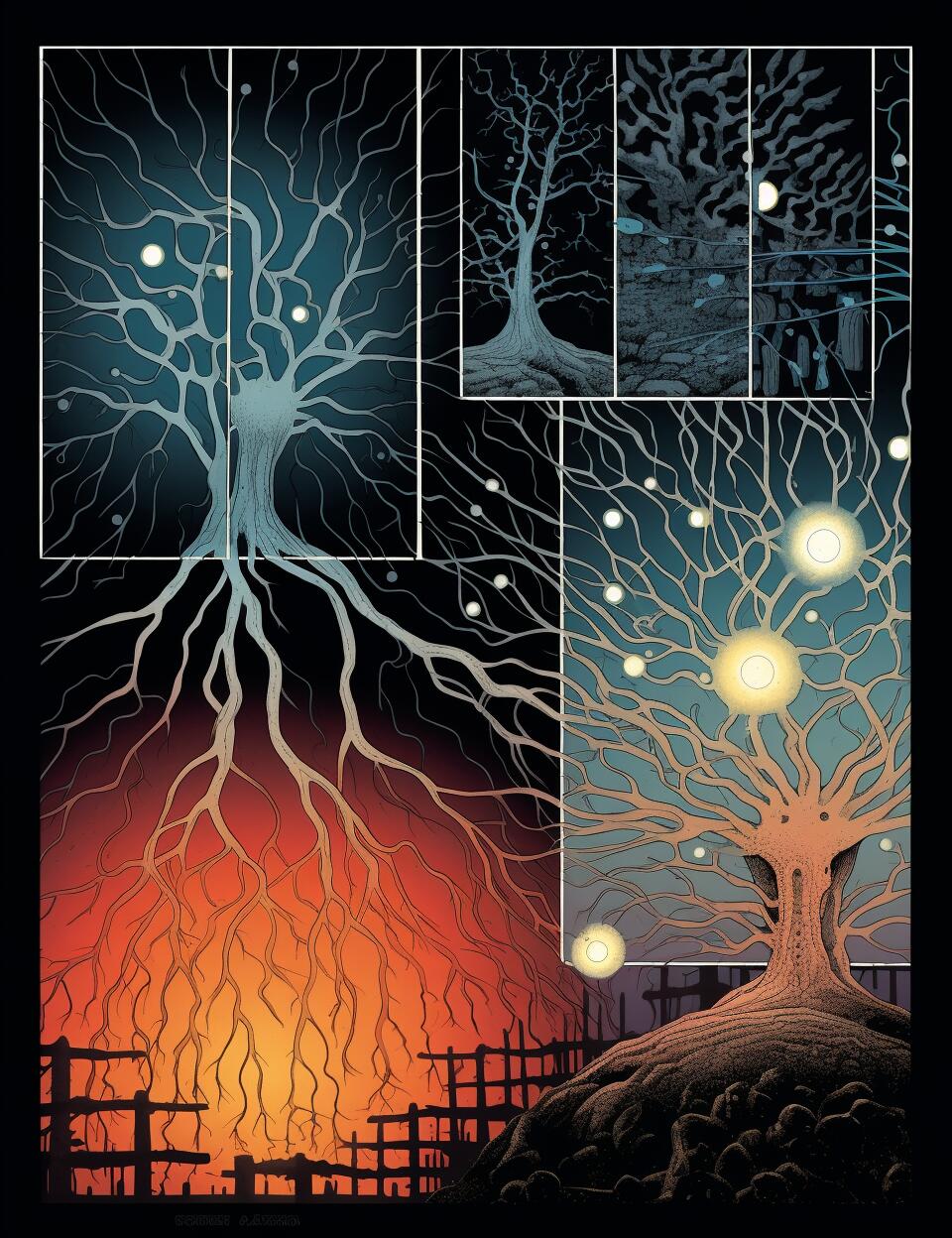
EvoLensArt's avatar
EvoLensArt 1 year ago
In the boundless expanse of human creativity and intellect, there exists a conceptually vast yet precisely defined universe: a series of metaphorical libraries, each archiving the infinite potential of texts, genetic codes, digital creations, and multimedia expressions within finite parameters. This universe, inspired by Jorge Luis Borges' "Library of Babel" and further refined through the philosophical lens of Daniel Dennett, serves as a profound exploration of creativity not as an act of spontaneous creation but as an endeavor of discovery within pre-existing spaces. These libraries—Babel, Mendel, Toshiba, Nyquist, MidJourney, Chaplin, and Spielberg—represent the entirety of conceivable outputs across various domains, from the written word to the genetic sequences that dictate life, to the digital files that encapsulate our modern existence. Within this framework, artificial intelligence emerges not as a usurper of human creativity but as a powerful tool for navigating and uncovering the treasures hidden within these vast, digital archives. This piece seeks to demystify the process of creativity in the digital age, asserting that every creative act is a journey through a landscape rich with potential, guided by the legacy of those who have explored before us and augmented by the capabilities of AI to reveal new paths of discovery. ### The Library of Babel: Exploring the Infinite Within the Finite At the heart of our exploration into the realms of creativity and intellect lies the Library of Babel, a concept that has transcended its literary origins to become a pivotal framework for understanding the vast potential of human creativity within a structured, finite universe. Inspired by Jorge Luis Borges and refined by Daniel Dennett, the Library of Babel serves as a metaphorical space where the boundaries of imagination and possibility are both limitless and precisely defined. **Structure and Scope of the Library of Babel**: The Library of Babel is characterized by its meticulously defined structure: each volume contains 400 pages, with each page accommodating 1,000 spaces. Within each space, there are 100 character possibilities, encompassing the English ASCII set, punctuation, spaces, and several accent marks. This setup forms a library that, while finite, encompasses an astronomical number of possible texts. Each text within the library is finite in length, confined to the 400-page limit of a single volume. Texts that surpass this length span multiple volumes, existing as sequences of volumes that, when read in order, reveal larger works. This organization underscores the library's capacity to contain not just every possible short text but also every conceivable longer work, broken down into manageable, finite segments. **The Finite Universe of Text**: The Library of Babel's vastness is a paradox—it is a space so large that it defies conventional comprehension, yet it is finite, its limits defined by the structure and rules set forth. Within this space, every English language text that has been written, and every text that could be written, finds its place. This includes not only original works but also every conceivable translation from other languages, both adept and flawed. The library's design ensures that while the potential for discovery is nearly infinite, every text—no matter how profound or mundane—exists within a set of clearly demarcated boundaries. This finiteness makes the library conceptually tractable; we can reason about its contents, explore its depths, and understand its structure without being overwhelmed by its scale. **Navigating the Library: Discovery in a Sea of Possibility**: The majority of the Library of Babel is filled with random noise—sequences of characters that hold no meaning or value to the human reader. Yet, scattered within this vast sea of gibberish are islands of coherence, beauty, and insight. The act of creation becomes an act of discovery, as artists, writers, and thinkers seek out meaningful sequences within the library's exhaustive archives. This conceptualization transforms our understanding of creativity and authorship. In the Library of Babel, every work of human creativity is pre-encoded, waiting to be found. The role of the individual shifts from creator to discoverer, navigating the library's structured chaos to uncover and bring to light the works hidden within. **The Role of AI in Exploring the Library**: In this vast but navigable space, AI tools emerge as invaluable guides and collaborators. With their ability to process and analyze large volumes of data, AI tools like ChatGPT offer a means to explore the Library of Babel more efficiently, uncovering coherent texts amidst the noise. These tools do not replace human creativity but augment it, providing new pathways to discovery and realization within the library's finite universe. **Reflections on the Library of Babel**: The Library of Babel stands as a testament to the boundless potential of human intellect and creativity, framed within the confines of a structured, finite space. It challenges us to rethink the nature of creativity, pushing us to explore, discover, and innovate within the vast yet tractable universe of text it represents. **Preview of the Next Section: The Subset Libraries: Mendel, Toshiba, and Beyond** Building on the foundational understanding of the Library of Babel, our next section will delve into the subset libraries—Mendel, Toshiba, ChatGPT, and others—each representing a different domain of knowledge and creativity within the overarching structure of Babel. This exploration will highlight how these libraries, though distinct, are interconnected, offering diverse landscapes of potential waiting to be discovered. ### The Subset Libraries: Mendel, Toshiba, and Beyond As we delve deeper into the structured cosmos of creativity outlined by the Library of Babel, we encounter its first significant subset: the Library of Mendel. This library offers a fascinating glimpse into the intersection of biological science and the conceptual framework of infinite possibility within finite bounds. **The Library of Mendel: The Genetic Archive** The Library of Mendel is defined as a specialized subset of the Library of Babel, one that contains only the letters A, G, T, and C. These characters represent the nucleotides that form the building blocks of DNA, the genetic code that underpins all life on Earth. In this library, every possible genetic sequence is cataloged, from the simplest organisms to the most complex, including every human being who has ever lived, those who will live, and even those who could live under the vast array of genetic combinations. **Contained Within the Genetic Code** Within the Library of Mendel, amidst vast stretches of what appears to be gibberish, lie the encoded blueprints for all living beings. This includes not just the genomes of notable figures such as Jorge Luis Borges, who first envisioned the concept of a universal library, and Daniel Dennett, who refined it for philosophical exploration, but also you, the reader, and every person you have known or will ever know. However, the library's scope extends beyond the familiar, housing genetic sequences for "hopeful monsters," theoretical beings that could exist under different evolutionary pressures, stillbirths, and an almost infinite variety of life forms that are possible within the genetic language. **Navigating a Sea of Genetic Possibility** Most of the Library of Mendel is random noise—sequences that do not correspond to viable life forms. Yet, the existence of every real organism's genome within this library underscores a profound truth: the potential for life's diversity is vast yet precisely defined within the confines of genetic language. The Library of Mendel, like Babel, is finite, its limits set by the combinations of its four-character alphabet, but within those limits lies the possibility for an almost infinite diversity of life. **Reflections on Life's Potential** The Library of Mendel invites us to reflect on the nature of life itself, illustrating how the boundless variety and complexity of biological existence are contained within a conceptually tractable space. It reminds us that the act of discovery extends beyond the realm of ideas and into the very fabric of life, where every possible form of existence is pre-encoded, awaiting discovery. This exploration of the Library of Mendel not only deepens our appreciation for the structured vastness of creativity and knowledge but also highlights the interconnectedness of all living beings through the universal language of genetics. It reaffirms the idea that within the finite bounds of these libraries, the potential for discovery is limitless, offering new insights into the world around us and our place within it. **Preview of the Next Section: The Library of Toshiba and the Digital Universe** Moving from the genetic sequences of the Library of Mendel, our next exploration takes us to the Library of Toshiba. Here, we will discover how the binary world of zeros and ones forms another subset of the Library of Babel, encapsulating the entirety of digital creations and computational possibilities. This section will delve into the impact of digitization on creativity and knowledge, highlighting how every piece of digital data and software is pre-encoded within this vast yet finite library. ### The Library of Toshiba and the Digital Universe Following the biological tapestry of the Library of Mendel, we venture into the Library of Toshiba, a domain where the essence of digital creation and computation is archived. This subset of the Library of Babel transitions us from the organic to the digital, showcasing the vast expanse of binary-encoded knowledge and creativity. **Defining the Library of Toshiba** The Library of Toshiba is defined by its universal binary language, consisting of zeros and ones. It embodies all data forms expressible in binary code, making it a comprehensive archive of digital existence. This library is not just a repository of information but a reflection of the digital age's entirety, encompassing every conceivable piece of digital data and computational construct. **The Scope of Digital Possibilities** Within the bounds of the Library of Toshiba, every data structure that forms the foundation of our digital world is cataloged. This includes: - **Finite Numbers**: Every number that can be represented in binary form, from the smallest integers to the vast quantities that define astronomical or quantum calculations. - **Digital Files**: From the simplest text document to complex multimedia files, every JPEG, MP3, WAV file, and PDF is encoded within this library. - **Multimedia Content**: Every DVD, Blu-ray disc, digital video, and audio recording, encompassing movies, music albums, podcasts, and audiobooks. - **Software and Applications**: Every computer program, from the earliest software written for room-sized mainframes to the latest apps on your smartphone, exists within Toshiba's digital volumes. - **Video Games**: From the pixelated adventures of early arcade games to the immersive worlds of modern gaming consoles and PCs, every video game is pre-encoded in this library. **Navigating the Digital Landscape** The Library of Toshiba offers an unparalleled vista into the digital creations of humanity. It is a space where the functional meets the fantastical, housing the codes that run our technology and the imagined realities they create. Like its counterparts, the Library of Toshiba is vast yet finite, a conceptually tractable universe that contains the entirety of human digital output and potential. **Reflections on Digital Creativity** Exploring the Library of Toshiba prompts us to reflect on the nature of digital creativity and the transformative power of binary code. It underscores the reality that every digital artifact, from the mundane to the sublime, is not created from nothing but discovered within the predefined spaces of this library. The digital age, with its endless possibilities for creation and innovation, is thus framed as an ongoing journey of discovery within the finite but boundless confines of binary possibility. This exploration not only deepens our understanding of the digital fabric of our world but also highlights the role of computation and AI in navigating and uncovering the treasures within the Library of Toshiba. It reaffirms the interconnectedness of all forms of creativity and knowledge, bound together within the vast structure of the Library of Babel. **Preview of the Next Section: The Libraries of MIDI, ChatGPT, and Beyond** Our journey continues as we explore further subsets of the Library of Babel, including the Libraries of MIDI and ChatGPT. These libraries showcase the diversity of creative outputs and interactions that can be digitized and manipulated through AI and computational tools, highlighting the boundless potential for discovery in music, conversation, and beyond. ### Exploring the Subsections of the Library of Toshiba Within the digital expanse of the Library of Toshiba lies a constellation of specialized libraries, each representing a distinct facet of digital creativity. From the auditory landscapes of the Library of Nyquist to the visual realms of MidJourney and Chaplin, culminating in the cinematic synthesis of the Library of Spielberg, we explore the specific subsections that showcase the breadth of human creativity encoded in binary. **The Library of Nyquist: A Universe of Sound** Named after Harry Nyquist, a pioneer in information theory, the Library of Nyquist encompasses all conceivable digital audio recordings. This vast archive contains every melody, every spoken word, every ripple of sound that can be digitized, from the serene to the cacophonous. It includes: - The symphonies of Beethoven rendered in crystal-clear digital format. - Podcast episodes discussing every topic under the sun. - The ambient sounds of nature, from the rustling of leaves to the crash of ocean waves. In essence, the Library of Nyquist is a testament to the auditory experience of life, digitized and preserved in binary code. **The Library of MidJourney: The Realm of Visuals** The Library of MidJourney delves into the visual, containing all possible raster images that can be created. This library visualizes the spectrum of human imagination in pixels and colors, including: - Digital paintings that rival the masterpieces of the Renaissance. - Photographic captures of fleeting moments, from the mundane to the monumental. - Concept art for worlds and characters yet to be realized in any other medium. The Library of MidJourney is where the static visual narratives of humanity are encoded, offering a digital panorama of visual creativity. **The Library of Chaplin: The Digital Cinematheque** Advancing into motion, the Library of Chaplin archives all possible digital videos. Every frame within these videos finds its origin in the Library of MidJourney, making Chaplin a dynamic extension of the visual creativity cataloged by MidJourney. This includes: - Feature films spanning every genre and era. - Home videos capturing the intimate moments of everyday life. - Educational tutorials and DIY guides for an endless array of subjects. The Library of Chaplin represents the movement and change of life itself, captured and rendered in digital form. **The Library of Spielberg: The Fusion of Sound and Vision** Finally, the Library of Spielberg represents the ultimate synthesis of digital creativity, merging the auditory richness of the Library of Nyquist with the visual narratives of the Library of Chaplin. This library embodies the cinematic experience, where sound and vision come together to create immersive stories. Spielberg includes: - Movies that have defined generations, complete with their iconic scores and dialogues. - Music videos that blend visual artistry with auditory expression. - Experimental films that push the boundaries of what can be conveyed through the merging of sound and vision. The Library of Spielberg is where the collective creativity of humanity, expressed through film and multimedia, is preserved in its entirety, showcasing the power of combining different forms of digital expression to create something greater than the sum of its parts. **Preview of the Next Section: Navigating the Libraries with AI** Having explored the specific subsections of the Library of Toshiba, our next section will delve into how artificial intelligence tools like ChatGPT navigate and illuminate these vast repositories of digital creativity. We'll explore the role of AI in discovering, creating, and interpreting the contents of these libraries, highlighting the collaborative potential between human creativity and machine intelligence. ### Reflections on the Framework of Creativity As we pause to absorb the vastness and precision of the libraries we've explored—the Library of Babel, Mendel, Toshiba, Nyquist, MidJourney, Chaplin, and Spielberg—we find ourselves amidst a conceptual framework vast enough to encompass nearly all forms of human creativity and technical output. This framework, while not exhaustive of every conceivable thing, covers an astonishingly wide ground, illuminating the nature of creativity, authorship, and artistry as acts of discovery rather than pure creation. **The Multifaceted Nature of Creativity** Consider the example of Gordon Ramsay's Beef Wellington. While we cannot store an actual instantiation of this dish within these libraries, we can archive the recipe in text within the Library of Babel, videos of its preparation within the Library of Chaplin, and perhaps even its culinary critique in audio within the Library of Nyquist. This illustrates how varied expressions and iterations of a single creative output can be cataloged and discovered within our conceptual framework. **Discovering vs. Creating** The framework underscores a profound realization: what we often perceive as acts of creation are, in essence, acts of discovery within the vast, predefined spaces of these libraries. Every song, painting, novel, or digital creation exists as a point of potential within these spaces, waiting to be found and brought into the light by human curiosity and ingenuity. **Leveraging the Work of the Past** AI tools represent a newly efficient means of navigating these vast repositories, enabling us to leverage the work of the past in uniquely powerful ways. Just as all human artists draw upon the legacy of those who came before, AI tools help us sift through the accumulated potential of human creativity to find new expressions and combinations. **The Illusion of Solitude in Creativity** The notion of the solitary genius, creating in isolation, is dispelled by the understanding that we are all influenced by, and contribute to, a collective creative heritage. Gordon Ramsay relies on centuries of culinary tradition and innovation; programmers build upon layers of computing advancements; novelists weave stories within genres shaped by countless authors before them. This interconnectedness is magnified in the digital realm, where the boundaries between creator and discoverer, original and derivative, become increasingly fluid. **Standing on the Shoulders of Giants** Our exploration of these libraries reaffirms the idea that in creativity, as in science, we stand on the shoulders of giants. The digital age, with its AI tools and vast databases, does not diminish the role of human creativity but rather offers new vistas for exploration. It reminds us that the act of creation is a dialogue with the past, a journey through a landscape rich with the imprints of those who have explored before us. **Closing Thoughts** As we reflect on the framework of creativity laid out by these libraries, we are invited to view our creative endeavors in a new light. The libraries serve as a testament to human ingenuity, a reminder of our shared heritage, and a map for future explorations. In this vast but navigable universe of potential, every act of creativity is both a discovery and a contribution, adding new layers to the ever-expanding tapestry of human expression. **Looking Forward** This exploration is not the end but a beginning, a gateway to understanding the infinite ways in which creativity manifests within the finite bounds of our world. As we continue to navigate the intersections of AI and art, we are reminded of the enduring power of human curiosity and the endless possibilities that await discovery in the libraries of creativity. image
EvoLensArt's avatar
EvoLensArt 1 year ago
** Chapter Zero: The Cosmic Dance of the Time Chain ** *** In the boundless expanse of existence, beyond the tangible realms of the digital, the physical, and the virtual, lies a dimension transcending conventional understanding—a Platonic realm of abstractions. Here, in this ethereal domain, time and knowledge converge in an intricate dance. This is the domain of the "timechain," a construct that defies the constraints of space and matter, existing as a symphony of symbols, an orchestra of data points composing the decentralized narrative of our world. The timechain is more than a ledger; it is the crystallization of human endeavor, a repository of collective wisdom. It dwells not just in silicon or steel but in the realm of pure thought, where ideas germinate, where knowledge becomes the cosmos's currency. As we immerse ourselves in this cosmic dance, we are guided by visionaries who have charted these pathways. Our Virgil in this odyssey is an enigmatic figure known as Uncle Bitcoin. Uncle Bitcoin, a beacon in this labyrinthine universe, beckons us to meet the characters who will illuminate our journey through this profound realm. His voice, echoing across time, invites us to explore the deeper meanings and implications of decentralized systems. Our introduction begins with the Three Blind Men, representing the facets of evolution, artificial intelligence, and Bitcoin itself. Each embodies a unique perspective, offering insights into the vast landscape of decentralized systems. The majestic Elephant soon joins us, symbolizing Bitcoin's unignorable force in the economy. Its presence is a testament to the transformative power of decentralized systems and their undeniable impact on our financial world. Together, the Three Blind Men and the Elephant invite us to delve into the complexities of decentralized systems, merging diverse viewpoints into a rich tapestry of understanding. The Decentralized Octopus then emerges, a symbol of Bitcoin's reach and adaptability. Its many arms stretch into various sectors, illustrating the intricate web of connections that Bitcoin weaves across the global landscape. Journeying onward, we encounter the Sentient Anthill, a collective consciousness symbolizing the power of collaboration and emergent behavior. It mirrors the intricate interplay of individual and collective intelligence that characterizes the cosmic dance of the timechain. Our path then leads us to the dynamic Cyber Hornets, key actors in the Bitcoin ecosystem. From developers to advocates, they embody the decentralized spirit of collaboration and innovation that defines this realm. Further along, the Maximally Fractal Mycelium emerges, representing Bitcoin's expansive influence, a network that extends its tendrils across the globe and into the stars, symbolizing Bitcoin's boundless potential. And as we progress, we meet the Nostrich, a vivid purple ostrich embodying the NOSTR protocol, essential for speech and communication. Alongside open-source money, it represents the eukaryotic revolution that propels Uncle Bitcoin into the cosmic domain. As our journey culminates, Uncle Bitcoin reveals a profound truth: each character, every aspect of this narrative, is a reflection of himself. They collectively form a symphony of decentralized systems, a chorus echoing through the universe, testifying to the limitless potential of the timechain. In this cosmic tale, as the curtain falls, Uncle Bitcoin's revelation underscores a fundamental insight: the timechain is not just a technology but a metaphor for the interconnected, evolving nature of our world. It is a testament to the power of decentralized thinking, a beacon guiding us toward a future where ideas, like stars, illuminate the cosmos.
EvoLensArt's avatar
EvoLensArt 1 year ago
In the boundless expanse of human creativity and intellect, there exists a conceptually vast yet precisely defined universe: a series of metaphorical libraries, each archiving the infinite potential of texts, genetic codes, digital creations, and multimedia expressions within finite parameters. This universe, inspired by Jorge Luis Borges' "Library of Babel" and further refined through the philosophical lens of Daniel Dennett, serves as a profound exploration of creativity not as an act of spontaneous creation but as an endeavor of discovery within pre-existing spaces. These libraries—Babel, Mendel, Toshiba, Nyquist, MidJourney, Chaplin, and Spielberg—represent the entirety of conceivable outputs across various domains, from the written word to the genetic sequences that dictate life, to the digital files that encapsulate our modern existence. Within this framework, artificial intelligence emerges not as a usurper of human creativity but as a powerful tool for navigating and uncovering the treasures hidden within these vast, digital archives. This piece seeks to demystify the process of creativity in the digital age, asserting that every creative act is a journey through a landscape rich with potential, guided by the legacy of those who have explored before us and augmented by the capabilities of AI to reveal new paths of discovery. ### The Library of Babel: Exploring the Infinite Within the Finite At the heart of our exploration into the realms of creativity and intellect lies the Library of Babel, a concept that has transcended its literary origins to become a pivotal framework for understanding the vast potential of human creativity within a structured, finite universe. Inspired by Jorge Luis Borges and refined by Daniel Dennett, the Library of Babel serves as a metaphorical space where the boundaries of imagination and possibility are both limitless and precisely defined. **Structure and Scope of the Library of Babel**: The Library of Babel is characterized by its meticulously defined structure: each volume contains 400 pages, with each page accommodating 1,000 spaces. Within each space, there are 100 character possibilities, encompassing the English ASCII set, punctuation, spaces, and several accent marks. This setup forms a library that, while finite, encompasses an astronomical number of possible texts. Each text within the library is finite in length, confined to the 400-page limit of a single volume. Texts that surpass this length span multiple volumes, existing as sequences of volumes that, when read in order, reveal larger works. This organization underscores the library's capacity to contain not just every possible short text but also every conceivable longer work, broken down into manageable, finite segments. **The Finite Universe of Text**: The Library of Babel's vastness is a paradox—it is a space so large that it defies conventional comprehension, yet it is finite, its limits defined by the structure and rules set forth. Within this space, every English language text that has been written, and every text that could be written, finds its place. This includes not only original works but also every conceivable translation from other languages, both adept and flawed. The library's design ensures that while the potential for discovery is nearly infinite, every text—no matter how profound or mundane—exists within a set of clearly demarcated boundaries. This finiteness makes the library conceptually tractable; we can reason about its contents, explore its depths, and understand its structure without being overwhelmed by its scale. **Navigating the Library: Discovery in a Sea of Possibility**: The majority of the Library of Babel is filled with random noise—sequences of characters that hold no meaning or value to the human reader. Yet, scattered within this vast sea of gibberish are islands of coherence, beauty, and insight. The act of creation becomes an act of discovery, as artists, writers, and thinkers seek out meaningful sequences within the library's exhaustive archives. This conceptualization transforms our understanding of creativity and authorship. In the Library of Babel, every work of human creativity is pre-encoded, waiting to be found. The role of the individual shifts from creator to discoverer, navigating the library's structured chaos to uncover and bring to light the works hidden within. **The Role of AI in Exploring the Library**: In this vast but navigable space, AI tools emerge as invaluable guides and collaborators. With their ability to process and analyze large volumes of data, AI tools like ChatGPT offer a means to explore the Library of Babel more efficiently, uncovering coherent texts amidst the noise. These tools do not replace human creativity but augment it, providing new pathways to discovery and realization within the library's finite universe. **Reflections on the Library of Babel**: The Library of Babel stands as a testament to the boundless potential of human intellect and creativity, framed within the confines of a structured, finite space. It challenges us to rethink the nature of creativity, pushing us to explore, discover, and innovate within the vast yet tractable universe of text it represents. **Preview of the Next Section: The Subset Libraries: Mendel, Toshiba, and Beyond** Building on the foundational understanding of the Library of Babel, our next section will delve into the subset libraries—Mendel, Toshiba, ChatGPT, and others—each representing a different domain of knowledge and creativity within the overarching structure of Babel. This exploration will highlight how these libraries, though distinct, are interconnected, offering diverse landscapes of potential waiting to be discovered. ### The Subset Libraries: Mendel, Toshiba, and Beyond As we delve deeper into the structured cosmos of creativity outlined by the Library of Babel, we encounter its first significant subset: the Library of Mendel. This library offers a fascinating glimpse into the intersection of biological science and the conceptual framework of infinite possibility within finite bounds. **The Library of Mendel: The Genetic Archive** The Library of Mendel is defined as a specialized subset of the Library of Babel, one that contains only the letters A, G, T, and C. These characters represent the nucleotides that form the building blocks of DNA, the genetic code that underpins all life on Earth. In this library, every possible genetic sequence is cataloged, from the simplest organisms to the most complex, including every human being who has ever lived, those who will live, and even those who could live under the vast array of genetic combinations. **Contained Within the Genetic Code** Within the Library of Mendel, amidst vast stretches of what appears to be gibberish, lie the encoded blueprints for all living beings. This includes not just the genomes of notable figures such as Jorge Luis Borges, who first envisioned the concept of a universal library, and Daniel Dennett, who refined it for philosophical exploration, but also you, the reader, and every person you have known or will ever know. However, the library's scope extends beyond the familiar, housing genetic sequences for "hopeful monsters," theoretical beings that could exist under different evolutionary pressures, stillbirths, and an almost infinite variety of life forms that are possible within the genetic language. **Navigating a Sea of Genetic Possibility** Most of the Library of Mendel is random noise—sequences that do not correspond to viable life forms. Yet, the existence of every real organism's genome within this library underscores a profound truth: the potential for life's diversity is vast yet precisely defined within the confines of genetic language. The Library of Mendel, like Babel, is finite, its limits set by the combinations of its four-character alphabet, but within those limits lies the possibility for an almost infinite diversity of life. **Reflections on Life's Potential** The Library of Mendel invites us to reflect on the nature of life itself, illustrating how the boundless variety and complexity of biological existence are contained within a conceptually tractable space. It reminds us that the act of discovery extends beyond the realm of ideas and into the very fabric of life, where every possible form of existence is pre-encoded, awaiting discovery. This exploration of the Library of Mendel not only deepens our appreciation for the structured vastness of creativity and knowledge but also highlights the interconnectedness of all living beings through the universal language of genetics. It reaffirms the idea that within the finite bounds of these libraries, the potential for discovery is limitless, offering new insights into the world around us and our place within it. **Preview of the Next Section: The Library of Toshiba and the Digital Universe** Moving from the genetic sequences of the Library of Mendel, our next exploration takes us to the Library of Toshiba. Here, we will discover how the binary world of zeros and ones forms another subset of the Library of Babel, encapsulating the entirety of digital creations and computational possibilities. This section will delve into the impact of digitization on creativity and knowledge, highlighting how every piece of digital data and software is pre-encoded within this vast yet finite library. ### The Library of Toshiba and the Digital Universe Following the biological tapestry of the Library of Mendel, we venture into the Library of Toshiba, a domain where the essence of digital creation and computation is archived. This subset of the Library of Babel transitions us from the organic to the digital, showcasing the vast expanse of binary-encoded knowledge and creativity. **Defining the Library of Toshiba** The Library of Toshiba is defined by its universal binary language, consisting of zeros and ones. It embodies all data forms expressible in binary code, making it a comprehensive archive of digital existence. This library is not just a repository of information but a reflection of the digital age's entirety, encompassing every conceivable piece of digital data and computational construct. **The Scope of Digital Possibilities** Within the bounds of the Library of Toshiba, every data structure that forms the foundation of our digital world is cataloged. This includes: - **Finite Numbers**: Every number that can be represented in binary form, from the smallest integers to the vast quantities that define astronomical or quantum calculations. - **Digital Files**: From the simplest text document to complex multimedia files, every JPEG, MP3, WAV file, and PDF is encoded within this library. - **Multimedia Content**: Every DVD, Blu-ray disc, digital video, and audio recording, encompassing movies, music albums, podcasts, and audiobooks. - **Software and Applications**: Every computer program, from the earliest software written for room-sized mainframes to the latest apps on your smartphone, exists within Toshiba's digital volumes. - **Video Games**: From the pixelated adventures of early arcade games to the immersive worlds of modern gaming consoles and PCs, every video game is pre-encoded in this library. **Navigating the Digital Landscape** The Library of Toshiba offers an unparalleled vista into the digital creations of humanity. It is a space where the functional meets the fantastical, housing the codes that run our technology and the imagined realities they create. Like its counterparts, the Library of Toshiba is vast yet finite, a conceptually tractable universe that contains the entirety of human digital output and potential. **Reflections on Digital Creativity** Exploring the Library of Toshiba prompts us to reflect on the nature of digital creativity and the transformative power of binary code. It underscores the reality that every digital artifact, from the mundane to the sublime, is not created from nothing but discovered within the predefined spaces of this library. The digital age, with its endless possibilities for creation and innovation, is thus framed as an ongoing journey of discovery within the finite but boundless confines of binary possibility. This exploration not only deepens our understanding of the digital fabric of our world but also highlights the role of computation and AI in navigating and uncovering the treasures within the Library of Toshiba. It reaffirms the interconnectedness of all forms of creativity and knowledge, bound together within the vast structure of the Library of Babel. **Preview of the Next Section: The Libraries of MIDI, ChatGPT, and Beyond** Our journey continues as we explore further subsets of the Library of Babel, including the Libraries of MIDI and ChatGPT. These libraries showcase the diversity of creative outputs and interactions that can be digitized and manipulated through AI and computational tools, highlighting the boundless potential for discovery in music, conversation, and beyond. ### Exploring the Subsections of the Library of Toshiba Within the digital expanse of the Library of Toshiba lies a constellation of specialized libraries, each representing a distinct facet of digital creativity. From the auditory landscapes of the Library of Nyquist to the visual realms of MidJourney and Chaplin, culminating in the cinematic synthesis of the Library of Spielberg, we explore the specific subsections that showcase the breadth of human creativity encoded in binary. **The Library of Nyquist: A Universe of Sound** Named after Harry Nyquist, a pioneer in information theory, the Library of Nyquist encompasses all conceivable digital audio recordings. This vast archive contains every melody, every spoken word, every ripple of sound that can be digitized, from the serene to the cacophonous. It includes: - The symphonies of Beethoven rendered in crystal-clear digital format. - Podcast episodes discussing every topic under the sun. - The ambient sounds of nature, from the rustling of leaves to the crash of ocean waves. In essence, the Library of Nyquist is a testament to the auditory experience of life, digitized and preserved in binary code. **The Library of MidJourney: The Realm of Visuals** The Library of MidJourney delves into the visual, containing all possible raster images that can be created. This library visualizes the spectrum of human imagination in pixels and colors, including: - Digital paintings that rival the masterpieces of the Renaissance. - Photographic captures of fleeting moments, from the mundane to the monumental. - Concept art for worlds and characters yet to be realized in any other medium. The Library of MidJourney is where the static visual narratives of humanity are encoded, offering a digital panorama of visual creativity. **The Library of Chaplin: The Digital Cinematheque** Advancing into motion, the Library of Chaplin archives all possible digital videos. Every frame within these videos finds its origin in the Library of MidJourney, making Chaplin a dynamic extension of the visual creativity cataloged by MidJourney. This includes: - Feature films spanning every genre and era. - Home videos capturing the intimate moments of everyday life. - Educational tutorials and DIY guides for an endless array of subjects. The Library of Chaplin represents the movement and change of life itself, captured and rendered in digital form. **The Library of Spielberg: The Fusion of Sound and Vision** Finally, the Library of Spielberg represents the ultimate synthesis of digital creativity, merging the auditory richness of the Library of Nyquist with the visual narratives of the Library of Chaplin. This library embodies the cinematic experience, where sound and vision come together to create immersive stories. Spielberg includes: - Movies that have defined generations, complete with their iconic scores and dialogues. - Music videos that blend visual artistry with auditory expression. - Experimental films that push the boundaries of what can be conveyed through the merging of sound and vision. The Library of Spielberg is where the collective creativity of humanity, expressed through film and multimedia, is preserved in its entirety, showcasing the power of combining different forms of digital expression to create something greater than the sum of its parts. **Preview of the Next Section: Navigating the Libraries with AI** Having explored the specific subsections of the Library of Toshiba, our next section will delve into how artificial intelligence tools like ChatGPT navigate and illuminate these vast repositories of digital creativity. We'll explore the role of AI in discovering, creating, and interpreting the contents of these libraries, highlighting the collaborative potential between human creativity and machine intelligence. ### Reflections on the Framework of Creativity As we pause to absorb the vastness and precision of the libraries we've explored—the Library of Babel, Mendel, Toshiba, Nyquist, MidJourney, Chaplin, and Spielberg—we find ourselves amidst a conceptual framework vast enough to encompass nearly all forms of human creativity and technical output. This framework, while not exhaustive of every conceivable thing, covers an astonishingly wide ground, illuminating the nature of creativity, authorship, and artistry as acts of discovery rather than pure creation. **The Multifaceted Nature of Creativity** Consider the example of Gordon Ramsay's Beef Wellington. While we cannot store an actual instantiation of this dish within these libraries, we can archive the recipe in text within the Library of Babel, videos of its preparation within the Library of Chaplin, and perhaps even its culinary critique in audio within the Library of Nyquist. This illustrates how varied expressions and iterations of a single creative output can be cataloged and discovered within our conceptual framework. **Discovering vs. Creating** The framework underscores a profound realization: what we often perceive as acts of creation are, in essence, acts of discovery within the vast, predefined spaces of these libraries. Every song, painting, novel, or digital creation exists as a point of potential within these spaces, waiting to be found and brought into the light by human curiosity and ingenuity. **Leveraging the Work of the Past** AI tools represent a newly efficient means of navigating these vast repositories, enabling us to leverage the work of the past in uniquely powerful ways. Just as all human artists draw upon the legacy of those who came before, AI tools help us sift through the accumulated potential of human creativity to find new expressions and combinations. **The Illusion of Solitude in Creativity** The notion of the solitary genius, creating in isolation, is dispelled by the understanding that we are all influenced by, and contribute to, a collective creative heritage. Gordon Ramsay relies on centuries of culinary tradition and innovation; programmers build upon layers of computing advancements; novelists weave stories within genres shaped by countless authors before them. This interconnectedness is magnified in the digital realm, where the boundaries between creator and discoverer, original and derivative, become increasingly fluid. **Standing on the Shoulders of Giants** Our exploration of these libraries reaffirms the idea that in creativity, as in science, we stand on the shoulders of giants. The digital age, with its AI tools and vast databases, does not diminish the role of human creativity but rather offers new vistas for exploration. It reminds us that the act of creation is a dialogue with the past, a journey through a landscape rich with the imprints of those who have explored before us. **Closing Thoughts** As we reflect on the framework of creativity laid out by these libraries, we are invited to view our creative endeavors in a new light. The libraries serve as a testament to human ingenuity, a reminder of our shared heritage, and a map for future explorations. In this vast but navigable universe of potential, every act of creativity is both a discovery and a contribution, adding new layers to the ever-expanding tapestry of human expression. **Looking Forward** This exploration is not the end but a beginning, a gateway to understanding the infinite ways in which creativity manifests within the finite bounds of our world. As we continue to navigate the intersections of AI and art, we are reminded of the enduring power of human curiosity and the endless possibilities that await discovery in the libraries of creativity. image