The Rabbit Hole Has an Exit: 25 Years of 9/11, a Lifetime of Psyops, and Why I Ended Up in Bitcoin
Bitcoin Well
bitcoinwell@btcw.app
npub19mf4...kfu2
Bitcoin Well is on a mission to enable independence. We do this by making it easy to use bitcoin in self-custody.
Whether you’re looking to buy, sell or use bitcoin, we never hold on to your bitcoin.
Bitcoin Well is automatic self-custody.
Labor Day question for our American readers: where is the 401(k) from the job you left?
It's still there. Sitting in your old employer's plan, in a fund lineup somebody in HR picked, earning whatever the market hands it. You didn't choose those funds. You can't put bitcoin in them.
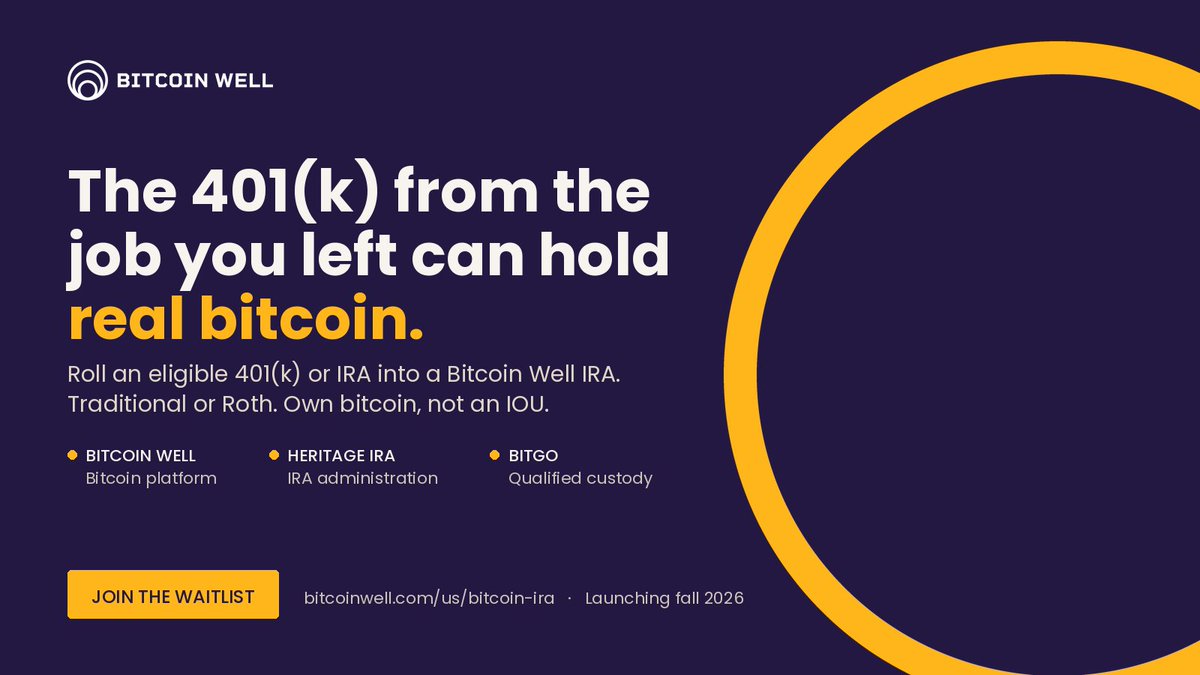
An eligible 401(k) or IRA can be rolled over into a Bitcoin Well IRA, and rollovers don't have the annual cap contributions do. Money you already earned, moved into real bitcoin you can verify on-chain, inside the same tax-advantaged structure.
Not advice. Eligibility depends on your plan and your situation. But the money is yours, and "I haven't thought about it in years" is not a plan.
Launching this fall:


The idea behind every bitcoin key you own was rejected as a homework assignment.
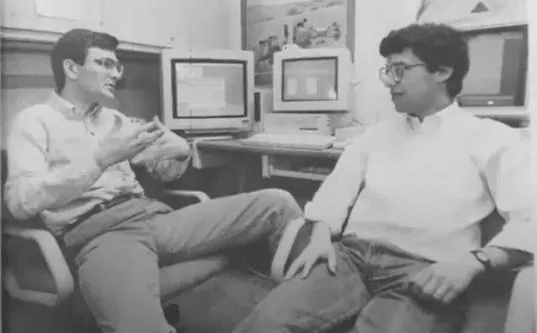
Fall 1974. Ralph Merkle, an undergraduate at Berkeley, submits a project proposal for his computer security course: a way for two strangers to agree on a secret over a wire anyone can listen to. The professor turns it down. Merkle rewrites it shorter, resubmits, gets it back with notes in the margin, and drops the course.
He keeps working on it anyway. In August 1975 he sends the paper to the Communications of the ACM. The anonymous reviewer's verdict: "not in the main stream of present cryptography thinking." It took almost three years to get published. By then the world had named it: public key cryptography.
He wasn't done. In 1979 he worked out how to fold thousands of records into one fingerprint you can check in seconds. Bitcoin calls it the Merkle root. There is one in the header of every block.
You see, the experts weren't lying. They were describing the mainstream, accurately. The mainstream was wrong.
Bitcoin is built almost entirely out of ideas that were turned down first. That should make you more comfortable holding it, not less.


The list is a weapon
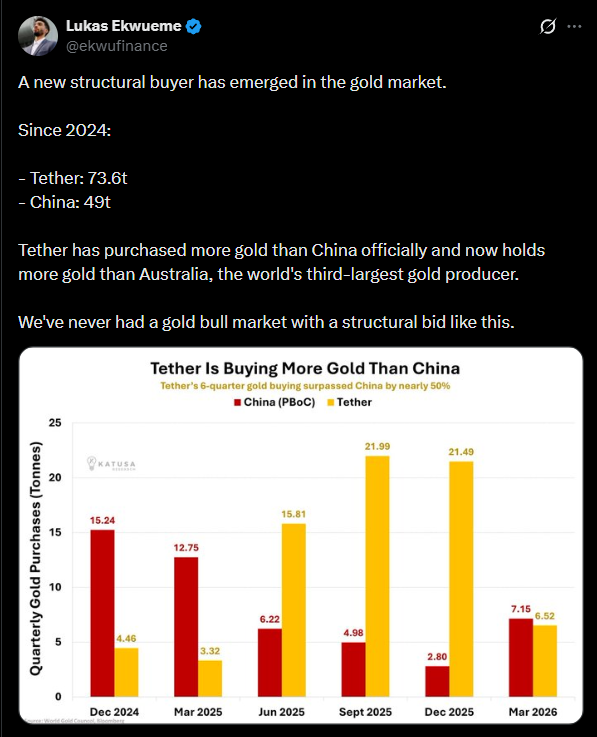
Gold just had its worst quarter since 2013.
Tether bought 14 more tonnes into it. The pile now runs past 146 tonnes, roughly double what Australia's central bank holds.
The largest issuer of digital dollars on earth spent a falling market accumulating the one money that has never had an issuer.
You can read that as a trade or as a tell. Either way, the version of it available to you needs no vault, no attestation and no quarterly report from an accounting firm. Buy spot bitcoin and take it off the exchange yourself.


I dug my old Ledger out of a drawer this morning. Hadn't touched it in years. The screen is so faded I could barely make out the characters.
So the thing going around yesterday is true. The screen on the Ledger Nano S fades with age. Nothing gets hacked and nothing gets tampered with, an old display just goes too faint to read. @janrothen posted about it and is past 189,000 views. Nick Neuman at Casa said the same thing five days earlier, and the two of them independently landed on the same workaround.
Point your phone camera at the device and read the screen off your phone instead. A camera sensor gathers far more light than your eye does and holds it longer, so a display that looks blank to you comes back sharp in your hand. Dim the room, get close, pinch to zoom.
Now notice what a faded screen is not. Your bitcoin was never on that device and could not have been. It is a record on Bitcoin's ledger, and thousands of machines are holding a copy of it right now. The device signs. It does not store.
A faded screen is not a lost balance so much as it is an annoyance if you backed up your seed phrase.
Go make sure you can still read your ledger and move your seed to a new device when you get a chance. No rush.


Saturday question.
What was the first thing you ever actually bought with bitcoin? Not traded. Bought.
Mine was a bottle of wine at the corner store using a Bitcoin debit card in 2018. Of course the person behind the counter had no idea.
Self-custody shouldn't feel like defusing a bomb with the wires unlabeled.
This week, Bitcoin Guidance is free. A private, one-on-one call with a real Bitcoin expert who walks you through it live: setting up your own wallet, moving your coins safely, and backing up your keys so a lost phone never means a lost fortune. No sales pitch. No jargon wall. Just a human who stays on the line until it's done and it actually makes sense to you.
After the couple of weeks Bitcoin holders just had, nobody should be guessing with their savings.
Free for a few more days. Book a call: 

Bitcoin Well
Bitcoin Guidance | Meet 1-on-1 with a Bitcoin Expert
Get personalized bitcoin guidance from our experts. Learn how to securely set up self-custody, understand bitcoin, and take control of your financi...
Self-custody is still the point
Gary Cardone looked at self-custody, saw a little friction, and said "GTFO, not scalable."
That reflex is the entire reason Bitcoin had to exist.
You see, the dice rolls aren't the point. They're a UX problem, and UX problems get solved. What doesn't get solved on its own is the mindset underneath the comment: the belief that doing the work yourself is beneath you, that "serious money" hands its keys to a suit and calls it control.
It isn't control. The money an institution holds for you is the money that gets frozen, loaned out behind your back, and seized. Ask anyone whose account froze in 2022. Ask the Americans who lived through Executive Order 6102.
The friction is temporary. The subservience is permanent, right up until the day you decide to hold your own keys.
Serious money isn't the money a custodian guards. It's the money nobody can take.
Not your keys, not your coins. Not your entropy, not your keys.


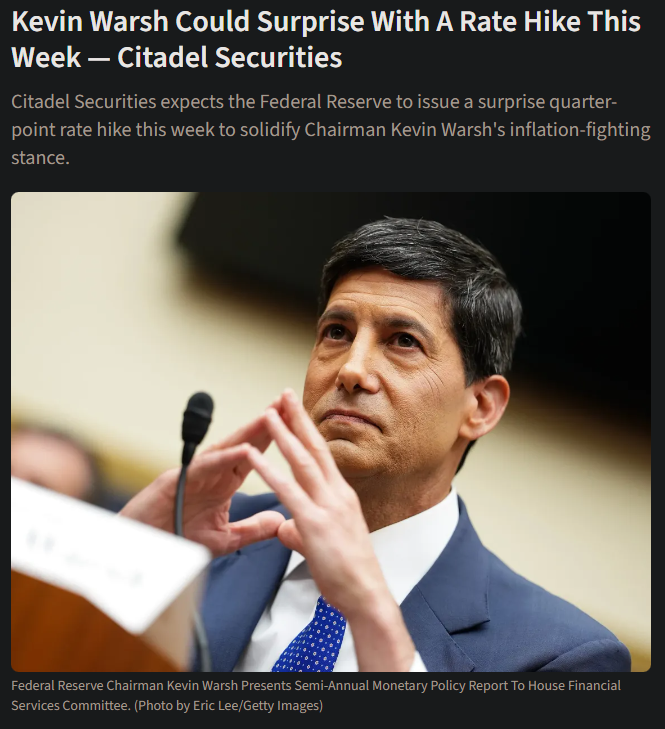
Everyone is watching whether Warsh raises rates a quarter point tomorrow. But that's the wrong number to be paying attention to.
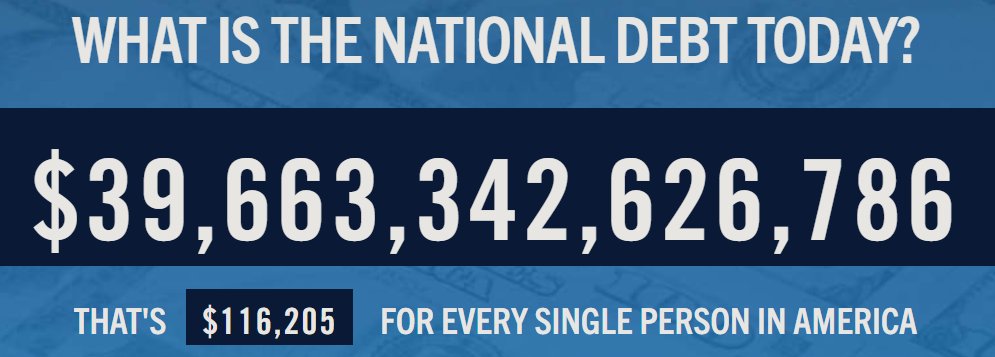
The only number that matters is $40 Trillion.
And that number says, ultimately, this train only goes in one direction.


The Last Analog Man: What John C. Dvorak Understood About Value That the Algorithm Never Will
Bitcoin mining difficulty is on track to finish 2026 lower than it started. That would be the first annual decline in Bitcoin's history. So is it the beginning of the end?
Difficulty is just a thermostat. When too many miners pile in, it climbs and crushes margins. When the overbuilt and overleveraged operators tap out, it falls and the survivors breathe again. That's a build in balancing system meeting the free market.
And there is nothing to fear on the security side. The hashpower behind Bitcoin is orders of magnitude past what the network needs to stay safe. A drop of roughly 13.8% off record highs still leaves it parked near the most secure it has ever been. "No miners left" was never on the table.
Here's the part the doomers miss. Lower difficulty means fatter margins for everyone still plugged in. It quietly invites the small, nimble, efficient miners back online, the ones who got priced out while the giants were flexing. The network doesn't get weaker. It gets more distributed.
Bitcoin doesn't get a bailout when its miners overbuild. It adjusts, in public, and hands the advantage back to whoever is left and paying attention. The miners compete so you never have to trust any single one of them.


The US national debt just crossed 39.6 trillion dollars. Write it out: 39,663,000,000,000.
Nobody voted for that number. No election approved it. It grows while you sleep, funded by a printer that quietly turns your savings into their spending.
This is the tax that never lands on a ballot. Your paycheck buys a little less each year, and the people running the press keep their jobs the whole time.
Bitcoin was built for exactly this. A supply capped at 21 million, enforced by every node, changeable by no committee and no emergency.
One of these systems asks you to trust that they'll behave. The other doesn't ask you to trust anyone at all.


Normal people check the weather before the weekend.
I check if my node is still synced.
We are not the same, and I've made peace with it.


We asked AI for a heartwarming photo of a dad teaching his kid self-custody.
It melted the hardware wallet and engraved the backup plate "BITCOIM." We're not sure where the family went.
Anyway. The point survives the slop.
Most people inherit a bank account. A number someone else controls, that shrinks a little every year. You can leave your kids the money itself. Keys they hold, that no bank has to approve and no government can inflate away.
Real inheritance isn't a balance. It's the ability to hold their own.
(Still waiting on the version that can spell Bitcoin.)


El Salvador's president just turned 45. Five years ago he did something every serious institution called reckless. He started buying bitcoin for his country and holding it in the national treasury.
The IMF warned him. The ratings agencies downgraded him. The op-eds wrote his obituary.
The country is still here. The national stack is still growing. And those coins sit in El Salvador's own custody, not on loan from any foreign lender.
Turns out the reckless move was trusting the people doing the mocking.
Happy 45th to the first head of state who chose math over permission.
— Zach 🧙♂️


The blockchain wasn't invented in 2008. The core idea showed up seventeen years earlier, and it was built to solve something boring: proving a document hadn't been backdated.
In 1991, two researchers at Bellcore, Stuart Haber and Scott Stornetta, published a paper called "How to Time-Stamp a Digital Document." The problem was simple. A digital file can be edited and its date faked, and no one can prove otherwise. Their fix was to fingerprint each document with a hash, then chain every new timestamp to the one before it. Alter any record and every link after it breaks.
They even anchored it in the physical world. For years, their company published a summary of the chain every week in the classified pages of the New York Times. Millions of printed copies, impossible to quietly rewrite.
A tamper-evident chain of records, anchored in public, trusting no single authority. Sound familiar?
When Satoshi wrote the Bitcoin whitepaper, three of its eight citations pointed back to Haber and Stornetta.
Bitcoin didn't fall from the sky. It was the moment someone wired a chain of honest records to money nobody can print.


Oil is up about 10% this week on Hormuz tensions. Liquidity is draining. And suddenly the same market that spent all year begging for rate cuts is quietly pricing in hikes.
"Higher for longer" was always a bluff. You don't run a debt this size, fund new conflicts, and keep money tight. The math doesn't allow it. The printer is not retired. It's resting.
They manage your psychology because they lost control of the ledger.
Bitcoin doesn't have a psychology to manage. Twenty-one million, no matter who's panicking.


Nine of the biggest names in finance just pledged $15M to protect Bitcoin. BlackRock. Fidelity. Coinbase. Strategy.
Two things are true at once.
Yes, some of this is a press release. Goodwill with the Bitcoin community is cheap at $15M, and every firm on that list knows it.
But the cynics miss the better point. These companies hold staggering amounts of bitcoin. Game theory doesn't care about their motives. Own enough of the network and you protect it and promote it, saint or not. Bitcoin was built this way on purpose. It never asked anyone to be virtuous. It just makes self-interest and security point the same direction.
Same reason the quantum panic is overblown. Bitcoin isn't defended by a foundation or a pledge. It's defended by millions of aligned incentives and a network that has upgraded before and will again.
$15M is a nice gesture. The incentives were already doing the work.
Hold your keys, follow the upgrades, and don't mistake a press release for the moat.