We're live. Episode 2 of the Bitcoin Well Podcast — the sell-off, the "never sell" reversal, and what it actually means for Bitcoin's biggest corporate bet, with @JoeConsorti and @ChrisAlaimo6.
https://youtube.com/live/ryYKA9anKsg?feature=share
Bitcoin Well
bitcoinwell@btcw.app
npub19mf4...kfu2
Bitcoin Well is on a mission to enable independence. We do this by making it easy to use bitcoin in self-custody.
Whether you’re looking to buy, sell or use bitcoin, we never hold on to your bitcoin.
Bitcoin Well is automatic self-custody.
Michael Saylor made the biggest corporate bitcoin bet in history. Now the charts are red, and the question nobody wants to say out loud is getting louder: what happens if he's forced to sell?
Today, 2 PM EST on the Bitcoin Well Podcast, we put it to two people who at least seem like they know what's going on! @ChrisAlaimo6 (Strategic Advisor at Simple Bitcoin) and @JoeConsorti (Horizon) dig into what's really going on with Saylor's position, whether the "forced seller" fear is real or overblown, and what it would mean for the rest of the market if it played out.
No panic. No hopium. Just the mechanics, straight. No chaser.
Watch live at 2 PM EST on this channel!


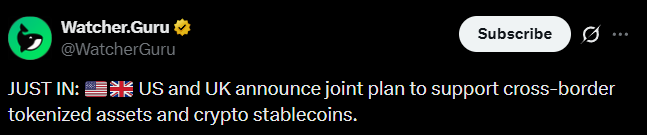
Two governments just agreed to build money you can track across an ocean. They're calling it innovation. But they certainly aren't innovating for freedom.
The US and UK announced a joint plan for cross-border tokenized assets and stablecoins. Tokenized, not decentralized. A dollar or a bond wrapped on a ledger the issuer still controls, that still reports, that can still be paused or reversed or geofenced the moment someone decides your transaction is a problem. Surveillance money with a blockchain sticker on the box.
States don't coordinate international plans around technology they find harmless. They're building a programmable, trackable, permissioned version of the exact thing Bitcoin was designed to route around. That's the anti-Bitcoin, shipped by committee, with a press release.
Here's the part that matters for you. A tokenized dollar moves the moment two governments agree it should, and freezes the moment they agree it shouldn't. The bitcoin in your own custody asks no treaty for permission. It crosses a border because you decided to move it, and nobody on either side of that ocean gets a vote.
They can tokenize the dollar. They can't tokenize your consent. Although God knows they'll try...


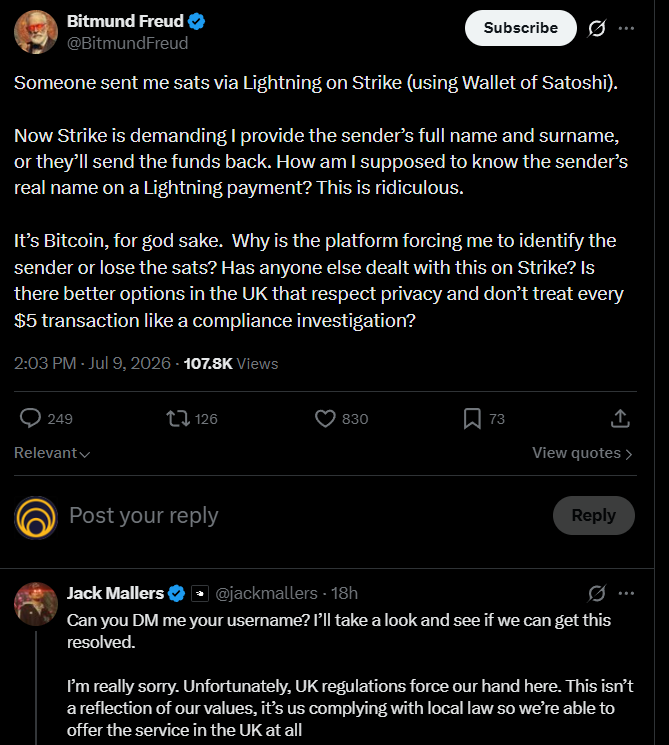
Someone sent a friend $5 of Bitcoin over Lightning. Strike froze it and demanded the sender's full legal name.
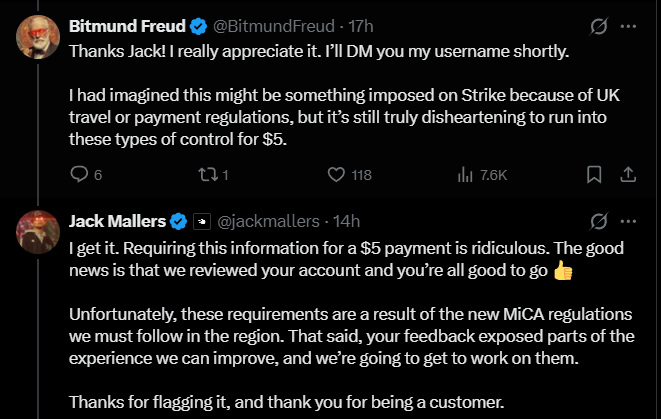
But the person receiving it had no way to answer. Nobody knows a stranger's surname from a Lightning payment. That's the whole point of the technology. Strike's CEO, Jack Mallers, apologized and named the culprit directly: the new MiCA regulations.
That's the same rulebook doing its work from the other side. MiCA is why 70% of Binance's exiting EU users just fled into self-custody. It is also why a $5 tip on Strike now triggers a demand for a stranger's legal name. One regulation, two doors. Wherever the state can reach a custodian, it makes that custodian watch you.
Here's the lesson hiding in both. A custodian is a chokepoint by design. However good its intentions, it holds a door the state can always knock on. Your own wallet has no door. A self-custodial Lightning payment never asks for anyone's name, because there is no middleman left to compel.
They can write every rule in Brussels and still never reach the wallet you hold yourself. Not your keys, not your coins. Not their business, either.


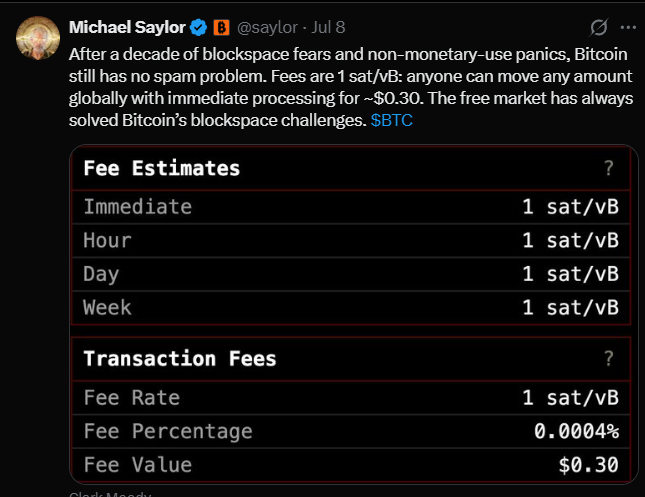
Michael Saylor says Bitcoin has no spam problem. A lot of people are furious he said it. Here is the part everyone in the fight is missing.
It doesn't matter what Saylor thinks. It doesn't matter what the pools signal by July 15. Bitcoin doesn't have a CEO who decides what it is for, and that is the entire point of the thing.
The rules of Bitcoin are not enforced by a vote, a company, or a mining cartel. They are enforced by the node you run. Every full node quietly checks every block against the rules its operator chose to accept. Miners can propose. Pools can signal. Billionaires can post. None of them can force a rule onto a node that rejects it.
That is why the "spam" fight, for all its noise, is really a question about you. Do you run your own node and enforce your own rules, or do you outsource that judgment to whoever has the loudest account this week?
Let them debate the filter. Sovereignty was never up for a vote.
Run your node. The rules are yours to keep.


Bitcoin isn't 21 million coins. It's 2.1 quadrillion satoshis. Keep that in mind the next time someone says there won't be "enough."
Eli Ben-Sasson, a Zcash co-founder, wants to swap Bitcoin's fixed cap for 4% annual issuance, worried that lost coins leave too little to go around. Start with the obvious part. The 21 million cap is the product. Change it and you don't have Bitcoin anymore. You have another coin that borrowed the name.
Now the "just 4%" part. There is no just once. The moment the cap can move, someone owns the dial, and 4% stops being a ceiling and becomes a precedent. Every future emergency will argue for a little more. That is the entire history of fiat money, restarted from scratch.
And the shortage he fears isn't real. Each Bitcoin splits into 100 million sats. When coins are lost, the ones that remain simply carry more value, and the network keeps pricing life in smaller units. Lost coins don't starve you. They make everyone else's sats worth more.
A cap you can vote to raise was never a cap. It's fiat with extra steps.


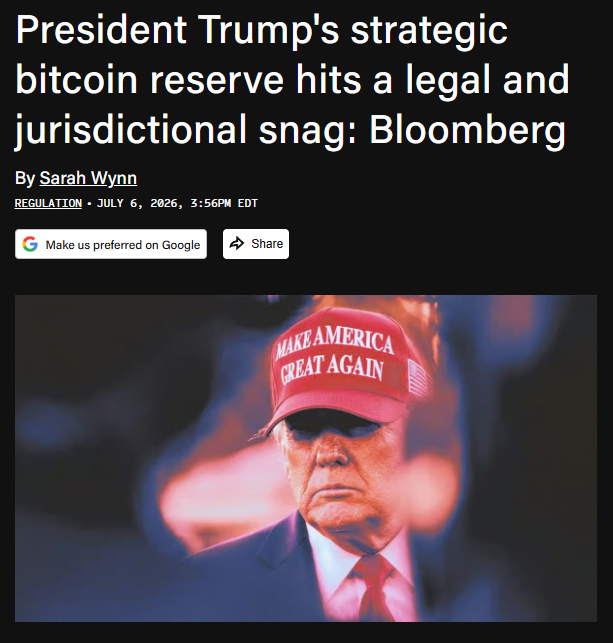
The U.S. government holds more than 328,000 Bitcoin, worth about $21 billion, and 16 months in it still can't figure out who holds the keys.
Bloomberg reports the Strategic Bitcoin Reserve has stalled. Treasury and Commerce are fighting over which one runs it, and government lawyers are now reviewing a more basic question. Whether Washington even has the legal authority to custody Bitcoin for the long term.
The most powerful state on earth, holding $21 billion in Bitcoin, is stuck on the exact problem every one of us solved on day one. Where do the keys live, and who is allowed to move them?
This is the whole lesson in one headline. Custody is not paperwork you delegate to an agency. It is the asset. A reserve nobody can agree how to hold is just a number in a press release.
You don't need an interagency working group. You need a seed phrase, a piece of steel, and an afternoon. No turf war. No legal review. No 16-month delay.
They have $21 billion and no answer for the keys. You can have yours today.
That is the whole difference between owning Bitcoin and being told you own it.


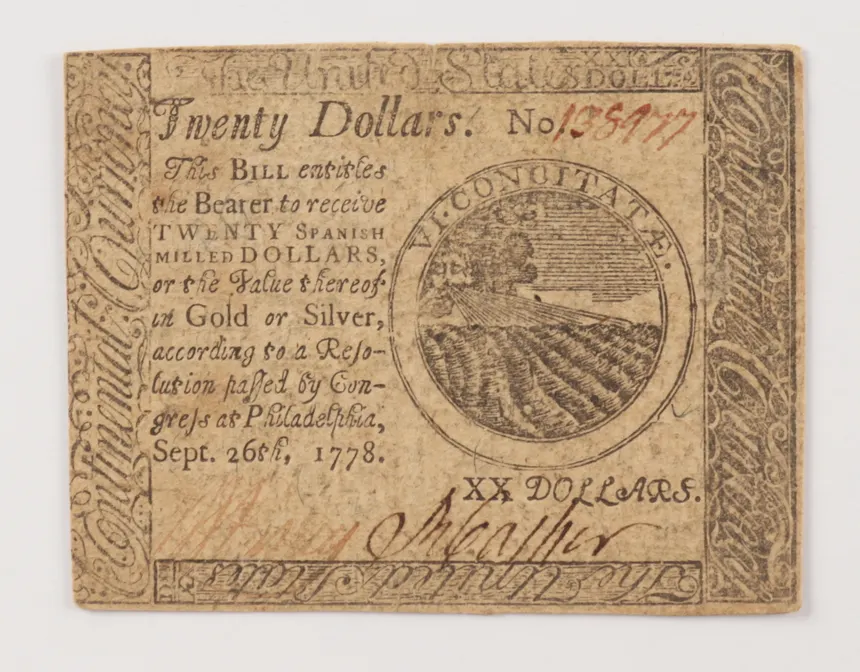
They declared independence from a king in 1776. Then they tried to pay for it with a printing press.
The Continental Congress had no gold and a war to fund, so it printed. Paper dollars called Continentals, millions of them, backed by nothing but a promise and the hope of victory. At first they spent fine. Then prices climbed. Then they ran. Within a few years it took a fistful of Continentals to buy what a single silver coin once did, and "not worth a Continental" entered the language as the insult it still is.
The same government that fought a war over taxation without consent taxed everyone anyway, quietly, through the printer, no vote required. The soldiers who won that war were paid in money that melted in their hands.
Sound money was the unfinished business of 1776. It still is.
Bitcoin is the first money in that whole story that no Congress can print more of. Fixed supply, enforced by every node, no emergencies and no exceptions.
Independence from a king was step one. Independence from the printing press is the part we still owe them.


Fireworks tonight for a country that once told a king no.
Meanwhile most people still cannot tell their own bank no. Wrong charge, frozen account, declined payment, and the only move is to ask nicely and wait for a yes.
Self-custody is the smallest declaration of independence you will ever sign. No paperwork, no permission, no one left to ask.
The fireworks are for a country that said no. The keys are how you say it yourself.


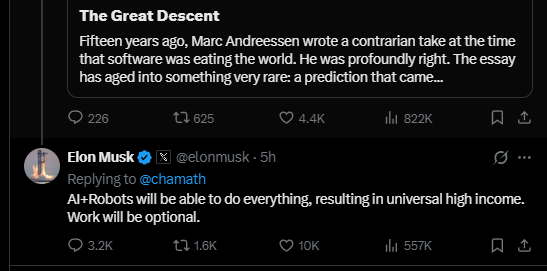
Elon says AI will do everything and we'll all live on "universal high income." Work optional. Sounds generous. Ask the second question.
Who sends the income? Who can pause it? Who decides your amount, and what happens to it the year you say the wrong thing?
A promise of money you don't work for is a promise of money you don't control at someone else's expense. Universal high income is universal dependence with a friendlier name. The check clears as long as you stay agreeable to whoever signs it. That's not freedom from work. That's a permission slip for your existence, renewable at someone else's discretion.
This is the exact machine we already live in, just automated. A dollar you didn't earn, issued by an authority, adjustable by decree, is the softest leash ever invented. It feels like a gift right up until the moment it's conditional.
Bitcoin is the opposite bet. Property no one grants you and no one can switch off. You don't apply for it. You earn it and hold it at your own discretion.
Before you take the income they promise, make sure you own something they can't.


Everyone wants a scary reason the price has felt heavy lately. Here's a calmer one: distribution.
Some of the oldest coins on the network have been waking up and changing hands. A great example is this story from last year that's going viral right now: 10,000 bitcoin bought in 2011 for $7,805, untouched for over 14 years, then moved for more than $1 billion. One anonymous address. About 140,000x. No press releases the whole way.
When decade-old supply finally sells, it meets the market, and price can sag while those coins find new owners. That is, honestly, the healthiest thing a monetary network can do.
Look at who actually holds bitcoin. Not a boardroom. Not a few insiders with lockups and scheduled sell plans. Plebs and anonymous OGs who bought conviction a decade ago and never asked permission to keep it. Coins moving from old strong hands to new strong hands is the distribution working as designed.
And the part nobody tells you: that 14-year clock was never a 2011 privilege. You can start yours today.
Buy what you understand. Hold your own keys. Let time do the work no trader can.


Happy Canada Day. Proud of this country. Also done asking anyone's permission to hold my own money.
Canada gave us a lot worth celebrating. The land, the people, a passport that opens doors, and a reputation for quietly minding our own business. But loving a country and trusting its currency are two different things. You can wave the flag today and still want money no central bank can print, no bank can freeze, and no policy can quietly tax through inflation.
That isn't unpatriotic. It might be the most Canadian instinct there is: independent, self-reliant, looking after your own. Bitcoin doesn't care where you were born. It just lets you keep what you earned, on your terms.
Love the country. Own the money. Happy Canada Day from a Canadian company that believes in both.


A dollar just became the second most valuable asset in all of crypto.
This week Tether's USDT passed Ethereum by market cap. Around $186 billion in dollar tokens, now worth more than the network that was supposed to replace the financial system. The most-used asset in crypto is the exact thing crypto was built to route around.
Stablecoins are useful, no argument. Peruvian onion exporters are now settling customs in USDT instantly, no correspondent bank, no three-day wire. That part is real. But a stablecoin is still a dollar, and a dollar still loses value on a schedule set by people you never voted for. Tether can also freeze any address it wants, and it has done it many times over. Convenient money you can be locked out of is still money you can be locked out of.
Bitcoin is the one asset on these rails nobody can print and nobody can freeze. Not a faster dollar. A different kind of money entirely.
Hold the one with no off switch.


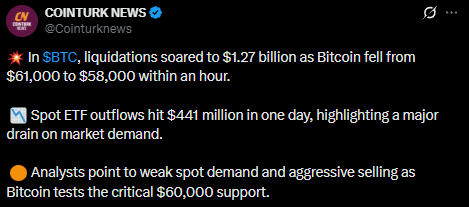
$1.27 billion in Bitcoin got liquidated in about an hour today. Not one satoshi of it was in cold storage.
Bitcoin fell from $61,000 to $58,000, a 21-month low, and over a billion dollars in leveraged long positions were wiped out.
Not Bitcoin. Leverage. Those were traders who borrowed to bet on the price, posted collateral they couldn't cover, and got force-sold by an exchange the second the number moved against them.
The coins sitting in a wallet you control did not get a margin call. They were not force-sold. They sat exactly where you left them, answering to no one.
That is the entire difference between owning Bitcoin and renting exposure to its price with money that isn't yours. A drawdown tests two things: your conviction and your custody. Leverage fails the first one for you, automatically, at the worst possible moment. Self-custody never takes the test, because there is no counterparty left to pull the rug.
The price will do what it does. What you actually hold is the only part you control. Keep it somewhere only you can reach.

You can print a dollar. You cannot print a kilowatt.
Every Bitcoin that exists is backed by real energy already spent. Work that actually happened. Electricity that was actually burned to secure the network. You can't fake it, fast-talk it, or vote more of it into existence.
That's the quiet reason Bitcoin is different from every currency before it. Fiat is created by decree. Bitcoin is created by proof. One costs a keystroke. The other costs the one thing no government can conjure from thin air: real work in the physical world.
Sound money was always money that cost something to make. We just forgot what that felt like.


Two days ago the Senate voted 89 to 10 to ban a government digital dollar. Today the Treasury proposed forcing every stablecoin company to file your ID with the federal government
This is the first GENIUS Act rule out of FinCEN, and it does the exact job the CBDC was supposed to do. A "Permitted Payment Stablecoin Issuer Customer Identification Program" drops Circle and Tether under the Bank Secrecy Act and orders them to verify, log, and report who holds the digital dollar. No central bank coin required. The surveillance just arrives wearing a private logo.
The dollar going digital was never the threat (its already mostly digital). The dollar becoming a permission slip was. Whether the form says Federal Reserve or USDC at the top changes nothing about who can freeze your balance or watch where it moves.
There is one digital money that cannot run a customer identification program, because no company stands between you and it. You hold the keys. There is no issuer to subpoena, no account to flag, no balance anyone can switch off.
Not your keys, not your coins was never a slogan. It is the only opt-out the rulebook forgot to close.


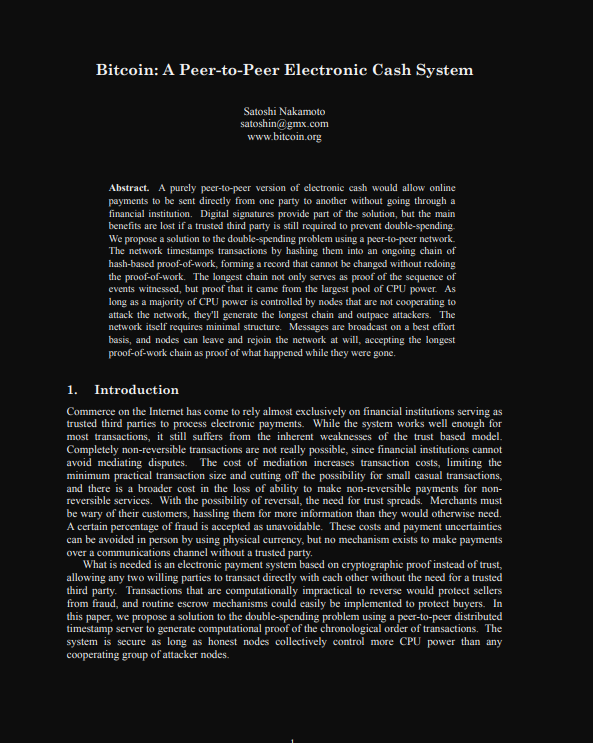
A 16-Year Satoshi-Era Whale Just Moved: How Many Bitcoin Does Satoshi Really Have?
Before Bitcoin existed, the U.S. government decided that strong encryption was a weapon.
In 1991 a man named Phil Zimmermann wrote a program called PGP and gave it away for free, so ordinary people, not just governments and banks, could send a message no one else could read. Soon after it spread beyond U.S. borders, the Customs Service opened a criminal investigation. The charge they were chasing: exporting munitions without a license. The munition was math.
The investigation lasted three years. Zimmermann's answer was perfect. He published PGP's entire source code as a book through MIT Press, because the government can restrict exporting a weapon, but it cannot restrict exporting a book. Code is speech. In early 1996 they dropped the case without filing a single charge.
That fight is why Bitcoin can exist. The right to run cryptographic software you control, to hold a key the state cannot pry open, was won by people like Zimmermann years before Satoshi wrote a line of code.
Self-custody is just encryption applied to your money. Same math. Same right. Same fight.
Hold a key no government can open, and you are standing exactly where he stood.


Memorial Day exists because a proposition was paid for.
The proposition was simple. A government can't tell a free person what they may own, where they may travel, who they may speak to, or with whom they may trade. People died holding this line. The cost was very real.
The line was paid for in blood. It has been kept for two centuries by paper. The paper is increasingly negotiable.
Your dollar can be debased without a vote. Your bank account can be frozen on a list you didn't know existed. Every layer between you and your money is a layer that can be coerced.
Bitcoin is the first asset that holds the line in code. Twenty-one million. Air-gapped. No senator can sign it away. No central banker can debase it. No court can reverse a confirmed block.
The men and women remembered today didn't die so you could trust an intermediary.
Bitcoin is a real way you can hold the line yourself.


The conditions that created Bitcoin are gone forever.
A pseudonymous creator. A fair launch. A period when nobody knew what it was and there was nothing to be gained by getting in early except belief.
That window closed in 2009. You can't manufacture a fair launch once everyone knows what one is worth.
Every coin since has been a derivative of the only one that mattered.