
Nayib Bukele, El Salvador, and Terrorist Gangs
The immensely popular president of El Salvador, Nayib Bukele, has garnered international attention for his successes in crime reduction and elimination of gang violence. A viral video features the first 2,000 gang members being ushered into the newly constructed prison, CECOT.
Some in the international community are clamoring for rights for jailed gang members. Others, though, are praising President Bukele, saying we need similar measures in the US and other countries. Newsweek ran an opinion piece by Gavin M. Wax, conservative political activist and president of the New York Young Republican Club, and Nathan E. Berger, vice president of the New York Young Republican Club.
In admiration of Bukele, and advocating an El Salvador-style criminal justice system, they wrote, “American justice must be fierce; it must scare the would-be thief into the pursuit of an honest life, and it must assure American citizens that their lives will not be upended.” Adding, “Bukele's spirit has shown that this model can succeed. We now need a champion to bring it home.”
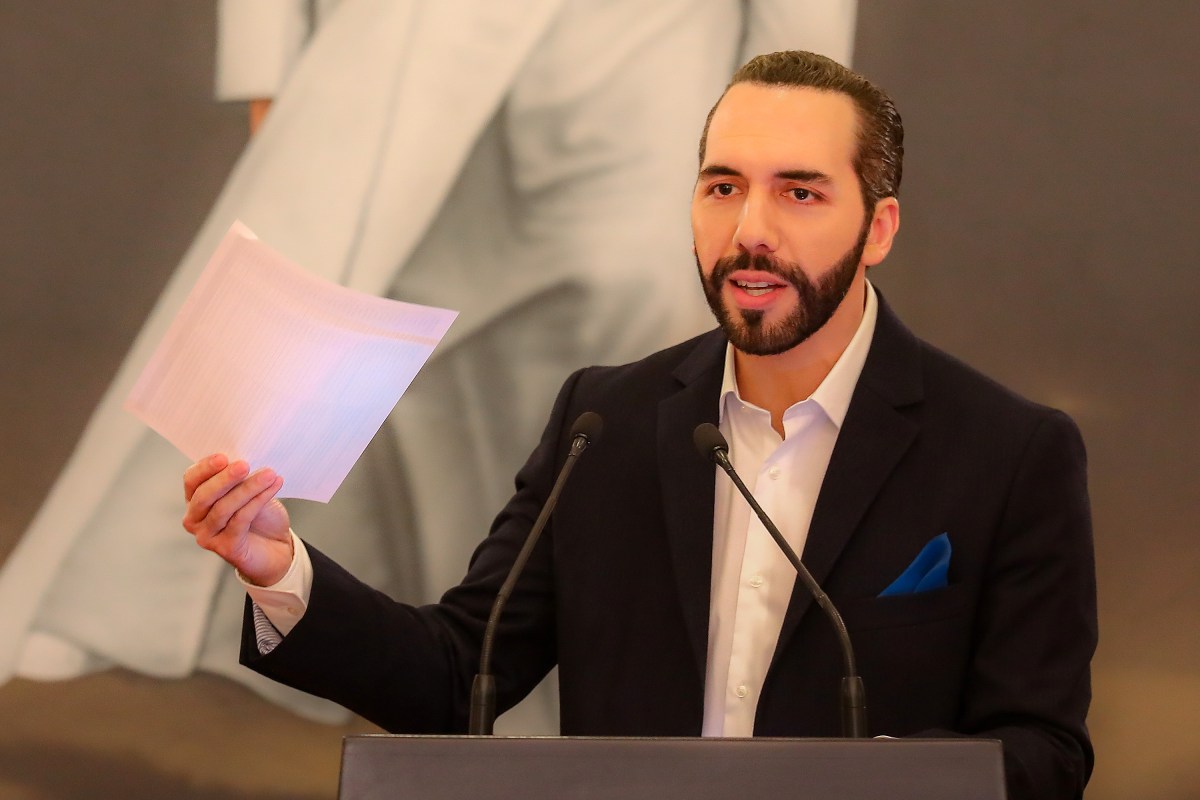 Sounds good, right? Not so fast though. The video of police corralling gang members went viral, but the writers have taken it out of context. Viewed by itself, a police crackdown jailing thousands could just as easily result in a program suppressing and terrorizing the poor – or any out-of-favor group – as has been the case in many countries, including in El Salvador’s own past.
That, of course, is not the case here. Bukele is wildly popular, with a 90% approval rating. So what is the difference between one crackdown and another? The difference between locking up violent gang members and a police state? The answer to that question lies in answering another, underlying question. Who benefits from the imprisonment? The greater population of the country? Or the financial elite and the government doing their bidding?
To explain Bukele’s success, we can put his anti-terror campaign into context. We can examine the question of who has benefited from eradication of gang violence.
To help us do that, let’s take a step back for a moment and consider several other videos out of El Salvador – videos showcasing measures taken before the appearance of the new prison. These videos can help put the current viral hype into a helpful perspective. (Author’s note: these videos are from my memory, so they are listed here in no particular order.)
First, there was a video of the legislature approving Bitcoin as legal tender in September of 2021, a year and a half ago. (I remember watching the live stream of the vote.) Prominent Bitcoiners like Samson Mow and Max Keiser followed the video of this historicalmoment with others promoting volcano bonds which fund the government’s endeavors based on bitcoin mining using sustainable, renewable energy from one ofthe country’s inactive volcanoes.
The law making Bitcoin legal tender, set the basis for vastly improving the economy. It set the basis for retiring the IMF debt. In case we need reminding, the IMF debt comes with strings attached and an interest rate that has been known to strangle economies of countries larger than El Salvador.
After setting the basis for a stronger, independent, sovereign economy, videos appeared:
-showing the construction of roads linking different parts of the country, especially along the coast, connecting world-famous surfing beaches, benefiting the tourist sector of the economy
-introducing the country to a new series of libraries-cum-community centers, or “Cubos” as they are called, in cities throughout the country – stocked with books and computers, some even with modern recording studios for the benefit of El Salvador’s youth.
-a tour of the new hospital in San Salvador, along with renovations of the country’s other hospitals. When Covid 19 broke out, the nation mobilized its forces, built not only the hospital, but equipped it with dozens of new beds for the ICU.
-showing the efficient waiting area used for anyone who wanted a vaccine, also in response to Covid
-a tour of San Salvador’s new pet hospital – large, modern, well-equipped and virtually free to the population.
-A video tour of San Salvador’s new, modern airport, complete with lactation rooms
-videos of the distribution of basic foodstuffs to any family in need
-videos of the distribution of tablets and computers to all school children in the public schools
-videos of Gabriela de Bukele’s work in the field of pre-natal and neo-natal care, as well as early education
-Several videos demonstrate the government’s dedication to economic development
These are some of the videos I remember. I’m sure we could find more. The point here is that while one video about the penal system clamping down on terrorists has gone viral, it cannot be understood outside the context of all programs being developed by Bukele’s government. Isolating that program makes it impossible to understand its popularity in El Salvador.
Applying any anti-terrorist program to other countries is dangerous. Unleashing an armed police force does not bring joy, hope, job opportunity and economic stability to a population. If we truly want to imitate Bukele’s model – and I hope we do – we need to implement all of it as it applies to conditions in our country.
Bitcoin was the starting point in El Salvador. It needs to be our starting point too.
None of El Salvador’s miracle would have been possible without Bitcoin – a decentralized economic model that allows everyone access to banking services, and offers financial sovereignty to individuals, to communities, to the entire country. Bitcoin is money beyond the reach of extortionist gangs like the Mara Salvatrucha, Barrio 18, and the IMF.
Sounds good, right? Not so fast though. The video of police corralling gang members went viral, but the writers have taken it out of context. Viewed by itself, a police crackdown jailing thousands could just as easily result in a program suppressing and terrorizing the poor – or any out-of-favor group – as has been the case in many countries, including in El Salvador’s own past.
That, of course, is not the case here. Bukele is wildly popular, with a 90% approval rating. So what is the difference between one crackdown and another? The difference between locking up violent gang members and a police state? The answer to that question lies in answering another, underlying question. Who benefits from the imprisonment? The greater population of the country? Or the financial elite and the government doing their bidding?
To explain Bukele’s success, we can put his anti-terror campaign into context. We can examine the question of who has benefited from eradication of gang violence.
To help us do that, let’s take a step back for a moment and consider several other videos out of El Salvador – videos showcasing measures taken before the appearance of the new prison. These videos can help put the current viral hype into a helpful perspective. (Author’s note: these videos are from my memory, so they are listed here in no particular order.)
First, there was a video of the legislature approving Bitcoin as legal tender in September of 2021, a year and a half ago. (I remember watching the live stream of the vote.) Prominent Bitcoiners like Samson Mow and Max Keiser followed the video of this historicalmoment with others promoting volcano bonds which fund the government’s endeavors based on bitcoin mining using sustainable, renewable energy from one ofthe country’s inactive volcanoes.
The law making Bitcoin legal tender, set the basis for vastly improving the economy. It set the basis for retiring the IMF debt. In case we need reminding, the IMF debt comes with strings attached and an interest rate that has been known to strangle economies of countries larger than El Salvador.
After setting the basis for a stronger, independent, sovereign economy, videos appeared:
-showing the construction of roads linking different parts of the country, especially along the coast, connecting world-famous surfing beaches, benefiting the tourist sector of the economy
-introducing the country to a new series of libraries-cum-community centers, or “Cubos” as they are called, in cities throughout the country – stocked with books and computers, some even with modern recording studios for the benefit of El Salvador’s youth.
-a tour of the new hospital in San Salvador, along with renovations of the country’s other hospitals. When Covid 19 broke out, the nation mobilized its forces, built not only the hospital, but equipped it with dozens of new beds for the ICU.
-showing the efficient waiting area used for anyone who wanted a vaccine, also in response to Covid
-a tour of San Salvador’s new pet hospital – large, modern, well-equipped and virtually free to the population.
-A video tour of San Salvador’s new, modern airport, complete with lactation rooms
-videos of the distribution of basic foodstuffs to any family in need
-videos of the distribution of tablets and computers to all school children in the public schools
-videos of Gabriela de Bukele’s work in the field of pre-natal and neo-natal care, as well as early education
-Several videos demonstrate the government’s dedication to economic development
These are some of the videos I remember. I’m sure we could find more. The point here is that while one video about the penal system clamping down on terrorists has gone viral, it cannot be understood outside the context of all programs being developed by Bukele’s government. Isolating that program makes it impossible to understand its popularity in El Salvador.
Applying any anti-terrorist program to other countries is dangerous. Unleashing an armed police force does not bring joy, hope, job opportunity and economic stability to a population. If we truly want to imitate Bukele’s model – and I hope we do – we need to implement all of it as it applies to conditions in our country.
Bitcoin was the starting point in El Salvador. It needs to be our starting point too.
None of El Salvador’s miracle would have been possible without Bitcoin – a decentralized economic model that allows everyone access to banking services, and offers financial sovereignty to individuals, to communities, to the entire country. Bitcoin is money beyond the reach of extortionist gangs like the Mara Salvatrucha, Barrio 18, and the IMF.
Newsweek
We Need an American Bukele
The point of Bukele's crackdown is clear: Join a gang, go to prison.