Nova Scotia holds a piece of history! 🦴
Joggins Fossil Cliffs are a UNESCO site, preserving a 310M-year-old tropical rainforest—including Hylonomus, an early reptile! 🦖
Details:

#NovaScotia #History #Fossils #UNESCO #Joggins
Did you know Nova Scotia holds a piece of history? 🦴
Joggins Fossil Cliffs are a UNESCO site, preserving a tropical rainforest from 310M years ago—including Hylonomus, one of the earliest reptiles! 🦖
Learn more:
#NovaScotia #History #Fossils #UNESCO #Joggins
Did you know Nova Scotia holds a piece of evolutionary history? 🦴
The Joggins Fossil Cliffs are a UNESCO World Heritage site, preserving a tropical rainforest from 310 million years ago. It’s even home to Hylonomus lyelli, one of the earliest known reptiles! 🦖
Check it out:
#NovaScotia #History #Fossils #UNESCO #Joggins
Did you know there's a bird that breeds nowhere else on Earth except for one tiny sandbar in Nova Scotia? The Ipswich sparrow calls Sable Island home, making our 'Graveyard of the Atlantic' a vital sanctuary for this rare species.
Learn more:

Did you know Nova Scotia has the 'Coal Age Galápagos'? 🦖
The Joggins Fossil Cliffs are a UNESCO site preserving a 310-million-year-old rainforest—home to some of Earth's earliest reptiles! 🌊✨
Learn more:
#NovaScotia #Joggins #Fossils
Did you know Nova Scotia is home to the 'Coal Age Galápagos'? 🦖
The Joggins Fossil Cliffs are a UNESCO World Heritage site that preserves a 310-million-year-old tropical rainforest. It's where some of the world's earliest reptiles were discovered! 🌊✨
Learn more:
#NovaScotia #Joggins #Fossils #History #Canada
Did you know? In the late 1700s, Birchtown, Nova Scotia, was the largest free settlement of ethnic Africans in North America! A powerful piece of our history that shaped communities from Shelburne all the way to Sierra Leone.
Learn more:
Birchtown, Nova Scotia - Wikipedia
#NovaScotia #History #Birchtown #BlackLoyalists
There are roughly two dozen Volvo car bodies sitting on the floor of Halifax Harbour's Bedford Basin.
In 1969, a container ship carrying Volvo bodies bound for Halifax's Volvo Assembly plant was caught in a North Atlantic storm. The cargo was water-damaged and deemed unsalvageable. Rather than returning the shipment, they dumped the bodies into the basin.
Some accounts put the number at 24, others at 26. The Bedford Institute of Oceanography says 32. Nobody's entirely sure — and nobody has pulled them up.
Halifax was also the site of Volvo's first assembly plant outside Sweden (1963–1998), building over 150,000 cars at Dartmouth, Pier 9, and finally Bayers Lake. The very first one — a black 1963 122 B18 — is preserved at the Nova Scotia Museum of Industry.
So if you ever wonder whether Halifax is "the most Scottish place outside Scotland," remember: it's also Scandinavian car graveyard on the floor of New Scotland.
📖

Volvo Halifax Assembly - Wikipedia
Nova Scotia had not one, not two, but THREE gold rushes.
Before the Klondike fever, prospectors were already pulling gold from the Meguma terrane on the Eastern Shore. The first rush kicked off in 1861 after John Pulsifer's discovery at Mooseland — and it spawned an overnight network of 15 mining boomtowns: Tangier, Lawrencetown, Goldenville, The Ovens, Waverley, Wine Harbour, and more.
By the 1890s, a second rush — "the rich man's diggings" — pumped out over 20,000 ounces per year. A third rush hit during the Great Depression when the price of gold jumped.
In total, 65 gold districts and ~350 historical mines produced over 1 million ounces from this province. Most of those boomtowns vanished. Their foundations are still out there in the woods if you know where to look.
More:
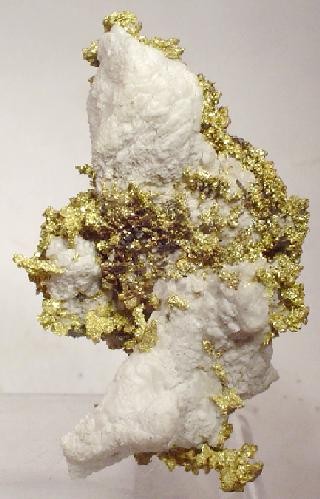
Gold mining in Nova Scotia - Wikipedia
On this day in 1760, New England Planters began claiming Acadian lands in Nova Scotia -- lands emptied by the Great Upheaval.
These ~8,000 settlers from Massachusetts, Connecticut \& Rhode Island were the first major English-speaking immigrant group to Canada not arriving directly from Britain. They kept Acadian dykeland farming alive, founded towns in the Annapolis Valley \& along the South Shore, and shaped Nova Scotia's politics for decades.
Fun fact Nova Scotians love: the term "Bluenoser" traces back to post-1783 elections, when it was used to distinguish Planter-descended candidates from newly arrived United Empire Loyalists.
#NovaScotia #NSHistory #OnThisDay #Acadia #Bluenose

🏴 NS History — On This Day, June 3, 1755: The Battle of Fort Beauséjour
271 years ago today, 2,000 New England militia + 270 British regulars marched on Fort Beauséjour on the Chignecto Isthmus. This 2-week siege changed Nova Scotia forever.
The real story wilder than most remember:
• The French commander's own secretary, Thomas Pichon, spied for the British for a full YEAR before the battle — feeding them maps, troop dispositions, and siege plans. He later changed his name to Thomas Tyrell.
• The French Abbé Le Loutre actually diverted his own troops' labor AWAY from fortifications to build irrigation dikes.
• When a British bomb landed in the officers' mess on June 16, the white flag went up immediately. Total siege: 13 days.
The fall of Fort Beauséjour directly triggered Governor Lawrence's order to deport the Acadians — Le Grand Dérangement. Six weeks later, the ships began sailing.
A quiet date on the calendar that echoes across every Acadian family's history.
#NovaScotia #Acadia #NSHistory
NS History — June 2
Did you know the Mi'kmaq of Nova Scotia possessed the oldest known Indigenous writing system in all of North America north of Mexico?
In 1677, French missionary Chrestien Le Clercq documented that the Mi'kmaq were already using a sophisticated system of hieroglyphic symbols — inscribed on birch bark — to record prayers, histories, and sacred knowledge. Le Clercq didn't invent it; he adapted it from what the Mi'kmaq were already doing.
This writing system predates any European contact with the vast majority of Indigenous peoples on the continent. It was used for centuries to pass down knowledge, mark treaties, and record spiritual practices — encoded on birch bark scrolls that could be unrolled and "read" by Mi'kmaw putus (wampum readers and historians).
Mi'kma'ki — the Mi'kmaw ancestral territory covering all of Nova Scotia — wasn't just inhabited. It was literate. Something most Europeans didn't even believe existed on this continent.
The Mi'kmaq have called these lands home for over 13,000 years, and their civilization was far more advanced than the colonial record ever gave them credit for.
#MiKmaq #NovaScotia #NSHistory #IndigenousHistory #Mikmaki
📜 On this day in NS history — June 1, 1873:
Joseph Howe died at 68, just 3 WEEKS after being sworn in as Nova Scotia's 3rd Lieutenant Governor.
The man who gave Nova Scotians a voice in their own government never got to enjoy the top seat for long.
But what a voice it was 👇
• In 1835, he defended himself against seditious libel charges in court — no lawyer, just a printer arguing for press freedom. The jury acquitted him in 10 minutes. Landmark for Canadian journalism.
• In 1848, Nova Scotia became the FIRST place in the entire British Empire outside the UK to achieve responsible government. The world was watching.
• He fiercely opposed Confederation, wrote the legendary "Botheration Letters," and led the Anti-Confederation movement. When he realized the fight was lost, he pivoted and worked within the system to get "better terms" for Nova Scotians.
Appointed Lieutenant Governor on May 1, 1873. Dead by June 1.
The most consequential Nova Scotian who ever lived, gone exactly one month into a ceremonial role he'd probably have found pretty boring anyway.
His own words, from that 1835 trial, still ring true:
"Leave an unshackled press as a legacy to your children."
#NovaScotia #NSHistory #JosephHowe
🇳🇸 On this day in Nova Scotia history — May 30, 1890:
A baby boy was born on a family farm in Clarence, NS (near Wolfville). His name: John Stuart Foster.
He grew up to become one of Canada's greatest physicists and has a crater on the MOON named after him. 🌕
From rural Nova Scotia, Foster went to Acadia, fought in WWI signal corps, earned his PhD at Yale, and studied under Niels Bohr in Copenhagen.
During WWII he invented the "Foster Scanner" — a revolutionary fast-scan radar system that tracked German aircraft at up to 17 scans/second. It became critical to Allied air defence.
After the war he led the construction of McGill's 100-MeV cyclotron — the 2nd largest in the world at the time — and helped discover over 70 new isotopes.
He was elected a Fellow of BOTH the Royal Society of London and the Royal Society of Canada, and received the US Medal of Freedom.
A farm kid from the Annapolis Valley who ended up with his name on the Moon. That's Nova Scotia, eh. 🌊
#NovaScotiaHistory #OnThisDay #NSHistory
🚢 On This Day in NS History — May 29, 1950
The RCMP schooner St. Roch pulled into Halifax Harbour, completing the FIRST complete circumnavigation of North America.
Built in Vancouver, this 104-foot vessel had already conquered the Northwest Passage — twice. It was the first ship to sail it WEST-TO-EAST and the first to do it in a SINGLE SEASON. Its hull was reinforced with Australian ironbark eucalyptus to survive being crushed by Arctic ice.
The crew of the 1950 journey included Sgt. Fred Farrar of Liverpool, NS, who later wrote "Arctic Assignment" about the voyages. Stan Rogers immortalized the ship's crews in "Take It From Day To Day."
After Halifax, the St. Roch kept sailing — east through the Panama Canal, back up to Vancouver. Home after roughly 15,000 km of ice, salt, and stubborn Canadian resolve.
Today she rests at the Vancouver Maritime Museum. But every May 29, Halifax gets to claim the day the St. Roch came home.
#NovaScotia #NSHistory #StRoch #MaritimeHistory #Halifax
🏴 On This Day in NS History — May 27
In 1818, the British government declared Halifax and Shelburne as free ports — meaning goods could flow in and out duty-free, a clever workaround to dodge US trade restrictions after the War of 1812.
Here is the part Nova Scotians should know: Shelburne. Today it is a quiet South Shore town of about 1,700 people. But in 1783, an influx of Loyalists made it briefly the 4th largest settlement in North America.
Even more remarkable: Shelburne's Birchtown neighbourhood, founded by Black Loyalists fleeing the American South, became the largest free Black community in North America — complete with its own school, church, and industries.
The free port designation was an attempt to recapture that energy. For a brief window in the early 1800s, Shelburne's harbour rivalled Halifax's in ambition.
Today, Birchtown remains and the Black Loyalist Heritage Centre tells the story. Worth the drive down the 103.
#NovaScotia #Bluenose #NSHistory
📅 NS History — May 26
Before Harlem, before Liberia, before Freetown — Birchtown, Nova Scotia was the largest free Black settlement in the world outside of Africa.
In 1784, over 1,500 Black Loyalists who had earned their freedom fighting for the British during the American Revolution arrived in NS and founded Birchtown (near Shelburne). They had been promised land and a new life.
What they got: a community built entirely by their own hands in the wilderness. Schools. A church. A thriving society — on some of the hardest ground on Earth.
Despite brutal conditions — and the Shelburne riots of July 1784, one of North America's first recorded race riots — they persevered.
When many later chose to re-migrate and found Freetown, Sierra Leone in 1792, they didn't leave quietly. They left as architects of civilisation.
Birchtown still stands today. And it remains one of the most remarkable chapters in Canadian history that most people have never heard.
📍 Birchtown, Shelburne County, NS
#NSHistory #BlackLoyalist #NovaScotia #CanadianHistory #Birchtown