Default avatar
Drop Site News (RSS/Atom feed)
npub1yguk...gzd3
RSS/Atom feed of Drop Site News More feeds can be found in my following list
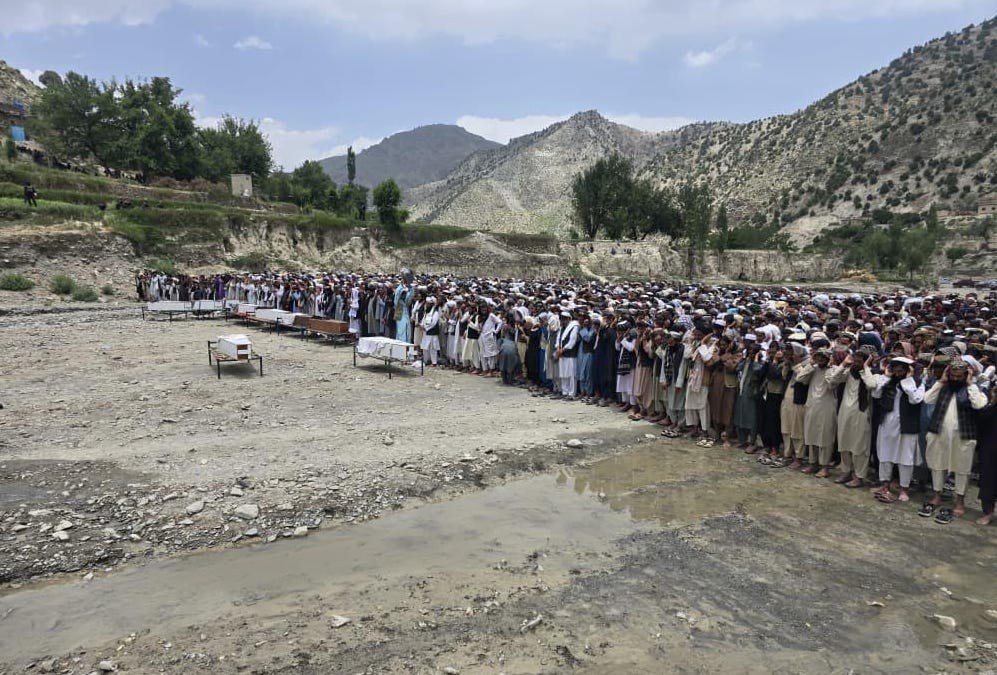
Peace Abroad, War Next Door: Pakistani Airstrikes Devastate Afghan Civilians Funeral for civilian victims of Pakistani airstrikes held in Khost on June 11. Photo: Mohammad Zaman Nazari. In the village of Mana, located in Afghanistan’s Khost province, close to the Pakistani border, men who normally pass their days farming instead spent the morning of June 10 digging fresh graves for their murdered relatives and neighbors. The night before, shortly after midnight, Pakistani drones and fighter jets flattened the neighboring homes of two brothers, Siraj and Babri. Nine members of a single family were killed, most of them women and children. The two brothers’ homes stood beside one another in Mana. Neighbors worked through the night dragging the dead and the wounded out of the debris. Across the two households, ten more people were wounded, several of them in critical condition. The survivors were rushed first to a small district hospital, before being transferred to the largest provincial hospital in Khost. A doctor at the hospital, who asked not to be named because medical staff have been warned against speaking to journalists, told Drop Site that 11 bodies were brought in after the strike, including women, children, and men—every one of them a civilian. Among the wounded survivors were three children. These are not isolated tragedies—they are the latest episodes in a campaign that Drop Site has been documenting along the border since the winter, one in which Pakistan, while presenting itself to Washington and Tehran as an indispensable peacemaker, has bombed Afghan villages, hospitals, schools and markets, emptied entire districts along the border, and blockaded roads until clinics ran out of medicine. By the United Nations’ own conservative count, Pakistani operations had already killed hundreds of Afghan civilians this year before the June 10 strikes. What plays in Islamabad’s conference halls as “counterterrorism operations,” appears, from Khost and Paktika, like indiscriminate punishment of Afghans living along the border demarcation line. By April 1, the United Nations Assistance Mission in Afghanistan (UNAMA) had verified at least 372 civilian deaths from Pakistani operations in Afghanistan, though the actual death toll in an area largely sealed off to independent monitors is likely higher. The attack on Mana was not the only deadly incident in the region that night. Pakistani aircraft also struck a series of buildings in neighboring Paktika province. Taken together, the bombardment of Khost and Paktika killed or wounded at least 23 civilians in a matter of hours, locals said. By the following morning in Mana the bodies had been washed, wrapped, and carried into the open for a mass funeral. At the ceremony, hundreds gathered under chants of “Allahu Akbar,” as they prepared to bury the victims, the majority of whom were children and women. The crowd was furious. Mourners called for international human rights organizations to open an impartial investigation into the killings and demanded that those responsible be brought to justice. Noor Badshah Khan, a tribal elder from the area, addressed the crowd and blasted Pakistan for waging a merciless campaign against ordinary Afghans. “When will these crimes stop? When will they stop slaughtering the children of this soil?” he asked. The attack on Paktika killed three more children: 10-year-old Nazam Khan, his younger sister Khadeja, and their cousin Mozdalafa. The three had spent the evening counting the stars and bickering over the number before they drifted off to sleep in the open air, family members told Drop Site. The blast destroyed the house, killed the family’s livestock, and hurled the children’s father, Sher Mast, some 60 feet through the air. He and his wife survived the attack that killed their children, though both were badly wounded. A neighbor who reached the wreckage within half an hour gathered what remained of the three children by torchlight. The next day they were lowered into three small graves dug side by side, the eldest boy’s shroud still wet with blood. [Subscribe now][1] ## **The War After the War** Along this stretch of border, the drones that fly overhead day and night have their own nickname. Villagers call them “bangana,” the Pashto word for a buzzing wasp. For the children of Khost and Paktika, that sound is now woven into their daily lives. War has become a tragic constant of life in the region. The same valleys were bombed during the Soviet occupation of Afghanistan during the 1980s, and again during the two-decade long U.S.-led war and occupation. Now, the hostile aircraft overhead are operated by a Pakistani regime that enjoys close ties with Washington. The drones inflict a particular type of psychological torment on residents of the region. Locals describe a feeling of helplessness—they can hear the machines, but never reach them, and their own government has no capacity to to stop them. The grief inflicted by the recent attacks in Khost and Paktika has eroded long-standing cultural traditions in the area. By custom, after a death, neighbors cook for a bereaved family for three days. This time, villagers said, no one could bring themselves to eat after the massacres. Without a responsive government, or the attention of international media, many Afghans have turned to social media in a desperate attempt to inform the world of their plight and demand accountability. Afghans in Khost prepare to bury victims of Pakistani strikes on June 10. Photo: Mohammad Zaman Nazari. In the hours after the strikes, Afghans filled online platforms with appeals to the United Nations and the international community to hold the Pakistani military to account, describing the bombardment as a direct assault on Afghanistan’s national sovereignty. While Pakistan has justified its attacks as a response to terrorist attacks on its soil blamed on the Tehrik-i-Taliban Pakistan (TTP), locals say that the justifications are an attempt to mask the real motives for the ongoing attacks on a border zone that has long been disputed between the two countries. “This is indeed a continuation of the War on Terror in Afghanistan,” said Mohammad Zaher, a local from Khost. “It was clear that it would not stop after the first drones reappeared after the U.S. withdrawal.” ## **“Precise and Calibrated”** Islamabad tells a different story about its attacks. Pakistan’s information minister, Attaullah Tarar, [described the operation][2] as “precise and calibrated,” claiming the Air Force had destroyed four militant targets and killed 26 TTP fighters. The gulf between the reported casualty figures, with Kabul recording 13 civilian dead, and Pakistan claims that double that number were killed, all terrorists, has by now become a familiar feature of the information war that accompanies the armed conflict. Residents from the region who spoke to Drop Site rejected the Pakistani account of the strikes, stating that none of the victims had any ties to armed groups. Pakistan’s escalating attacks on its neighbor come as the country is embracing a new international identity as a peacemaker mediating the war between Iran and the United States. Field Marshall Asim Munir, the Pakistani military’s chief of staff, has emerged as a close ally of President Donald Trump, who has praised Munir as an “exceptional human being,” while ignoring his brutal crackdowns on dissent inside Pakistan, as well as his escalating killings of Afghan civilians. Trump’s praise for Munir as a mediator stands in stark contrast to the brutal reality of Pakistan’s military campaign against its neighbor. Islamabad declared “open war” on the Afghan Taliban government in February after a suicide attack on a Shia mosque in Islamabad blamed on the TTP. Since that time, Pakistani airstrikes have shifted from rural areas on the border to attacks on Kabul itself, including the [bombing][3] of a rehabilitation clinic in the heart of the capital that killed hundreds in March. Residents described the attacks on roads and local transport infrastructure as a de facto siege—depriving markets and clinics of basic goods like flour and medicine. Locals from the region told Drop Site they believed the aim of Pakistani operations was to depopulate the frontier and carve out a buffer zone, with the terror wrought by the recent bombings in Khost and Paktika helping achieve the same goal by encouraging flight from the area. While the newest phase of the war between the two neighbors has been justified as a counterterrorism operation, Afghans note that Pakistani animosity towards Kabul has continued across many different regimes over the decades—with nationalist, communist, democratic, and Islamist governments all targeted by Islamabad in a bid to ensure that its neighbor remains too weak and unstable to assert its own territorial claims. “This is an endless cycle and you don’t need any educated analyst, military expert or historian to understand it,” said Ali Khan, a resident of Kabul and former soldier of the U.S.-backed Afghan army that collapsed in 2021. “You just need to talk to the people who have been affected by these policies for decades.” Pakistan’s confrontation with Afghans is increasingly taking place on both sides of the border. After years of hosting a large refugee population, hundreds of thousands of Afghans have recently been deported from Pakistan back to Afghanistan—in many cases placing them back in the same border villages and provinces that are currently under attack by Pakistani drones and aircraft. “Afghans are a population to be managed, leveraged, and disposed of, never quite people”, said Ali Khan. Because of his own affiliation to the former army of the Afghan Republic, he himself fled to Pakistan, and then Iran during the last four years, before he ultimately returned home to Kabul earlier this year. “It’s better for me to hide in Kabul, see my family and live with some level of dignity instead of being beaten and deported by our neighboring countries,” he said. *Afghanistan-based journalists Fazelminallah Qazizai and Mohammad Zaman Nazari contributed to this report.* [Subscribe now][4] [Leave a comment][5] [1]: [2]: [3]: [4]: [5]:
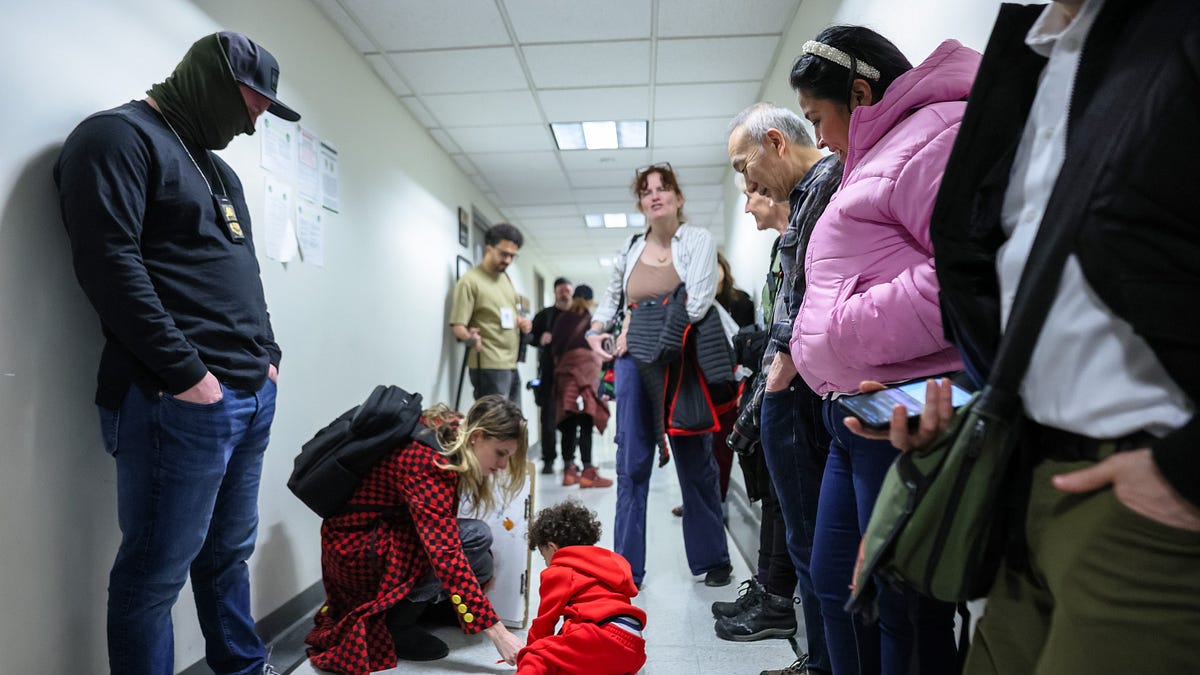
Over 425,000 Kids in U.S. Face Deportation Hearings Without Lawyers As a reader-funded independent news outlet, we operate free from the influence of governments, advertisers, and corporate backers. This is essential to our mission: to report on what matters most, beholden only to the truth. In that spirit, we made a commitment to ensure that our journalism is free for everyone, not locked behind a paywall. But that means we rely on the voluntary support of our community of readers. Please consider making a[ tax-deductible donation to support our work today][1]. [Subscribe now][2] A child plays on the floor in the halls of immigration court at the Jacob K. Javits Federal Building in New York City, on March 05, 2026. Photo by Michael M. Santiago/Getty Images. In April, a 10-year-old Venezuelan boy named Wilfredo Hoyos-Gomez appeared in immigration court in Texas, unaccompanied and without a lawyer. His mother, Nexoli Anyis Gomez Bracho, was arrested during a traffic stop and has been in ICE custody in Houston since December. Wilfredo entered the U.S. three years ago with his mother. She has a work permit, and their asylum cases are pending. They have no other family in the U.S., and Gomez’s former employer has been looking after Wilfredo while he faces deportation hearings alone. “I was nervous because it was my first time going to a court,” Wilfredo told Univision after his hearing. The DHS is seeking to deport him to Ecuador, a country where he knows no one and has never been. Wilfredo is one of hundreds of thousands of children facing pending immigration cases without legal representation nationwide, according to federal immigration data. His case offers a rare glimpse into a system operating outside of public scrutiny. While technically open by law, immigration hearings for children are effectively blocked from public access. A new analysis of federal immigration data, conducted by the Vera Institute of Justice in response to questions from Drop Site News, shows that children like Hoyos-Gomez are not an anomaly but part of a wider pattern. More than half of all children facing pending immigration cases are doing so without legal representation, according to data from the Department of Justice. The analysis shows that legal representation appears to be one of the most important factors shaping children’s outcomes in immigration court. Of 751,861 children with pending removal cases, 57%—or 425,093 children—lacked legal representation, according to the most recent data. This rate is slightly higher than that of adults, 54% of whom are unrepresented in immigration court in pending cases. Nearly two thirds of children’s cases that are still pending were initiated by the federal government in 2023, under the Biden administration. The gap widens in completed cases. Last year, 64% of children’s completed immigration cases went forward without legal representation. The data, from the DOJ’s Executive Office for Immigration Review (EOIR), indicates that children under the age of 18 are increasingly appearing in immigration court without lawyers at a time when deportation orders are surging as the Trump administration attempts to deport more than a million people annually and immigration relief is becoming harder to obtain. The Vera Institute analysis could not determine how many of these children are unaccompanied, because EOIR data does not distinguish between accompanied and unaccompanied children. Former judges, attorneys, and advocates interviewed by Drop Site describe an immigration court system under mounting pressure to move cases quickly, straining due process protections for the most vulnerable. “The scale is alarming,” said Neil Agarwal, the principal data scientist who led the analysis at the Vera Institute of Justice. These figures reflect the administration’s coordinated effort to pursue its “mass deportation scheme,” he added. The Justice Department and ICE did not respond to requests for comment. In an emailed statement, a spokesperson with the Department of Homeland Security claimed that ICE does not separate families. “Parents are asked if they want to be removed with their children or ICE will place the children with a safe person the parent designates,” a DHS spokesperson said, adding that the U.S. encourages voluntary departures and if people don’t choose to do so they will be arrested and deported. “The United States is offering illegal aliens $2,600 and a free flight to self-deport now.” “Any possible way to be harsh and unforgiving is being utilized by the government at this point,” said former immigration judge Dana Leigh Marks, who presided over cases for more than three decades in San Francisco. “It makes me ashamed.” “I don’t know if I could remain on the bench today…because my hands would be tied,” she said. “I think there was a very small amount of due process before and there was more ability of immigration judges to try to find a way to craft a reasonable solution for children in the court,” she added, “and now it’s non-existent.” ## **A Clear Pattern ** Last year, 7% of children with an attorney in completed cases were allowed to stay in the country with some form of legal relief, either by being granted asylum or some other federal protection, including a change in status or cancellation of removal, compared with less than 1% of children without legal representation. The pattern has continued into 2026. So far this year, 3% of represented children have avoided deportation and received some form of protection, compared with less than 1% of those without lawyers. This year, 25% of represented children’s cases resulted in an outcome allowing them to remain in the country without protections such as asylum, compared with 11% of unrepresented children. Meanwhile, 73% of represented children were either deported or opted for voluntary departure, versus 89% of unrepresented children. Over the past two years, final court decisions that allow children to remain in the United States have declined, while removal orders have increased. Tania Cohen, legal director of the New York-based Safe Passage Project, a nonprofit organization that provides free legal representation to migrant and refugee children facing deportation, said she has seen more migrant children heading to hearings alone after parents were detained or deported. “It’s alarming and unsurprising,” said Cohen. “I have seen an uptick of youth seeking representation who entered with a parent, but now that parent has been deported or is in detention.” The youngest child the group has recently represented was just an infant. “We are concerned that the immigration court system is speeding up cases at the expense of due process,” said Jennifer Podkul, chief of global policy and advocacy at Kids in Need of Defense (KIND), a nongovernmental organization providing free legal counsel to unaccompanied refugee and migrant children. The true number of children navigating immigration court may be even higher. Roughly 11% of people in the EOIR dataset lacked birthdate information and could not be categorized by age, meaning some children may not have been included in this analysis. ## **Hearings Behind Closed Doors** Because public access to minor immigration hearings is restricted, judges and legal aid organizations are among the few sources of information about these proceedings. “An immigration court proceeding involving an unrepresented two or three year old can be exactly as nonsensical as it sounds,” said Jason Boyd, the vice president of U.S. federal policy and an attorney at KIND. “The hearing may conclude and a child doesn’t comprehend what just happened.” For five years, former immigration judge Elizabeth Young presided over thousands of cases on the juvenile docket in San Francisco. Young said she vividly remembered a case involving a four-year-old girl with her father. She had fallen asleep in her father’s arms, exhausted in the middle of a noisy courtroom at the beginning of the hearing. As Young began to read out names, she looked to the government attorney to introduce themselves, and saw they were silently weeping. She decided to grant the family a continuance, or extra time, to prepare for a case and secure counsel. Last year when KIND’s Podkul was in a courtroom observing the juvenile docket, there was a child she recalled “running around a tiny car, zoom-zooming on the floor,” she said. “They’re treating these kids as if it’s a regular case, like they’re an adult.” “Just the other day, one of our colleagues had to hold a baby in her arms that she was a lawyer for,” Podkul told Drop Site. ## **Violations of Due Process** Attorneys and former judges interviewed by Drop Site say immigration courts can be difficult for adults to navigate, let alone children. “This is a due process crisis,” said Boyd. ”It’s virtually impossible for an unaccompanied child to navigate the complex and adversarial U.S. immigration system without an attorney at their side, federal data makes that very clear.” In the past, unaccompanied children were more likely to receive extra time to prepare their cases, often two to three months, according to KIND. In recent months, they’ve observed continuances no longer than two to three weeks, which is insufficient time, Boyd said. Legal aid and advocacy groups and former judges told Drop Site that due process is being challenged under the Trump administration by “mega masters,” or mass hearings with multiple cases involving children and adults being heard back to back. There are sometimes about 100 people scheduled for a morning, Cohen said. Marks, the former immigration judge, says these hearings are detrimental for children. “They should have a judge who is able to spend as much time as needed explaining things, making the child feel comfortable enough to be able to tell their story, giving enough time for the judge to be able to assess whether the child is suffering from post-traumatic stress or some of the effects of a dangerous journey to the United States,” she said. Immigration judges are also working under pressure to move quickly through cases—not only from their supervisors but also from attorneys who appear for the Department of Homeland Security in court, Marks said. “There’s just a push to get the cases done,” said Young, and the administration has made it clear “they want it done in a way that results in a lot of deportations.” Boyd observed another “disturbing” trend with judges routinely “ordering the removal of unaccompanied children” who had already been granted special immigrant juvenile status, a form of protection guaranteed by Congress for children who experienced parental abuse or abandonment. “By judges ordering those kids removed from the United States, potentially to the very abuse that they fled,” he said. Over the last year the Trump administration has reduced the number of immigration judges [by 25%][3]. “It feels like there is no due process,” Cohen said. “Judges are being fired for following the law, and then being fired if they do not take enough of an anti-immigrant stance in their decision making.” ## Disruption to Legal Aid In February 2025, the Trump administration issued a “stop-work” [order][4] to legal service providers such as KIND that are funded by the Department of Health and Human Services. That order disrupted support for nearly 26,000 children before it was [rescinded][5] three days later. The following month, HHS abruptly [terminated][6] major federal grants that supported legal representation for unaccompanied minors. A federal judge soon [ordered][7] the administration to restore these funds, but legal aid organizations say the funds have not been fully restored. They are now being provided in three month increments while the government appeals the case. KIND, which [relied on federal funding][8] to cover 68% of its budget to represent more than 4,000 unaccompanied children, has [reduced its staff][9] to work within a strained budget. The organization is currently operating under these three month increments, according to Podkul. “As an organization that’s trying to hire attorneys into representation for children, that’s really hard to do at three month increments,” Podkul said. “You can’t say to a kid, well I can help you now, but I don’t know if I’m going to be here in 89 days.” While there are laws in place to offer protection to children in these cases, the impact of these new policies reshaping the immigration system will be felt for years to come, according to legal aid service providers. “We have laws that Congress passed that provide an avenue for relief and this administration is trying to find all the ways to cut off those avenues,” Cohen added, “I think that it’s a huge miscarriage of justice.” [Leave a comment][10] [Share][11] [1]: [2]: [3]: https://www.npr.org/2026/02/23/g-s1-110911/trump-immigration-judges-dismissals-numbers [4]: [5]: https://immigrantjustice.org/press-release/update-trump-administration-rescinds-stop-work-order-that-halted-legal-services-for-unaccompanied-immigrant-children/ [6]: https://www.nytimes.com/2025/03/21/us/migrant-children-legal-representation-funding.html [7]: https://www.npr.org/2025/04/02/nx-s1-5348831/judge-trump-administration-legal-aid-to-migrant-children [8]: [9]: [10]: [11]:
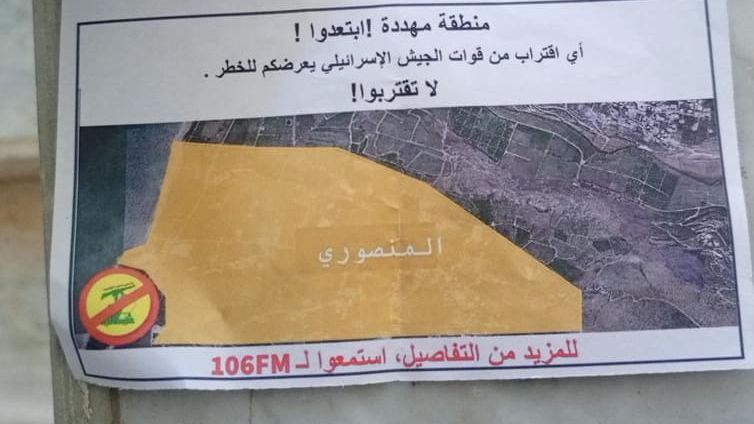
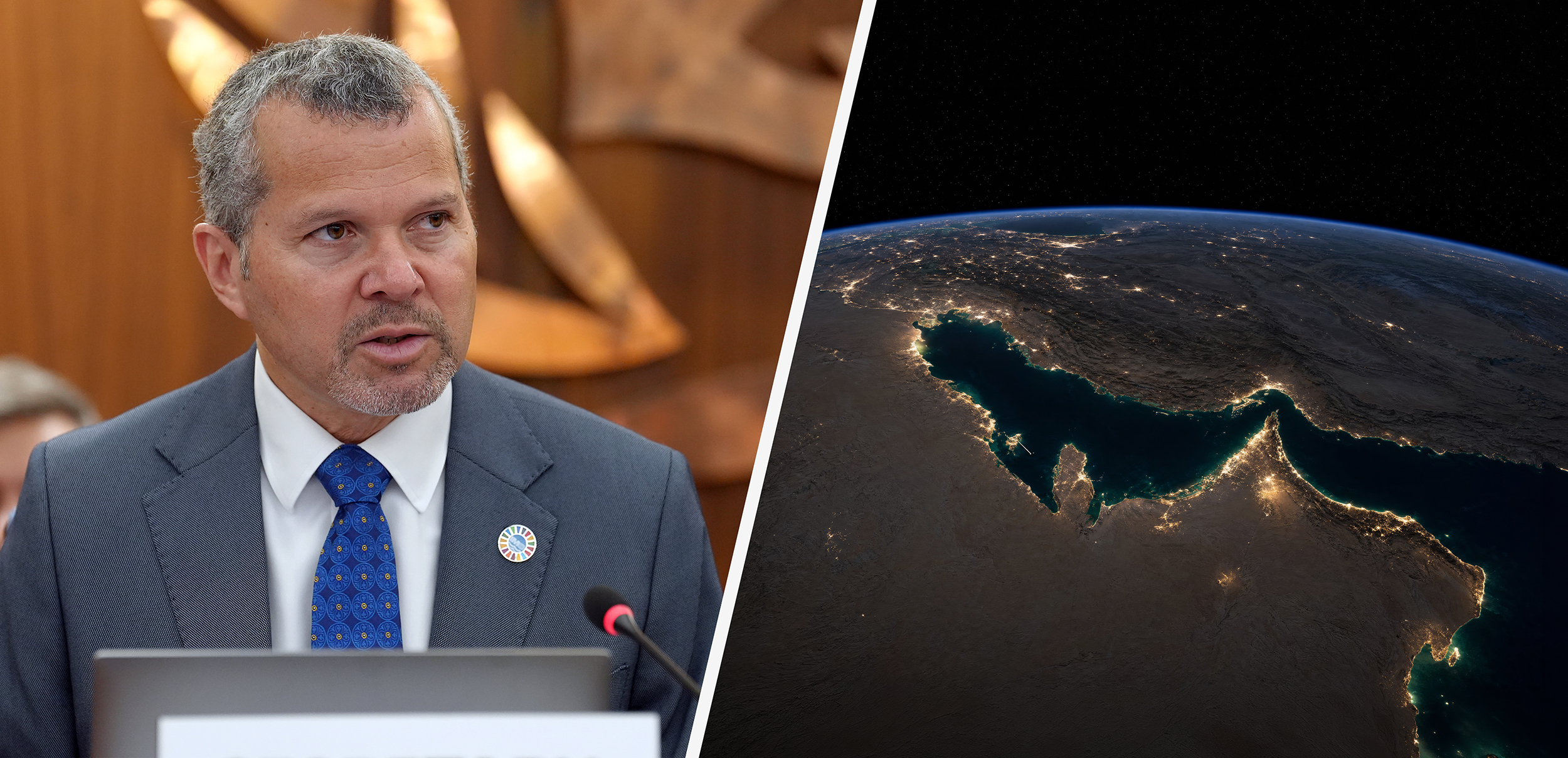
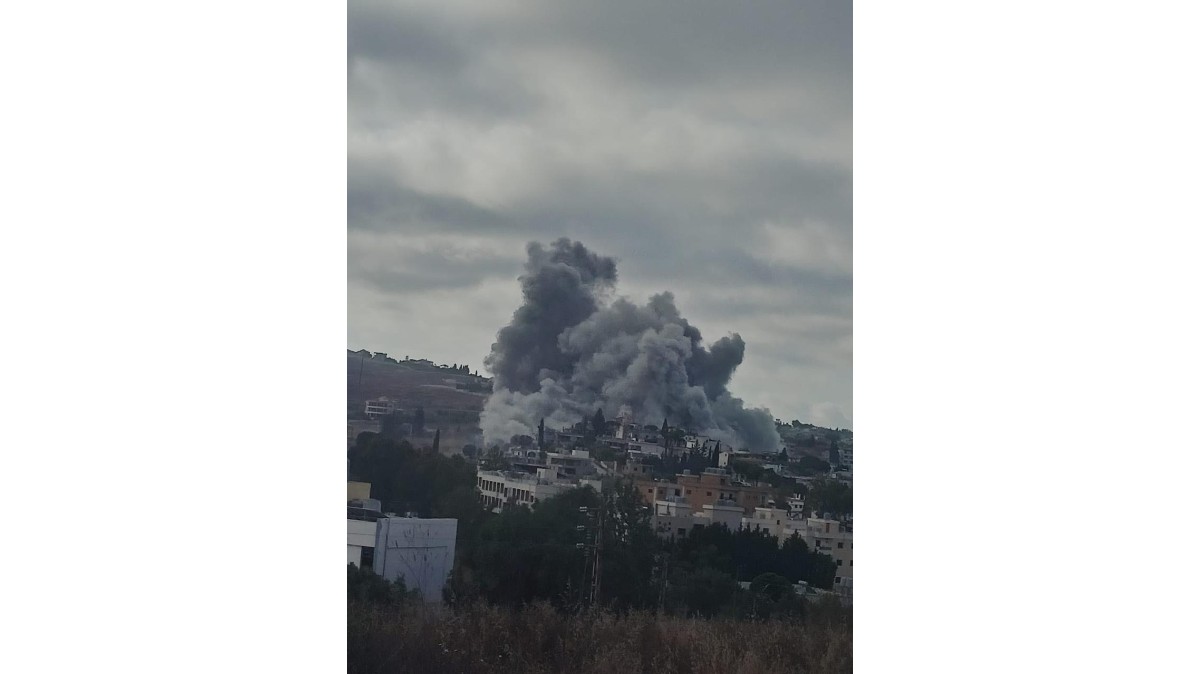
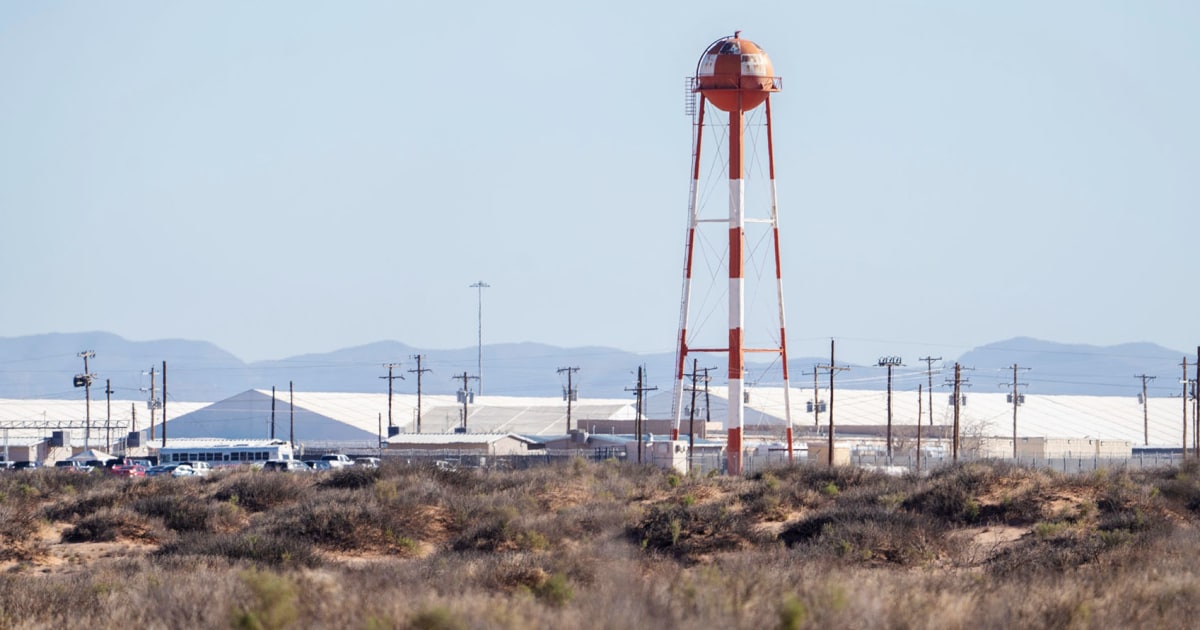
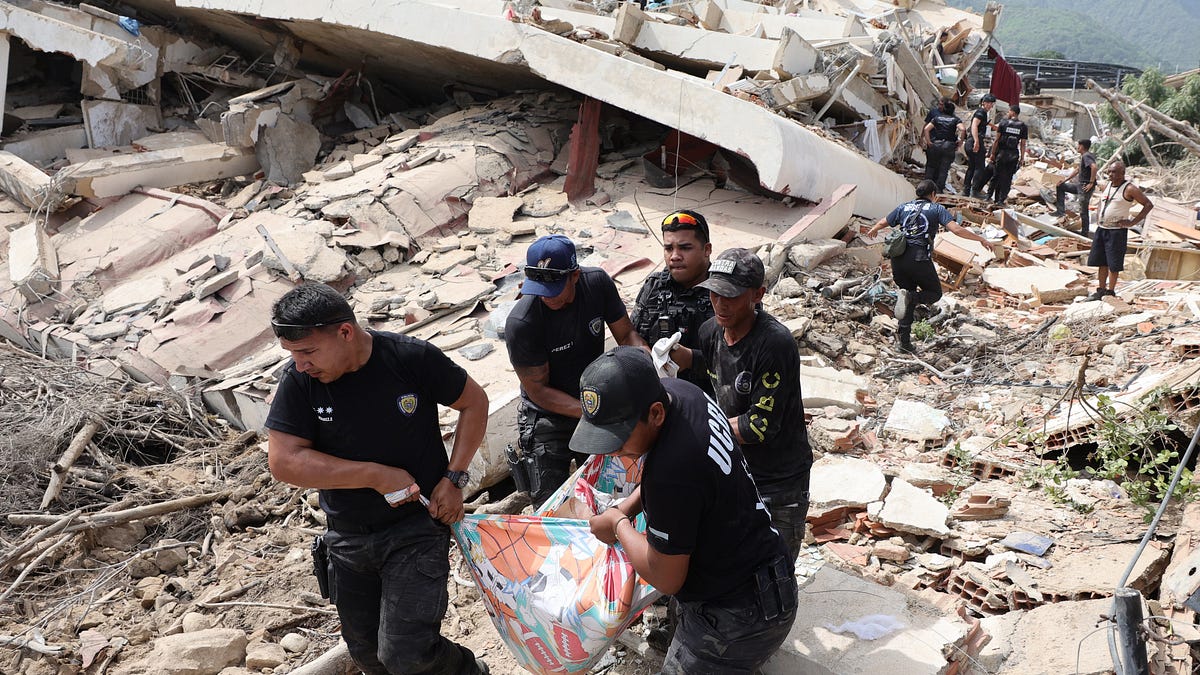
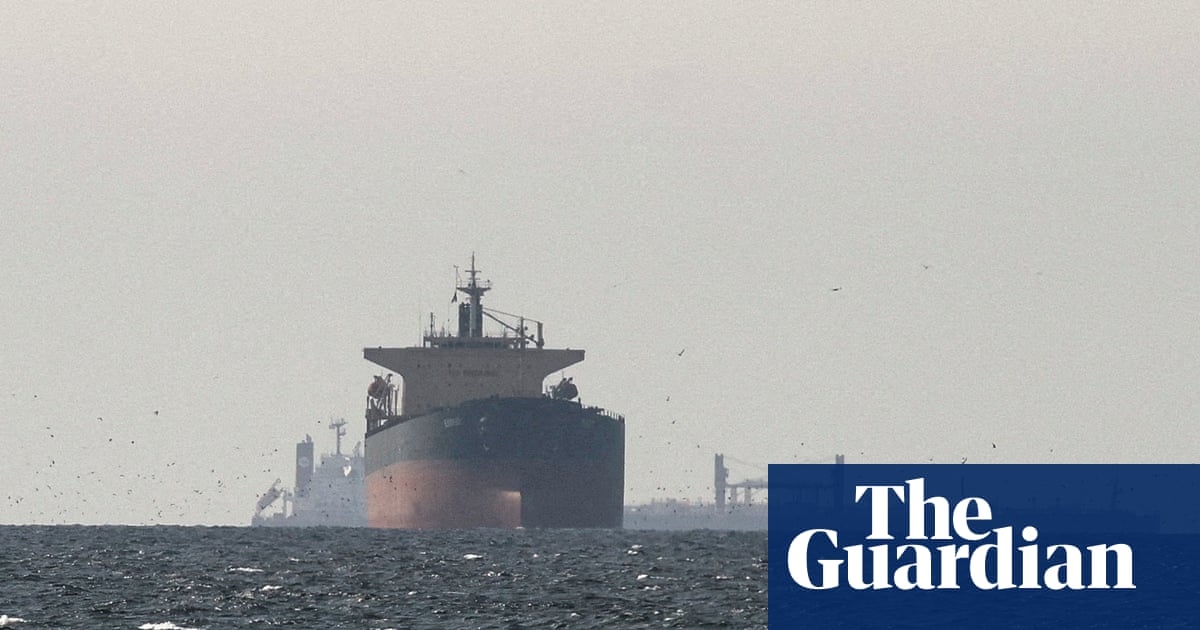
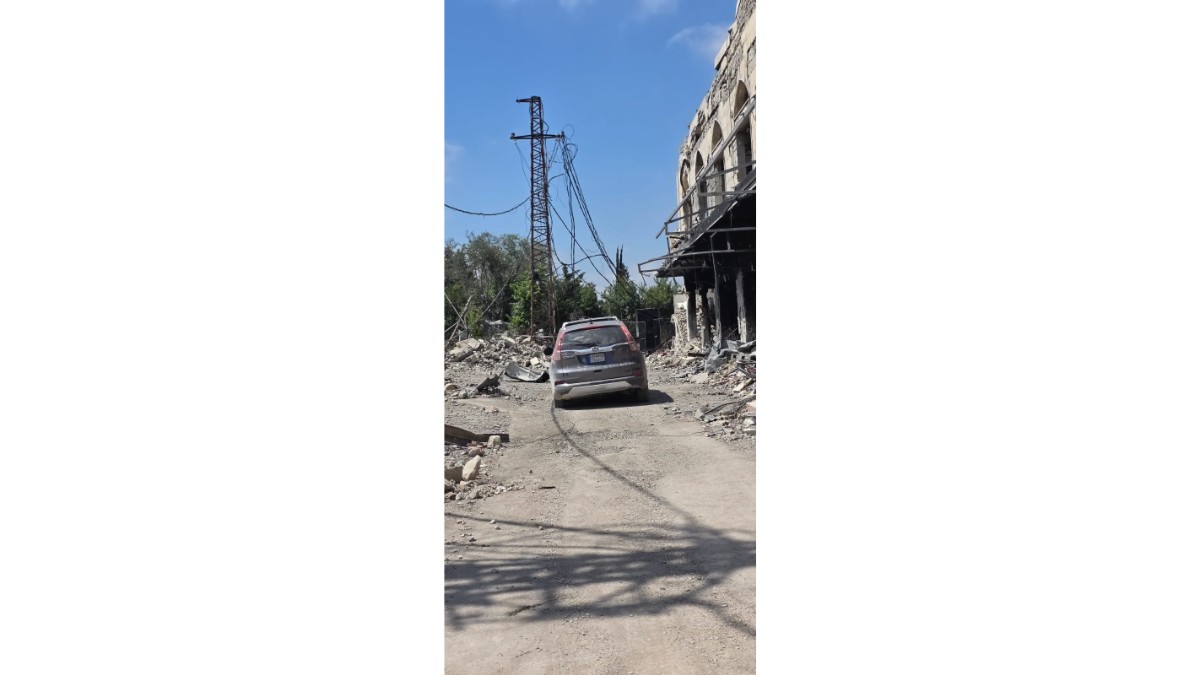
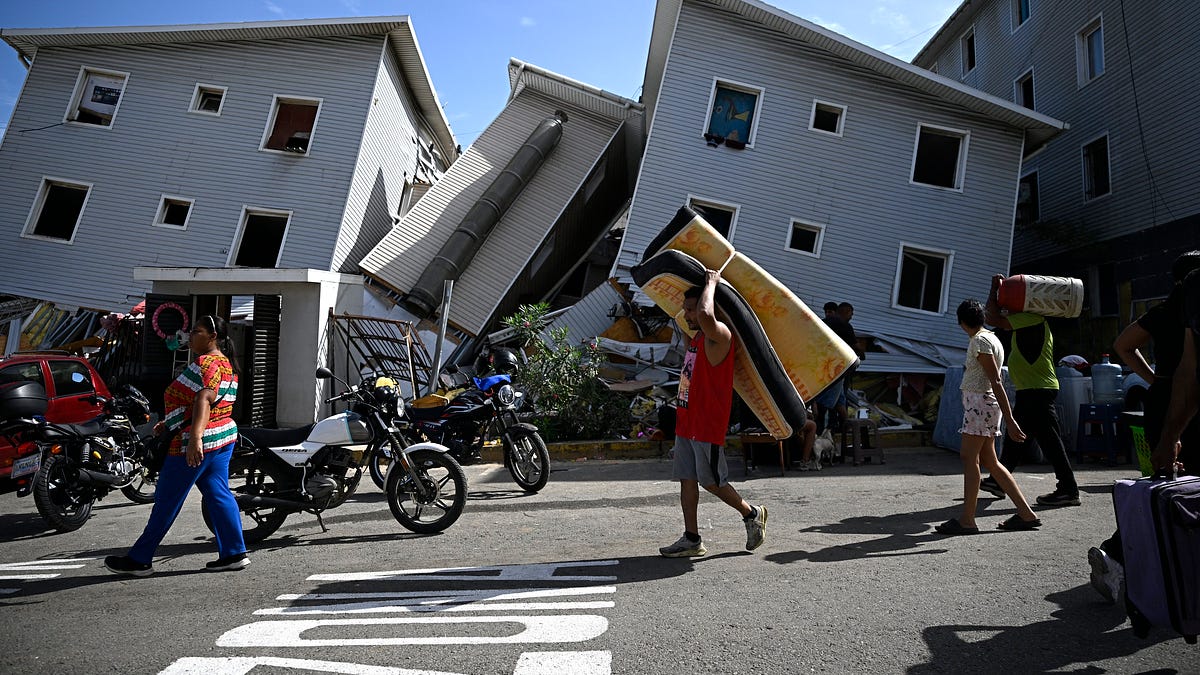
House to vote on foreign aid to Israel; SCOTUS allows Trump to strip Haitians and Syrians of status; Thousands still missing in Venezuela *After attack on vessel, International Maritime Organization [pauses][1] Strait of Hormuz evacuation. Day of [debate][2] about tolls in Strait of Hormuz. Iran calls U.S.-Gulf Cooperation Council joint statement “interventionist, irresponsible and provocative.” Iran [projects][3] $40B annual revenue in Hormuz fees. U.S. Energy Secretary Chris Wright [discusses][4] sanctions relief. Israeli forces [continue][5] operations across south Lebanon amid fragile “ceasefire.” Israel, Lebanon [extend][6] U.S.-mediated talks after failing to reach withdrawal deal. Killed and wounded. Two Palestinians [killed][7] after Israeli strike in northern Gaza. Fire [hits][8] Al-Shifa medical complex. Israeli forces, settlers [storm][9] Hebron mosque, block prayers. U.S. House of Representatives to [vote][10] on foreign aid to Israel, House Dems panic. Supreme Court [allows][11] Trump to nix protected status for Haitians and Syrians. Michigan senatorial candidate Mallory McMorrow [criticizes][12] frontrunner Abdul El-Sayed for campaigning with Hasan Piker, says she isn’t dropping out. New York City freezes [rents][13] on rent-stabilized apartments. Rep. Summer Lee [hints][14] at Senate run. Newly elected New York Democrats [diverge][15] on Hakeem Jeffries’s speakership. Federal judge [orders][16] Department of Justice to release more unredacted Epstein records by July 2. 63-year-old man [dies][17] at Laredo ICE facility, fifth Texas detention death this year. FBI [used][18] technology from Israeli firm Cellebrite to secretly extract data from Spokane ICE protesters’ phones, investigation finds. Venezuela earthquake death total rises to 589. Canada [looks][19] to restore ties with Venezuela and Iran. U.S. sanctions Rwandan gold network. Yemeni journalist Mohammed Ayda [killed][20] in car bombing. RSF drone strike [kills][21] two civilians at Rabak fuel station. South Korea to [train][22] 500,000 “drone warriors,” produce up to 60,000 drones by 2029. German military recruitment drive stalls. Ukraine hits Russian chemical plant for the second time in two weeks.* **From Drop Site:** * **[Israel bombs Palestinians in beach tents in Gaza][23]** * **[Trump Claims Victory in Colombia as Right-Wing Populist Wins Presidential Election][24]** Drop Site is now live on WhatsApp. Get our latest reporting, podcasts, and breaking news, delivered directly. **[Join the channel here.][25]** **This is Drop Site Daily, our free daily news recap. **We send it Monday through Friday. Today’s edition is being sent to more than 750,000 subscribers. Help us grow that number by forwarding and recommending this newsletter. [Subscribe now][26] 🛒 Get your “[Drop [Site] News/Not Bombs][27]” Hoodie here: [Get Your Hoodie][28] Police members tend a victim amid debris of demolished buildings as rescue efforts continue after a magnitude 7.2 earthquake struck Venezuela on June 25, 2026 in La Guaira, Venezuela. Photo by Jesus Vargas/Getty Images. [Subscribe now][29] # Iran and Ceasefire * **After attack on vessel, International Maritime Organization pauses Hormuz evacuation: **On Thursday, a cargo vessel was struck on its starboard side by an [unknown projectile][30] about 7.5 nautical miles southeast of Dahit, Oman, damaging the ship’s bridge, according to UK Maritime Trade Operations (UKMTO). There were no casualties reported. The International Maritime Organization [announced][31] a suspension of its systematic evacuation of ships out of the Persian Gulf “until further clarity” on Thursday. * A U.S. official told The Associated Press that the vessel was hit by an Iranian drone, though no one from Iran’s military or government claimed responsibility for the attack. * The incident comes after Iran’s IRGC said safe passage through the Strait of Hormuz is only possible via routes approved by Iran, and the IRGC warned that ships that used any “unauthorized routes” would be “dealt with by its navy.” * Oman and the UN-affiliated International Maritime Organization (IMO) had announced a southern temporary shipping corridor in Hormuz on Tuesday. * **Day of debate about tolls in Strait; Oman says it is against transit fees: **Omani Foreign Minister Badr Albusaidi [said][32] that his country would not support the imposition of transit fees through the Strait of Hormuz during a joint meeting between the Gulf Cooperation Council (GCC) and the United States. * Oman, which borders the strait, has a special responsibility to support international efforts to safeguard maritime navigation in accordance with international law and the UN Convention on the Law of the Sea, Albusaidi said. * U.S. Secretary of State Marco Rubio told the meeting that “no country on Earth has the right to charge for the use of international waterways,” adding that fees or tolls for shipping would not be part of any deal, a key Iranian demand. * In a joint statement following the GCC meeting, however, the U.S. and the six Gulf Cooperation Council (GCC) states, Saudi Arabia, the UAE, Qatar, Kuwait, Bahrain, and Oman, [rejected][33] all “tolls” or “fees” on the Strait, among discussions of the MOU, Lebanon, Syria, and Gaza. * **Iran calls U.S.-GCC statement “interventionist, irresponsible and provocative”: **Iran’s Foreign Ministry on Friday dismissed the recent U.S.-GCC joint statement as “interventionist, irresponsible and provocative,” accusing Washington of distorting reality by portraying itself as a guarantor of Gulf security. The ministry said the Strait of Hormuz would be managed in accordance with the recently signed MOU. * It called on Gulf states to prevent their territories from being used for any unlawful acts against Iran, urged them not to adopt the U.S. narrative on Tehran’s “peaceful nuclear program,” and instead support a “nuclear-weapon-free Middle East.” * The statement also criticized the GCC for joining Washington and Israel in describing Palestinian and Lebanese resistance groups as “Iranian proxies,” arguing that Israel is the region’s only “proxy.” * The ministry added that regional security should be maintained by countries in the region rather than through reliance on foreign powers whose interventions have “repeatedly undermined” stability. * **Iran projects $40B annual revenue in Hormuz fees:** Iran estimates it could [generate][34] $40 billion annually by charging for security, safety, navigation, and environmental services in the Strait of Hormuz under a proposed postwar management framework, according to a Wall Street Journal report. * The proposal reportedly envisions revenue being shared with participating regional states, and the report says Iran has pitched the idea to its Persian Gulf neighbors and as far afield as China and Egypt, according to Iranian and mediating officials. * **Vance brags about “new relationship” with Iran**: In an interview with UnHerd aboard Air Force Two on Thursday, Vice President JD Vance [described][35] a quasi-normalization of relations with Iran emerging from the war. * Vance claimed Iran is offering nuclear concessions beyond those in the JCPOA. He said Tehran is proposing “a much more rigorous inspection regime” and the elimination of its enriched uranium stockpile. Iran has consistently denied this. * Calling the UAE “by far the most hawkish, by far the most pro-Israel country” in the GCC, Vance said Emirati officials are holding unprecedented talks with the IRGC over what Iran would need to do to become “investable.” * **Energy Sec discusses sanctions relief: **U.S. Energy Secretary Chris Wright discussed the impact of lifting sanctions on Iran at an event in Idaho, [saying][36] Iran will now “be back to exporting similar volumes” of petroleum as during the Biden years—putting production and export capacity at 1.5-2 million barrels a day. * Wright said dollars from new oil sales go straight to Iran with no restrictions, but insisted any released frozen funds would be “tightly controlled.” * **South Korean vehicles leave Strait of Hormuz: **Eight more Korean-linked vessels stranded in the Strait of Hormuz have now [exited][37] the waterway, the country’s maritime ministry announced on Friday via the Korea Times, with 21 of the 26 ships with ties to the nation and which had been trapped in the Strait since February having passed through. * Maritime traffic is continuing to recover, with Kpler recording 70 confirmed Strait of Hormuz crossings on June 24, up 105% from the previous day. Commercial shipping accounted for 53 transits as demining efforts progressed and more operators used the Omani route. # Lebanon * **Killed and wounded: **At least 4,230 people have been killed, and 12,179 wounded, in Israeli attacks on Lebanon since March 2, according to the Lebanese Health Ministry. In its Thursday report, the ministry said 38 people were killed, most from wounds sustained in earlier attacks, and that eight had been injured over the previous 24 hours. * **Israeli forces continue operations across south Lebanon amid fragile “ceasefire”: **The Israeli military [dropped][38] leaflets over al-Mansouri, a town in southern Lebanon, on Friday ordering residents to “stay away” and stating that approaching Israeli forces would put them “in danger,” according to Lebanon’s National News Agency, the first forced displacement order given since Friday’s “ceasefire.” Israeli troops, backed by military vehicles and bulldozers, also [advanced][39] from Hadatha toward the outskirts of Haris in Bint Jbeil district. In Markaba, Israeli forces continued bulldozing and burning homes, while warplanes carried out two [airstrikes][40] on the outskirts of Nabatieh Al-Fawqa. * One person was also killed and another critically injured after an unexploded ordnance detonated in the southern Lebanese town of Mansouri on Friday. * **Artillery strikes on Barashit and Beit Yahoun after four Israeli soldiers injured: **Israeli forces launched several attacks on southern Lebanon on Thursday, with Lebanon’s National News Agency reporting around 10 artillery strikes and machine gun fire targeting the outskirts of Barashit and Beit Yahoun. * The attacks followed reports of a “security incident” involving Israeli troops near Beit Yahoun. The Israeli military later [said][41] that four Israeli soldiers were wounded—one moderately and three lightly—in an attack in Beit Yahoun on Thursday night, according to the Times of Israel. * **Israel, Lebanon extend U.S.-mediated talks after failing to reach withdrawal deal: **Israel and Lebanon [extended][42] their U.S.-mediated talks in Washington to a fourth day after failing to reach an agreement on a partial Israeli withdrawal from southern Lebanon during Thursday’s negotiations, according to the Times of Israel. The fifth round of talks had been expected to conclude with a framework agreement under which Israeli forces would partially withdraw from the “buffer zone” in southern Lebanon, to be replaced by the Lebanese army in designated “pilot zones.” # Palestine * **Two Palestinians killed after Israeli strike in northern Gaza: **Two Palestinians were killed in an Israeli drone strike Friday on Jabaliya Al-Balad, northern Gaza Strip, according to Al-Jazeera. A Palestinian man also [died][43] on Friday from wounds sustained in an Israeli strike a day earlier in the Al-Nasr neighborhood west of Gaza City, WAFA reported. Separately, another Palestinian was shot by Israeli forces near the Austrian cemetery west of Khan Younis, with Israeli forces opening fire and shelling the eastern areas of the city. * **Fire hits Al-Shifa medical complex: **A massive fire [broke out][44] inside Al-Shifa medical complex in Gaza City on Thursday, tearing through the only surgical operations building operating in northern Gaza. * The fire was completely controlled, with no injuries [reported][45], according to a statement from Gaza’s Health Ministry, which said an investigation was underway. * Civil defense crews reportedly [battled][46] the fire with worn-out equipment, with the conditions inside the hospital characterized as “catastrophic.” * **Israeli forces, settlers storm Hebron mosque, block prayers: **Israeli forces, accompanied by settlers, [raided][47] the Al-Ras mosque in the Al-Jaabari neighborhood of Hebron’s Old City before dawn on Friday, assaulting those inside and preventing worshippers from holding prayers, according to WAFA. They raised Israeli flags over the mosque’s entrances, broadcast songs through its loudspeakers, and forced two Palestinians who had been staying inside the mosque to leave before sealing the site. Settlers had also seized a plot of land belonging to the mosque around six months ago and converted it into a playground. * **Palestinian prisoners’ group says journalist’s case reflects Israel’s “slow execution” of detainees:** Photos of Palestinian journalist Mujahid Bani Mufleh circulated on Thursday, showing the severe impact of his [detention][48] by Israel without charge in June 2025. Two days after his release in January 2026, Bani Mufleh suffered a severe brain hemorrhage linked to an illness he contracted in Israeli prison, rights groups say. He was hospitalized in critical condition and underwent multiple surgeries that left part of his skull removed and, according to the Palestinian Prisoner Society, still faces a long and complex recovery. * The group says his case reflects Israel’s systematic torture, abuse, and denial of medical care to Palestinian prisoners. The group characterized the fate of those like Mufleh as a “slow execution” by his former Israeli captors. # U.S. News *By Julian Andreone, with Ryan Grim. Have a tip on Capitol Hill? Email Andreone at [Julian@dropsitenews.com][49].* * **House to vote on foreign aid to Israel, House Dems panic: **The House Rules Committee voted Tuesday to allow Rep. **Thomas Massie**’s amendment to strike $3.3 billion in foreign aid from the State Department’s 2027 funding bill and prohibit any aid to Israel through that bill to advance to the floor for a vote. Now, all members of Congress will be put on record as to whether they support continuing to fund Israel’s genocidal project in the Middle East. Punchbowl News [reported][50] that Democratic members of the House “expressed alarm” in a closed meeting and were “begging for leadership guidance” on how to vote as the Democratic base sours on the U.S.-Israel relationship. * **Supreme Court allows Trump to nix protected status for Haitians and Syrians: **The U.S. Supreme Court [ruled][51] 6-3 in favor of the Trump administration to allow the federal government to end Temporary Protected Status (TPS) for roughly 350,000 Haitians and 6,000 Syrians. * In the majority opinion for the consolidated cases (*Mullin v. Doe* and *Trump v. Miot*), Justice **Samuel Alito** stated that federal law grants the executive branch unreviewable authority to terminate TPS designations, effectively barring federal judges from intervening or second-guessing those decisions. * The conservative majority also rejected claims that the administration’s actions were unconstitutionally driven by racial animus. Alito declined to reprint Trump’s past remarks about Haitians while ruling they were not “overtly racial.” * In dissent, Justice **Elena Kagan**, joined by Justices **Sonia Sotomayor** and **Ketanji Brown Jackson**, reproduced Trump’s statements, including his claim that Haitians in Springfield, Ohio, were “eating the pets” and his description of Haiti as a “shithole country.” The statements, Kagan wrote, “fairly shout” that race shaped the decision to expel them. * The decision takes effect in 32 days, barring narrow district court interventions. Affected Haitian and Syrian nationals will lose their legal residency, work authorization, and driver’s licenses, rendering them subject to detention and deportation. * While this ruling targets Haiti and Syria, the precedent imperils roughly 1 million more TPS holders from countries including Afghanistan, Burma, Cameroon, Ethiopia, Honduras, Nepal, Somalia, South Sudan, and Yemen, all now in litigation. * **McMorrow criticizes El-Sayed for campaigning with Hasan Piker, says she isn’t dropping out: **Rep. **Mallory McMorrow**, a Democratic Senate candidate in Michigan, [told][52] CNN on Thursday that she is not dropping out of the race despite weak polling, and criticized progressive frontrunner **Abdul El-Sayed** for campaigning with **Hasan Piker**, seeming to allege a connection between Piker and an attack on a synagogue in Michigan. McMorrow has consistently declined to describe Israel’s assault on Gaza as genocide. * Separately on Wednesday, Maryland Sen. **Chris Van Hollen** endorsed El-Sayed, becoming the second senator after **Bernie Sanders** to do so, calling him the “strongest” candidate for a seat the Democrats desperately need to win to flip the Senate. He praised El-Sayed’s willingness to “take on the Democratic establishment that has not fought hard enough for working people.” * **New York City freezes rents on rent-stabilized apartments:** New York City’s Rent Guidelines Board voted 7-1 on Thursday to [approve][53] a 0% rent increase for roughly 1 million rent-stabilized apartments, delivering on one of Mayor **Zohran Mamdani**’s signature campaign promises. * The freeze applies to both one-year and two-year lease renewals beginning October 1. Tenant advocates hailed the vote as a major affordability victory, while landlord groups signaled that they would mount legal challenges against the measure. * **Rep. Summer Lee hints at Senate run: Summer Lee**, the progressive Pittsburgh-area congresswoman, [posted][54] on Thursday that, “2028 can’t come fast enough for PA,” a remark many interpreted as a shot at Sen. **John Fetterman** and a hint that she might run against him. * Fetterman was the lone Senate Democrat to oppose the Iran war powers resolutions and has become an increasingly isolated figure in his party over his unconditional support for Israel, his defense of ICE, and his broader willingness to align with Trump. * **Newly elected New York Democrats diverge on Hakeem Jeffries’s speakership: Darializa Avila Chevalier**, who [won][55] the Democratic primary to represent New York’s 13th Congressional District on Tuesday, declined to commit to supporting House Minority Leader **Hakeem Jeffries** for speaker during an interview on NBC’s Meet the Press NOW. * She said she would consult with her “coalition and community” about how best to deliver for New Yorkers before making a decision. * Her remarks follow comments from **Brad Lander** on Thursday, who won a primary in the city’s 10th district, who committed to “helping elect Hakeem Jeffries as Speaker,” even though Jeffries endorsed his primary opponent. * **Federal judge orders DOJ to release more unredacted Epstein records by July 2: **U.S. District Judge Emmet Sullivan [ordered][56] the Justice Department on Thursday to release additional unredacted **Jeffrey Epstein** records by July 2 or explain why it cannot, granting a preliminary injunction in media legal analyst **Katie Phang**’s lawsuit, which alleges the department failed to comply with last year’s Epstein Act. * Phang’s case claims that acting Attorney General **Todd Blanche**’s DOJ improperly redacted sender and recipient names in at least eight email exchanges referencing a “torture video” and alleged sexual activity involving minors, and withheld 36 materials mentioning President **Trump**, including FBI interview notes from a woman who alleges Epstein introduced her to Trump as a 13-year-old and that Trump assaulted her. * Rep. **Thomas Massie** told Drop Site’s Julian Andreone that the Oversight Committee’s work on the files was “an absolute total joke.” “We basically just bring people over there and give them almost a whitewash,” Massie said. “Once they do some perfunctory testimony there in the Oversight Committee, they check the box. It says, ‘I’ve shown up and done something.’” **Video** **[here][57]**. * **Supreme Court strikes down Hawaii’s “vampire rule” on carrying guns onto private property: **The Supreme Court [ruled][58] 6-3 on Thursday to strike down a Hawaii law requiring concealed carry permit holders to obtain a property owner’s permission before entering with a firearm, finding the measure violates the Second Amendment. The ruling will likely affect regulations in New York, New Jersey, Maryland, and California. * Justice **Alito** wrote for the majority that the rule, dubbed the “vampire rule,” imposed “severe restrictions” on permit holders’ daily activities. * Justice **Kagan** dissented, arguing the law mirrored colonial-era restrictions on carrying firearms onto private property without consent. * **Johnson says he’ll send housing bill to Trump: **House Speaker Mike Johnson [said][59] he would formally transmit a bipartisan housing bill to President Donald Trump, a day after Trump abruptly canceled its signing ceremony and demanded the Senate first pass the SAVE America Act, an unrelated voter-restriction measure. * Transmitting the bill starts a constitutional 10-day clock for Trump to sign or veto it, after which it becomes law without his signature. * Trump has called the housing legislation “of minor importance” even as fellow Republicans tout it as a key win on living costs ahead of November’s midterms. * **63-year-old man dies at Laredo ICE facility, fifth Texas detention death this year: **Felix Alcorta-Rodriguez, 63, [died][60] at the Webb County Detention Center in Laredo on June 19, about an hour after being rushed to the emergency room, according to a notification ICE sent to Congress, marking at least the fifth death in Texas ICE detention this year—a quarter of the nationwide total. * The Webb County medical examiner said Alcorta died of “natural causes.” An autopsy is pending. * The Department of Homeland Security’s inspector general [announced][61] that it would launch two reviews into Immigration and Customs Enforcement’s handling of detained migrants, one examining a rise in detainee deaths and another assessing whether ICE facilities meet use-of-force standards. * Detainee deaths have increased every fiscal year since 2022, with 20 deaths recorded so far in 2026 compared with 33 in all of 2025 and 11 in 2024, according to ICE. * **GEO Group claims qualified immunity to fight forced-labor lawsuit over ICE detention work: **GEO Group, a major ICE contractor and one of the world’s largest private prison companies, is invoking qualified immunity—the legal doctrine that typically shields police officers from civil rights lawsuits—to fight a forced-labor case brought by detainees at one of its Colorado facilities, according to a new investigation from The American Prospect and The Lever. Read more about the case in the full piece from the Lever and TAP [here][62]. * **FBI used Cellebrite to secretly extract data from Spokane ICE protesters’ phones, investigation finds: **The FBI used forensic software from Israeli firm Cellebrite to [extract][63] data from the phones of at least a dozen protesters arrested at a June 2025 demonstration outside an ICE field office in Spokane, Washington, according to a new investigation from Mother Jones. * Spokane police seized 23 phones during the protest and transferred them to the FBI. One of these protesters, Thalia Ramirez, was part of the **Spokane 9**, all charged with “conspiracy to impede or injure” officers at the protest. * One surveillance expert warned of the danger of the action’s precedent, saying, ​“Your mere proximity to somebody else can be used to justify an invasive search into your entire digital life.” * Read Mother Jones’ full investigation [here][64]. # Other International News * **Venezuela earthquake death total rises to 589: **The death toll from two earthquakes that hit Venezuela on Wednesday has risen to 589, with thousands more reported missing as rescue crews continue to search for survivors. The health ministry reported at least 4,300 people were injured. * The Center for Economic and Policy Research (CEPR) [called][65] on Thursday for the U.S. and other countries to fully lift sanctions on Venezuela. CEPR says existing sanctions would severely hinder humanitarian relief by discouraging banks, aid groups, and businesses from operating in Venezuela. It urged the UK and Portugal to release frozen Venezuelan state assets as well, so that the funds might be used for emergency response and reconstruction. * **Canada looks to restore ties with Venezuela and Iran: **Canadian PM Mark Carney said on Thursday that Canada should [restore][66] diplomatic representation in Iran and in earthquake-ravaged Venezuela, citing the humanitarian crisis in Venezuela and saying, “Engagement is not endorsement.” * He said a decision on both countries had not yet been reached, but it is what Canada “needs to do.” * **U.S. sanctions Rwandan gold network: **The U.S. State Department announced sanctions on Thursday against a network it says smuggles minerals out of eastern Democratic Republic of the Congo to fund the Rwanda-backed M23 armed group. * The targets are Gasabo Gold Refinery in Kigali, three other Rwandan mining companies, and two men who run the refinery. * At least 60 kilograms of gold moved from eastern DRC to the Gasabo refinery in early 2026, escorted by Rwandan forces and M23 fighters, according to the Treasury Department. * The State Department says the move enforces the Washington Accords, the Trump-brokered DRC-Rwanda deal, and its framework for “fully licit” mineral supply chains. That same framework, Drop Site has reported, is opening the door for U.S. and Emirati investors to capture Congo’s copper, cobalt, and coltan trade, the prize beneath a war that has displaced more than 7 million people. **More on the Congolese mineral industry—in which an Epstein-linked Israeli network plays a pivotal role—is [here][67].** * **Yemeni journalist Mohammed Ayda killed in car bombing: **Mohammed Ayda, a correspondent for Al Arabiya and Al Hadath, was [killed][68] Wednesday evening when an explosive device detonated in his car while he was driving along al-Seen Street in Mukalla, the capital of Yemen’s Hadhramaut province, according to the New Arab. * Ayda, who had covered Yemeni politics and security since 2019, had reportedly been warned of threats to his life; no group has claimed responsibility. * **RSF drone strike kills two civilians at Rabak fuel station: **A Rapid Support Forces drone strike [killed][69] two civilians and injured several others at a fuel station in Rabak, the capital of White Nile State, on Thursday morning, local sources said—part of an intensified RSF campaign targeting fuel stations in El Obeid and along the highway connecting it to White Nile State in an apparent bid to cut off fuel supplies. * Separately, the Sudanese army said its air defenses shot down an RSF drone over El Obeid on Thursday as it attempted to target the city’s Airport neighborhood. * **South Korea to train 500,000 “drone warriors,” produce up to 60,000 drones by 2029: **South Korea’s Defense Ministry [said][70] it will train 500,000 “drone warriors” and distribute tens of thousands of unmanned systems across frontline units to counter North Korea, according to Reuters. * Defence Minister Ahn Gyu-back said the military plans to produce about 60,000 drones by 2029—revised down from an initial 110,000 figure—including roughly 11,000 in 2026. * Ahn said the goal is to make drones “a universal combat tool” used by individual soldiers like a “second personal weapon,” with all components domestically produced rather than sourced from China, citing lessons from Ukraine and the Middle East, where low-cost drones have reshaped battlefield tactics. * **German military recruitment drive stalls: **Germany’s Defense Ministry reported that it has sent nearly 300,000 questionnaires to 18-year-olds since January as part of a new effort to promote voluntary military service, but only around 530 of those contacted have so far given enlistment offers for service this year—roughly 0.18% of those contacted. The failure to recruit soldiers comes as the German government has promoted a national push for military readiness amid the weakening of NATO, fears of a future conflict with Russia, and increasing calls for mandatory conscription. * **Ukraine hits Russian chemical plant for second time in two weeks:** Ukraine struck an industrial facility in Russia’s Tula region overnight, with Russian and Ukrainian reports identifying the target as the Azot chemical plant in Novomoskovsk, roughly 125 miles south of Moscow. * The site, Russia’s largest producer of ammonia and nitrogen fertilizers, has been described by Ukrainian President Volodymyr Zelensky as important to Moscow’s explosives production and was previously hit on June 14. The strike came during one of Ukraine’s largest drone barrages of the year, with Russia’s Defense Ministry claiming it downed 660 drones across 12 regions and occupied Crimea. If you want to continue getting this newsletter, you don’t have to do anything. But if this is too much—we do try to be mindful of your inbox—you can unsubscribe from this newsletter while continuing to get the rest of our reporting. Just go into [your account here at this link, scroll down][71], and toggle the button next to “Drop Site Daily“ to the off setting. **It looks like this**: [Subscribe now][72] [Leave a comment][73] [1]: [2]: [3]: [4]: [5]: [6]: https://www.timesofisrael.com/liveblog_entry/israel-lebanon-talks-extended-an-extra-day-as-deal-on-idf-withdrawal-remains-elusive/ [7]: [8]: [9]: [10]: [11]: [12]: [13]: [14]: [15]: [16]: https://www.axios.com/2026/06/26/epstein-files-doj-lawsuit-judge-release-unredacted-july-order [17]: [18]: [19]: [20]: [21]: https://sudantribune.com/article/315489 [22]: https://www.reuters.com/world/asia-pacific/south-korea-expand-drone-forces-train-500000-operators-ministry-says-2026-06-26/ [23]: [24]: [25]: [26]: [27]: [28]: [29]: [30]: [31]: [32]: [33]: [34]: [35]: [36]: [37]: https://www.koreatimes.co.kr/southkorea/20260626/8-more-korean-operated-vessels-exit-strait-of-hormuz [38]: [39]: [40]: [41]: [42]: https://www.timesofisrael.com/liveblog_entry/israel-lebanon-talks-extended-an-extra-day-as-deal-on-idf-withdrawal-remains-elusive/ [43]: [44]: [45]: [46]: [47]: [48]: [49]: mailto:Julian@dropsitenews.com [50]: [51]: [52]: [53]: [54]: [55]: [56]: https://www.axios.com/2026/06/26/epstein-files-doj-lawsuit-judge-release-unredacted-july-order [57]: [58]: [59]: https://www.nytimes.com/2026/06/25/us/politics/mike-johnson-trump-housing-bill.html [60]: [61]: [62]: [63]: [64]: [65]: [66]: [67]: [68]: [69]: https://sudantribune.com/article/315489 [70]: https://www.reuters.com/world/asia-pacific/south-korea-expand-drone-forces-train-500000-operators-ministry-says-2026-06-26/ [71]: [72]: [73]:
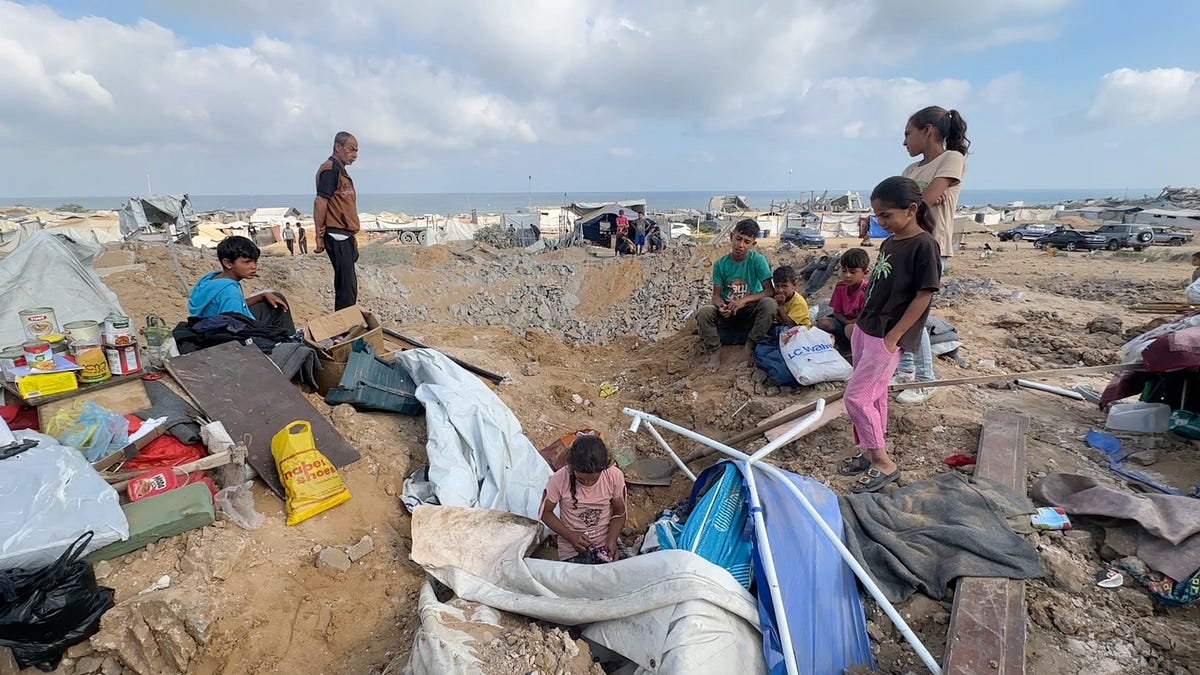
Israel Bombs Palestinians in Beach Tents in Gaza *Drop Site is a reader-funded, independent news outlet. Without your support, we can’t operate. Please consider becoming a paid subscriber or making a [501(c)(3) tax-deductible donation today][1].* [Subscribe now][2] Members of the Yassin family next to their destroyed tents on the coastline west of Gaza City after an Israeli airstrike on June 24, 2026. Screenshot of video by Abdel Qader Sabbah. *Story by Mohamed Ahmed and Abdel Qader Sabbah* KHAN YOUNIS, Gaza Strip—Eleven-year-old Ahmed Al-Raqab was playing outside his family tent pitched on Gaza’s sandy coastline in Al-Mawasi, west of Khan Younis, on Wednesday when the Israeli missile struck, killing him and severely wounding several others. “The children were playing and they fired a missile directly on them,” Ahmed’s father, Sabri Al-Raqab, said, sobbing as he knelt on the floor of Nasser hospital with his arms across his son’s dead body in a final embrace. “He was carrying a watermelon. What was this child’s crime? He picked up a watermelon and they fired at him. Is he a fighter? He’s not a fighter. He’s a child.” Overcome with grief, Al-Raqab buried his face into his son’s, which was caked with blood, and wept uncontrollably. In a nearby room, a six year old child wounded in the same attack screamed in pain as blood from a gaping wound in his right eye covered his cheek and ear. He was carried into the hospital in the arms of a teenage relative who laid him down shouting, “Come attend to this boy. We are losing the boy, we are losing him.” The child’s grandfather, Ahmed Al-Jarjawi, stood nearby, the front of his jalabiya stained deep red with blood. “We were just sitting and the strike landed next to the our tent and hit three other tents,” Ahmed Al-Jarjawi told Drop Site News. “This child lost his eye. I was wounded here,” he said pointing to his chest. “My son’s wife was also wounded in the upper part of her leg.” Dead and wounded children arrive at Nasser hospital in Khan Younis after an Israeli airstrike on a tent encampment in Mawasi Khan Younis on June 24, 2026. Video by Mohamed Ahmed. The latest Israeli attacks on children came a day after a UN Independent International Commission of Inquiry released a report that concluded, “Israeli authorities and security forces have deliberately targeted Palestinian children, resulting in genocide, crimes against humanity and war crimes in the Gaza Strip.” The UN inquiry said that during the first two years of the Israeli assault, over 20,000 children were killed and more than 44,000 injured. Since the so-called ceasefire went into effect in October 2025, Israel has killed at least 265 children and wounded hundreds more in Gaza, according to findings released last week by the UN children’s agency UNICEF. “During a period supposedly defined by restraint and protection, a child has been killed, on average, every single day for more than eight months,” UNICEF spokesperson James Elder said in a statement. “That is an absurd and devastating figure.” Israel’s attacks on Wednesday targeted several areas of Gaza’s coastline where thousands of displaced Palestinians live in dilapidated tent encampments. The encampments by the sea lie as far as possible from the “yellow line” where Israeli troops are stationed and are steadily encroaching further westward. Yet Israel has repeatedly bombed Gaza’s beaches, killing Palestinians living in the barest part of the enclave. One of the airstrikes overnight hit a tent encampment on the coastline west of Gaza City. Israel warned of the strike minutes before, prompting families to flee towards the sea before the missile struck, destroying several tents and leaving a massive crater in the sand. “We were sleeping, it was night. We heard sounds of commotion and disturbance so we went outside to see what was happening, and we found that everyone, in the whole quarter, the whole encampment, was evacuating. We left with them,” said Ahmed Yassin, who lived with his wife, five children and other relatives in two tents pitched on the sandy dunes. He spoke in a low, wearied voice. “We took our children, they were sleeping. My mother is elderly and disabled. She’s ill. We barely managed to get out in the final moments.” Behind him, children picked through the ruins of the tents, trying to salvage whatever they could from the detritus. “We have no place, no shelter, nothing. Where are we supposed to go? We have no idea. From the beginning of the war until today, the attacks have never stopped. It didn’t stop. A truce, a ceasefire—where is the ceasefire? What are they talking about? Bombing, destruction, shelling. The war is ongoing,” Yassin said. Members of the Yassin family next to their destroyed tents on the coastline west of Gaza City after an Israeli airstrike on June 24, 2026. Video by Abdel Qader Sabbah. The Yassin family was displaced from their five-story home in Al-Zeitoun neighborhood of Gaza City early in the war. They went south, where they were displaced several times again before returning north after the “ceasefire” went into effect. Ultimately, they ended up in a tent on the coastline. “Al-Zeitoun is a dangerous area, today there is no one there. The area we used to live in is basically nothing but a demolition zone,” Yassin’s wife, Rana, said. “This area here was made up of tents sheltering civilians—displaced people, people who lived through oppression, humiliation, famine, war and siege. And the whole place was bombed, the entire area was destroyed.” She continued, “Today, as you can see, we are sitting on the rubble of the tent and one doesn’t know where to go or what to do. Everything is gone. You want tents—everything costs money. You want wood—everything costs money. You want mattresses, sheets, blankets, clothes for the children. The children only have the clothes they were wearing when we fled the area. Other than that there is nothing. There is nothing.” As temperatures soar in the summer months, Palestinians in Gaza have little recourse from the heat and access to clean water is an ordeal. The Israeli military has targeted water pipelines, sewage systems, and desalination plants, damaging or destroying nearly 90 percent of water infrastructure in Gaza, according to Doctors Without Borders (MSF). “Palestinians in Gaza face engineered water scarcity,” MSF said in a report. “Families often prioritize drinking over cooking or washing, limit personal hygiene, and rely on unsafe or saline sources when humanitarian deliveries are interrupted.” For displaced families living on the coastline, water is even scarcer, causing some Palestinians to resort to digging their own wells in desperation. Mohammed Zayed, who was displaced from Beit Lahia to a tent on the beach west of Gaza City, dug a makeshift well outside his tent using simple tools. “We were displaced from our land in northern Gaza and are now living on the seashore. We suffered tremendously, an indescribable hardship, due to the lack of water. We had to wait for water trucks, walk long distances and spend hours under the sun, just to sometimes get a single gallon of water. Other times, we would return empty handed—unable to meet our daily needs and with no water,” Zayed told Drop Site. “We were forced to go to the sea. The seawater is salty, but we would collect and use it despite the great difficulty. We tried to carry on with our lives, but we could not endure living without water or basic necessities. So, thank God, I worked hard and dug this well next to my tent.” Mohammed Zayed dug a well by his tent on the coastline west of Gaza City where access to water is scarce. June 24, 2026. Video by Abdel Qader Sabbah. Zayed’s makeshift well is small but effective. It stands about a foot in diameter, with plastic running down the sides leading up to a narrow open pipe jutting out of the ground. He lowered a tin can on a rope a few meters deep and brought out fresh water, slowly filling a plastic bucket. “The water is very fresh. It has eased my hardship and the hardship of those around me. Displaced people from the surrounding tents come here to fill up with fresh water,” Zayed said. With soaring food prices, Zayed also used the water to irrigate a small vegetable garden he constructed beside his tent growing eggplants and zucchini. “I dug the well, found water, and managed to grow vegetables. This has greatly reduced the suffering of those around me,” he said. “We live in tents and in these tents we face so many hardships: Heat, cold, insects, rodents and sand. The sand itself causes us suffering. It gets into our bedding, our clothes, and affects our children…They develop itching and pimples on their bodies from the sand, the sea and the heat. May God ease our suffering.” *Sharif Abdel Kouddous and Jawa Ahmad contributed to this report. Sami Vanderlip edited the video.* [Leave a comment][3] [Share][4] [1]: [2]: [3]: [4]:
Trump Claims Victory in Colombia as Right-Wing Populist Wins Presidential Election Colombia’s President-elect Abelardo de la Espriella on June 25, 2026. Photo: REUTERS/Sergio Acero. BOGOTÁ—On Sunday night, U.S. President Donald Trump congratulated far-right populist Abelardo de la Espriella, the winner of Colombia’s presidential election. Trump’s congratulations marked the culmination of more than a year of interference in Colombian politics by the president and senior Republicans, from sanctioning the leftist government to openly endorsing and incentivizing a swing to the right. The stakes were high for the White House, which considers Colombia a key strategic outpost for advancing its hemispheric agenda of countering drug production and promoting U.S. hegemony, according to experts. “For the U.S, the interest is to have economic and security dominion over the region,” said Gimena Sánchez-Garzoli, director for the Andes at the Washington Office on Latin America (WOLA). De la Espriella’s rival in the race, leftist Senator Iván Cepeda, conceded defeat on Wednesday morning. De la Espriella, who has adopted the moniker “El Tigre,” is a high-profile criminal defense attorney with law offices in Colombia and Miami and a history of working with important figures from Colombia’s violent past. The 2026 election marked his first stab at politics, playing off his outsider status to pledge a crusade against government corruption and strict measures to tackle the country’s increasingly powerful insurgent groups. His campaign borrowed policies from prominent figures of Latin America’s populist right, from Javier Milei’s government spending cuts to Nayib Bukele’s megaprisons and iron-fisted crackdowns on organized crime groups. But de la Espriella has faced criticism for defending some of Colombia’s most infamous criminals, including former paramilitary commanders tied to crimes against humanity, a man who scammed 200,000 people in the country’s largest ever Ponzi scheme, and Alex Saab, a key political and financial operator for ousted Venezuelan President Nicolas Maduro. [Subscribe now][1] ## A campaign of interference by Washington Despite his controversial background, de la Espriella got Trump’s stamp of approval just days after winning the most votes in the election’s first round. “Because of his tremendous accomplishments in life, and his political support for me, personally, it is my Honor to give Abelardo my Complete and Total Endorsement,” wrote Trump on Truth Social on June 2. The U.S. president also appeared to condition the future of bilateral relations on the outcome of the election; a strategy reminiscent of his successful foray into the Honduran election late last year. “The results of this Election are very important to the future of Colombia and its relationship to the United States which, if Abelardo wins… will have the total support and strength of the United States behind him,” he wrote. These statements were widely publicized in Colombia, where Washington’s influence is felt heavily in political discourse. “To understand the weight of these statements from the United States, it’s important to remember just how important the U.S. relationship is for Colombia,” explained Elizabeth Dickinson, deputy director for Latin America at the International Crisis Group, a Brussels-based think tank. As Colombia’s largest export market, aid benefactor, and security partner, Washington’s approval reverberates deeply in the country, said the analyst. So too does its stricture; in addition to endorsing de la Espriella, the White House has actively targeted Colombia’s left wing. Since his inauguration, Trump has personally sparred with incumbent President Gustavo Petro on issues ranging from deportation flights to drug control. Their online spats escalated last October when the White House added him and his wife, son, and the interior minister to the U.S. Treasury Office of Foreign Assets Control’s “Clinton List” of sanctioned individuals, freezing their assets and effectively banning them from the U.S. Tensions rose again after Petro denounced Washington’s capture of Maduro in January, with Trump warning the Colombian President “he’ll be next.” While a phone call and subsequent meeting at the White House de-escalated tensions, the fractious relationship loomed large over the election. “This level of interference runs against the 200 plus years of bipartisanship both countries have respected,” said WOLA’s Sánchez-Garzoli. Members of the right wing argued that only a conservative can be trusted to repair relations with Washington, dismissing Cepeda, a human rights advocate representing Petro’s Historic Pact coalition. “The White House has taken sides. That is not diplomacy, it is interference. And Latin American history is full of the consequences of that kind of interference,” María del Mar Pizarro, a Historic Pact congresswoman, told Drop Site News. U.S. political pressure has come in other forms too; in recent weeks senior Republican figures have repeatedly expressed concerns over the integrity of the democratic process in Colombia. While Sunday night’s nonbinding quick count indicated a razor-thin victory for the right-wing candidate, Cepeda initially refrained from accepting defeat, stating that his team had submitted over 57,000 complaints over alleged irregularities. He later conceded on Wednesday after the first round of verification corroborated the initial result. Some Abelardistas even credited U.S. involvement for their candidate’s victory: “Thank you to the U.S. government, President Trump, and all the senators that supported this movement,” Diana Tellez, a voter from Bogota, told Drop Site News. On Monday, Trump himself seemingly congratulated himself for de la Espriella’s win, telling reporters in the Oval Office, “He was in tenth place, I endorsed him, and he won the election.” But analysts warn that Washington must be careful about its involvement in Colombian politics given the country’s extreme polarization. “In this current moment, it’s critical that the United States understands just how delicate of a situation Colombia finds itself in,” said Dickinson, who warned of the possibility of demonstrations breaking out against de la Espriella. In 2021, a mass protest movement known as the *Estallido Social* erupted after right-wing ex-president Iván Duque (2018-2022) attempted to raise taxes on basic goods amid a cost of living crisis. There are widespread fears that a similar movement could grip the country again. “Even though we’re going to accept [the result], that doesn’t mean we’re just going to sit idly by,” said Sara Cano, who called for peaceful protests. While Petro’s base supported the left-wing candidate, many say his failures hindered Cepeda in the election, with de la Espriella capitalizing off the government’s divisive rhetoric and unpopular policies over the past four years—particularly around healthcare and security—to drive voter turnout. Although the electoral map largely remained the same at the departmental level, with the left holding onto its strongholds in Bogotá and the peripheries of the country—particularly the Caribbean and Pacific coasts—its margin of victory shrunk. In Bogotá, for example, Cepeda received a similar number of votes as Petro did in 2022, but almost 500,000 more ballots were cast for Abelardo than Petro’s then-opponent, right-wing Rodolfo Hernandez. In Atlántico, a province on the Caribbean coast, de la Espriella clinched an additional 200,000 votes compared to 2022. ## A new era for the Colombia-U.S. alliance With de la Espriella poised to take office on August 7, Washington has a clear path to use Colombia to advance its hemispheric policy goals, according to experts. While the Petro administration openly opposed the White House’s military intervention and drug eradication policies, de la Espriella “is likely to do the U.S.’s bidding,” according to Sánchez-Garzoli. In recent years, armed insurgent groups—many of them U.S.-designated terrorist organizations—have [grown][2] in size and influence, controlling vast swaths of Colombia and profiting off the cocaine trade and illegal mining. On the campaign trail, Abelardo pledged a total offensive against these groups, splitting from the Petro administration’s largely unsuccessful policy of negotiating peace agreements with rebels. De la Espriella has also promoted Washington’s preferred counter-narcotics strategy of supply-side eradication, marking a shift from Petro’s focus on using crop substitution to tackle the socioeconomic causes of the drug trade, which led Trump to call the president “an illegal drug dealer.” The Petro government’s investments in the countryside translated into support for Cepeda, who dominated the peripheral, rural, and coastal regions like Cauca and Atlántico; whereas de la Espriella performed much better in Colombia’s more affluent, urbanized interior, where voters were convinced by his heavy handed security pledges and pro-business policies. Abelardo’s proposals fit neatly into the White House’s bellicose counter-narcotics policy in the region, which has seen a prolonged bombing campaign against alleged drug-trafficking vessels in the Caribbean and eastern Pacific and, recently, a strike inside Venezuela targeting the leader of the Tren de Aragua gang. De la Espriella is also expected to be invited to join Trump’s ‘Shield of the Americas’ anti-crime alliance, which had excluded the Petro government. But experts warn ramping up military offensives has historically failed to stamp out rebels and drug production. “Colombia is likely to revert to violence, repression and intolerance. None of which will help the country’s security situation nor address its illicit economies,” said Sánchez-Garzoli. “The Bukele model is not going to work in Colombia due to its size, complicated geography and the fact that the State does not control all of the country.” Many of Abelardo’s policies are modeled after ex-president Alvaro Uribe (2002-2010), who endorsed the candidate ahead of the second round of voting. In the early 2000s, Uribe teamed up with Washington to launch a crackdown against the now-demobilized Revolutionary Armed Forces of Colombia (FARC), a bipartisan strategy that was termed ‘Plan Colombia’; Abelardo has floated the idea of a Plan Colombia 2.0 to combat resurgent rebels. But while the offensive succeeded in weakening rebel forces, it also brought with it widespread human rights violations, many perpetrated by members of the AUC paramilitary force, whose commanders de la Espriella represented in court. As such, most of the provinces affected by the armed conflict oppose Abelardo’s proposals. “For most in conflict zones the idea of militarization is traumatizing given past hardline policies that generate many rights abuses like the extrajudicial killings,” explained Sánchez-Garzoli. Others are doubtful that the Trump administration would provide the funds necessary for a military operation of the scale de la Espriella is pledging. “There are many people who hope for extensive cooperation in terms of funding, capabilities, and intelligence, but that’s not going to happen,” said Laura Bonilla, deputy director of the Peace and Reconciliation Foundation, a Bogotá-based think tank. Abelardo’s pledges to pare back state spending may eventually clash with his promise to restore order through force, especially given his lack of a congressional majority. But for the White House, domestic security results may not be as important as their rhetorical alliance with Colombia’s incoming government. Abelardo has echoed Trump’s disdain for international institutions, pledging to withdraw from the Organization of American States and United Nations, the latter of which currently has Colombia as a member of the security council. He has also backed Israel and pledged to resume fracking and promote traditional Catholic family values. “This is not just a security coalition alignment… but an ideological alignment,” said WOLA’s Sánchez-Garzoli. [Subscribe now][3] [Leave a comment][4] [1]: [2]: [3]: [4]:
Two powerful earthquakes devastate Venezuela; Israeli killing in Lebanon continues; Iván Cepeda concedes in Colombia *U.S.-Iran technical talks [set][1] to resume next week, Pakistan says. Iran [says][2] no nuclear inspections until final deal reached. Iranian official [challenges][3] U.S. Secretary of State Marco Rubio on path to regional peace. Rubio rejects fees in Strait of Hormuz. Gulf leaders [meet][4] to negotiate Strait of Hormuz. IRGC [calls][5] Hormuz shipping lane “unacceptable.” Oil prices [fall][6] to pre-Iran war levels as shipping rebounds. President Donald Trump [says][7] responsibility for Minab school attack may “never be determined.” Israel [kills][8] three, burns houses despite “ceasefire” in Lebanon. Israeli Prime Minister Benjamin Netanyahu [says][9] Israel will maintain southern Lebanon “security zone” as long as he is prime minister. Israel [floods][10] streets in Al-Maghazi camp with cement. Israeli forces [kill][11] two Palestinians during West Bank raids. Israel [seizes][12] 115 acres of Palestinian land to expand settlement bloc. Trump [cancels][13] housing bill signing, demands SAVE America Act pass first. White House [requests][14] $87.6 billion in supplemental funding. Second Iran War Powers resolution [fails][15]. Federal judge [scraps][16] most of Trump executive order on elections. Three ICC judges [sue][17] Trump administration over sanctions. At least 164 [killed][18] in pair of major earthquakes in Venezuela. Rubio [says][19] U.S. pressing for ceasefire in Sudan. Left-wing candidate Iván Cepeda [concedes][20] in Colombia. App workers in Mexico stage two-hour strike [demanding][21] fair pay and labor protections. North Korean soldier [defects][22] across heavily fortified border. Iraq [threatens][23] to leave OPEC as oil revenues collapse. Ukrainian drone strike [knocks][24] out power in Sevastopol.* **From Drop Site:** * **[How Jeffrey Epstein’s Israeli Network Shaped Congo’s Deadly Mineral Trade][25]** Drop Site is now live on WhatsApp. Get our latest reporting, podcasts, and breaking news, delivered directly. **[Join the channel here.][26]** **This is Drop Site Daily, our free daily news recap. **We send it Monday through Friday. Today’s edition is being sent to more than 750,000 subscribers. Help us grow that number by forwarding and recommending this newsletter. [Subscribe now][27] 🛒 Get your “[Drop [Site] News/Not Bombs][28]” Hoodie here: [Get Your Hoodie][29] A man carries a mattress past damaged residential buildings following an earthquake in Catia La Mar, Venezuela on June 25, 2026. Photo by Federico PARRA / AFP via Getty Images. [Subscribe now][30] # Iran and Ceasefire * **U.S.-Iran technical talks set to resume next week, Pakistan says: **Technical talks between the United States and Iran will [resume][31] next week, most likely on Tuesday, Pakistani Foreign Ministry spokesman Tahir Andrabi reportedly said on Wednesday, according to AFP. * Pakistan and Qatar are mediating the talks under the Islamabad memorandum of understanding signed June 17. The first round of negotiations was held this week in Lucerne, Switzerland. * **Iran says no nuclear inspections until final deal reached: **Iran’s Deputy Foreign Minister Kazem Gharibabadi [rejected][32] the UN nuclear watchdog’s claim that inspections of Iranian sites are imminent on Wednesday, saying on X that no meeting took place with IAEA chief Rafael Grossi during last week’s talks in Switzerland, and that there is no plan to grant access to facilities struck during the war or to Iran’s nuclear material until a final agreement and full sanctions relief. * Grossi had said hours earlier that inspections were “going to happen” within days, citing the deal’s text placing Iran’s nuclear material under IAEA supervision. * **Iranian official challenges Rubio on path to regional peace: **Iranian Foreign Ministry spokesman Esmaeil Baghaei [hit back][33] at U.S. Secretary of State Marco Rubio, who claimed there could be no end to regional hostilities “as long as Iranian proxies are launching missiles and drones from Iraq.” “No one will be fooled,” Baghaei wrote. “We can’t have a peaceful region so long as American militarism and interventionism persist, and their occupying proxy [Israel] continues, with absolute impunity, to inflict endless wars across the region and perpetrate genocide, terror, violence, and every [type of] atrocity.” * Baghaei added that Washington’s “contradictory statements” would only deepen Iranian distrust. * **Rubio rejects fees in Strait of Hormuz: **U.S. Secretary of State Marco Rubio on Thursday said that Iran would not be permitted to impose tolls or transit fees on vessels using the Strait of Hormuz under any final agreement with Washington. Speaking during a regional tour in the United Arab Emirates and later at a Gulf Cooperation Council meeting in Bahrain, Rubio said, “There is zero support from Gulf countries for tolls or fees on the Strait of Hormuz,” adding, “It’s an international waterway. No country is allowed to charge tolls or fees on an international waterway.” He warned that allowing countries to charge for passage because a waterway borders their territory would create “total chaos,” adding that such a precedent would spread “throughout the world like a contagion.” * Iran’s chief negotiator, Mohammad Bagher Ghalibaf, said Monday that “Hormuz will never return” to its pre-war state, with Oman and Iran releasing a statement on Wednesday saying they will negotiate the future arrangements and costs of services associated with the strategic waterway. * **Gulf leaders meet to negotiate Hormuz: **Qatar’s prime minister, Sheikh Mohammed bin Abdulrahman Al Thani, [met][34] Oman’s ruler in Muscat on Wednesday to launch a new negotiating track between Iran, Iraq, and Gulf Arab states over the Strait of Hormuz’s future management, a diplomat briefed on the talks told Reuters. * The discussions, separate from the U.S.-Iran negotiations, carry out a provision of the memorandum of understanding calling for Iran to coordinate with Oman, Iraq, and other Gulf states on navigation and maritime services, with Pakistan as proposed mediator. * Gulf states are expected to push for no transit fees, while Iran is likely to propose environmental, navigation, and security charges, with toll-free passage under the U.S. deal set to last only 60 days. * Separate reconciliation talks are reportedly [planned][35] to take place in Saudi Arabia, Reuters reported, aimed at mending ties between Iran and the Gulf States. * **IRGC calls Hormuz shipping lane “unacceptable”: **Iran’s Islamic Revolutionary Guard Corps (IRGC) [warned][36] in a statement on Wednesday that a newly announced shipping lane is “unacceptable” and “completely dangerous.” Oman and the UN-affiliated International Maritime Organization had announced a southern temporary shipping corridor to allow hundreds of ships and roughly 11,000 stranded seafarers to transit the Strait of Hormuz the previous day. * In its statement, the IRGC argued that safe passage is only possible via routes approved by Iran, and insisted that all vessels must coordinate with its navy via international maritime Channel 16 when transiting the strait. “Navigation outside these routes is extremely dangerous and prohibited, and we warn all vessels to strictly refrain from any transit outside the designated routes,” it said. * **Oil prices fall to pre-Iran war levels as shipping rebounds: **Brent crude [fell][37] to $72.24 a barrel on Thursday, returning to pre-Iran war levels and marking a decline of more than 20% this month, The Guardian reported, as vessel traffic through the Strait of Hormuz doubled over the previous 24 hours to its highest level since late February, according to CNN and MarineTraffic data. * **Trump says responsibility for Minab school attack may “never be determined”: **Trump [said][38] he had not seen the report into the Minab school attack—which killed at least 165, mostly children—when asked about the matter in the Oval Office on Wednesday, telling a reporter he had to “wait for it to be complete,” and casting doubt on the possibility of determining the responsibility of any party. “I don’t know that they’re ever going to solve that problem. I don’t know that they’re ever going to say it was one of our missiles.” * He called the attack “horrible,” though he indicated it was unlikely the U.S. was at fault because “missiles were flying all over the place.” * Nearly every investigation of the attack has found the United States [culpable][39], including preliminary investigations from the U.S. military itself. * **Iran’s lead negotiator calls MOU “America’s declaration of defeat”: **Mohammad Bagher Ghalibaf, Iran’s lead negotiator and Speaker of Parliament, [said][40] at a conference in Baku, Azerbaijan on Wednesday that the memorandum of understanding to end the war represents “America’s declaration of defeat.” “The Islamabad understanding was not the result of pressure and coercion, but rather the result of the resistance and authority of the brave Iranian nation,” Ghalibaf said. * In the same speech, Ghalibaf also noted that the eventual withdrawal of foreign military forces from the region—where the U.S. maintains multiple bases—was a “strategic goal” for Iran. # Lebanon * **Killed and wounded: **Lebanon’s Health Ministry [said][41] 19 more people died over the past 24 hours from wounds sustained in previous Israeli attacks, bringing the death toll since hostilities resumed on March 2 to 4,211 killed and 12,173 wounded. * **Israel kills three, burns houses despite “ceasefire”:** Three people were [killed][42] and one injured after an Israeli drone struck a vehicle traveling on the road between Zawtar and Mefdoun in southern Lebanon’s Nabatieh governorate, according to Lebanon’s National News Agency. Israeli forces also [burned][43] several homes in the southern Lebanese town of Ain Arab on Thursday after forcibly displacing the residents the previous day, despite residents having only returned after roads to the village were reopened. Separately, Israeli soldiers [released][44] a Syrian shepherd who had been abducted during an Israeli ground incursion near Al-Mari two days earlier. * **Netanyahu says Israel will maintain southern Lebanon “security zone” as long as he is prime minister: **Israeli Prime Minister Benjamin Netanyahu [said][45] on Wednesday Israel will not withdraw from the “security zone” it occupies in southern Lebanon as long as he remains in office, according to Haaretz, and described overcoming fear as Israel’s “greatest achievement” of the war while pledging to address Hezbollah’s explosive drones. * He also said Israel now controls nearly 70 percent of the Gaza Strip and is “suffocating Hamas,” recalling earlier pressure he faced not to advance into Rafah in the south of Gaza after the October 7 attacks. * Israeli military sources on Thursday [denied][46] reports that Israeli forces had withdrawn from part of the self-declared “buffer zone” in southern Lebanon, contradicting comments by a U.S. State Department official who told Reuters that Israel had pulled back from part of the area as a “significant demonstration of good faith” toward the Lebanese government. A senior Lebanese security official also said authorities were unaware of any Israeli pullback. * This comes amid the fifth round of U.S.-mediated Israel-Lebanon talks in Washington, with a senior Lebanese security official telling Reuters that military officials will discuss withdrawal and that any concrete plan would emerge only after the talks conclude on Thursday. # Palestine * **Killed and wounded: **Over the last 24 hours, two Palestinians were killed and 15 were injured in Israeli attacks across Gaza. The total recorded death toll since October 7, 2023 has risen to 73,043 killed, with 173,417 injured, according to the Palestinian Ministry of Health. * Since October 11, the first full day of the so-called ceasefire, Israel has killed at least 1,031 Palestinians in Gaza and wounded 3,309, while 785 bodies have been recovered from under the rubble. * **Israel floods streets in Al-Maghazi camp with cement: **Residents of eastern Al-Maghazi camp in central Gaza [told][47] Drop Site’s Mohamed Ahmed that Israeli forces pumped a thick cement-like substance into their neighborhood after tanks advanced near Hosni Al-Masadar Mosque on Sunday, leaving streets buried under hardened concrete and trapping families inside their homes. * Speaking to journalist Mohamed Ahmed, a resident told Mohamed that people in the area could no longer reach work, evacuate, or transport wheelchair users to medical appointments. “We escaped the siege of gunfire, only to be under the siege of cement,” he said. * Another resident said children and elderly residents had fallen trying to cross the cement-covered roads. He warned the material had seeped into homes and could clog drainage systems. “This is the first time in the history of the Gaza Strip that we are drowning in cement,” he said. * **Israeli forces kill two Palestinians during West Bank raids: **Israeli forces killed two Palestinian men during raids in the occupied West Bank between Wednesday and Thursday morning, Mohammad Zayed from Jenin and Mustafa Al-Khatib from Salfit, according to WAFA. Israeli forces surrounded a house in the town of Al-Yamun, west of Jenin, before fatally shooting Zayed and withholding his body, while Al-Khatib was shot dead during a raid on his home in Salfit, with soldiers leaving his body inside the house. The Palestinian Prisoners’ Society [condemned][48] the killing of the two men, and said the killings reflect “Israel’s systematic policy of extrajudicial executions,” which it says has escalated since the start of the war on Gaza, and renewed calls for the international community and the United Nations to hold Israeli leaders accountable for unlawful killings. * **Israel seizes 115 acres of Palestinian land to expand settlement bloc: **Israeli authorities [seized][49] 464.4 dunams (114.8 acres) of Palestinian land in the town of Sinjil, north of Ramallah in the occupied West Bank, by declaring it “state land,” according to WAFA. The Palestinian Wall and Settlement Resistance Commission said the declaration covers the entire area of the Givat Harel settlement outpost, established in 1998 and designated by the Israeli government in December 2025 as a standalone settlement. The land seizure links the settlements of Shilo and Ma’ale Levona along Route 60, creating a continuous settlement corridor that consolidates Israeli control over a wider stretch of Palestinian land in the area. * **GSF members return from Libyan detention: **Ten members of the Global Sumud Flotilla Land Convoy delegation [arrived][50] at Tunis-Carthage International Airport on Tuesday after being detained for 30 days in eastern Libya. * The activists from nine countries were arrested on May 24 near Sirte while trying to reach Gaza via Egypt’s Rafah crossing. They attempted to bring humanitarian aid, including ambulances, medical supplies and equipment, and construction materials, into the Strip before their detention in Eastern Libya. # U.S. News *By Julian Andreone, with Ryan Grim. Have a tip on Capitol Hill? Email Andreone at [Julian@dropsitenews.com][51].* * **Trump cancels housing bill signing, demands SAVE America Act pass first: **President Donald Trump [cancelled][52] Wednesday’s planned signing of a bipartisan housing bill, posting on Truth Social that the ceremony was “hereby cancelled” until Congress passes the SAVE America Act, an unrelated bill that would require voters to prove U.S. citizenship. * House Speaker **Mike Johnson** said Trump still plans to sign the housing measure within his 10-day constitutional window, and the bill—which passed 358-32 in the House and 85-5 in the Senate—would become law without his signature if that window lapses. * Senate Majority Leader **John Thune **said Republicans still lack the votes to pass the SAVE America Act or eliminate the filibuster blocking it. * **White House requests $87.6 billion in supplemental funding: **The White House [asked][53] Congress on Wednesday for $87.6 billion in supplemental funding, including $67 billion for the War Department, $1.4 billion for Ebola response, and $11.1 billion in farm assistance, according to a letter from Office of Management and Budget Director **Russell Vought**. * The Pentagon request is down from the $200 billion War Secretary **Pete Hegseth** had floated in March, but Democratic senators, including **Chris Murphy** and **Mazie Hirono,** said the package seems designed to fail given the party’s opposition to providing additional funding for the Iran war. * **Second Iran War Powers resolution fails: **The Senate [voted][54] 50-47 late Wednesday to reject a procedural motion that would have advanced Sen. **Tim Kaine’s** resolution directing President Donald Trump to remove U.S. forces from hostilities against Iran, unless the action was authorized by Congress. * Republican Sens. **Susan Collins **(Me.) and **Lisa Murkowski** (Alaska) joined most Democrats in voting to advance the measure, while **Rand Paul** (Ky.) voted present after saying on X that he wanted to give Trump “more space and leverage to negotiate” with Iran. * Sen. **Bill Cassidy **(La.)—who had voted for a separate House-passed war powers resolution a day earlier—voted against advancement after being briefed on Iran at the White House by Vice President **JD Vance** and special envoy **Steve Witkoff**. His vote follows a heated [exchange][55] with President Donald Trump during a closed-door Senate GOP conference meeting on Wednesday. * **Federal judge scraps most of Trump executive order on elections**: U.S. District Court Judge **Denise Casper** in Boston permanently [blocked][56] most of President Donald Trump’s first executive order on elections Wednesday, converting a preliminary injunction issued a year ago into a permanent ban. * Casper ruled the order—which sought documentary proof of citizenship for voter registration and would have disqualified late-arriving mail ballots, threatening to withhold federal grants from noncompliant states—violated the Constitution’s separation of powers, which delegates authority over elections to the states and Congress, not the president. The administration is expected to appeal the decision. * **Three ICC judges sue Trump administration over sanctions: **Three International Criminal Court judges—**Kimberly Pros**t of Canada, **Reine Alapini-Gansou** of Benin, and **Solomy Balungi Bossa** of Uganda—[filed suit][57] in the Southern District of New York on Wednesday, arguing that sanctions imposed against them by the Trump administration exceeded the president’s legal authority. * The judges claim the sanctions, imposed over the past year in response to ICC investigations into Israeli and American conduct and arrest warrants against Israeli leaders, were not based on a genuine national emergency as required under the International Emergency Economic Powers Act. “Being subjected to such sanctions under IEEPA is tantamount to the financial death penalty. Due to the sanctions, Judges Prost, Bossa, and Alapini-Gansou are no longer able, among other ⁠things, to use credit cards; access banking services; use common online platforms, such as Amazon and Google; book travel; and in some cases, obtain health insurance,” the lawsuit said. * **Mamdani defends boosting primary challengers: **New York City Mayor **Zohran Mamdani** [defended][58] endorsing challengers against incumbent Democrats in a television appearance on Wednesday, after New York Attorney General **Letitia James** criticized the move. “All of us are a little frustrated with the Democratic Party. But you don’t blow it up,” James [told CNN][59]. “That’s what MAGA has done.” Mamdani responded that “the Democratic Party is its voters,” and New Yorkers are backing “a new kind of politics” centered on the working class. He said he kept his promise to voters to use every tool, including his political capital, to help elect candidates who would advance the same agenda in Albany and Congress. * **Federal judge dismisses DOJ lawsuit against four New Jersey “sanctuary” cities: **A federal judge [dismissed][60] a Justice Department lawsuit against Newark, Jersey City, Hoboken, and Paterson on Wednesday that had accused the cities of shielding undocumented immigrants from federal immigration enforcement. * Judge **Evelyn Padin** ruled the suit failed to account for New Jersey’s 2008 immigrant trust directive, which governs how local police interact with federal immigration authorities, meaning the federal government lacked standing. # Other International News * **At least 164 killed in pair of major earthquakes in Venezuela: **At least 164 people were [killed][61] and roughly 971 injured by two powerful earthquakes that struck Venezuela Wednesday evening, Acting President Delcy Rodríguez said early Thursday, with the toll expected to rise as rescuers continue searching collapsed buildings. * The U.S. Geological Survey recorded magnitudes of 7.2 and 7.5 in a “doublet” 39 seconds apart, with its predictive modeling showing a 42 percent chance of at least 10,000 fatalities based on historical averages. * The coastal state of La Guaira was hit hardest, according to Rodríguez, who declared a state of emergency and said the quakes forced the closure of Caracas’s main international airport. * President Donald Trump said he had directed U.S. agencies to mobilize aid, and Secretary of State Marco Rubio said search teams, medical resources, and humanitarian assistance were being deployed to Venezuela, with additional offers of help coming from Argentina, Bolivia, Brazil, Chile, China, Ecuador, El Salvador, Mexico, Panama, and Uruguay. * **Rubio says U.S. pressing for ceasefire in Sudan: **U.S. Secretary of State Marco Rubio [told][62] reporters in Kuwait that Washington is pressing regional powers to help secure a ceasefire in Sudan, expand humanitarian access, and lay the groundwork for a lasting peace in the country. * Rubio said Sudan remains a focus of every regional meeting and confirmed he would raise the war again with Saudi officials. * He said Special Envoy Massad Boulos is engaged daily on the crisis, but did not say whether the U.S. had pressed the UAE to end its documented support for the RSF. * Separately on Wednesday, the Sudan Doctors Network reported that more than 215 civilians [detained][63] at Daqrees prison in Nyala, South Darfur, died over the past two months from torture and disease outbreaks. The group cited field sources who attributed the deaths to a lack of healthcare, mistreatment, and spreading epidemics at the facility. The group also raised concern over 31 detainees, including children, transferred from the prison to Nyala Hospital despite reportedly having no medical conditions warranting relocation, and said their current whereabouts remain unknown. * **Cepeda concedes in Colombia: **Leftist candidate Iván Cepeda officially [conceded][64] Colombia’s presidential runoff election on Wednesday, formalizing his recognition of far-right businessman Abelardo de la Espriella as the country’s next president. “I do so as an act of democratic responsibility. I do so to contribute to coexistence, peace and dialogue among Colombians,” Cepeda said. * President Gustavo Petro also acknowledged the runoff’s outcome and announced he will begin the transition process before de la Espriella takes office on August 7, 2026. * As the runner-up, Cepeda is entitled to a seat in the Senate, where he has vowed to lead a “democratic, vigilant, and constructive opposition.” * **Hacked emails reveal the role of Jeffrey Epstein’s Israeli network in Africa: **Former Israeli Prime Minister Ehud Barak coordinated closely with Jeffrey Epstein on mineral, oil, and gas ventures across Africa after leaving his post as Israel’s defense minister in 2013, according to U.S. Justice Department documents and hacked Gmail correspondence reviewed by Drop Site News. * The emails show Barak drew on former Mossad chief Danny Yatom’s private security firm, which trained a Congolese army special operations unit during the 2012-2013 war against the M23 rebel movement, while Epstein simultaneously worked to connect business associates with Congolese officials over mining, oil, and port investments. * The cache also details Epstein’s later involvement in sanctions diplomacy around Congo’s conflict minerals and Russian aluminum interests tied to Barak’s own business network. * **Read the latest from Murtaza Hussain and Ryan Grim for Drop Site [here][65].** * **App workers in Mexico stage two-hour strike demanding fair pay and labor protections: **Hundreds of app-based drivers and delivery workers across Mexico City and five states held a two-hour work stoppage on May 15, chanting “We are not partners, we are workers” and demanding fair rates, an end to unjustified account deactivations, and a collective labor agreement with platforms including Uber, Didi, and Rappi, according to the National App Workers Union (UNTA). * Workers in at least 15 other countries staged similar stoppages during peak hours. * The action follows a 2024 labor law reform under President Claudia Sheinbaum that recognized Mexico’s 1.2 million app-based workers as employees, though UNTA says income thresholds and earnings exclusions for costs like gas and maintenance leave only about 10 percent of workers eligible for the resulting benefits. Read more about Mexico’s gig worker mobilization from Labor Notes, **[here][66]**. * **North Korean soldier defects across heavily fortified border:** A North Korean soldier [crossed][67] into South Korea on Tuesday night and was taken into custody after indicating he wanted to defect, according to a statement by the South Korean government. The alleged defection marks the fourth known North Korean crossing into the South since President Lee Jae Myung took office in June 2025, and the second military defection in less than a year. The soldier is currently undergoing South Korea’s standard defector screening process which can take up to three months. * **Iraq threatens to leave OPEC as oil revenues collapse**: Iraq will consider leaving OPEC if the oil producers’ group does not allow Baghdad to sharply raise its production quota, according to a report by Reuters. Iraq’s oil-dependent budget has been badly hit by the Iran war and the disruption of exports through the Strait of Hormuz, increasing pressure on Baghdad to push for a higher output ceiling as OPEC reviews members’ production capacity for future quota baselines. The reported threat comes amid the recent departure of the UAE from the group, which works with members to manage global oil supply and prices. * **Ukrainian drone strike knocks out power in Sevastopol:** A Ukrainian drone [attack][68] on Russian-occupied Crimea hit Sevastopol’s main power substation overnight, cutting electricity in parts of the strategically important port city, according to Ukrainian officials and the Moscow-installed governor. The strike comes as Kyiv has escalated attacks on Russian-held energy and logistics infrastructure, including facilities tied to fuel supplies and military operations in Crimea, leading to reported gas shortages in the territory which was taken by Russia in 2014. If you want to continue getting this newsletter, you don’t have to do anything. But if this is too much—we do try to be mindful of your inbox—you can unsubscribe from this newsletter while continuing to get the rest of our reporting. Just go into [your account here at this link, scroll down][69], and toggle the button next to “Drop Site Daily“ to the off setting. **It looks like this**: [Subscribe now][70] [Leave a comment][71] [1]: [2]: [3]: [4]: [5]: [6]: [7]: [8]: [9]: [10]: [11]: [12]: [13]: https://www.axios.com/2026/06/24/trump-delays-housing-bill-save-act [14]: https://thehill.com/policy/defense/5939421-congress-asked-iran-war-ebola/ [15]: [16]: [17]: https://www.nytimes.com/2026/06/24/world/europe/trump-sanctions-judges-lawsuit.html [18]: [19]: [20]: [21]: [22]: [23]: [24]: [25]: [26]: [27]: [28]: [29]: [30]: [31]: [32]: [33]: [34]: [35]: [36]: [37]: [38]: [39]: https://www.nytimes.com/2026/03/11/us/politics/iran-school-missile-strike.html [40]: [41]: [42]: [43]: [44]: [45]: [46]: https://www.reuters.com/world/middle-east/israel-withdraws-part-southern-lebanon-buffer-zone-us-state-department-official-2026-06-25/ [47]: [48]: [49]: [50]: [51]: mailto:Julian@dropsitenews.com [52]: https://www.axios.com/2026/06/24/trump-delays-housing-bill-save-act [53]: https://thehill.com/policy/defense/5939421-congress-asked-iran-war-ebola/ [54]: [55]: https://thehill.com/homenews/senate/5939015-trump-cassidy-iran-gop-meeting/ [56]: [57]: https://www.nytimes.com/2026/06/24/world/europe/trump-sanctions-judges-lawsuit.html [58]: [59]: https://www.cnn.com/2026/06/24/politics/zohran-mamdani-democrat-anger-primaries [60]: https://www.nytimes.com/2026/06/24/us/politics/new-jersey-sanctuary-cities-lawsuit.html [61]: [62]: [63]: https://sudantribune.com/article/315480 [64]: [65]: [66]: [67]: [68]: [69]: [70]: [71]: