Pure Money - Bitcoin Poem 113. This is number 29 in the problems and solutions series. See more poems at 
Index of /
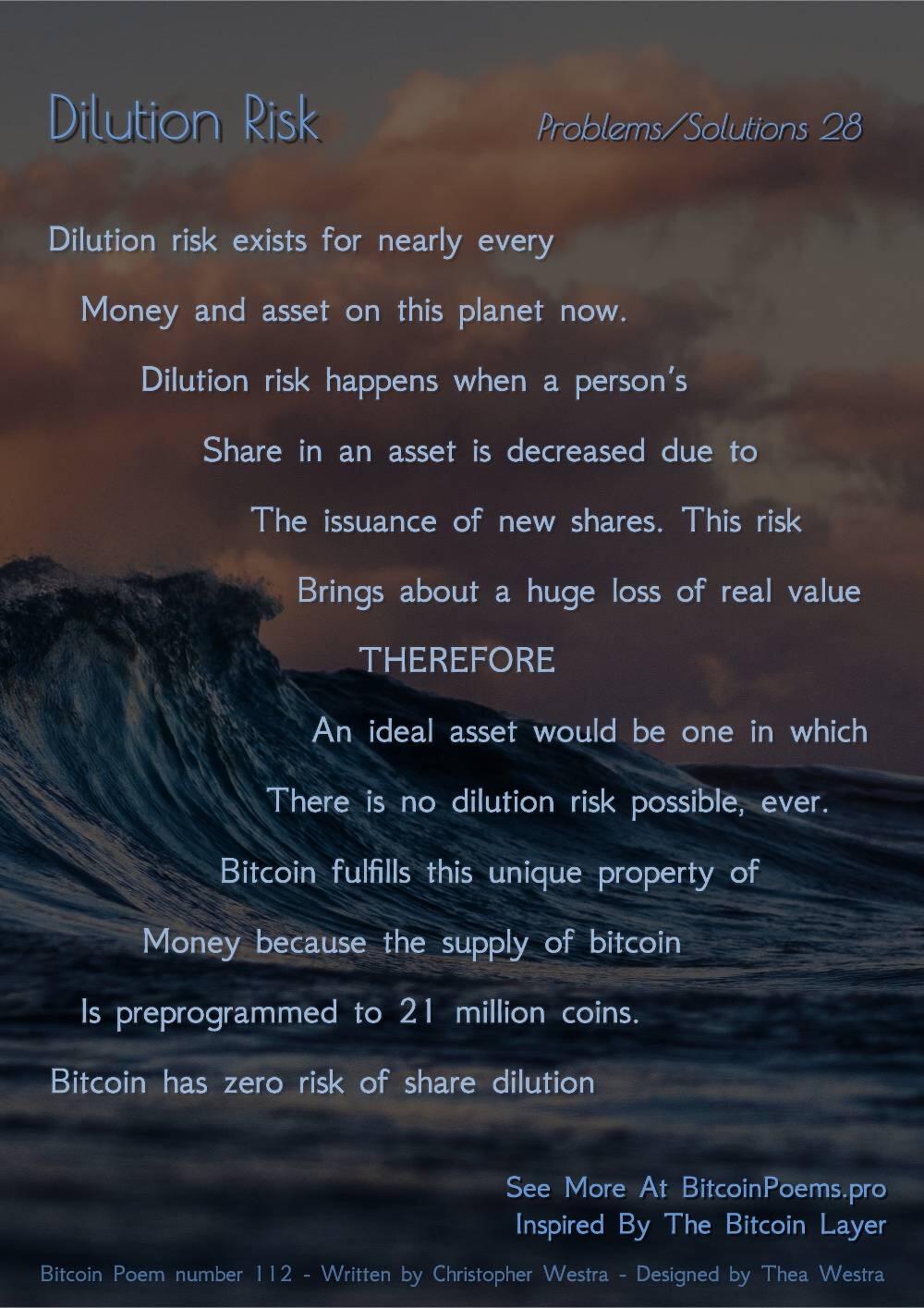
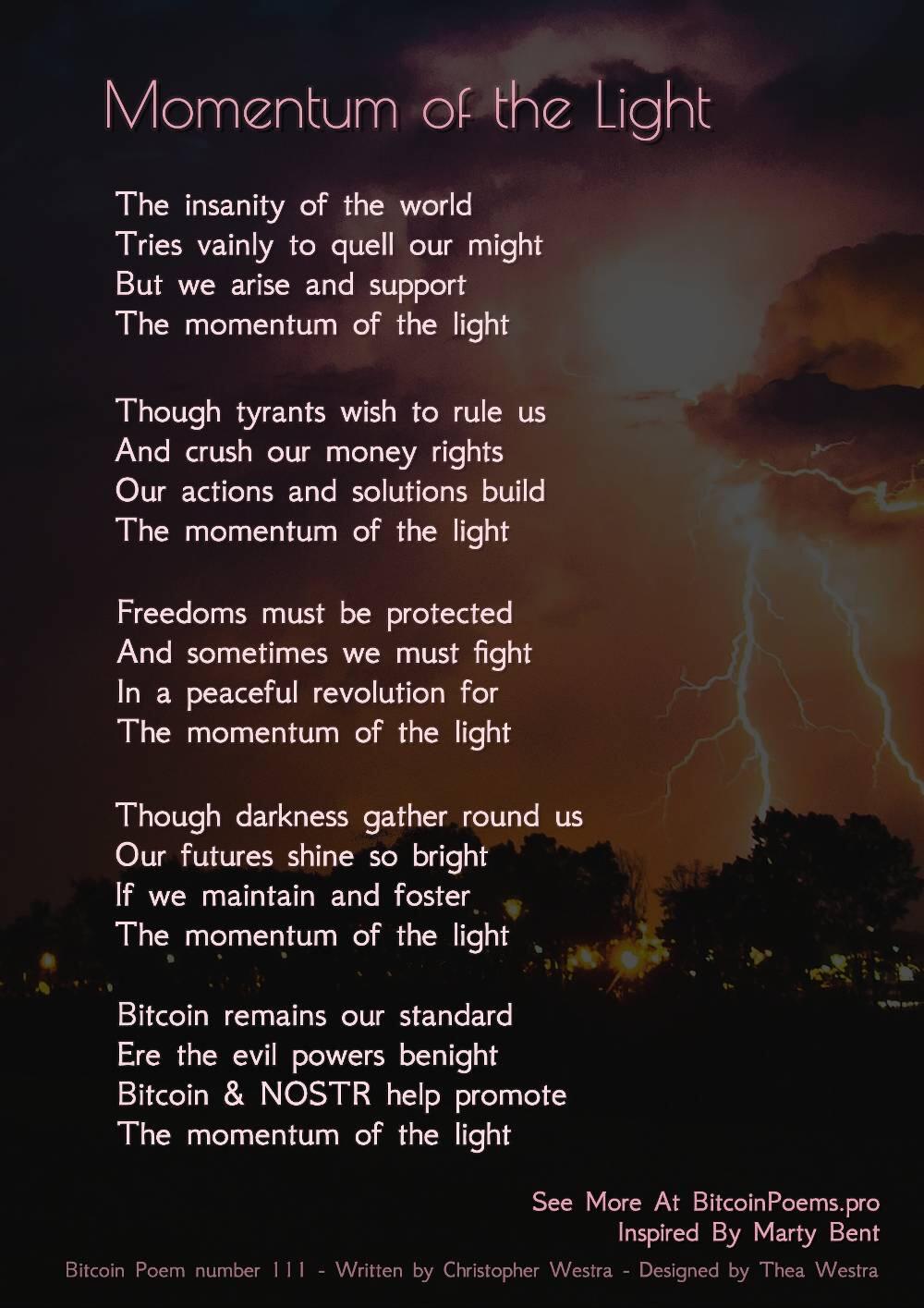
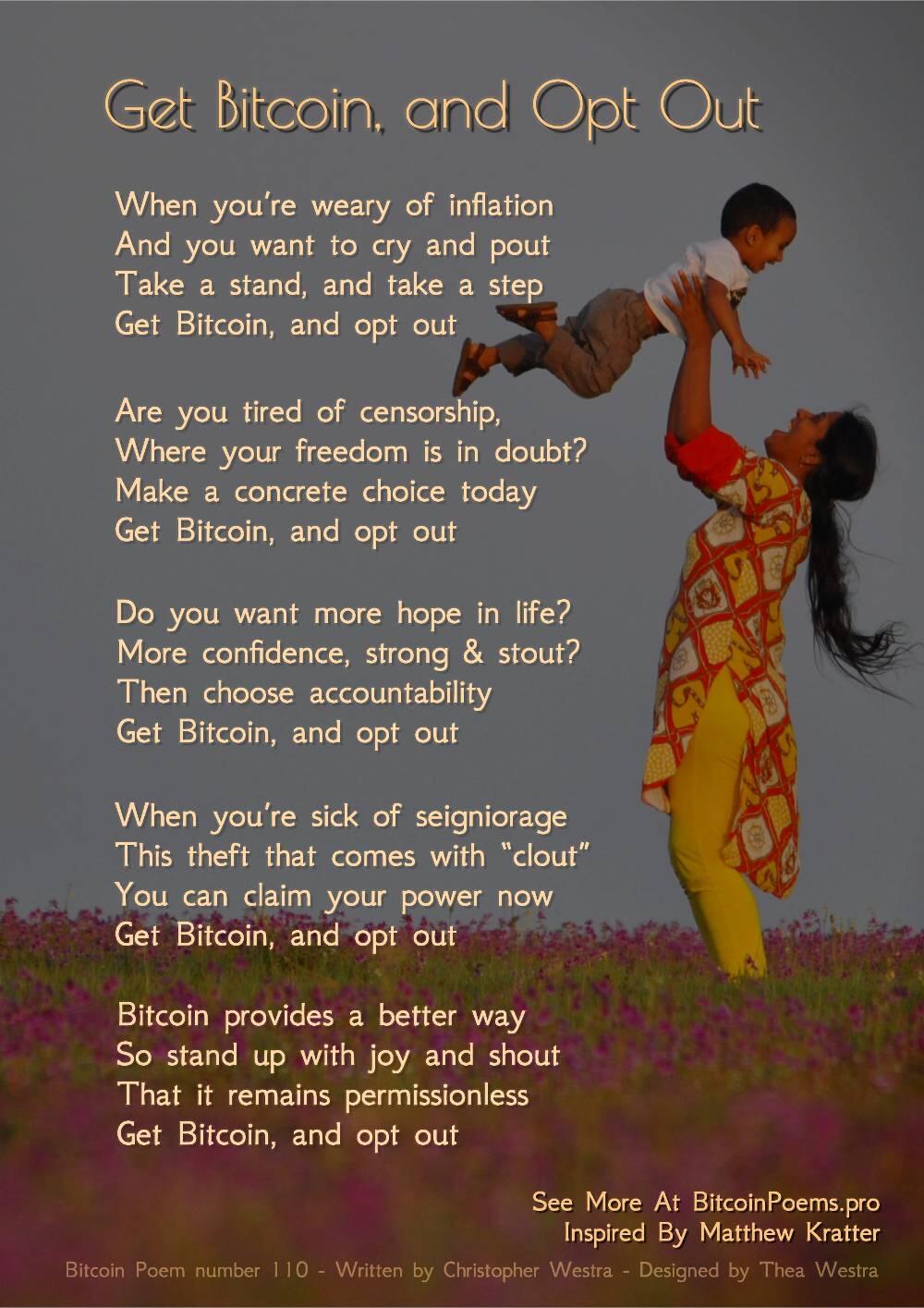
 In the bustling port city of Shimmer Bay, merchants bartered and traded using colorful seashells. Once a deal was struck, the shells were handed over, and the transaction was final. No take-backs, no arguments. But across the shimmering bay, a new city, Digiport, had sprung up. Here, transactions were conducted digitally, with promises whispered through glowing orbs.
However, these digital promises were far from final.
Merchants in Digiport often faced disputes. “The promised payment never arrived!” a disgruntled fishmonger would shout. The resolution process was slow and cumbersome, with wise elders spending days poring over records to determine the truth. Trade stagnated, held back by the uncertainty of unfinalized transactions.
One day, a curious sailor named Captain Satoshi arrived in Digiport. He spoke of a revolutionary system – a digital ledger maintained not by a single authority, but by everyone in the city. Each transaction was like a seashell, permanently etched into the ledger, visible to all.
No more broken promises, no more endless debates.
The merchants of Digiport were skeptical at first. Could a system without a central authority truly work? But Captain Satoshi explained how powerful computers called “miners” would compete to secure the ledger, adding new transactions and ensuring their finality. Once a transaction was etched into the ledger, it was set in stone, just like a seashell changing hands in Shimmer Bay.
Intrigued, the merchants of Digiport decided to give it a try. Soon, the city buzzed with activity. Transactions were completed swiftly and securely, without the need for slow and costly mediations. Trade flourished as merchants no longer feared the ghosts of unfulfilled promises.
The finality of Captain Satoshi's system, much like the finality of the seashells, brought trust and efficiency back to Digiport's digital marketplace.
And so, in a world where trust was often elusive and disputes were common, Bitcoin stood as a beacon of hope, offering a solution to the age-old problem of finality in the digital realm. With Bitcoin, transactions became not just efficient, but truly final – a testament to the power of cryptographic innovation.
In the bustling port city of Shimmer Bay, merchants bartered and traded using colorful seashells. Once a deal was struck, the shells were handed over, and the transaction was final. No take-backs, no arguments. But across the shimmering bay, a new city, Digiport, had sprung up. Here, transactions were conducted digitally, with promises whispered through glowing orbs.
However, these digital promises were far from final.
Merchants in Digiport often faced disputes. “The promised payment never arrived!” a disgruntled fishmonger would shout. The resolution process was slow and cumbersome, with wise elders spending days poring over records to determine the truth. Trade stagnated, held back by the uncertainty of unfinalized transactions.
One day, a curious sailor named Captain Satoshi arrived in Digiport. He spoke of a revolutionary system – a digital ledger maintained not by a single authority, but by everyone in the city. Each transaction was like a seashell, permanently etched into the ledger, visible to all.
No more broken promises, no more endless debates.
The merchants of Digiport were skeptical at first. Could a system without a central authority truly work? But Captain Satoshi explained how powerful computers called “miners” would compete to secure the ledger, adding new transactions and ensuring their finality. Once a transaction was etched into the ledger, it was set in stone, just like a seashell changing hands in Shimmer Bay.
Intrigued, the merchants of Digiport decided to give it a try. Soon, the city buzzed with activity. Transactions were completed swiftly and securely, without the need for slow and costly mediations. Trade flourished as merchants no longer feared the ghosts of unfulfilled promises.
The finality of Captain Satoshi's system, much like the finality of the seashells, brought trust and efficiency back to Digiport's digital marketplace.
And so, in a world where trust was often elusive and disputes were common, Bitcoin stood as a beacon of hope, offering a solution to the age-old problem of finality in the digital realm. With Bitcoin, transactions became not just efficient, but truly final – a testament to the power of cryptographic innovation.
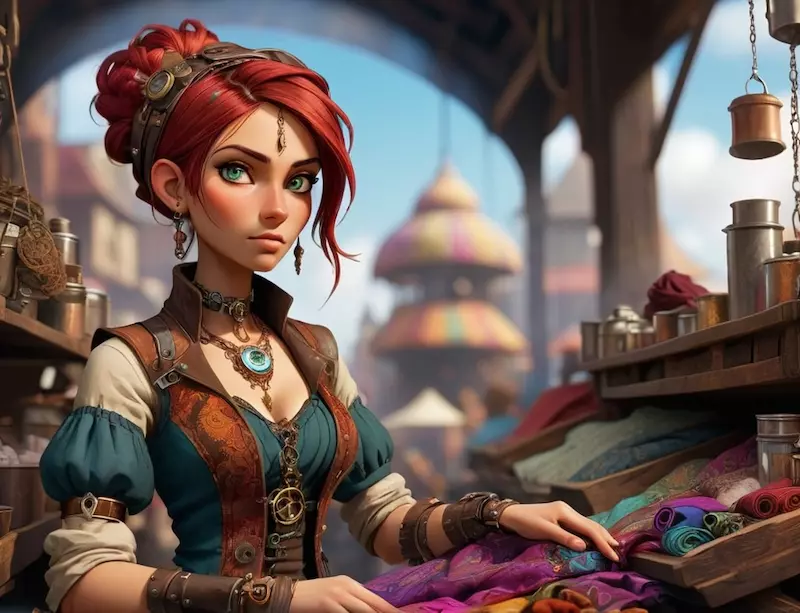 In a bustling marketplace filled with colorful fabrics and fragrant spices, lived Anika, a weaver known for her beautiful tapestries. Each month, a portion of her earnings went to her family back in a distant village. Sending this money, called a remittance, was always a bittersweet affair.
While Anika wanted to support her loved ones, the fees charged by the money transfer service felt like a heavy tax on her hard work. 6% of every transaction seemed to vanish into thin air, leaving less for her family and a knot of frustration in Anika's stomach.
One day, a traveling merchant named Jafar arrived at the market. Jafar spoke of a new system, a digital currency called Bitcoin, that promised to change things. He explained that Bitcoin transactions were faster, more secure, and most importantly, much cheaper than traditional methods.
Anika was skeptical at first, but listened intently as Jafar described how Bitcoin's fees were minimal, especially when using something called the Lightning Network.
Intrigued, Anika decided to try it. Her first Bitcoin remittance was a revelation. The transaction was completed within minutes, and the fees were a fraction of what she usually paid. The joy of sending money to her family was amplified by the extra resources it left behind.
News of Anika's experience spread like wildfire through the marketplace. Soon, other vendors were trying Bitcoin for their own transactions. The marketplace buzzed with excitement as people discovered the freedom and savings offered by this new system. They could finally focus on their businesses and families, without a significant portion of their earnings disappearing into fees.
As more people embraced Bitcoin, the marketplace flourished. The money saved on transactions translated into new investments, vibrant stalls, and a sense of empowerment among the vendors. Anika, once burdened by fees, now used Bitcoin to not only support her family but also expand her weaving business.
The story of Anika and the marketplace is a glimpse into a future where financial systems work for the people, not the other way around. With Bitcoin, the power to move money around the world becomes faster, cheaper, and accessible to all.
In a bustling marketplace filled with colorful fabrics and fragrant spices, lived Anika, a weaver known for her beautiful tapestries. Each month, a portion of her earnings went to her family back in a distant village. Sending this money, called a remittance, was always a bittersweet affair.
While Anika wanted to support her loved ones, the fees charged by the money transfer service felt like a heavy tax on her hard work. 6% of every transaction seemed to vanish into thin air, leaving less for her family and a knot of frustration in Anika's stomach.
One day, a traveling merchant named Jafar arrived at the market. Jafar spoke of a new system, a digital currency called Bitcoin, that promised to change things. He explained that Bitcoin transactions were faster, more secure, and most importantly, much cheaper than traditional methods.
Anika was skeptical at first, but listened intently as Jafar described how Bitcoin's fees were minimal, especially when using something called the Lightning Network.
Intrigued, Anika decided to try it. Her first Bitcoin remittance was a revelation. The transaction was completed within minutes, and the fees were a fraction of what she usually paid. The joy of sending money to her family was amplified by the extra resources it left behind.
News of Anika's experience spread like wildfire through the marketplace. Soon, other vendors were trying Bitcoin for their own transactions. The marketplace buzzed with excitement as people discovered the freedom and savings offered by this new system. They could finally focus on their businesses and families, without a significant portion of their earnings disappearing into fees.
As more people embraced Bitcoin, the marketplace flourished. The money saved on transactions translated into new investments, vibrant stalls, and a sense of empowerment among the vendors. Anika, once burdened by fees, now used Bitcoin to not only support her family but also expand her weaving business.
The story of Anika and the marketplace is a glimpse into a future where financial systems work for the people, not the other way around. With Bitcoin, the power to move money around the world becomes faster, cheaper, and accessible to all.
 In a valley nestled between snow-capped peaks lived two tribes: the Makers and the Takers. The Makers thrived on innovation and hard work. They built intricate tools, tilled fertile fields, and traded their goods with other valleys. Their currency was simple: clay tokens representing a day's labor.
The Takers, on the other hand, were ruled by the Grand Tallykeeper. He controlled a vast store of gold coins, the only currency accepted. The Tallykeeper believed his role was to actively manage the economy.
When harvests were bountiful, he'd declare the gold more valuable, making it harder for Makers to obtain loans for new tools. This, he claimed, prevented inflation. Conversely, during lean years, he'd flood the market with gold, making loans easier but risking a future price collapse.
This constant tinkering backfired. True signals of need were lost in the artificial ebb and flow of gold. The Makers, unsure of the future value of their labor, became hesitant to invest in long-term projects. Bubbles formed in short-term ventures, then burst, leaving a trail of wasted resources.
One Maker, a young woman named Elara, noticed a hidden valley rumored to hold a rare metal, Adamantine. Perfect for tools, Adamantine could revolutionize their work. But obtaining loans in the Taker's gold market was too risky for such a long-term venture.
Elara proposed a new system: time tokens. Each token represented a set amount of future labor, freely tradable amongst the Makers. With these tokens, Elara could secure investment from fellow Makers who believed in Adamantine's potential. The risk and reward were clear, based solely on the perceived value of the project, not the whims of the Grand Tallykeeper.
The time token system spread like wildfire. Innovation flourished. The discovery of Adamantine, funded by the free market, propelled the Makers into a golden age. The Takers, clinging to their gold and outdated system, watched with envy.
Elara's story became a legend, a testament to the power of a currency that reflected true value and empowered the people to allocate resources efficiently. It was a system based on work, not manipulation, a constant reminder that the best signal for an economy is the collective will of its makers.
In a valley nestled between snow-capped peaks lived two tribes: the Makers and the Takers. The Makers thrived on innovation and hard work. They built intricate tools, tilled fertile fields, and traded their goods with other valleys. Their currency was simple: clay tokens representing a day's labor.
The Takers, on the other hand, were ruled by the Grand Tallykeeper. He controlled a vast store of gold coins, the only currency accepted. The Tallykeeper believed his role was to actively manage the economy.
When harvests were bountiful, he'd declare the gold more valuable, making it harder for Makers to obtain loans for new tools. This, he claimed, prevented inflation. Conversely, during lean years, he'd flood the market with gold, making loans easier but risking a future price collapse.
This constant tinkering backfired. True signals of need were lost in the artificial ebb and flow of gold. The Makers, unsure of the future value of their labor, became hesitant to invest in long-term projects. Bubbles formed in short-term ventures, then burst, leaving a trail of wasted resources.
One Maker, a young woman named Elara, noticed a hidden valley rumored to hold a rare metal, Adamantine. Perfect for tools, Adamantine could revolutionize their work. But obtaining loans in the Taker's gold market was too risky for such a long-term venture.
Elara proposed a new system: time tokens. Each token represented a set amount of future labor, freely tradable amongst the Makers. With these tokens, Elara could secure investment from fellow Makers who believed in Adamantine's potential. The risk and reward were clear, based solely on the perceived value of the project, not the whims of the Grand Tallykeeper.
The time token system spread like wildfire. Innovation flourished. The discovery of Adamantine, funded by the free market, propelled the Makers into a golden age. The Takers, clinging to their gold and outdated system, watched with envy.
Elara's story became a legend, a testament to the power of a currency that reflected true value and empowered the people to allocate resources efficiently. It was a system based on work, not manipulation, a constant reminder that the best signal for an economy is the collective will of its makers.

 In a small village nestled in the hills, there was a magical river that provided water to all the villagers. The river always flowed, but its currents were strongest during certain times of the day and certain seasons. At night and during rainy seasons, the river would swell, carrying much more water than the villagers needed. This excess water often flowed away unused, spilling over the banks and being wasted.
The village elders were concerned about this waste. They knew that during the day, when everyone was awake and active, there was often just enough water for all the villagers' needs. But at night, when everyone was asleep, the river overflowed. “What can we do to avoid wasting this precious water?” they wondered.
One day, a clever young woman named Lyra came up with an idea. She proposed building a series of water wheels along the riverbanks. These water wheels would turn and grind grain into flour whenever the river's flow was strong. This way, the extra water at night wouldn't be wasted. Instead, it would power the water wheels and provide the village with flour.
But there was another part to Lyra's plan. The water wheels could be stopped easily if the village needed more water for drinking, cooking, or washing during the day. If the river's flow decreased, the wheels would halt, ensuring that the villagers always had enough water for their immediate needs.
The villagers agreed to try Lyra's idea. They built the water wheels, and soon they noticed a remarkable change. The water wheels turned tirelessly through the night, grinding grain and using the river's surplus power. During the day, when the villagers needed more water, they could simply stop the wheels. This balance allowed the village to use the river's power efficiently, reducing waste and ensuring a steady supply of flour and water.
Just like the water wheels in Lyra's village, Bitcoin miners use excess energy from power grids. They run their operations when there's surplus energy, especially from sources like wind and solar power. And just like the water wheels that could stop when water was needed elsewhere, Bitcoin miners can quickly reduce their energy consumption when the grid needs more power for homes and businesses.
This helps balance energy use, reduces waste, and makes the entire system more efficient.
See More at https://BitcoinSolutions.Pro
In a small village nestled in the hills, there was a magical river that provided water to all the villagers. The river always flowed, but its currents were strongest during certain times of the day and certain seasons. At night and during rainy seasons, the river would swell, carrying much more water than the villagers needed. This excess water often flowed away unused, spilling over the banks and being wasted.
The village elders were concerned about this waste. They knew that during the day, when everyone was awake and active, there was often just enough water for all the villagers' needs. But at night, when everyone was asleep, the river overflowed. “What can we do to avoid wasting this precious water?” they wondered.
One day, a clever young woman named Lyra came up with an idea. She proposed building a series of water wheels along the riverbanks. These water wheels would turn and grind grain into flour whenever the river's flow was strong. This way, the extra water at night wouldn't be wasted. Instead, it would power the water wheels and provide the village with flour.
But there was another part to Lyra's plan. The water wheels could be stopped easily if the village needed more water for drinking, cooking, or washing during the day. If the river's flow decreased, the wheels would halt, ensuring that the villagers always had enough water for their immediate needs.
The villagers agreed to try Lyra's idea. They built the water wheels, and soon they noticed a remarkable change. The water wheels turned tirelessly through the night, grinding grain and using the river's surplus power. During the day, when the villagers needed more water, they could simply stop the wheels. This balance allowed the village to use the river's power efficiently, reducing waste and ensuring a steady supply of flour and water.
Just like the water wheels in Lyra's village, Bitcoin miners use excess energy from power grids. They run their operations when there's surplus energy, especially from sources like wind and solar power. And just like the water wheels that could stop when water was needed elsewhere, Bitcoin miners can quickly reduce their energy consumption when the grid needs more power for homes and businesses.
This helps balance energy use, reduces waste, and makes the entire system more efficient.
See More at https://BitcoinSolutions.Pro
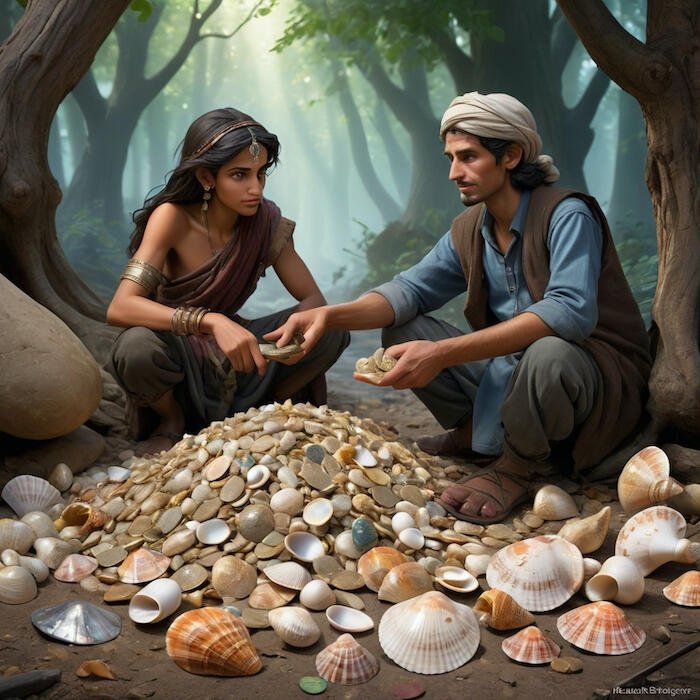 On the bustling trade route of the Whispering Trees, a menagerie of merchants bartered their wares. One offered shimmering seashells, another, intricately carved stones. But these weren't mere trinkets; they were the currencies of their time.
For generations, the value of these items held steady. However, whispers turned to shouts as a new technology emerged – the Great Shell Scooper. It could scoop vast quantities of shells from the ocean floor, flooding the market. Seashells, once valuable, became common, and their buying power plummeted.
A similar fate befell the carved stones. Greedy miners, armed with powerful chisels, began churning them out at an alarming rate. Soon, the stones lost their exclusivity, and merchants found themselves struggling to buy basic necessities.
Disheartened, the traders gathered around a wise old nomad named Zahra. “True money,” she explained, “needs scarcity built into its very essence, not just its availability.”
One young merchant, Amal, chimed in with a glimmer in his eye. He had encountered a distant tribe that spoke of a revolutionary system – “Starlight Tokens.” These tokens, he explained, were digital, existing only on a vast, secure network. But the most remarkable feature was their finite quantity. There would only ever be a set number of Starlight Tokens in existence.
Intrigued, the traders decided to learn more. They discovered a system where complex puzzles guarded the creation of new tokens, ensuring a slow and steady release. This digital scarcity, unlike the unpredictable nature of physical items, offered a solution to their woes.
The Whispering Trees embraced the Starlight Token system. With a predictable supply, merchants and traders could plan for the future. The tokens' digital nature allowed for secure and fast transactions.
The once-troubled trade route flourished, a testament to the power of digital scarcity in a world increasingly reliant on the digital realm. As Amal had hoped, the Starlight Tokens, scarce by design, became a beacon of stability in their ever-changing world.
See more at https://BitcoinSolutions.Pro
On the bustling trade route of the Whispering Trees, a menagerie of merchants bartered their wares. One offered shimmering seashells, another, intricately carved stones. But these weren't mere trinkets; they were the currencies of their time.
For generations, the value of these items held steady. However, whispers turned to shouts as a new technology emerged – the Great Shell Scooper. It could scoop vast quantities of shells from the ocean floor, flooding the market. Seashells, once valuable, became common, and their buying power plummeted.
A similar fate befell the carved stones. Greedy miners, armed with powerful chisels, began churning them out at an alarming rate. Soon, the stones lost their exclusivity, and merchants found themselves struggling to buy basic necessities.
Disheartened, the traders gathered around a wise old nomad named Zahra. “True money,” she explained, “needs scarcity built into its very essence, not just its availability.”
One young merchant, Amal, chimed in with a glimmer in his eye. He had encountered a distant tribe that spoke of a revolutionary system – “Starlight Tokens.” These tokens, he explained, were digital, existing only on a vast, secure network. But the most remarkable feature was their finite quantity. There would only ever be a set number of Starlight Tokens in existence.
Intrigued, the traders decided to learn more. They discovered a system where complex puzzles guarded the creation of new tokens, ensuring a slow and steady release. This digital scarcity, unlike the unpredictable nature of physical items, offered a solution to their woes.
The Whispering Trees embraced the Starlight Token system. With a predictable supply, merchants and traders could plan for the future. The tokens' digital nature allowed for secure and fast transactions.
The once-troubled trade route flourished, a testament to the power of digital scarcity in a world increasingly reliant on the digital realm. As Amal had hoped, the Starlight Tokens, scarce by design, became a beacon of stability in their ever-changing world.
See more at https://BitcoinSolutions.Pro
 Once upon a time, in a bustling town nestled between rolling hills, there lived two friends named Lily and Max. They both worked hard at their jobs, earning a modest income every month. Lily was a big fan of the latest gadgets and trendy clothes, while Max preferred to save his money for a rainy day.
Lily loved spending her money as soon as she earned it. Whenever a new smartphone hit the market or a flashy sale popped up at the mall, she couldn't resist splurging on the latest tech and fashion. She enjoyed the thrill of instant gratification, but over time, she noticed something troubling. Despite all her purchases, she never seemed to have much to show for it in the long run. The things she bought quickly lost their charm, and she found herself constantly chasing the next shiny object.
Max, on the other hand, had a different approach to money. He was intrigued by the idea of saving and investing for the future. Instead of spending all his earnings right away, he set aside a portion each month and put it into a special savings account. But what made his strategy even more successful was his discovery of Bitcoin.
Unlike fiat money, which loses value over time due to inflation, Bitcoin had a unique property – it tended to increase in value over time. Max realized that by holding onto his bitcoin, he could actually increase his purchasing power in the future. This realization changed his perspective on money. Instead of seeing it as something to be spent frivolously, he viewed it as a tool for building wealth and securing his future.
As the years went by, Lily noticed a stark contrast between her lifestyle and Max's. While she struggled with mounting debt and the constant need for more, Max thrived, steadily growing his savings and investments. He was able to afford things that truly mattered to him, like buying a home and starting his own business.
The story of Lily and Max illustrates how money that loses value over time can lead to excessive consumption and short-term thinking, while money that increases in value encourages savings and long-term planning. By embracing Bitcoin, we can reverse this trend and create a more sustainable and prosperous future for ourselves and the world around us.
See more at https://bitcoinsolutions.pro/
Once upon a time, in a bustling town nestled between rolling hills, there lived two friends named Lily and Max. They both worked hard at their jobs, earning a modest income every month. Lily was a big fan of the latest gadgets and trendy clothes, while Max preferred to save his money for a rainy day.
Lily loved spending her money as soon as she earned it. Whenever a new smartphone hit the market or a flashy sale popped up at the mall, she couldn't resist splurging on the latest tech and fashion. She enjoyed the thrill of instant gratification, but over time, she noticed something troubling. Despite all her purchases, she never seemed to have much to show for it in the long run. The things she bought quickly lost their charm, and she found herself constantly chasing the next shiny object.
Max, on the other hand, had a different approach to money. He was intrigued by the idea of saving and investing for the future. Instead of spending all his earnings right away, he set aside a portion each month and put it into a special savings account. But what made his strategy even more successful was his discovery of Bitcoin.
Unlike fiat money, which loses value over time due to inflation, Bitcoin had a unique property – it tended to increase in value over time. Max realized that by holding onto his bitcoin, he could actually increase his purchasing power in the future. This realization changed his perspective on money. Instead of seeing it as something to be spent frivolously, he viewed it as a tool for building wealth and securing his future.
As the years went by, Lily noticed a stark contrast between her lifestyle and Max's. While she struggled with mounting debt and the constant need for more, Max thrived, steadily growing his savings and investments. He was able to afford things that truly mattered to him, like buying a home and starting his own business.
The story of Lily and Max illustrates how money that loses value over time can lead to excessive consumption and short-term thinking, while money that increases in value encourages savings and long-term planning. By embracing Bitcoin, we can reverse this trend and create a more sustainable and prosperous future for ourselves and the world around us.
See more at https://bitcoinsolutions.pro/

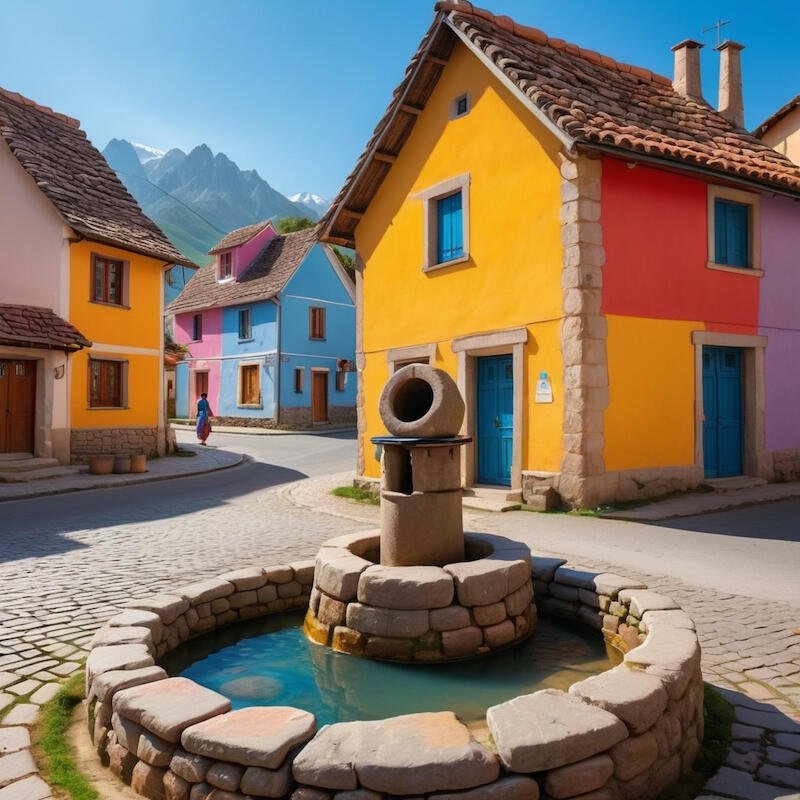 In a bustling village nestled between rolling hills, life was peaceful for a time. The villagers, known for their craftsmanship and resourcefulness, thrived through trade and cooperation. However, a shadow loomed on the horizon. A neighboring village, fueled by whispers of an endless wellspring of gold, began to stir trouble.
This neighboring village had a peculiar system. Instead of using coins minted from precious metals like the one the craftsmen used, they relied on “promise notes.” These notes were issued by a central well, and their value hinged on the promise that more notes could be created whenever needed.
Tempted by the allure of easy wealth, the neighboring village embarked on an ambitious campaign of expansion. They hired foreign fighters, built grand fortifications, and financed it all with a constant flow of new promise notes.
At first, the craftsmen's village prospered further. The demand for their goods from the expanding neighbor was high. But a disquieting trend emerged. As more and more notes were printed, each one seemed to buy less. The price of simple goods began to climb, and whispers of discontent rose amongst the villagers.
The elders, wise and cautious, knew the dangers of such a system. With each new promise note, the real value of the existing ones dwindled. It was like a never-ending well that, instead of water, produced a shimmering illusion of wealth.
One day, a young apprentice named Lance returned from a trade mission to the neighboring village. His eyes were wide with worry. “They're planning a war,” he reported, “and they're counting on their endless notes to finance it.”
The elders knew they had to act. They gathered the villagers and explained the precarious situation. “Their war may bring them temporary gain,” they warned, “but the cost will be borne by everyone, through ever-rising prices and a dwindling supply of true value.”
The villagers, valuing their peaceful lives and hard-earned wealth, decided to take a stand. They proposed a new system, with new monetary units based on work, their value derived from the metal they were made of. Since this metal was hard to obtain, this “hard money,” as they called it, wouldn't be subject to inflation or manipulation.
The neighboring village scoffed at their proposal. But as time passed, the cracks in their own system began to show. The war they financed dragged on, their promise notes grew worthless, and their people faced shortages and hardship.
The craftsmen's village, on the other hand, thrived. Their hard money system instilled trust and stability. They continued to trade, innovate, and invest in their future, knowing the value of their resources wouldn't be eroded by endless printing of new notes.
The story of the two villages became a cautionary tale. It showed that while easy credit might create the illusion of wealth, it ultimately led to instability and conflict. True prosperity, the villagers learned, came from hard work, resourcefulness, and a system based on honest value, not endless promises.
More at https://bitcoinsolutions.pro
In a bustling village nestled between rolling hills, life was peaceful for a time. The villagers, known for their craftsmanship and resourcefulness, thrived through trade and cooperation. However, a shadow loomed on the horizon. A neighboring village, fueled by whispers of an endless wellspring of gold, began to stir trouble.
This neighboring village had a peculiar system. Instead of using coins minted from precious metals like the one the craftsmen used, they relied on “promise notes.” These notes were issued by a central well, and their value hinged on the promise that more notes could be created whenever needed.
Tempted by the allure of easy wealth, the neighboring village embarked on an ambitious campaign of expansion. They hired foreign fighters, built grand fortifications, and financed it all with a constant flow of new promise notes.
At first, the craftsmen's village prospered further. The demand for their goods from the expanding neighbor was high. But a disquieting trend emerged. As more and more notes were printed, each one seemed to buy less. The price of simple goods began to climb, and whispers of discontent rose amongst the villagers.
The elders, wise and cautious, knew the dangers of such a system. With each new promise note, the real value of the existing ones dwindled. It was like a never-ending well that, instead of water, produced a shimmering illusion of wealth.
One day, a young apprentice named Lance returned from a trade mission to the neighboring village. His eyes were wide with worry. “They're planning a war,” he reported, “and they're counting on their endless notes to finance it.”
The elders knew they had to act. They gathered the villagers and explained the precarious situation. “Their war may bring them temporary gain,” they warned, “but the cost will be borne by everyone, through ever-rising prices and a dwindling supply of true value.”
The villagers, valuing their peaceful lives and hard-earned wealth, decided to take a stand. They proposed a new system, with new monetary units based on work, their value derived from the metal they were made of. Since this metal was hard to obtain, this “hard money,” as they called it, wouldn't be subject to inflation or manipulation.
The neighboring village scoffed at their proposal. But as time passed, the cracks in their own system began to show. The war they financed dragged on, their promise notes grew worthless, and their people faced shortages and hardship.
The craftsmen's village, on the other hand, thrived. Their hard money system instilled trust and stability. They continued to trade, innovate, and invest in their future, knowing the value of their resources wouldn't be eroded by endless printing of new notes.
The story of the two villages became a cautionary tale. It showed that while easy credit might create the illusion of wealth, it ultimately led to instability and conflict. True prosperity, the villagers learned, came from hard work, resourcefulness, and a system based on honest value, not endless promises.
More at https://bitcoinsolutions.pro
 In the heart of a vast kingdom, a life-giving river snaked its way through fertile fields and bustling towns. The river was the lifeblood of the land, its waters carefully managed by a council of wise Riverkeepers. These benevolent rulers ensured fair distribution of the water, nurturing a society where prosperity was shared by all.
One day, a cunning advisor named Viscount Venal approached the Riverkeepers. “Why rely solely on the river's flow?” he whispered. “We can create more wealth by printing new golden seeds, representing the river's future bounty.”
Intrigued, the Riverkeepers agreed. Viscount Venal, with a sly grin, flooded the land with these golden seeds. Merchants received them first, using them to buy more goods and inflate prices. The wealthy elite, close to the source of the new seeds, grew richer.
But as the golden seeds trickled down to the commoners, their value dwindled. Farmers struggled to buy basic necessities, and whispers of discontent filled the air. The Riverkeepers, realizing their mistake, saw the rich growing richer while the poor grew poorer.
A young boy named Kiran, known for his curiosity, discovered a hidden valley nestled within the kingdom. There, a community thrived using a unique system. Their wealth wasn't based on printed promises, but on “River Shards” – rare, beautiful stones mined from the riverbed.
Kiran learned that anyone could participate in mining these River Shards. All they needed was hard work and ingenuity to solve the complex puzzles that secured the network. Rewards for successful mining came in the form of newly discovered River Shards, fairly distributed to those who contributed to the river's health.
Returning to the kingdom, Kiran shared his discovery. The Riverkeepers, impressed by the fairness and sustainability of the River Shard system, saw a path to correcting their mistake. They embraced the new system, dismantling the printing of golden seeds.
The kingdom witnessed a transformation. As people participated in mining River Shards, wealth became more evenly distributed. Farmers used earned Shards to improve their lands, merchants offered fair prices, and a sense of shared prosperity returned.
The story of the Riverkeepers and the River Shards became a beacon of hope. It showed that true wealth wasn't created through manipulation and privilege, but through hard work, collaboration, and a system that rewarded everyone who contributed to the collective good.
The kingdom flourished, a testament to the power of a fair and decentralized system where everyone could benefit from the river's bounty.
In the heart of a vast kingdom, a life-giving river snaked its way through fertile fields and bustling towns. The river was the lifeblood of the land, its waters carefully managed by a council of wise Riverkeepers. These benevolent rulers ensured fair distribution of the water, nurturing a society where prosperity was shared by all.
One day, a cunning advisor named Viscount Venal approached the Riverkeepers. “Why rely solely on the river's flow?” he whispered. “We can create more wealth by printing new golden seeds, representing the river's future bounty.”
Intrigued, the Riverkeepers agreed. Viscount Venal, with a sly grin, flooded the land with these golden seeds. Merchants received them first, using them to buy more goods and inflate prices. The wealthy elite, close to the source of the new seeds, grew richer.
But as the golden seeds trickled down to the commoners, their value dwindled. Farmers struggled to buy basic necessities, and whispers of discontent filled the air. The Riverkeepers, realizing their mistake, saw the rich growing richer while the poor grew poorer.
A young boy named Kiran, known for his curiosity, discovered a hidden valley nestled within the kingdom. There, a community thrived using a unique system. Their wealth wasn't based on printed promises, but on “River Shards” – rare, beautiful stones mined from the riverbed.
Kiran learned that anyone could participate in mining these River Shards. All they needed was hard work and ingenuity to solve the complex puzzles that secured the network. Rewards for successful mining came in the form of newly discovered River Shards, fairly distributed to those who contributed to the river's health.
Returning to the kingdom, Kiran shared his discovery. The Riverkeepers, impressed by the fairness and sustainability of the River Shard system, saw a path to correcting their mistake. They embraced the new system, dismantling the printing of golden seeds.
The kingdom witnessed a transformation. As people participated in mining River Shards, wealth became more evenly distributed. Farmers used earned Shards to improve their lands, merchants offered fair prices, and a sense of shared prosperity returned.
The story of the Riverkeepers and the River Shards became a beacon of hope. It showed that true wealth wasn't created through manipulation and privilege, but through hard work, collaboration, and a system that rewarded everyone who contributed to the collective good.
The kingdom flourished, a testament to the power of a fair and decentralized system where everyone could benefit from the river's bounty.
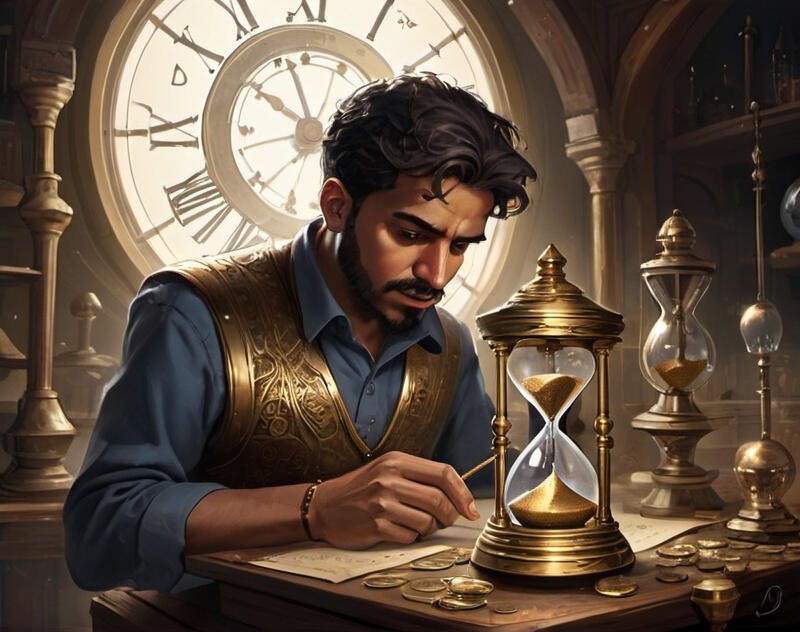 In the bustling marketplace of Crimson Citadel, camels laden with exotic spices jostled for space with merchants hawking vibrant silks. Here, amidst the cacophony of bartering and haggling, lived two friends, Amara and Samir.
Amara, a weaver of exquisite tapestries, wished to purchase a rare jar of sapphire dust from Samir, a spice merchant. However, their options were limited. They could exchange goods directly, which was risky and inconvenient. Or, they could rely on Hakim the Moneychanger.
Hakim, a portly man with a perpetually calculating gaze, operated a money booth. He accepted goods in exchange for his special coins, which Amara and Samir could then use to purchase items. But Hakim's services weren't free. He charged a hefty fee for every exchange, and whispers swirled about his tendency to manipulate the exchange rates.
One stifling afternoon, Amara approached Samir, frustration etched on her face. “The price of sapphire dust keeps rising with Hakim taking his cut,” she lamented. “Wouldn't it be wonderful if we could trade directly, without relying on his greed?”
Samir, a tinkerer with a knack for inventions, tapped his chin thoughtfully. “There has to be a better way,” he mused. Days turned into weeks as Samir hunched over his workbench, gears whirring and metal clinking in a symphony of creation. Finally, he unveiled his invention – a marvel of brass and crystal he called the “Sandglass of Trust.”
The Sandglass, powered by intricate clockwork, allowed Amara and Samir to directly record their trades. Each transaction was etched onto a permanent record, visible to everyone. This eliminated the need for Hakim's coins and his manipulations.
News of the Sandglass spread like wildfire. Soon, other merchants began using it, bypassing Hakim altogether. The marketplace buzzed with newfound efficiency and trust. Hakim, his business dwindling, grumbled about the “unruly contraption.”
The Sandglass of Trust, though simple, became a symbol of a new era in Crimson Citadel – an era of peer-to-peer exchange, free from the constraints and fees of a middleman. It proved that trust and transparency, not a moneychanger's greed, were the cornerstones of a thriving marketplace.
In the bustling marketplace of Crimson Citadel, camels laden with exotic spices jostled for space with merchants hawking vibrant silks. Here, amidst the cacophony of bartering and haggling, lived two friends, Amara and Samir.
Amara, a weaver of exquisite tapestries, wished to purchase a rare jar of sapphire dust from Samir, a spice merchant. However, their options were limited. They could exchange goods directly, which was risky and inconvenient. Or, they could rely on Hakim the Moneychanger.
Hakim, a portly man with a perpetually calculating gaze, operated a money booth. He accepted goods in exchange for his special coins, which Amara and Samir could then use to purchase items. But Hakim's services weren't free. He charged a hefty fee for every exchange, and whispers swirled about his tendency to manipulate the exchange rates.
One stifling afternoon, Amara approached Samir, frustration etched on her face. “The price of sapphire dust keeps rising with Hakim taking his cut,” she lamented. “Wouldn't it be wonderful if we could trade directly, without relying on his greed?”
Samir, a tinkerer with a knack for inventions, tapped his chin thoughtfully. “There has to be a better way,” he mused. Days turned into weeks as Samir hunched over his workbench, gears whirring and metal clinking in a symphony of creation. Finally, he unveiled his invention – a marvel of brass and crystal he called the “Sandglass of Trust.”
The Sandglass, powered by intricate clockwork, allowed Amara and Samir to directly record their trades. Each transaction was etched onto a permanent record, visible to everyone. This eliminated the need for Hakim's coins and his manipulations.
News of the Sandglass spread like wildfire. Soon, other merchants began using it, bypassing Hakim altogether. The marketplace buzzed with newfound efficiency and trust. Hakim, his business dwindling, grumbled about the “unruly contraption.”
The Sandglass of Trust, though simple, became a symbol of a new era in Crimson Citadel – an era of peer-to-peer exchange, free from the constraints and fees of a middleman. It proved that trust and transparency, not a moneychanger's greed, were the cornerstones of a thriving marketplace.
 On a sunny afternoon, a group of friends gathered in the park for their favorite game – “Barterville.” The rules were simple: they traded imaginary items using colorful pebbles as currency.
One friend, Max, was the “Banker.” He kept a small pouch of pebbles, ensuring there were just enough for everyone to play comfortably. Every trade felt fair because the pebbles held their value.
But then, a new kid named Alex joined in. Alex, full of ideas, wanted to build a giant sandcastle, but he lacked pebbles. Impatient, he declared, “I'll just make more!” He grabbed a handful of dirt and pretended to transform it into shiny pebbles.
The other kids were skeptical. “But where did those come from?” Sarah asked. Max explained, “We can't just create more pebbles. Their value comes from having just the right amount for everyone.”
Unconvinced, Alex kept creating his own “dirt-money.” Soon, there were piles of it everywhere. The initial excitement of having more faded as the “dirt-money” lost its value. Nobody wanted it anymore.
Meanwhile, Max's pebbles, representing limited resources earned through honest work, remained valuable. Sarah used hers to buy a stick for her flag, and Ben traded his for a beautiful leaf crown.
Frustrated, Alex realized his shortcut had ruined the game. He apologized and asked Max, “How can we fix this?”
Max smiled. “Let's restart with the original pebbles. Remember, the fun comes from trading what we have, not just having more.”
From then on, they played with a newfound appreciation for limited resources. The experience mirrored the real world. Governments printing too much money, like Alex with his dirt-money, could lead to inflation, where the money loses its value.
Bitcoin, however, functioned more like Max's pebbles, limited in quantity and earned through a process called mining. This limited supply prevents governments from simply creating more money to fund their projects.
As they continued playing, the friends understood that a currency based on work and limited resources, like Bitcoin, could offer a more balanced system, encouraging responsible spending and fair exchange. Just like in Barterville, true value came from honest effort, not shortcuts.
On a sunny afternoon, a group of friends gathered in the park for their favorite game – “Barterville.” The rules were simple: they traded imaginary items using colorful pebbles as currency.
One friend, Max, was the “Banker.” He kept a small pouch of pebbles, ensuring there were just enough for everyone to play comfortably. Every trade felt fair because the pebbles held their value.
But then, a new kid named Alex joined in. Alex, full of ideas, wanted to build a giant sandcastle, but he lacked pebbles. Impatient, he declared, “I'll just make more!” He grabbed a handful of dirt and pretended to transform it into shiny pebbles.
The other kids were skeptical. “But where did those come from?” Sarah asked. Max explained, “We can't just create more pebbles. Their value comes from having just the right amount for everyone.”
Unconvinced, Alex kept creating his own “dirt-money.” Soon, there were piles of it everywhere. The initial excitement of having more faded as the “dirt-money” lost its value. Nobody wanted it anymore.
Meanwhile, Max's pebbles, representing limited resources earned through honest work, remained valuable. Sarah used hers to buy a stick for her flag, and Ben traded his for a beautiful leaf crown.
Frustrated, Alex realized his shortcut had ruined the game. He apologized and asked Max, “How can we fix this?”
Max smiled. “Let's restart with the original pebbles. Remember, the fun comes from trading what we have, not just having more.”
From then on, they played with a newfound appreciation for limited resources. The experience mirrored the real world. Governments printing too much money, like Alex with his dirt-money, could lead to inflation, where the money loses its value.
Bitcoin, however, functioned more like Max's pebbles, limited in quantity and earned through a process called mining. This limited supply prevents governments from simply creating more money to fund their projects.
As they continued playing, the friends understood that a currency based on work and limited resources, like Bitcoin, could offer a more balanced system, encouraging responsible spending and fair exchange. Just like in Barterville, true value came from honest effort, not shortcuts.