Donald Trump and Elizabeth Warren have gone at each other for a decade over tariffs, taxes, the Fed, immigration. There's just one thing they agree on: abolishing America's debt ceiling.
The ceiling was created in 1917 to simplify borrowing. Since 1960, Congress has raised, suspended, or redefined it about 80 times.
Why does it always blow up? Arithmetic. Fiscal year 2025: a $1.775 trillion hole. The last federal budget in surplus was in 2001. On interest on the debt alone, the government paid $1.22 trillion in 2025, nearly a quarter of federal revenue.
To pay it, more debt. Yesterday's creditors repaid with tomorrow's creditors' money.
A pyramid scheme by definition, with two differences: participation is mandatory, and the manager prints the currency it repays with. It never defaults explicitly; it does so gradually, by diluting the purchasing power of the dollars in circulation.
The expansion of the money supply is neither right-wing nor left-wing: it's the one thing the right and the left agree on.
View article →
Federico Rivi
federicorivi@nostrplebs.com
npub1rd0w...r3ys
Head of Fiat Demolition at Bull Bitcoin | Atlas21 Editor in Chief
It's the most talked-about news in Italy.
On July 15, the Court of Cassation upheld a sentence of 14 years and 9 months for Mario Roggero, the jeweler from Grinzane Cavour who in April 2021 killed two of the three robbers who had just cleaned out his shop. His wife and daughter beaten and tied up, the safe emptied.
Under Italian law, the act was over: the robbers had turned their backs.
By the logic of property, the violation was still in progress. As long as the stolen goods remain in the thief's hands, the invasion continues. Flight is the violation carried on by other means.
It wasn't the first time. Roggero had already been robbed in 2015: he, his wife and his daughter tied up, the two women locked in the bathroom, €300,000 in stolen goods. The security monopolist failed the same family twice. It collects taxes to protect you, doesn't show up, and when you protect yourself it punishes you. Then it orders you to compensate the families of the men who attacked you.
In a free market for security, the court would ask only one question: who initiated the use of force? Three men with a gun and a knife. Every consequence falls on whoever made that choice.
View article →
BIP 110 wants to block spam on Bitcoin. Too bad the spam has already disappeared on its own.
The blockchain is half-empty. Fees at multi-year lows. Bitcoin Mechanic, a developer at Ocean and the main supporter of the proposal, himself defines the network a "ghost town." Then he asks to modify the consensus rules on an emergency basis.
The proposal would activate with 55% of the miners, or via UASF with no miners at all, with 6-7% of the reachable nodes signaling it. For comparison: SegWit required 95% signaling. Taproot 90%.
Mechanic insists on the expiration: twelve months, then everything goes back to how it was before. But the text of the proposal admits that after activation we will in any case return to the traditional filters, because the consensus rules are not the right tool to fight spam. He himself acknowledges this in the What Bitcoin Did interview of May 26.
What remains when the soft-fork expires? The precedent. The memory that, faced with a situation perceived as an emergency by a niche, it is legitimate to modify the consensus rules to prevent a minority from doing things we do not like.
The game theory that Mechanic uses as the activation engine is the "whoever blinks first loses" one: the miners who do not apply the new rules work for free, so they adapt. It is a correct line of reasoning. But it demonstrates that a determined minority can modify Bitcoin's rules by leveraging the economic rationality of the miners, not the broad consensus. Anyone, tomorrow, can use the same playbook. To block the inscriptions, but also to freeze UTXOs that have ended up under OFAC sanctions, or to extend the emission schedule beyond the 21 million.
On the technical front: in February a developer published a complete image inside Bitcoin with a single transaction, circumventing all the filters that BIP 110 would like to write at the consensus level. Mechanic himself admits that after twelve months the inscribers will find other routes.
You pay the price of the precedent in full. The problem you wanted to solve remains intact.
View article →
While at the Bitcoin Conference in Las Vegas, executives from US federal agencies promise not to prosecute developers, in reality code is in the dock.
Keonne Rodriguez has entered a US federal penitentiary. Five years. His crime: writing a non-custodial Bitcoin wallet with Whirlpool.
He never touched user funds. He didn't hold the keys. The code was open source. Yet the Department of Justice prosecuted him for "unlicensed money transmitting" under Section 1960 - a charge that requires no proof of intent, no complicity with crimes, no custody of others' funds. His associate William Lonergan Hill got four years.
Running parallel is Roman Storm, co-founder of Tornado Cash - a non-custodial mixer on Ethereum. Arrested in August 2023. A four-week trial in the Southern District of New York. Verdict on August 6, 2025: the jury failed to reach agreement on the two heavy counts (money laundering, violating North Korea sanctions), but convicted him on § 1960. Same charge, same pattern. If the motion for acquittal filed by the defense is denied, Storm faces a retrial in October 2026 with total exposure approaching forty-five years.
Too bad that back in 2019 FinCEN had explicitly written: anyone who develops non-custodial peer-to-peer software without controlling user funds is not a money transmitter. In April 2025, Deputy Attorney General Todd Blanche issued an internal memo: stop regulatory prosecutions against developers of non-custodial software.
The verdict against Storm came in August 2025. Four months after the Blanche memo. Prosecutors in the Southern District of New York pushed for conviction anyway. In March 2026 they sought a new trial on the other two counts, with the opposite directive written in black and white by DOJ leadership.
If the interpretation of § 1960 applied to Storm holds up on appeal, the perimeter is this: any American developer of wallets, coinjoins, or Lightning Service Providers becomes a potential defendant. The menu is already written. Plead and take four or five years. Fight and risk forty-five.
Code is on trial, whatever the paid feds in Las Vegas may say.
View article →
BIP-361: Post Quantum Migration and Legacy Signature Sunset. The proposal: five years after activation, any bitcoin not migrated to quantum-resistant addresses gets frozen.
The numbers behind the proposal. As of March 1, 2026, more than 34% of all existing bitcoin had public keys exposed on-chain. According to @Jameson Lopp, one of the six signatories, the technically vulnerable bitcoin total 5.6 million. Roughly 28% of the circulating supply. That figure includes 1.1 million bitcoin untouched since 2010, probabilistically attributed to Satoshi Nakamoto.
The proponents’ thesis: if an attacker with a sufficiently powerful quantum computer unlocked those UTXOs and dumped them on the market, the sell-off would hurt every other holder. From the BIP text: “Lost coins make everyone else’s worth slightly more. Coins recovered by an attacker make everyone else’s worth less. Consider it theft from everyone.”
Lopp himself, however, in the hours after the debate blew up on X, stated: “At the moment, I don’t think any of this is necessary.”
The objections come from several directions. @MartyBent raised what he calls “the man in the coma” case: anyone who fails to execute the migration for five years loses all their money, frozen by consensus rules. @npub1qg8j...24kw at Paris Blockchain Week called today’s quantum computers “lab experiments” with “incremental” progress, and argued that Bitcoin can prepare itself through optional upgrades without imposing freezes.
The real point is something else. If consensus rules can freeze addresses based on type, a precedent exists. Governments will have it on the table: freezing sanctioned UTXOs, freezing addresses on OFAC lists, freezing the wallets of politically inconvenient people.
The proposal calls for freezing legitimately held bitcoin in the name of the collective good. Bitcoin exists because no one can block anyone else’s funds. BIP-361 asks the protocol to do exactly that, by design.
View article →
On 23 March, a two-block reorg occurred on the Bitcoin network. Some people claimed it was a bug, a vulnerability, or an impending disaster – as is now usual in an environment where debate is turning into a football pitch.
But the protocol worked exactly as intended.
I discuss this in the new #BitcoinTrain article.
View article →
In the new article I address what is happening in France: something that should terrify anyone who declares their bitcoins "to be on the safe side". Criminal gangs are accessing the tax data of bitcoiners. Names, addresses, estimated assets. Everything the state has collected in the name of 'transparency' and 'anti-money laundering' has become a shopping list for those who want to rob and seize.
KYC is sold as a shield, when it is a database of high-value targets, accessible to anyone with the right connections or simply the right corruption. And corruption, in the nerve centres of state bureaucracies, is never lacking.
The right question to ask is: who really needs to collect all this data? Honest citizens, who are profiled and filed? Or those – the state or criminals, the difference is non-existent – who have an interest in knowing exactly where the wealth is and who holds it?
Bitcoin was created as a response to this problem, and the manhunt is already on. If you wanted to sleep peacefully, frightened by the propaganda of public thugs, perhaps your address has already been compromised.
View article →
How to avoid tariffs:
Don't make the invoice;
Get paid in bitcoin.
Thank you for your attention.
Happy 100k everyone 🧡
Bitcoin goes mainstream 🧡
View quoted note →
Double Attack on [#Bitcoin](/t/Bitcoin) from the ECB and the FED.
The synchronicity with which the ECB and the Federal Reserve attempt to discredit Bitcoin with two new papers—filled with arguments as strategic as they are fragile—is curious.
ECB: In the document titled “The Distributive Effects of Bitcoin,” Ulrich Bindseil and Jürgen Schaaf assert that “Bitcoin does not increase the productive potential of the economy.” They go on to claim that Bitcoin’s alleged value stems solely from “speculation,” which is bound to “benefit early entrants at the expense of newcomers.”
Basically, Bindseil and Schaaf have discovered the wonderful world of supply and demand dynamics within that mysterious entity called “the market”—perhaps too complex to grasp for those dreaming of a Soviet-style economy.
FED: The Federal Reserve of Minneapolis doubles down in their paper “Unique Implementation of Permanent Primary Deficits?” suggesting that if Bitcoin became widespread, the government would no longer be able to generate deficits. “The government could simply make Bitcoin illegal.”
The fallacies in the arguments of the money monopolists are addressed in a counter-paper that debunks the arguments from Frankfurt point by point.
The new edition of [#BitcoinTrain](/t/BitcoinTrain) is now online!
View article →
https://highlighter.com/a/naddr1qvzqqqr4gupzqx67uaxlruf7hpw4f5mtcxdyrq85fn56em4696s3p7020xa34tnwqy2hwumn8ghj7mn0wd68ytn00p68ytnyv4mz7qp9235x2t2nwaskut2ndahxwtt0vck5xetww3exzmpdgfsku6mn95erqmntv5esz7un0w
The real Bitcoin country is the Kingdom of Bhutan. It literally has more than twice the Bitcoin holdings of El Salvador 🤣


Atlas21
Bhutan is the fourth country in the world by number of bitcoins thanks to mining
The Asian country's strategy involves using excess hydroelectric power for state-funded mining operations: over 13,000 bitcoins in reserve.
The REAL Bitcoin Country is the Kingdom of
Will London prove to be a good first mover in Europe? In the new issue of #BitcoinTrain, I analyze the pros and cons of the new bill that aims to recognize bitcoin as private property.
Enjoy!
[https://highlighter.com/a/naddr1qvzqqqr4gupzqx67uaxlruf7hpw4f5mtcxdyrq85fn56em4696s3p7020xa34tnwqqh5y6t5vdhkjm3d2pex7ur9wf68jt2jd9nksarn9425kttn94rxjunnwsk4xar9wpej67phx9j82mctt0uxw](https://highlighter.com/a/naddr1qvzqqqr4gupzqx67uaxlruf7hpw4f5mtcxdyrq85fn56em4696s3p7020xa34tnwqqh5y6t5vdhkjm3d2pex7ur9wf68jt2jd9nksarn9425kttn94rxjunnwsk4xar9wpej67phx9j82mctt0uxw)
#bitcoin
#property rights
#UK
View article →
https://highlighter.com/a/naddr1qvzqqqr4gupzqx67uaxlruf7hpw4f5mtcxdyrq85fn56em4696s3p7020xa34tnwqyd8wumn8ghj7mn0wd68ytnrv4exxct5wfhhvcfwd4jj7qp0gf5hgcm0d9hz65rjdacx2un50yk4y6t8dp68xt24fvkhxt2xd9e8xapd2d6x2urn94urwvtyw4hskdnnsy
Three years ago, as the Bitcoin Law was coming into effect in El Salvador, I began my journey as a Bitcoin journalist. I started writing a newsletter in my native language, Italian, and called it 'Bitcoin Train.’ It’s a weekly newsletter that, starting from the latest news, delves into Bitcoin, its implications, and related topics.
I named it this way because Bitcoin is a long journey, filled with an almost infinite number of stops. From the initial orange pill to a deeper understanding of the world around us, to a radical shift in perspective, and passing through countless other stages along the way.
After just a few months, I realized that Bitcoin Train was gaining traction and could become something significant. I left my full-time job as a press officer, and within just over a year, the newsletter became my full-time occupation. Today, it is the largest Bitcoin-only newsletter in Italy.
Today, three years since its inception, I want to take it a step further. The events of the past few weeks have made me realize that Nostr could become a crucial technology for freedom of expression in the future, and as a journalist, I’ve decided to bet on it.
Starting today, I will publish the English version of my in-depth articles weekly here, on Nostr. I won’t rely on Substack, Beehiiv, Medium, or other platforms. The articles will be published here, openly.
Soon, I’ll publish an article dedicated to the importance of Nostr and its ties to the events of the past few weeks involving Telegram, Meta, and X.
The journey begins.


Final panel at #BH2024 with @jack @jack mallers @ODELL debating about the future of #Bitcoin businesses.
@ODELL: “I think every business is going to be a Bitcoin business.”
@jack mallers: “10 years from now, every company will be a Bitcoin company.”
@jack : “Every company will have to use Bitcoin but I would hate if the only way to interact with Bitcoin would be only through Bitcoin companies.”


TLDR: Trump has no freaking clue of what Bitcoin is
GM. If you are excited about Trump's participation in a conference, something went wrong with your bitcoin learning curve.
Incredible research by @npub1n3sj...te5l proving a very interesting fact.
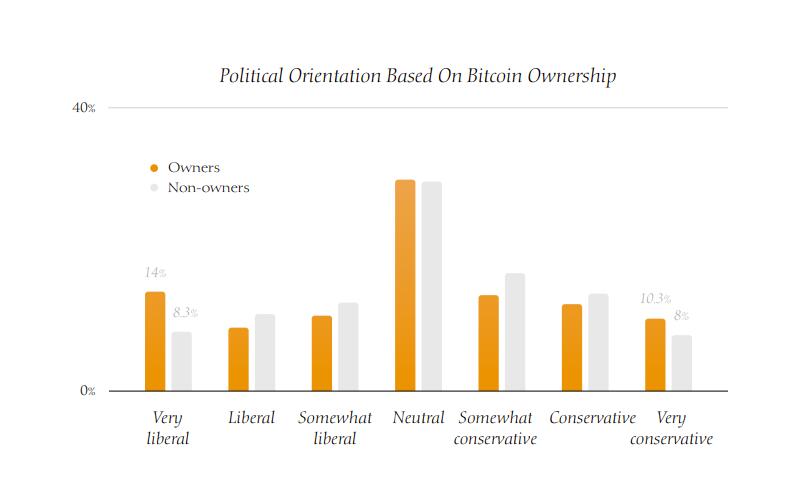
Activism in #Bitcoin is often influenced by very clear values, but ownership is not.
Bitcoin ownership is extremely heterogeneous and covers moderates, conservatives, liberals as well as different religions, races, social classes, economic classes, educational degrees, etc.
Find here the whole research by The Nakamoto Project: https://cdn.prod.website-files.com/6644db90e58a1fbeb1c70ddc/669f69702fa1b4b3bf09dbac_TNP%20Q3%202024%20Report%20(Digital).pdf