Miguel Afonso Caetano's avatar
Miguel Afonso Caetano
remixtures@tldr-nettime-org.mostr.pub
npub1pwuv...95z7
Senior Technical Writer @ Opplane (Lisbon, Portugal). PhD in Communication Sciences (ISCTE-IUL). Past: technology journalist, blogger & communication researcher. #TechnicalWriting #WebDev #WebDevelopment #OpenSource #FLOSS #SoftwareDevelopment #IP #PoliticalEconomy #Communication #Media #Copyright #Music #Cities #Urbanism
"The demand for the replacement of the EU coordinator on combating antisemitism after her pro-Israel claims in an official diplomatic meeting is now coming from Jewish and Israeli organisations as well. Last week, 29 Jewish and Israeli organisations from across Europe sent an open letter to EU Commission president Ursula von der Leyen, calling for the immediate replacement of Katharina von Schnurbein. In the joint open letter these Jewish and Israeli organisations from different EU member states stated that they do not support the "extreme-right government of Israel" and are "committed to human rights and democratic principles, anti-racism and respect for international law". These organisations also wrote that they reject the idea that the fight against antisemitism means "shielding Israel from any form of pressure or criticism" and an "automatic and total advancement of the positions of the current Israeli government."" #EU #Antisemitism #Zionism #Israel #Palestine #Genocide

"If you've read about the sudden appearance of age verification across the internet in the UK and thought it would never happen in the U.S., take note: many politicians want the same or even more strict laws. As of July 1st, South Dakota and Wyoming enacted laws requiring any website that hosts any sexual content to implement age verification measures. These laws would potentially capture a broad range of non-pornographic content, including classic literature and art, and expose a wide range of platforms, of all sizes, to civil or criminal liability for not using age verification on every user. That includes social media networks like X, Reddit, and Discord; online retailers like Amazon and Barnes & Noble; and streaming platforms like Netflix and Rumble—essentially, any site that allows user-generated or published content without gatekeeping access based on age" #USA #AgeVerification #Censorship #Wyoming #SouthDakota #UK #PoliceState #Surveillance
"What if generative AI isn’t God in the machine or vaporware? What if it’s just good enough, useful to many without being revolutionary? Right now, the models don’t think—they predict and arrange tokens of language to provide plausible responses to queries. There is little compelling evidence that they will evolve without some kind of quantum research leap. What if they never stop hallucinating and never develop the kind of creative ingenuity that powers actual human intelligence? The models being good enough doesn’t mean that the industry collapses overnight or that the technology is useless (though it could). The technology may still do an excellent job of making our educational system irrelevant, leaving a generation reliant on getting answers from a chatbot instead of thinking for themselves, without the promised advantage of a sentient bot that invents cancer cures. Good enough has been keeping me up at night. Because good enough would likely mean that not enough people recognize what’s really being built—and what’s being sacrificed—until it’s too late. What if the real doomer scenario is that we pollute the internet and the planet, reorient our economy and leverage ourselves, outsource big chunks of our minds, realign our geopolitics and culture, and fight endlessly over a technology that never comes close to delivering on its grandest promises? What if we spend so much time waiting and arguing that we fail to marshal our energy toward addressing the problems that exist here and now? That would be a tragedy—the product of a mass delusion. What scares me the most about this scenario is that it’s the only one that doesn’t sound all that insane." #AI #GenerativeAI #MassDelusion #AGI #AIHype #AIBubble #OpenAI
"For all the impressive tasks that drones can do, there is one that remains beyond their power: facial recognition. Drones are generally much farther from their subjects than the kind of cameras, such as CCTVs, that are ordinarily used for biometrics. At these distances a face may consist of only a few dozen pixels. Atmospheric turbulence caused, for example, by rising hot air, can distort features like the distance between one’s eyes. And because they record from the sky, drones’ on-board cameras may capture only a partial view of a face (or, if someone is wearing a wide-brimmed hat, none at all). But new technology from a team at Michigan State University (MSU) seeks to change all that and extend the spying powers of artificial intelligence (AI) into the skies. The system, known as FarSight, suggests that long-range aerial surveillance could soon become far more accurate—and intrusive—than ever before. The project is funded by the Intelligence Advanced Research Projects Activity (IARPA), part of the American government responsible for marshalling fanciful spy-gadget ideas into real-world use. Other current IARPA projects include an effort to build a device that can modulate a voice in real-time in order to avoid detection by speech-recognition tools, as well as an initiative to make snooping devices small and pliable enough to be woven directly into clothing." https://www.economist.com/science-and-technology/2025/08/13/drones-could-soon-become-more-intrusive-than-ever #Drones #DroneWarfare #Surveillance #Biometrics #FacialRecognition #IARPA
"Over the last few weeks, Amnesty International interviewed 19 Palestinians, who are now residing in three makeshift camps for internally displaced people (IDPs), as well as two medical staff members treating malnourished children in two hospitals in Gaza City. As of 17 August, the Ministry of Health in Gaza recorded the deaths of 110 children from malnutrition-related complications. In an alert published on 29 July 2025, the Integrated Food Security Phase Classification (IPC) stated that famine thresholds had been reached for food consumption in most of Gaza, concluding that the worst-case scenario for famine is already playing out and the number of people, including children, dying from starvation will continue to increase. This alarming reality was reflected in data collected by the Nutrition Cluster, according to which nearly 13,000 cases of acute malnutrition admissions for treatment among children were recorded in July, the highest monthly figure since October 2023. Of those, at least 2,800 (22%) were cases of severe acute malnutrition. Israeli authorities have further exacerbated the inhumane conditions that their policies have created by continuing to obstruct the work of most major humanitarian organizations and UN agencies inside Gaza, including by repeatedly rejecting their requests to bring in lifesaving aid into Gaza. These arbitrary restrictions have been accompanied by the introduction of new rules on the registration of international NGOs, which, if implemented, will prohibit these organizations from operating in the Occupied Palestinian Territory (OPT) entirely." #Israel #Palestine #Gaza #Starvation #Genocide #HumanRights
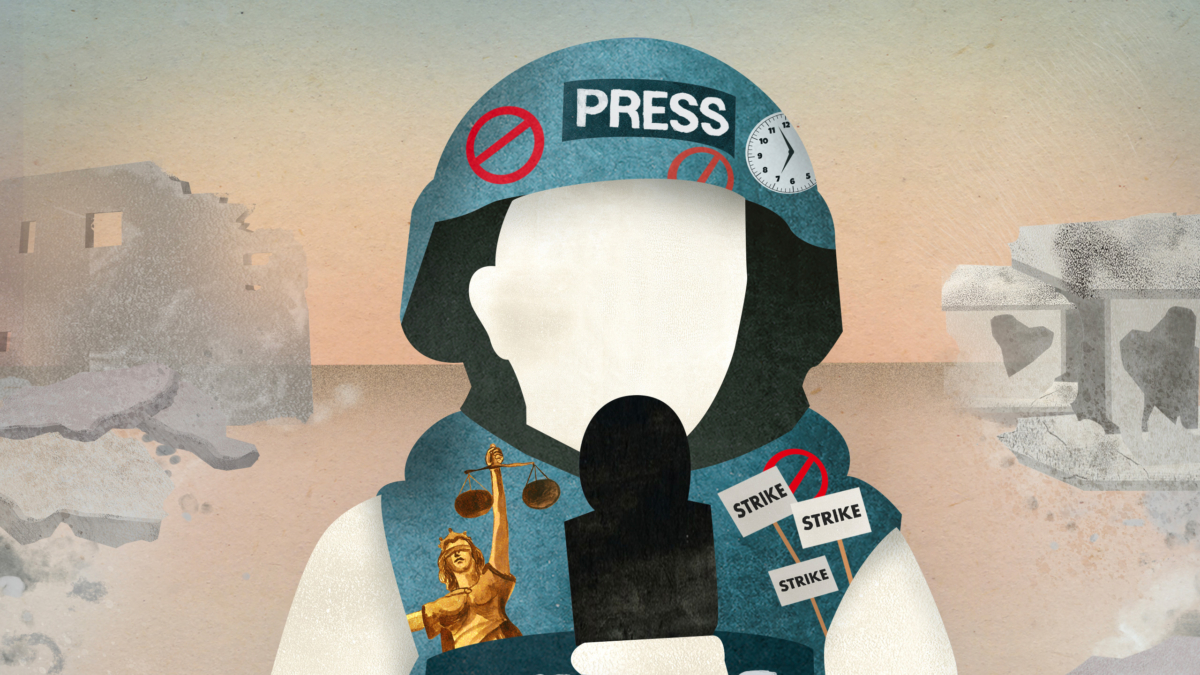
Let's hope this article will not mean the end of Columbia Journalism Review... "These threats to press freedom are urgent for every journalist still somehow managing to work in Gaza. They also have long-term consequences for distrust in our media institutions and for precedents that might jeopardize the safety of journalists elsewhere, anywhere in the future. Among both news consumers and members of the profession, many have noted the muted responses of governments as well as journalism organizations—which have not been inclined toward collective action or direct appeals, but often focus coverage on, for instance, poorly evidenced accusations that someone Israel killed was a combatant, rather than well-documented evidence of that person’s work as a reporter. A growing number have come to view this, ultimately, as a failure to contend with man-made human catastrophe in Gaza, including for reporters—and it has marked a breaking point in their relationships with legacy news institutions. Amid these dire threats, individual journalists, press freedom groups, and some newsrooms have drawn upon the traditional tools in their advocacy arsenal: letters, statements, condemnations, and the occasional slow-moving Israeli court case challenging lack of access. None of these efforts has resulted in change. “We’ve passed the point of verbal condemnation,” Youmna ElSayed, Al Jazeera English’s Gaza Strip correspondent, told me. She and others have been pushing for creative solutions that have gone unheeded. This summer, the Columbia Journalism Review and the Simon and June Li Center for Global Journalism solicited thinkers from across the fields of journalism, human rights, literature, academia, and advocacy, asking them for ideas about what new strategies, efforts, and possibilities should be on the table for our industry at this moment." #Palestine #Gaza #Genocide #PressFreedom #Media #News #Journalism #HumanRights
"In the months leading up to the January 6 Capitol riot, a now deleted Twitter account bearing the full name of E. J. Antoni, President Donald Trump’s pick to run the Bureau of Labor Statistics (BLS), betrayed a seeming obsession with promoting election denial conspiracy theories while talking about violent threats to those who stood in Trump’s way. The account, which used “Dr. Erwin J. Antoni III” as its screen name for a time, was linked by the conservative Heartland Institute think tank when referring to Antoni in a 2020 post on Twitter promoting one of its own YouTube videos in which he appeared. A WIRED review of an archive of the account’s posts shows that in the months leading up to the attack on the Capitol, it spread baseless conspiracy theories about the 2020 election and shared content from The Donald, a virulently pro-Trump message board that was used to organize the events of Jan 6, 2021. One of the final posts on the now deleted account used violent religious rhetoric in the hours before the assault on the Capitol began. “Samson has his arms around the temple pillars, and though he may not survive, he will bring it all down on his enemies,” the account posted late on January 5, 2021, in response to a Twitter post from Trump calling on Republicans to “FIGHT.“" #USA #Trump #BLS #LaborStatistics #ConspiracyTheories
"Crucially, Palantir doesn’t reorganize a company's bins and pipes, so to speak, meaning it doesn’t change how data is collected or how it moves through the guts of an organization. Instead, its software sits on top of a customer’s messy systems and allows them to integrate and analyze data without needing to fix the underlying architecture. In some ways, it’s a technical band-aid. In theory, this makes Palantir particularly well suited for government agencies that may use state-of-the-art software cobbled together with programming languages dating back to the 1960s. Palantir began gaining steam in the 2010s, a decade when corporate business discourse was dominated by the rise of “Big Data.” Hundreds of tech startups popped up promising to disrupt the market by leveraging information that was now readily available thanks to smartphones and internet-connected sensors, including everything from global shipping patterns to the social media habits of college students. The hype around Big Data put pressure on companies, especially legacy brands without sophisticated technical know-how, to upgrade their software, or else risk looking like dinosaurs to their customers and investors. But it’s not exactly easy or cheap to upgrade computer systems that may date back years, or even decades. Rather than tearing everything down and building anew, companies may want a solution designed to be slapped on top of what they already have. That’s where Palantir comes in. Palantir’s software is designed with nontechnical users in mind. Rather than relying on specialized technical teams to parse and analyze data, Palantir allows people across an organization to get insights, sometimes without writing a single line of code. All they need to do is log into one of Palantir’s two primary platforms: Foundry, for commercial users, or Gotham, for law enforcement and government users." #USA #Palantir #BigTech #BigData #SiliconValley
"American tech giants have increased spending on artificial intelligence tools designed to resolve some of the world’s most pressing problems. Since 2020, Google has spent $200 million on AI-driven social projects worldwide to combat wildfires, hunger, and public health emergencies, according to Leslie Yeh, director of scientific progress at Google.org, the company’s charitable arm. Most recently, in July, Google opened an AI Community Center in Ghana to support local innovation, and announced a $37 million investment in social impact projects under the catch-all label “AI for Good” across Africa. Microsoft, Meta, Amazon, and Apple are funding similar projects, aligning themselves with a growing trend in which governments, global organizations, and private tech companies promote AI for public good — a push that aims to normalize the technology and soften the anxieties surrounding it. Regional AI experts and industry leaders, however, urge caution, saying Africa could become a testing ground for AI models and a vast source of data collection in the U.S.-China tech rivalry, making the continent dependent on foreign-owned systems." #Africa #AI #AIforGood #BigTech #USA #China #Imperialism #Neocolonialism
"The annual meeting of state utility regulators is typically a humdrum affair of dry speeches and panel discussions. But in November, the scene at the Marriott in Anaheim, Calif., had a bit more flash. The conference’s top sponsors included the nation’s biggest tech companies — Amazon, Microsoft and Google. Their executives sat on panels, and the companies’ branding was plastered on product booths and at networking events. Even the lanyards around attendees’ necks were stamped with Google’s colorful logo. Just a few years ago, tech companies were minor players in energy, making investments in solar and wind farms to rein in their growing carbon footprints and placate customers concerned about climate change. But now, they are changing the face of the U.S. power industry and blurring the line between energy consumer and energy producer. They have morphed into some of energy’s most dominant players. They have set up subsidiaries that invest in power generation and sell electricity. Much of the energy they produce is bought by utilities and then delivered to homes and businesses, including the tech companies themselves. Their operations and investments dwarf those of many traditional utilities. But the tech industry’s all-out artificial intelligence push is fueling soaring demand for electricity to run data centers that dot the landscape in Virginia, Ohio and other states. Large, rectangular buildings packed with servers consumed more than 4 percent of the nation’s electricity in 2023, and government analysts estimate that will increase to as much as 12 percent in just three years. That’s partly because computers training and running A.I. systems consume far more energy than machines that stream Netflix or TikTok." #AI #GenerativeAI #BigTech #DataCenters #Energy #Electricity
"I was never sold on Starmer’s Labour delivering sunlit uplands. He doesn’t have a theory of change, or policies commensurate with the challenges he often acknowledges. But even I was shocked when it was revealed that Rushanara Ali, the now former Minister for Homelessness, had evicted four tenants from her East London property only to re-list it for an additional £700 a month. Besides that, the agents acting on her behalf initially tried to charge the evictees nearly £2,000 to redecorate, and an additional sum for professional cleaning. Under the Tenant Fees Act, passed under the May government, neither was permissible. Ali resigned shortly after the i newspaper broke the story. That was inevitable given the Renters Rights’ Bill, which Ali herself claimed would “tackle the root cause of homelessness”, included the minor detail of prohibiting what she had done. Ali could, of course, have put the property on the market with the tenants remaining in situ. That is, after all, what normally happens. The house in question is presently listed at £894,000, and is one of three Ali owns across the capital (one is jointly held with a family member). Other Labour MPs who are also landlords include Rachel Reeves, the Chancellor, who lets her former South London home for £6,000 a month, and David Lammy, the Foreign Secretary. Two ideological stalwarts of the party’s Labour First faction, Jas Atwhal and Gurinder Josan, allegedly own more than 20 properties between them. As of the last election, three of the leading five landlords in parliament are Labour MPs. All this stands in contrast to most of Labour party history." #UK #Labour #LabourParty #Housing #Rentism #Rents #LandLordism #Starmer #RadicalCentrism
RT @lumoherdaui governo justificando a pataquada: os desenhistas do PL têm certeza que redes sociais têm limites de espaço e de circulação de conteúdo; de olho na lei europeia, PL das Fake News ignorou o Discord em uma das versões... "suspensão de redes apenas"
"El Indicador Combinado de Sequías muestra condiciones críticas en el sudeste de Europa. No sólo incendios; la otra cara del fuego es la inundación. Hemos comprobado, de Galicia a Grecia y de Australia a California, que la población no está preparada para afrontarlo, y los servicios de emergencia no escalan de forma proporcional. La estrategia centralizada no es eficaz, al menos si el objetivo es proteger las casas y salvar a la población. No digo que el pueblo salve al pueblo. No somos una aldea medieval abandonada a su suerte, pero podemos afrontar la realidad como es, y no como nos gustaría que fuese. Todo está a punto de empeorar. Vamos a ser un Ejército Civil contra el Cambio Climático, tanto si queremos como si no. Juntos, entrenados y coordinados tenemos más posibilidades que cada uno en su casa mirando la televisión."
"Companies are betting on AI—yet nearly all enterprise pilots are stuck at the starting line. The GenAI Divide: State of AI in Business 2025, a new report published by MIT’s NANDA initiative, reveals that while generative AI holds promise for enterprises, most initiatives to drive rapid revenue growth are falling flat. Despite the rush to integrate powerful new models, about 5% of AI pilot programs achieve rapid revenue acceleration; the vast majority stall, delivering little to no measurable impact on P&L. The research—based on 150 interviews with leaders, a survey of 350 employees, and an analysis of 300 public AI deployments—paints a clear divide between success stories and stalled projects. (...) [F]or 95% of companies in the dataset, generative AI implementation is falling short. The core issue? Not the quality of the AI models, but the “learning gap” for both tools and organizations. While executives often blame regulation or model performance, MIT’s research points to flawed enterprise integration. Generic tools like ChatGPT excel for individuals because of their flexibility, but they stall in enterprise use since they don’t learn from or adapt to workflows..." #AI #GenerativeAI #AIBubble #AIHype
RT @jasonhickel On this day in 1953, the US and Britain carried out a brutal coup that deposed Mohammad Mosaddegh, the popular Prime Minister of Iran, beloved for his progressive and pro-worker reforms, because he sought to restore national control over the country's oil reserves.
"API documentation writers don’t just write content. We’re liaisons between client developers and in-house developers. I often say “we’re paid by the company but work for our clients.” Many think that in-house developers automatically empathize with the client developers. After all, they’re all developers, right? Right? Well, no. A surprising number of times, in-house developers are actually out of touch with clients. Why else would we be talking about having clear field names? They get tunnel vision or become myopic while in the code. This is not unique to developers. All professions have this risk. That’s our job to make sure that clarity is there for the clients. We can’t do it completely by ourselves. We need developer’s buy in. That means, one of two things. We can push back on the in-house developers. When we see a meaningless, poor, or bad field names, for example, we have the right, if not obligation, to get it changed. Some developers may disagree. That’s OK. The truth is, the code doesn’t belong exclusively to in-house developers. It’s the client’s code. They’re the ones intended to run the code, to know which fields to pass in, with which values, and to read the response JSON. That makes it our code, too. We not only have to run the code but also to explain this to clients. We have a say in the matter." https://robertdelwood.medium.com/writing-for-humans-an-api-documentation-writer-writes-3c51a6ea87a5 #TechnicalWriting #APIs #API #APIDocumentation #SoftwareDevelopment #APIs #TechnicalCommunication
"Cloud’s depiction of the mob harkens back to previous Kurosawa films such as Cure, which centered on violence committed by ordinary people under the influence of hypnosis. Whereas Cure derived potent horror from the dead-eyed, puppet-like movements of its slashers, Cloud repurposes the same devices for bleak comedy. There is something undeniably hilarious about a group of murderers who handle shotguns like gardening tools and affect the bored, attention-seeking nihilism of a 4chan board. In one of the film’s funniest scenes, the mob bickers over whether one of its members should be allowed to keep a mask on to preserve his anonymity as Yoshii sits bound and gagged in a nearby chair." #Japan #Movies #Cinema #Film #TechnoThriller #Kurosawa