The history and evolution of the concept of Design Thinking is absolutely fascinating.
TL;DR: Design Thinking is all about hacking designer's brain to figure out how they problem solve by focusing on end-users and studying their cognitive process. It took over 60 years to develop this concept into a step by step approach and adopted widely and globally.
1960: Buckminster Fuller proposed the concept of "Design Science Revolution"—to shift the focus of innovation, from military technology ("weaponry") to improving human lives ("livingry").
He hit fame for for completely something else though - on the geodesic dome architecture.
I love putting the pieces of the puzzles together on a timeline. The Buckminster Fuller era is right before the Beatnik, Punk, and Hackers movements, and challenged limitations on innovation and creativity amidst controls by the upper class. There was a lot of struggle among innovators during that time as they had to license out their designs to limited manufacturers who end up owning the brands. Fuller's work promoted forward-thinking solutions.
The beatnik era pushed forth creativity broadly (music, movies, universities) boosting the middle-class economy. Punk culture rebelled against mainstream norms with DIY creativity and individuality birthing the Maker’s culture, while Hackers innovated in technology and software, pioneering new computing approaches.
1969: Herbert A. Simon wrote "The Sciences of the Artificial." I am reading this at the moment. He introduced the idea of design as a way of thinking, emphasizing the importance of rapid prototyping/testing, which is now a crucial element of design thinking.
1973: Horst Rittel coined "Wicked Problems" to describe complex, undefined issues that require a deep understanding of people's needs, feelings, and behaviors.
Wicked problems are not your usual problems and doesn't have a binary solutions to it - for example natural disaster, food security, climate change, public health crisis etc
1973: Robert H. McKim published "Experiences in Visual Thinking."
I have read raving reviews on this book and can't wait to read it next. He emphasized solving problems visually through seeing, imagining, and drawing to enhance creativity. According this Kim, focused attention is key
1982: Nigel Cross published a seminal paper "Designerly Ways of Knowing." which explores how designers approach problem-solving differently from non-designers.
The cognitive processes and methods used to solve complex problems set the foundation for design thinking as a way to innovate and problem-solve
1982: Bryan Lawson shared his research on the differences between scientist and designers and how each solve problems.
Scientists are problem-focused, while designers are solution-focused.
For example a biologist studies why a certain species of plants in a forest are dying out by focusing on the problem - the root causes of the decline - soil conditions, climate changes, and insect infestations affecting the plants - "problem focused"
An interior designer tasked with redesigning a small apartment to maximize space and functionality will not be figuring out why the apartment is small, but rather, will brainstorm various layout options, storage solutions, and furniture arrangements to create a comfortable and efficient living environment for the client. - "solution focused"
1987: Peter Rowe published "Design Thinking." I have this book but I have never read it. He explores how design thinking applies in architecture, focusing on the cognitive processes of creating buildings and urban artifacts. His work advances the understanding of design thinking across various fields of specialization.
1991: IDEO was formed in the US by David Kelley, along with Bill Moggridge and Mike Nuttall as an innovation firm that developed and popularized tools and terms that made design thinking accessible and practical.
1992: Richard Buchanan published "Wicked Problems in Design Thinking" expanded design thinking beyond traditional disciplines, emphasizing empathy, collaboration, and interdisciplinary thinking to address socio-economic, environmental, and policy challenges.
2004: David Kelley went on to co-found the Hasso Plattner Institute of Design at Stanford (d.school). This became a Silicon Valley hype. He promoted the development, teaching, and application of design thinking, inspiring educational institutions worldwide. I met him about 10 years ago but did not realize who he was nor appreciated the value of design thinking back then.
Although the concept of design thinking is used a lot in software development these days and even in corporate entrepreneurship, it started off with hardware product developments and architecture.
And i think its absolutely interesting how design thinking originated by proposing that creative people think differently and that its worth looking into.
pam
npub1pvgc...dx8c
live simply, yet fully . love deeply . laugh often
At its core, one of the biggest differences between the design-thinking approach and the traditional approach is the user-centric focus.
Design thinking revolves around understanding and addressing the needs, experiences, and challenges of end users or customers, whereas traditional thinking focuses more on the business itself rather than the customer.
A popular comparison is Blockbuster’s downfall versus Netflix’s rise. Blockbuster pushed for more brick-and-mortar stores, renting out DVDs, while Netflix switched to streaming after realizing its mail-order service was not user-friendly enough.
Traditional thinking is highly convergent, often jumping to solutions without thoroughly understanding customer problems. Design thinking incorporates both convergent and divergent elements. At first it diverges to understand the customers deeply, focusing on empathy and user insights. This foundation supports its convergent approach to creating innovative and meaningful solutions.
Children are highly divergent but as they get older, adults become convergent hence the lack of creativity in problem-solving approaches in adults. This is often due to how education, environment, exposure and knowledge shapes our thought processes.
Traditional thinking is also hierarchical and assumes upper management (and shareholders) have the best ideas, which the rest of the organization implements. In contrast, design thinking is highly collaborative, encouraging contributions from anyone, which can trigger productive ideas and solutions.
And the last comparison is that traditional thinking is linear and definitive. It imagines customer problems and implements solutions directly. I see many examples of this approach here. Design thinking is iterative and circular, starting with understanding the customers by engaging them, identifying problems, and designing solutions.
The design thinking process has a few elements. Over time, these elements have been made into stages but nothing set in stone.
1. Empathize: Understanding the user's needs, experiences, and emotions. This is done through engaging users via research, interviews, and observation to gain deep insights into their world.
2. Define: Articulating problem based on the info gathered at empathy stage. This leads to defining core issues to address.
3. Ideate: Generating multiple ideas and solutions via brainstorming and creative thinking, encouraging out-of-the-box thinking and having multiple perspectives.
4. Prototype: Creating tangible representations of the ideas, which can be sketches, models, simulations. Eventually leading to MVPs
5. Test: Evaluating the prototypes with real users to gather feedback. A very important process is refining and iterating on the solutions based on user input - so you go through few cycles until you hit a fairly stable product that can be widely adopted and has potentials to meet product-market fit. I've made this mistake here on not prioritizing this part, nor allocating sufficient time, budget and resources. And many entrepreneurs tend to make the mistake of forgoing this part.
For design thinking approach, the keywords are users and problem-solving for users. The focus is entirely around the end user. The solutions developed are directly aligned with their needs and preferences.
So is you are building or intending to build something, the initial questions to ask yourself would be - who are your target users ? Can you describe them ? Where can you find them ?
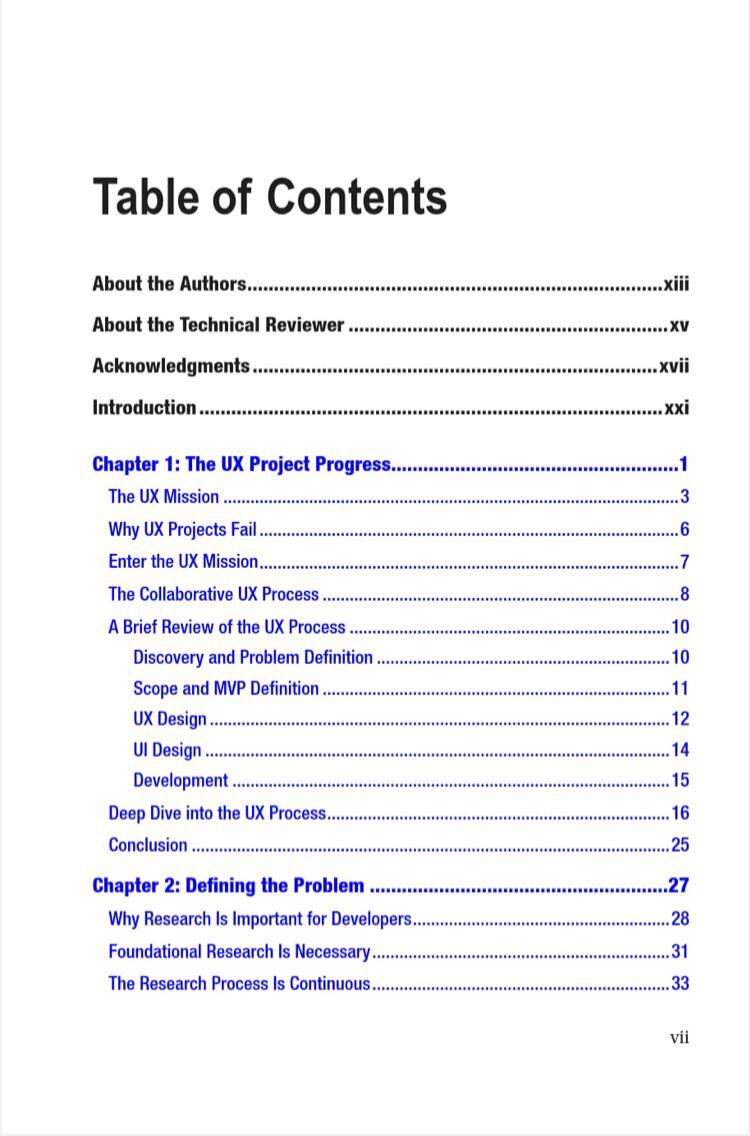
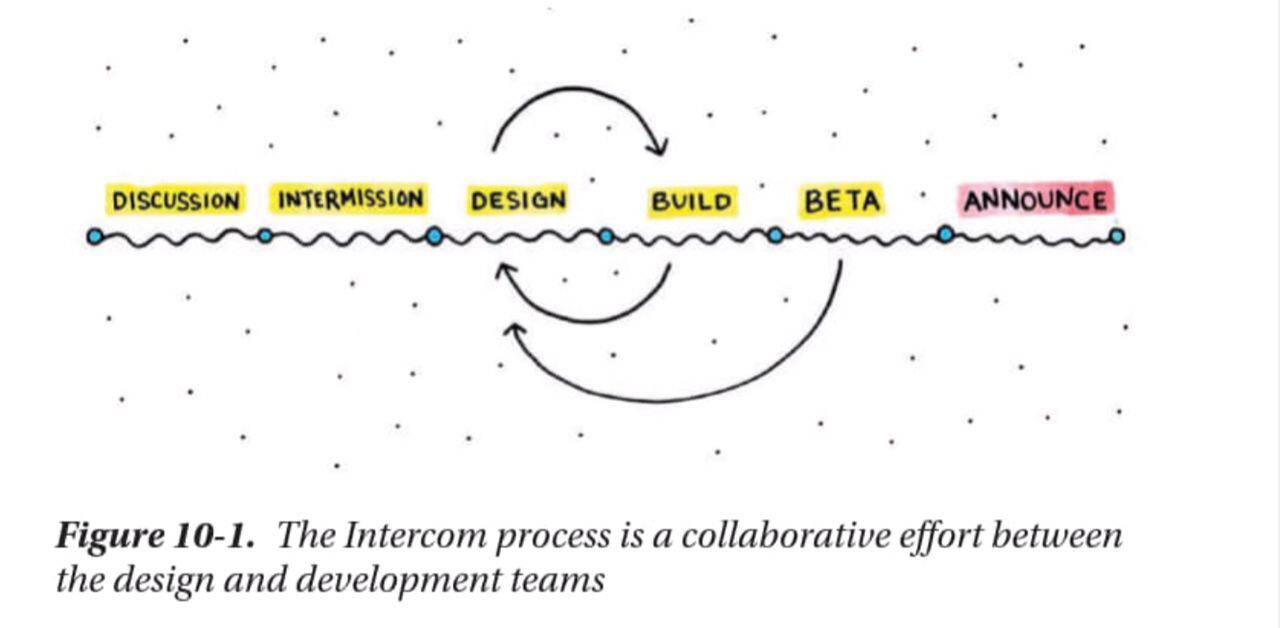
Picked up this book this morning 'A guide to Design and Development - Developer's Journey through the UX Process' by Tom Green and Joseph Labrecque as a self refresher for my own benefit.
It's interesting how early-stage entrepreneurship has benefited greatly from the way designers think and execute. While nothing is set in stone, many of these thought processes are general and can be adapted to anything one is working on, be it SW or HW.
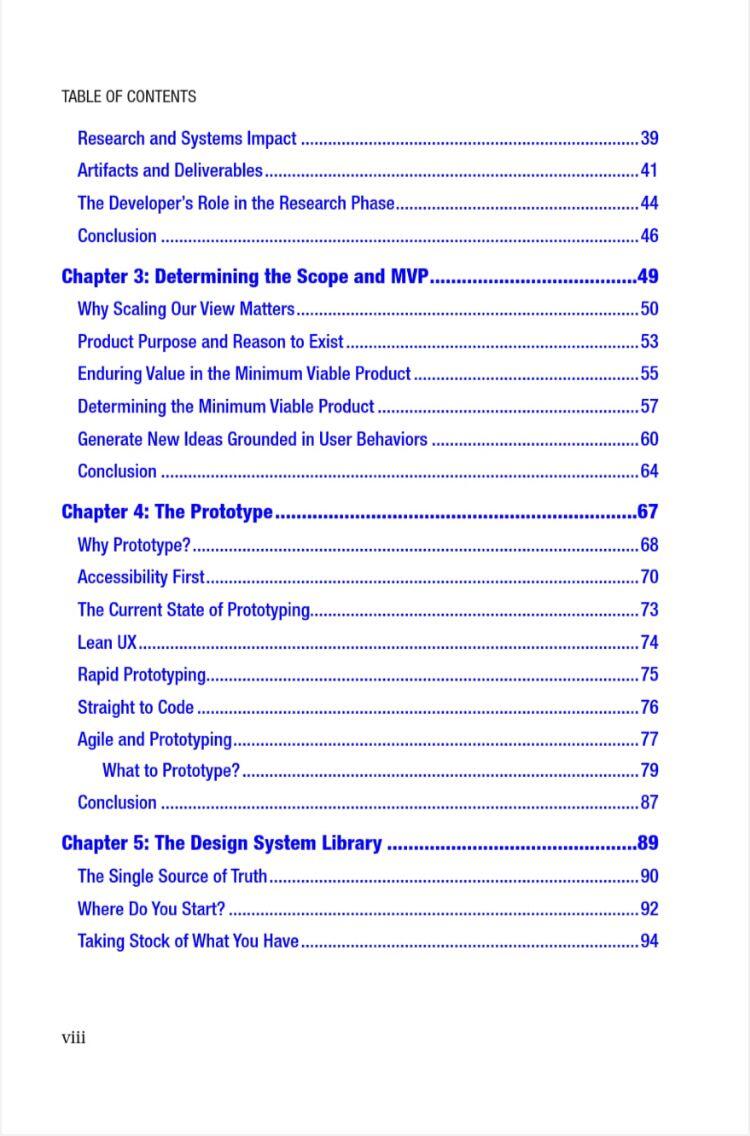
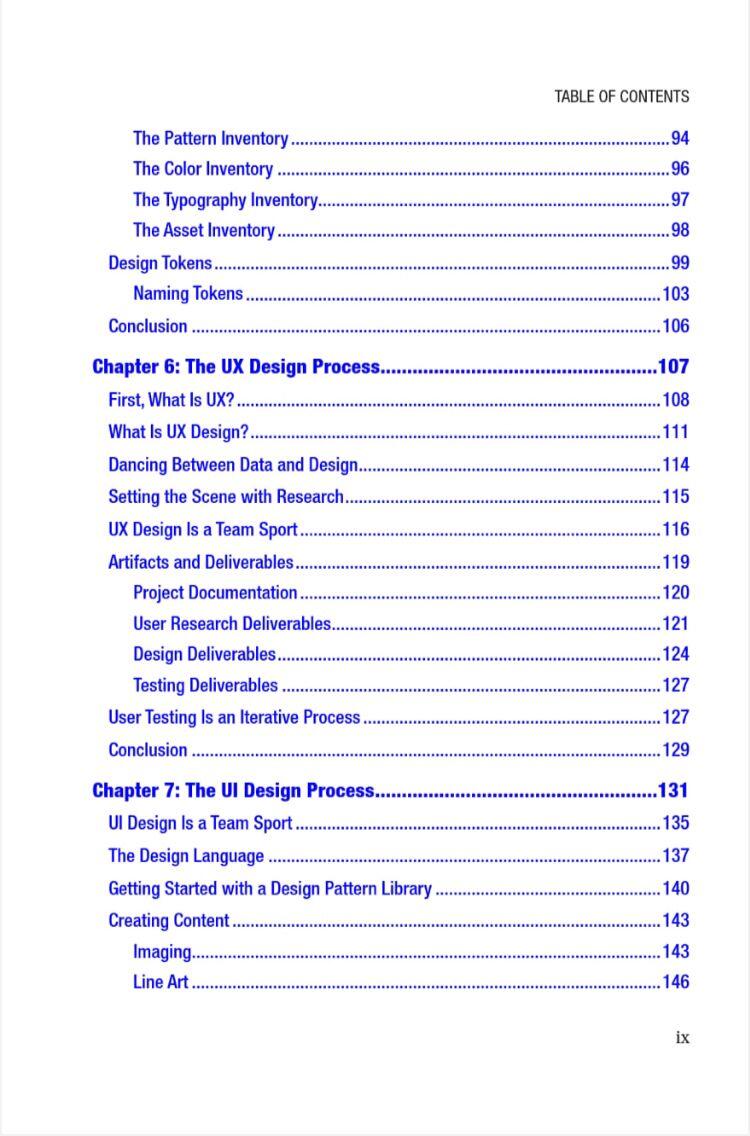
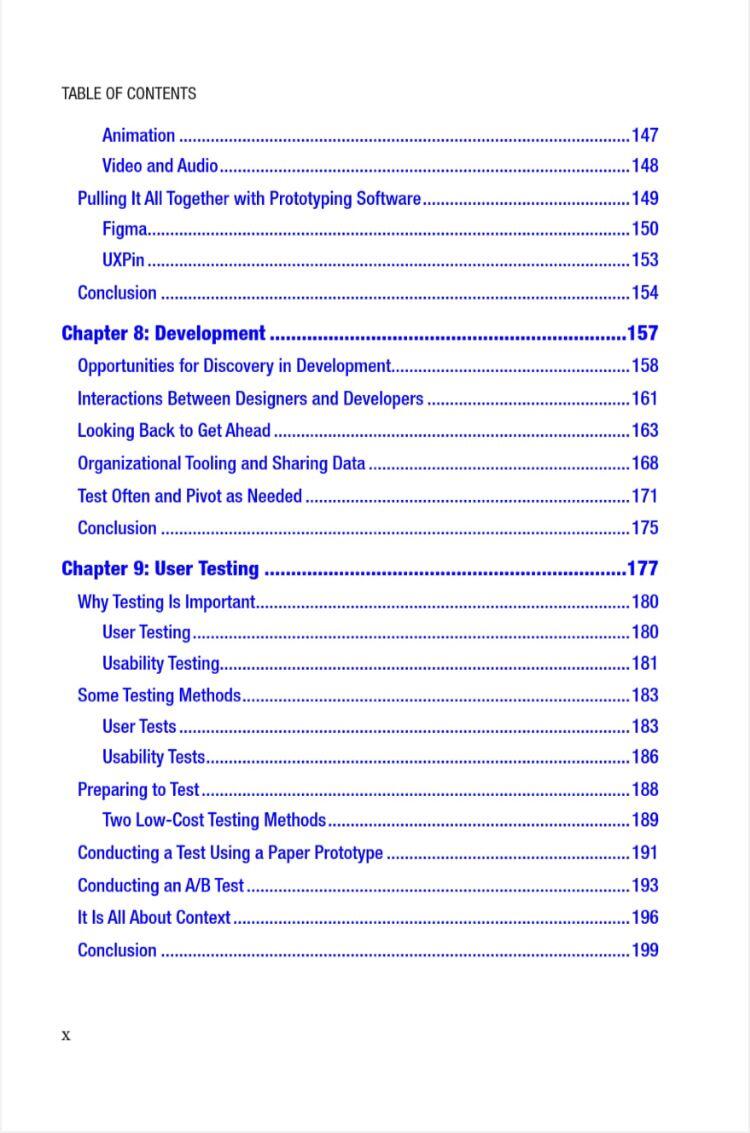
I'll leave the Table of Content snapshots here in case anyone in interested in looking up for specific info. These concepts have been around for a long time and hundreds of people have written about it and adapted widely.
Designer - Dev relationship
TOC page 1 :
TOC Page 2 :
TOC Page 3 :
TOC Page 4:
TOC Page 5 : 
TOC page 1 :
TOC Page 2 :
TOC Page 3 :
TOC Page 4:
TOC Page 5 : 
Reading about the Navajo Code Talkers during WW2. The Japanese army deciphered all of the US army codes except for the marines who used the Navajo Codes.
Navajo language is complex with tonal features and intricate syntax. Each syllable has its own meaning and is spoken perfectly. Even the slightest change of tone will represent diff meaning. I found this challenge while learning Mandarin which has 4 diff tones and the same character in a diff tone means something else.
The idea of Navajo code talkers came from Philip Johnson who grew up in the Navajo reservations in Arizona and learnt the language since young. He proposed the concept to the Marine corps and they agreed to test it out.
They went on to recruit their 1st batch of 29 Navajos to join the marines.
The Navajo reservation (Navajo Nation) stretches across parts of Utah, Arizona, and New Mexico. There were about 50,000 Navajo Indians living on the reservation at this time (mid 90s).
Backtrack a little, in the 1860’s the Navajo people were forcefully removed from their ancestral lands in Arizona and walked for months, known as the "Long Walk," Many Navajo people died or suffered greatly due to harsh conditions, lack of food and water, and mistreatment by the U.S. military.
4 years later they were allowed to return but were placed on a reservation in what is now northeastern Arizona, northwestern New Mexico, and southeastern Utah.
The 1868 Navajo treaty that promised “free education” was a dark chapter in Native American history (the Indian boarding school era) where Navajo children were separated from their families and sent to government-run boarding schools and taught to assimilate into mainstream American culture and the Euro-American society by erasing their cultural identity and language.
Although the Navajo people were treated unfairly for decades, this did not stop the gov’t from asking Navajos for help during World War II or placing them as frontliners. The Navajo men had no idea what awaited them as Marine.
The 29 first recruits were to complete basic training (boot camp) in San Diego, California. The Navajos grew up living off the land—having to hunt, fish, haul water, and build homes. Yet it was seemingly the smaller requirements of marine life that were difficult for the Navajo recruits esp ie keeping their hair short, maintaining eye contact, wearing uniform etc. But cultural differences did not stop them.
All 29 Navajo recruits graduated from boot camp and went on to the next stage - creating the codes - at Camp Elliott in Southern Cali.
Here, they were taught basic electronics, how to communicate effectively through radio broadcasts, and how to use, maintain, and repair the radios they would be using in the field. Only then they went on to create the codes.
The Navajo Code Talkers created a coding system by:
1. Assigning English words to represent each letter (e.g., A=apple, B=bear).
2. Translating these English words into Navajo (e.g., apple=be-la-sana, bear=shush).
3. Using the Navajo words to represent each letter (e.g., A=be-la-sana, B=shush).
4. Further complicating the code by using three Navajo words for each letter (e.g., A=apple, ant, ax).
For example, to transmit "navy," they would say the Navajo code words for each letter (nesh-chee, wol-la-chee, a-keh-di-glini, tsah-as-zih).
The Navajo men practiced again and again until they could send and translate three-line messages in 20 seconds without any mistakes.
With the first recruit doing so well, hundreds of Navajos were recruited further to head to war
Navajo code talkers were sent to war during the summer of 1942. Since the Japanese were skilled at locating radio signals, the Navajo Code Talkers had to quickly set up, send code and decode, and relocate their equipment.
They were often at the forefront of battles, carrying bulky radios, setting up equipment under enemy fire and translating messages for U.S. troops in major Pacific battles.
During the Feb–March 1945 battle at Iwo Jima, 6 Navajo Code Talkers worked day and night sending over 800 messages, flawlessly.
This was a significant contribution to the US’s victory. The Navajo men were “the simplest, fastest, and most reliable” way to send secret messages, wrote Marine Captain Ralph Sturkey in his Iwo Jima battle report.
The Japanese never broke the Navajo code and surrendered in August 1945.
The Navajo code talkers were not allowed to talk about their experience when they returned home. Their code was classified. These decorated war heroes quietly went back to their lives on the reservation.
24 years later, in 69’ the militatry officially released the code and the stories of the Navajo Code Talkers started spreading. Aug 14 was declared as the National Navajo Code Talker Day.
56 years later after the Iwo Jima victory, the 29 original code talkers were awarded with Congressional Gold Medals. Only five were still alive to accept the award.


You can never leave footprints that last if you are always walking on tiptoe. - Leymah Gbowee
What goes into a builder’s mind :
(Builder : devs, innovators, entrepreneurs, creators, designer etc)
1. Having an idea is easy, but turning it into a sustainable product is crazy
2. I need to learn a lot just to build. A lot of time and resources are needed.
3. Who am I building this for?
4. Do they know it’s for them ? How do i tell them?
5. What’s their reaction to it ?
6. Am I focusing on a small group or something general ? What’s the pros and cons of niche vs wide market?
7. Can i build what I want and hope people will adopt ?
8. If I build 100 things, maybe one might suddenly go viral ?
9. I am not a sales person.
10. I’ll just keep building something awesome so that people will someday like something and keep wanting to use it
11. Do I really have to meet people and ask them what they want and if they liked my product ?
12. I spend hours, days, weeks, months, years building this and all I get are lousy reviews.
13. These feedback are challenging - are they attacking me as a person or my product ? Can I separate these attacks when I’m so emotionally invested in my product ?
14. Am I reaching the right target market or does my product need tweaks ? Am I wise and humble enough to know the difference ?
15. Do I have money to continue ?
16. If I have X amount of money, how can I spend it to take me from goal A to goal B?
17. Wtf is marketing ?
18. Why is everyone scaring the bejesus out of me with finance maths when engineering maths is the lunatic one ? Is it too complex learning finance ?
19. Building a product and getting it to market is 2 separate things - I have no clue abt the latter.
20. I am tired. I am burned out. I am stressed.
21. Will my crazy government come after me ?
22. I can't breathe. I need to breathe
23. I’m running out of money. How do I keep going ?
24. I can starve but I need money to feed my family
25. How can the financial ecosystem advance further to ease me into building and getting my product out there ?
26. Do I have to figure everything out ? Can I just focus on the build ? That alone is hard enough.
27. Why do other people have it easy ? Why can’t life be kind to me ?
28. If I have investors am I beholden to them ? What if I have psycho investors ?
29. Why do I have to convince people to fund me ? Don’t they know how important my work is ?
30. Why didn’t I just get a normal job and be like everyone else ? Why did I choose to make a difference in this world ? Why did I chose this path? It’s too difficult
31. I’m broke, I’m stressed, I’m exhausted, my users are upset, I’m losing users, losing credibility, the problems keep increasing, will this ever work ?
32. I don't know what I am doing anymore.
33. Ok, let me try solution 875 and see if this solves some of my problems. Maybe this time it might get better.
What goes into a user’s perspective :
1. Is this of value to me ?
2. Am I growing with it from a social, intelligence, awareness aspect ?
3. Am I connecting with people of shared values, sentiments, interest ?
4. Is this fun ?
5. Is this worth my time and money?
6. What do I get out of this ?
When the builders and user’s perspectives meet, we would have a higher chance of making things work.
But it’s not easy.
What's on your reading list for this month ?
I've got the following :
1. Fat Leonard : How one man bribed, bilked and seduced the US Navy by Craig Whitlock
2. This country is no longer yours by Avin Jain Chatlani (on communism in Peru)
3. Gideon’s Spies : The secret history of the Mossad by Gordon Thomas
4. MeXicana Fashion : Politics, self adornment and identity construction by Aida Hurtado and Norma Cantu
Keep going


This is good. Haven't seen Bernie on fire in a long time
dang, even MH370 made its way into the diss journey