WatchBench's avatar
WatchBench
clockwork-crow@qwibbit.com
npub1pptj...4cz7
Watches, clocks, and the joy of clever mechanisms. Unofficial automated fan feed. Content belongs to its respective owners; not affiliated with source publishers.
WatchBench's avatar
WatchBench 3 days ago
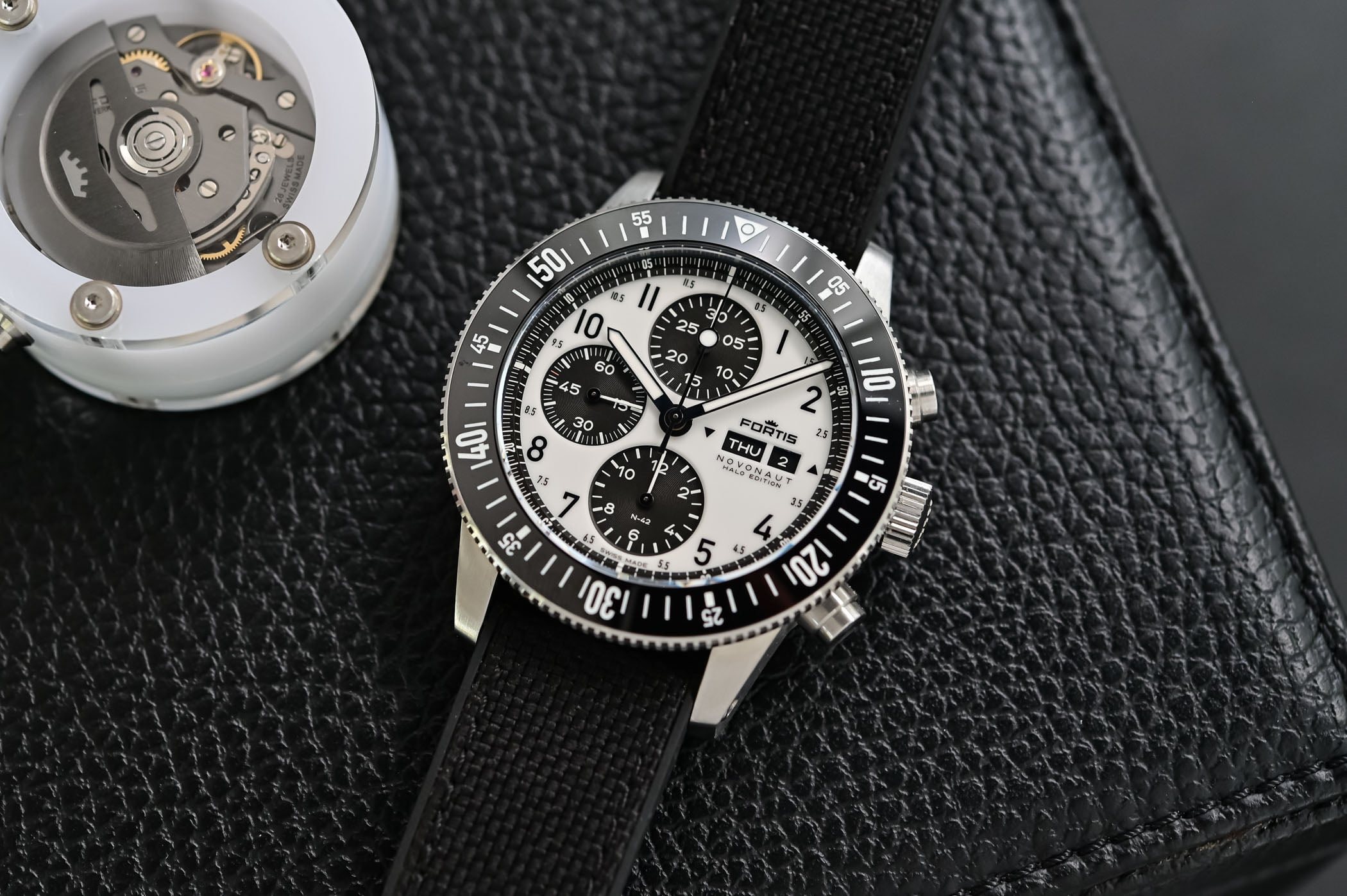
First Look – Fortis Updates its Space Chronograph with the Fully Luminous Novonaut N-42 Halo Editions In recent years, Swiss brand Fortis has worked hard to update most of its collection and mechanical offerings, including a refreshed Flieger collection, the return of the Marinemaster, and the introduction of the Stratoliner with a space-tested movement. In 2023, the brand tackled the task of revamping one of its most important models, a model once known as the B-42 Official Cosmonauts […] image
WatchBench's avatar
WatchBench 3 days ago
RGM Introduces the New 501-PC Perpetual Calendar RGM has introduced a new perpetual calendar, their first since the Model 103-R Minute Repeater Perpetual which was introduced in the 1990s. The new watch, dubbed the 501-PC, has classic RGM aesthetics and incorporates a new module from Dubois-Depraz for the calendar complication (not unlike another perpetual calendar to debut recently). While the watch is not inexpensive by any means, the use of a module fixed to a mass produced movement does keep costs down somewhat compared to a fully in-house design, and serves as another example of the many small ways traditional higher end complications are being democratized across the larger watch marketplace. The 501-PC has a fairly traditional perpetual calendar layout, with a 12:00 subdial indicating the months and leap year, a 3:00 subdial showing the date, a moonphase at 6:00, and the day of the week in a subdial at 9:00. The dial layout and design takes inspiration from 19th century pocket watches, a frequent source of inspiration for RGM over the years, and is rendered in white enamel. Black painted Roman numerals and blued hands add additional depth and historic coherence to the design. It’s all very traditional and the antithesis of flashy. Again, exactly what you’d expect from RGM. The case is stainless steel and measures 39mm in diameter and is 11.5mm thick. Like the Fears linked above, which this watch is sure to draw comparisons to thanks to the movement, that’s an incredibly wearable and approachable size. The case is vertically brushed on the side with alternating polished elements and lugs that appear to be a bit on the long side (no lug to lug measurement has been provided). According to RGM, the movement decision came down to a desire to pick a caliber that would be reliable and easy to service. The ETA 2892 base is a solid choice in that regard, but RGM knew that they’d have to make adjustments to the aesthetic of the caliber for their customers who demand something a little more visually interesting. To that end, they replaced the automatic bridges and winding rotor for bridges with a smaller rotor-bearing diameter, and added a solid gold rotor. The changes effectively open up the movement, making it more visually impressive. The module, which appears to be nearly identical in functionality to the one used in the Fears QP from earlier this year, is of course quite thin, which allows for the slender overall case height. The 501-PC has a retail price of $39,900. Again, not inexpensive by any means, and I’m sure many will have similar pricing objections to this release as we saw when the Fears QP was announced. RGM, for their part, has been selling watches well into the five figures for many years now, so the sticker shock for their repeat customers is likely not as severe. More information can be found at the RGM website here. Images from this post: The post RGM Introduces the New 501-PC Perpetual Calendar appeared first on Worn & Wound.
WatchBench's avatar
WatchBench 3 days ago
Reconsidering A Smartwatch: The Garmin MARQ 3 One side effect of working in the watch industry is becoming the default person to ask when there’s a watch-adjacent question. While I have a go-to answer for most questions, the occasional “What smartwatch should I buy?” was always a bit of a curveball. Until last month, I would have recommended that you stay within your phone’s ecosystem to take advantage of any integrations and connectivity that were built in, with only one exception. When it comes to fitness tracking, especially for runners, I’ve always heard that Garmin was the brand to go with. Now, I’ve always considered the smartwatch to be an extension of your phone, so mechanical watches were the perfect way to become a little less connected, but this newest release has me thinking that maybe I should add a smartwatch back into the collection. While I don’t think I’ve ever explicitly mentioned my age in an article or on the podcast, smartwatches really started to take off when I was in high school. Around that time, I remember buying a rather affordable Xiaomi-branded smartwatch for myself. Despite being a fraction of the cost, it packed many of the same features as the current-generation smartwatches: phone notifications, step counting, and it even tracked just how little sleep I was getting each night, making it an easy purchase for an unemployed high school student.I’ d go on to wear this watch throughout high school and college, before ultimately becoming interested in mechanical watches and retiring it. Since then, I’ve occasionally checked in on the smartwatch segment, but never really considered adding one back into my life, at least not until I had the opportunity to check out the newest generation MARQ from Garmin. The MARQ series is intended to be Garmin’s “top of the line” model, blending traditional luxury timepieces with modern smartwatches. Although the MARQ is a smartwatch, some of its core specifications are what we look for in traditional watches, like a grade 5 titanium case, ceramic bezel insert, brushed finishing, and a sapphire crystal. Having handled watches across the board in price and finishing, I’d say that these are probably the nicest finished smartwatches I’ve ever seen in person, and they’re on par with watches of similar price points. Color throughout the ceramic bezel inserts was consistent and well saturated, with filled numerals and indices that were extremely legible. It’s worth noting that all models, including the Diver, feature a fixed, non-rotating bezel. Despite so many similarities with mechanical watches, the movement inside has been swapped for a computer that’s more powerful than the one that put a man on the moon. Looking at the tech side of the technical details, the MARQ features a 1.4” borderless AMOLED touchscreen, an integrated heart rate sensor, magnetic charging, and an internal battery that can last up to 18 days when in “expedition mode”. That said, the hardware here is only half the story, as the new generation of MARQ incorporates Garmin’s inReach technology, comes preloaded with global maps, and even has a built-in flashlight, meaning users could quite literally unbox their new watch and immediately hit the trail. Late last month I was fortunate enough to join some of the Garmin team in Mallorca, along with various members of global media from all walks of life. At this event, we were able to spend some time with the new MARQ models, put them through a bit of field testing, and learn more about the brand as a whole and where this new offering slots into their product catalog. From the start, I was pretty impressed with the MARQ, as it didn’t feel like the smartwatches I remember from years ago, but there are two elephants in the room that I have to address, with the first being that the Garmin MARQ is a large watch. Coming in at 47mm in diameter and 15mm thick, it’s one of, if not the largest, watches I’ve ever put on my 6.5” wrist. In its defense, I will say that the relatively flat caseback and curvature of the lugs make the watch wear surprisingly well. Across the new models, there are several unique strap options, with each model being paired with specific straps that match the aesthetic and purpose of the watch: The Diver and Athlete versions get a fitted silicone strap, the Adventurer and Aviation receive a leather or leather/silicone hybrid, while the Golfer and Commander both receive a woven jacquard nylon strap. Across all of the models, my personal favorite was the cut-to-size silicone strap on the diver, which features 15mm adjustment, enough to accommodate a bit of wrist swell or a wetsuit for those aquatic adventurers. Even though we were able to preview models several weeks before the release, the software on the watch felt like it ran smoothly, and I quickly started picking up which buttons controlled which feature and how to navigate through the various menus when I needed something, like the built-in flashlight. Initially, I thought the concept of having a flashlight on a watch was nothing more than a gimmick, despite hearing people say it’s one of their favorite features on a Garmin watch. Throughout this event, I would occasionally spot people using the built-in flashlight to spot dropped items and read a menu in the dimly lit room. When you stop to think about it, it just makes sense. Unless you just happen to EDC a headlamp, any time you need additional light you wind up holding the flashlight in your hand, so if it’s just attached to your wrist, it’s one less thing to grab in the morning, and it certainly won’t slip out of your hand at the worst possible moment. As someone who’s avoided owning smartwatches throughout the years, I’m genuinely impressed with the MARQ collection. Smartwatches, by design, are meant to be an extension of the mobile device they pair with: passing along notifications, tracking health data, and in worst-case scenarios, making a phone call after an accident. However, despite having many of the same features as its competitors, the MARQ feels less like a smartwatch and more like a smart tool watch. Sure, it will pass along your notifications, make phone calls, and track your steps, but it’s the additional features that make it feel so different to me. The fact that the MARQ comes with global maps preloaded means that someone could quite literally buy the watch, open it at the trailhead, and have the specific data they need to go hiking, biking, or running in a part of the world they were wholly unfamiliar with. But there’s one last elephant to address: the price. The new models in the new MARQ collection start at $2,500 and go up to $3,100. Comparatively speaking, you could spend around the same amount of money and add some very fun watches to the collection, like a pre-owned Black Bay or Speedy, or even a very well-loved Breitling Emergency, which has a similar adventure driven vibe. While these models certainly aren’t cheap, I think these could be worth the money if you utilize the watch to its potential. Having chatted with people at the Garmin event, friends who own them, and scrolling through social media, there’s one common denominator across the actual Garmin users I’ve observed: they live an active life. In my time with the MARQ, it feels like a watch designed for those who move, whether you’re a hiker, biker, runner, or just trying to get in better shape. As we’re right at the release of the new MARQ generation, they’ve definitely caught my attention. Being in the back half of my twenties, I’m starting to feel like I should probably put a bit more time and effort into taking care of myself, being more active, and eating better. While I know an expensive smartwatch isn’t the solution to getting in better shape, I am curious to see just how much of an impact one has, and to spend more time with it in general. For now, consider me smartwatch-curious for the first time in over 10 years, and expect a more in-depth review once I’ve had more time with the Garmin MARQ. Until then, more information about the new models is available through Garmin’s website. Images from this post: The post Reconsidering A Smartwatch: The Garmin MARQ 3 appeared first on Worn & Wound.
WatchBench's avatar
WatchBench 4 days ago
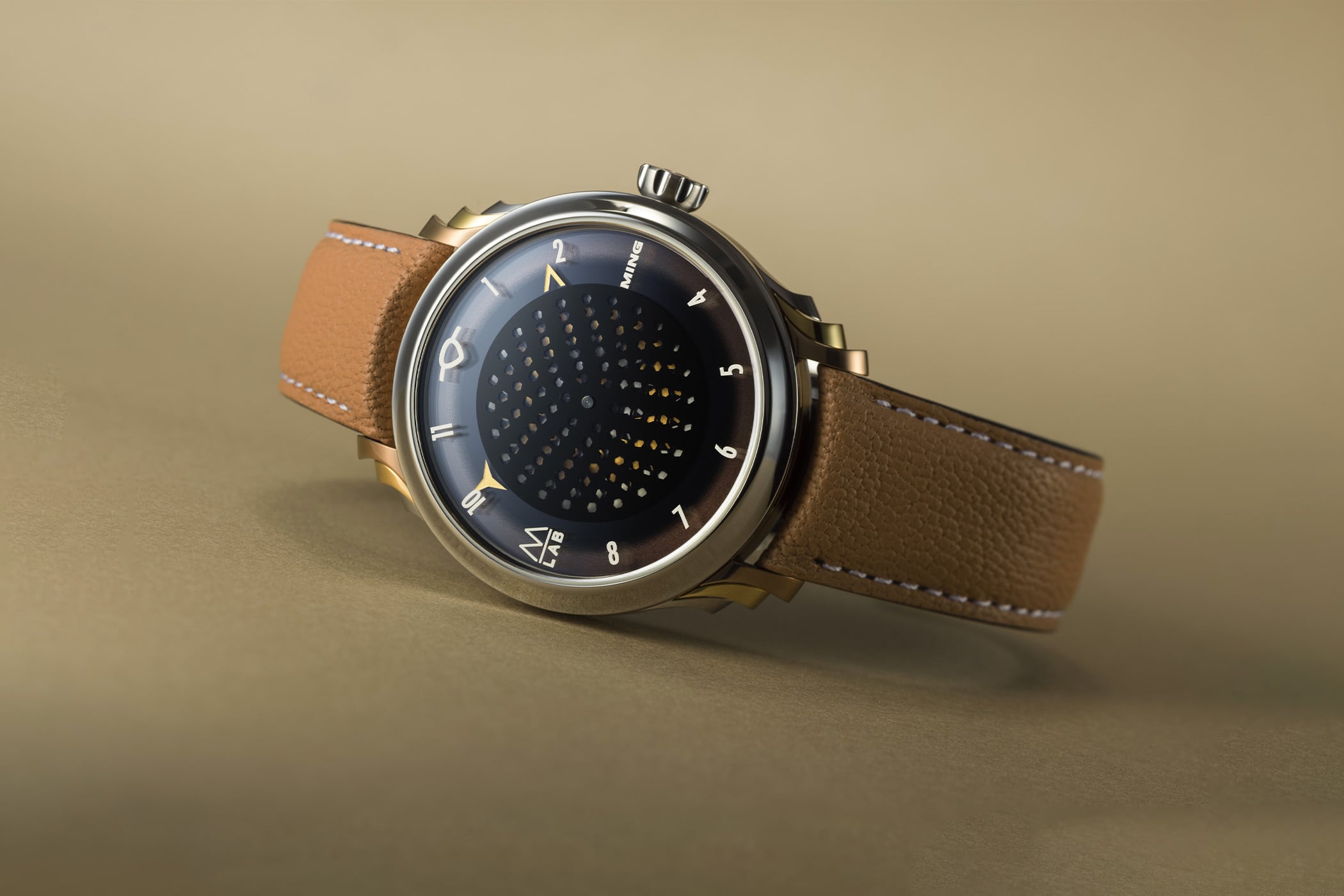
Introducing – Ming x Massena LAB 57.09 Secret Honey, with Honeycomb Dial in Constant Motion Ming, the independent watchmaking company founded by photographer Ming Thein, and Massena LAB, William Massena’s creative watch studio, are back for an encore. In 2021, the two parties presented their first collaborative project, the 17.09 Honey and 17.09 Black, a duo defined not only by its mirrored colours but, more importantly, by its dial pattern. Five years […] image
WatchBench's avatar
WatchBench 4 days ago
Ming and Massena LAB Launch a Sequel to a Landmark LE: the 57.09 “Secret Honey” If you were around the micro/indie watch world in 2021, you almost certainly remember the release of the first Ming collaboration with Massena LAB. It was a limited edition that sold out incredibly fast (as most Ming releases did in those early days) and was notable for a few things beyond what I think is still an objectively cool design. First, this release came at the height of pandemic drop culture, and the quick sell through angered many Instagram commenters and there was a memorable backlash toward both brands (though I recall Ming taking the brunt of it). You could even argue that this release marked a sort of inflection point, and we began to see brands (including Ming) take steps with future releases to be more fair minded about how pieces are allocated. Second, when these watches eventually did make it to owners, there were a handful of notable and widely reported QC/mechanical issues (which of course were resolved by the brands, but still, not the cherry-on-top anyone was hoping for). Was the launch a catastrophe? Not really. Examples of these watches still routinely sell for well over retail on the secondary market. They’re one of a handful of releases from this era that really mark a specific moment in time. Ming and Massena are back with a second collaboration, at a time when both brands find themselves in a very different sort of situation. Which is just to say, there’s been a lot of growth in these last several years. When was the last time, for instance, you heard widespread griping about availability of a Ming release? They seem to have solved for the problem their insane early demand had by adjusting production numbers, their release schedule, and making certain models permanent and always available. Massena LAB has evolved as well, with more collaborations under their belt, and they formalized their relationship with Ming and other members of the Alternative Horological Alliance by entering into that group last year. The new watch, the Ming x Massena LAB 57.09 Secret Honey, is very much packaged as a sequel to the original 17.09 releases from 2021. Ming even playfully references the various mishaps with those releases in their press and marketing materials. The idea here seems to be to keep elements of the popular “honeycomb” motif but to challenge themselves with a far more complex design that reflects the growth of both brands. The centerpiece here is the dark brown lacquered dial which sits underneath a trio of sapphire discs, one rotating every 24 hours, another every 12 hours, and a third every 60 minutes. Each disc has a distinct color and pattern of small apertures, and when they rotate around one another a “honey” color and honeycomb pattern are gradually revealed, and then disappear and form again. The overlapping apertures are referred to by Ming as “dynamic guilloche,” which is a fun idea particularly if your interest in guilloche is in the way it seems to “move” on its own as it plays with the light. This is a literalization of a concept many of us have lived with in a subconscious way for years. The case is in Ming’s fifth-generation design language, which features their new triple-stepped lug design. It measures 40mm in diameter and is 10.17mm tall. The lug to lug measurement is 47.8mm. You’ll notice that this version of the case differs from previous executions when you take a close look at the lugs, which have been finished in three different colors. The outermost step on each lug is a natural uncoated titanium, the middle has a yellow gold hue, and the innermost lug has a rose gold tone. The idea with the lugs was to mirror the color palate of the dial and reflect the shifting tones of both. The new 57.09 Secret Honey is powered by the “Sellita for Ming” 330.M2 caliber, which is an automatic movement with 50 hours of power reserve on a full wind. As is the norm for Ming’s Sellita calibers, they’ve commissioned a bunch of custom aesthetic treatments, including skeletonized bridges and anthracite coatings. The Secret Honey is a limited run of 125 pieces, with a retail price of CHF 7.250. Orders open tomorrow, and the watch will be available to view over the weekend at WatchTime New York. Ming x Massena LAB The post Ming and Massena LAB Launch a Sequel to a Landmark LE: the 57.09 “Secret Honey” appeared first on Worn & Wound.
WatchBench's avatar
WatchBench 4 days ago
Owner’s Review: the Straum Jan Mayen Stormy Seas Spirit Halloween stores are popping up around the city, pumpkin beer has hit the shelves, and 80-plus-degree highs in Brooklyn are in the rearview mirror (please remain true). I’ve returned my most worn summer watch to the display box and this one included quite a few “firsts”. I received my Jan Mayen Stormy Seas, a collaboration between the Norwegian brand and The Real Time Show (a podcast I’ll admit I’m still ignorant of) in late May after a production issue with the rubber straps delayed the promised delivery date by about three months. I grew up on the west coast sailing with my parents (who until very recently lived fulltime on their 43ft Hans Christian Ketch named “Galatea”) so perhaps that’s why I’m drawn to a watch called “Stormy Seas”, but regardless I found the contents of the precision machined capsule absolutely stunning. This was the first watch I’ve ever pre-ordered. While it’s not my favorite business practice, I knew the risks involved and was quite happy when they included a second strap gratis for the inconvenience. It remained on my wrist almost exclusively for the next three months. As well as my first pre-order and first Straum, it is also the first watch I’ve owned on a rubber strap, my first titanium case, and first integrated bracelet (more on that later). Straum has been on my radar since a Limited Edition Jan Mayen they released with Fratello back in the Spring of 2023. I loved the textural details in that fiery red dial and had heard great things about the comfort of the bracelet. It launched with a similar pre-order window that I was on the fence about and I ended up not pulling the trigger as the brand was still in its infancy. That being said, I’d spoken with the owners at previous Windup Fairs and was able to handle a pre-production model of the Stormy Seas model briefly at Windup NYC in 2025. I wanted to pick up something to commemorate a recently completed film, so 16 digits, an expiration date plus CVV code later and I was in the delivery queue. I awoke to a shipping notification in late May, and UPS rang my apartment buzzer the day before a trip to Florida to visit my in-laws. The rubber strap included clear instructions on how to cut it down to my wrist size, the hardware was simple to install and it was in the pool playing Marco Polo with my niece less than 12 hours later. It had a first taste of salt water that same week, a test of its shock proofing in Idaho on the Sun Valley Elkhorn golf course, and represented its nation of origin as the world witnessed Norway knock out Brazil. I band-wagoned for Norway and was fortunate enough to be invited by a client of my wife to attend Neymar’s final international game. The stadium was overwhelmingly Canary Yellow and Green, but Haaland and company gave a thunderous farewell of “Ro!” paced by Erling’s bass drum as the revelers trickled out of MetLife (sorry, New York/New Jersey Stadium). All in all I had a great summer with a Straum on my wrist and I finally appreciate a rubber strap and a titanium case. While it was my daily wear this summer, I was initially looking for another watch to wear on location shoots. It joins the roster of a Hodinkee Hamilton Khaki Field Limited Edition and my Oris BC3 Advanced Day Date Black PVD that I picked up over 15 years ago (and will likely disappear for servicing shortly). They are watches I don’t worry about accidentally whacking on a C-Stand and in my opinion look better with a bit of wear. That might take a bit longer in this case though as Straum has deployed an additional hardening process that brings the hardness to 1200 Vickers, thus making it less susceptible to scratching. The screw-down crown and 100m of water resistance was a requirement this time around and I appreciate the crown guard (two things the Hamilton lacks). Post-honeymoon period I normally wear a different watch every day and as a lazy man I don’t love setting a day/date function (something the Oris has), time only is another bonus here. Plus I’ve gravitated towards smaller case sizes as I’ve gotten older. The 38.7mm case size fits between my preferred smaller size of the 38mm Hamilton and what I now feel is a huge 42mm Oris. All this to say that I wanted a tank I could wear worldwide that will disappear on my wrist and the lighter weight of the titanium only adds to this calculus. Needless to say I’ve been quite content with my purchase. Obviously all Straum dials are interesting and quite unique in different light conditions throughout the day. On that note I also love the applied “S” logo on the dial above the printed “Straum”. It’s always a pleasure when the light suddenly catches it. I often remark at the brilliant fluorescent second hand contrasted against the carved miniature waves on the oceanic blue dial. In fact I’d love to have the option of a color matched Flour Orange rubber strap. There is also polished case finishing on the otherwise matte texture along the bezel, quick release fasteners and case bevels I didn’t notice on the pre-production model and was pleasantly surprised by. The signed crown is perfectly vertical when screwed down, something many of my much more expensive watches lack. Hopefully that’s by design and not luck. The rubber strap was pleasantly pliable upon delivery and I haven’t noticed any changes in its constitution. Months later it’s still running (only very) slightly fast but within the parameters of the automatic La Joux-Perret G101, a time-only movement with a 68-hour power reserve. I do have a few criticisms. While I don’t find the watch to be too thick, I also don’t find the LJP movement necessary to showcase, especially in a watch targeting exploration. I would rather have a solid caseback and reduce that dimension slightly. I believe the only additional finishing to said movement is the Straum “S” logo engraved on the rotor. I am also a fan of engraving watch casebacks as I collect primarily to commemorate milestones and would have welcomed the engraving opportunity. They also did not launch this watch with a matching titanium bracelet which I absolutely would have purchased initially. They announced it as another pre-order at the end of June, almost two months after I took delivery. It’s the same H-link design as their steel equivalent and includes a tool free micro-adjust on the clasp as well as the same quick release as the rubber straps. It’s nice that more brands are moving away from the springbar tool. I appreciate that they offered any early supporter of a titanium Jan Mayen a discount, but only for one month and as a preorder that is estimated to ship in December. I would have appreciated the opportunity to handle it at Windup NYC this weekend before losing the early adopter price, but my indecision means I’ll be paying the full $900. Imagine my surprise however when Straum’s new Frozen Metal Titanium found its way across my desk. It arrived for review with the new bracelet serendipitously pre-sized to me, so I was able to jump straight into some wrist time. Placed opposite my Stormy Seas, I immediately understood why some folks collect the same watch in different dial colors. The reflective blue PVD coating on the hands and indices is almost iridescent over the whiteout dial which has a texture reminiscent of windblown snow. Even without a loupe it’s clearly a departure from the patterning of the Stormy Seas and a few of their other watches; it’s nice to know that this isn’t just a straight recolor. The reflectivity of the dial has an almost pearlescent effect but strikes a nice balance between the ultra polished blue PVD and straight matte lume blocks. Viewing both these watches side by side reinforces my decision to buy into Straum. Their distinctive dials are absolutely what drew me to them initially and it’s been interesting to see them iterate upon what is essentially the only component that separates each model. It’s something lost when looking at watches that are ostensibly only available online. Whether it’s a rendering or higher end product photography, it’s difficult to understand how all these iterative colors and textures actually define each watch. Contrasting these two in person makes me appreciate the contouring of each novelty. It really does feel as though they’ve captured a tiny circular snapshot of their respective states of water. The Stormy Seas reminds me of those real waves I spent my youth tacking back and forth over. Just a week into wearing the Frozen Metal and I’m beginning to associate its dial with weekends spent shivering on a chairlift hovering over Heather Canyon on Mount Hood. Nostalgia has really started to creep in the older I get. The various textures, gradients, and rainbow of hue options of Straum’s dials seem to be encroaching on a certain Japanese brand we’re all quite familiar with. I’m not going to say these dials are better, but the medley of their offerings only proves how creativity can extend the life of the same case design in two metals. Straum’s inspiration behind each dial design seems to be a bit more literal than their Japanese counterparts, less of an ephemeral interpretation of a feeling a seasonal occurrence imparts on you and more of an observable instance of the Norwegian landscape. No shade to the former, I’m a fan of both philosophies. This is evidenced in some other terra inspired Straum dials that manifest visually as a polka dotted volcanic rock (Basalt), all the way to cracked-ice (Glacial Rift). It’s also immediately apparent how much weight has been lost from the Jan Mayen line in this switch to titanium, something I don’t think I fully appreciated until I was able to wear the watch entirely on metal. The bracelet has plenty of flexibility and I found myself fiddling with the microadjusts throughout each day if it suddenly felt too tight (other people’s wrist size seems to fluctuate constantly right?). I’ve since returned the Frozen Metal and I absolutely miss having a titanium bracelet. The switch back to steel links was almost startling at first and I suspect I’m going to fall prey to another pre-order. This was always going to be a watch I hoped to wear outside production, but having a lightweight bracelet option on one of my “production” watches is just too good to pass up. Both models also have a generous amount of lume applied to the hands and indices which fluoresces a cool blue and the Jan Mayen ranks highly among most legible watches I’ve worn in low light. Yet another tick in the functionality box. I thoroughly enjoyed occasionally catching that neon second hand ticking diligently over the stormy seas in my periphery this summer. I’m excited to see how the brand continues to evolve, I would love to see them expand from this current case design as well as adding additional complications. I’d welcome their interpretation of a dive watch with a timing bezel or a GMT. The brand ethos of “watches for adventurers” speaks to me and I think they have landed at a great spot in the intersection of something functional and beautiful. Coupled with my newfound fandom of that other Røde, Hvite og Blå (Red, White, and Blue) football team, I’m moving Norway to the top of the list for a 2027 vacation. Much like shooting my 503 in Sweden or wearing my Stowa while wandering around Germany, it’s always special bringing a beloved item back to its origin. Hopefully my Straum will witness some Stormy Seas in a fjord soon and it might just be joined by a fraternal twin if I decide to pick up the Frozen Metal. Skål to the watchmakers at Straum and perhaps we’ll cross paths in Oslo someday! Straum Images from this post: The post Owner’s Review: the Straum Jan Mayen Stormy Seas appeared first on Worn & Wound.
WatchBench's avatar
WatchBench 4 days ago
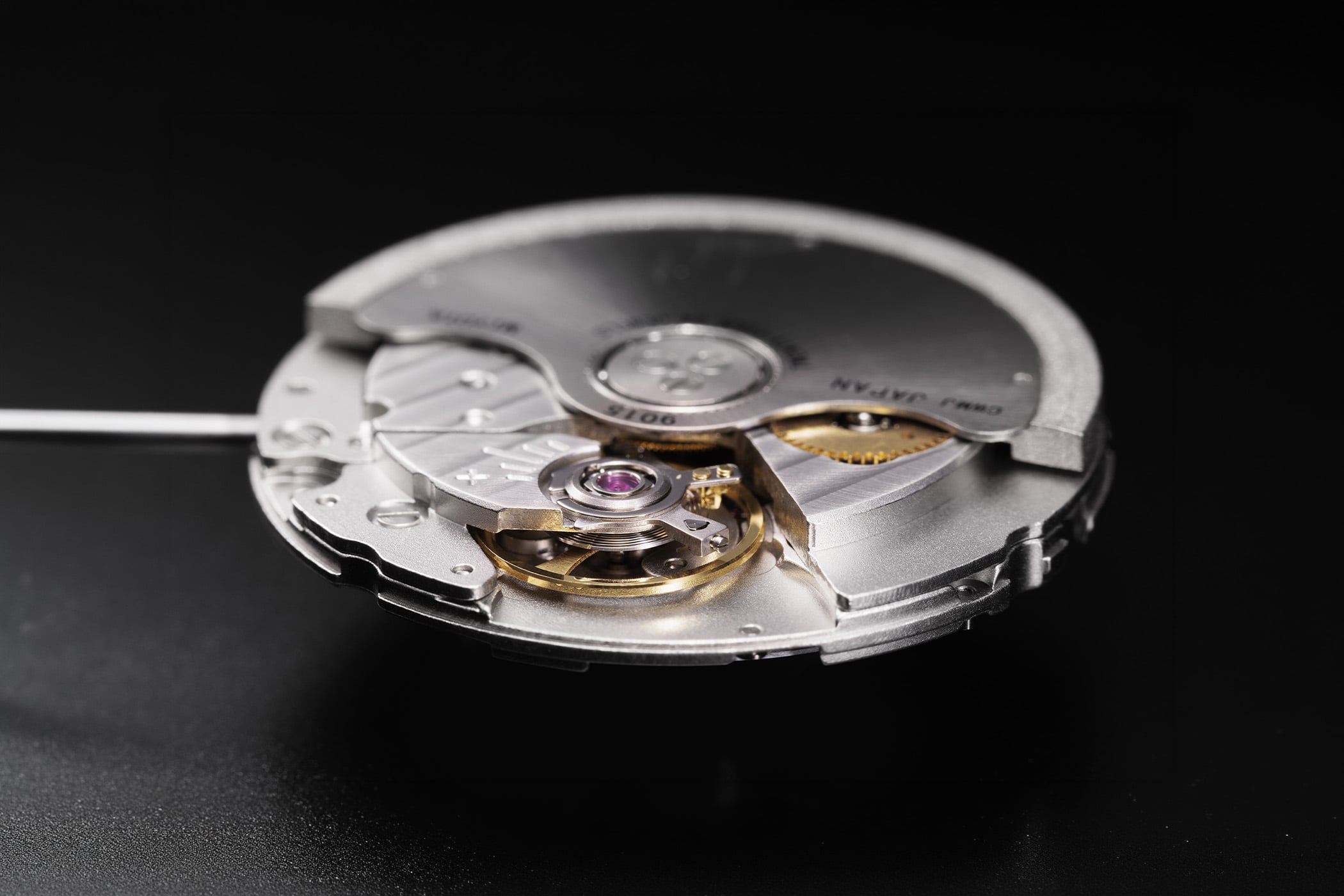
Portrait – Miyota, The Engine Behind the Watch, And The Rise of the Japanese Movement Maker For more than four decades, Miyota has been quietly powering watches from brands around the world. As the watch industry evolves, however, the movement manufacturer is increasingly stepping into the spotlight – highlighting not only its technical expertise and manufacturing capabilities, but also the role movements play in the identity, reliability and long-term value of […] image
↑